The World Cat Federation (WCF) lists the breed as the Suphalak, with the code SUP. Its standard recognizes one coat color, SUP b, a rich, glossy, warm chocolate. The photograph of Ayodia gives a sense of what that color looks like. As she looks up toward a leaf, her cheek appears deep brown in the shade. Light catches the fine hairs on her brow and the bridge of her nose, bringing out their warmth. In this one profile, you can see both the sheen and the direction in which the short hairs lie. [1]
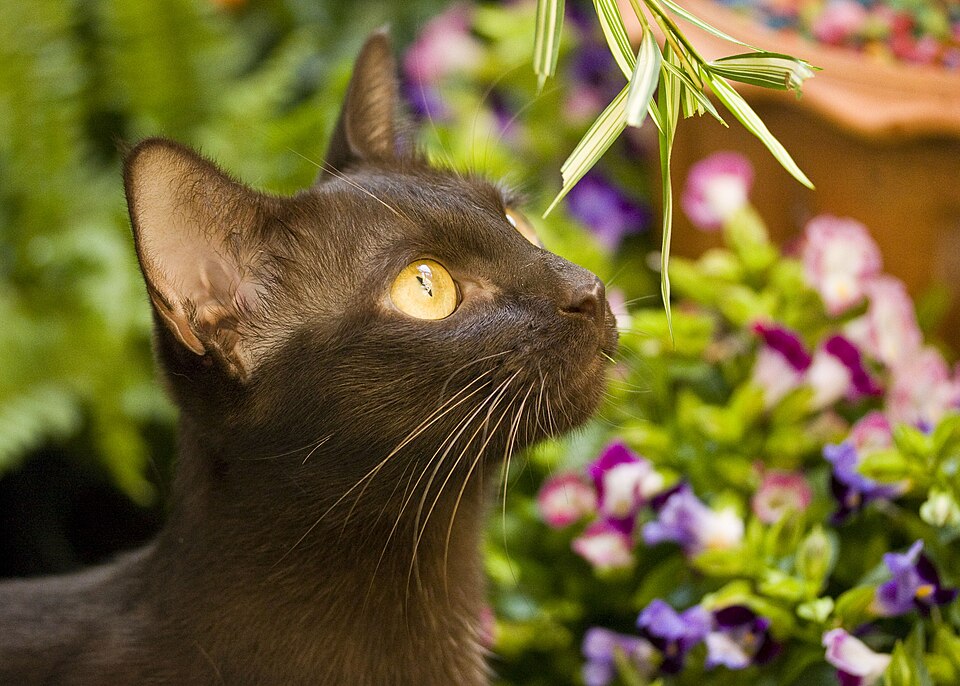
Ayodia’s short coat is visible in profile. Maewboran, Wikimedia Commons[6]

The WCF describes the coat as very short and fine. It lies close to the body, has no undercoat and feels silky. The standard particularly favors a warm brown with a reddish copper sheen. It also allows for faint markings, especially in kittens or as the coat changes with the season. The outline of the cat offers clues beyond color. The Suphalak is medium-sized and well proportioned, with long, slender, muscular legs and oval paws. The tail tapers slightly from the base to a blunt tip. [1]
Seen head-on, AumDaengManee shows the space between the ears, the taper toward the muzzle and the large eyes. The standard describes the head as a soft wedge with a hint of a heart shape. The eyes sit at a slight slant. The upper lid has an almond-shaped curve, while the lower lid is rounder. Eye color ranges from pale yellow to deep gold and may have a greenish tinge. The brow is slightly prominent, and the fur just above the eyes is naturally sparse, a detail that stands out when the eyes are wide open. [1]
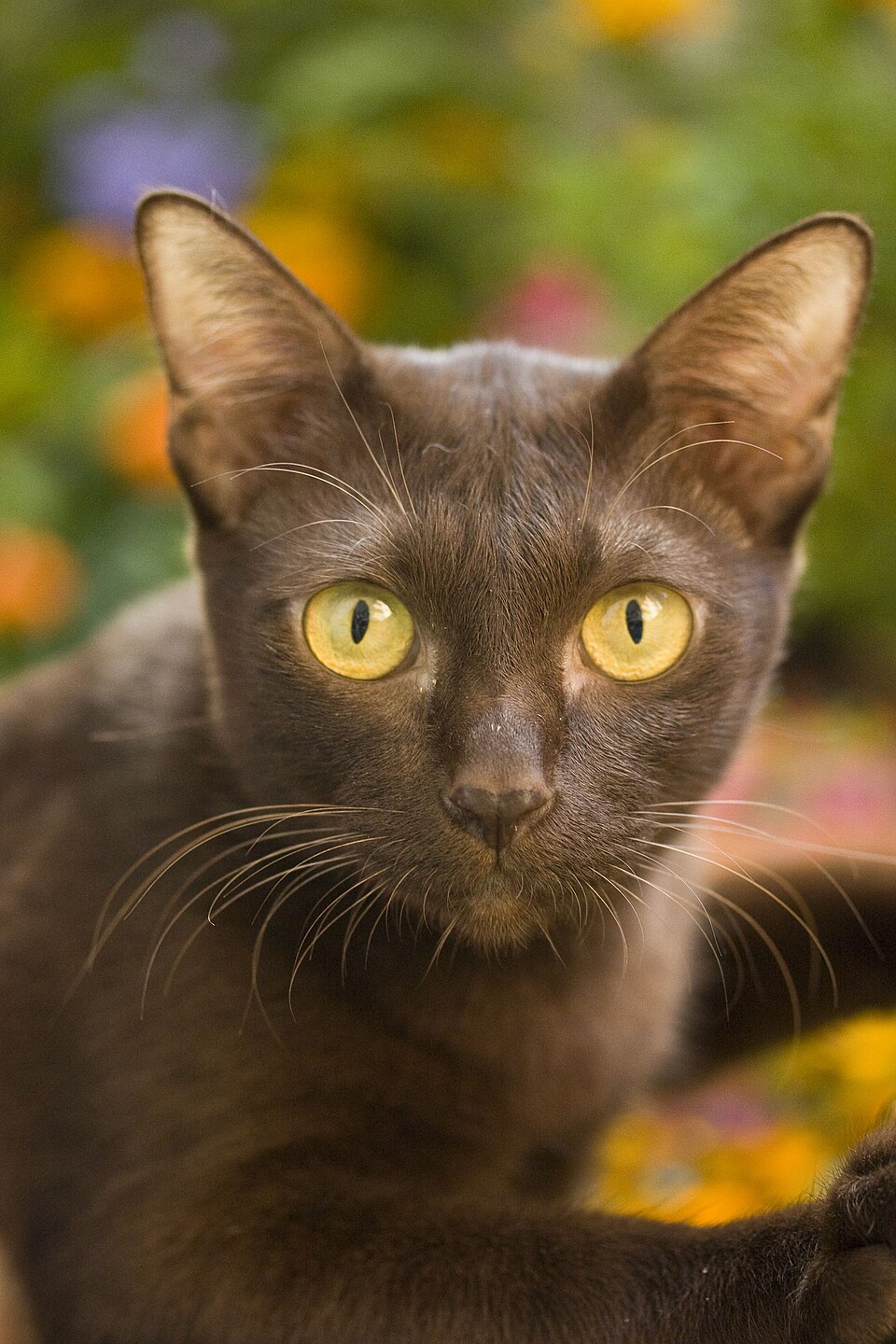
A front view shows AumDaengManee’s head shape. Maewboran, Wikimedia Commons[7]

The nose and paw pads give you two more shades to look for alongside the coat. The WCF describes the nose as chocolate brown and the pads as warm cinnamon. In the close-up, the toe pads are noticeably lighter than the brown fur around them, and you can see exactly where fur meets bare skin. Pads can deepen in color with age, taking on an orange or milky-coffee tone in older cats. A cat stretching its paws as it lies on its side gives you a chance to see a feature usually hidden underfoot. [1]
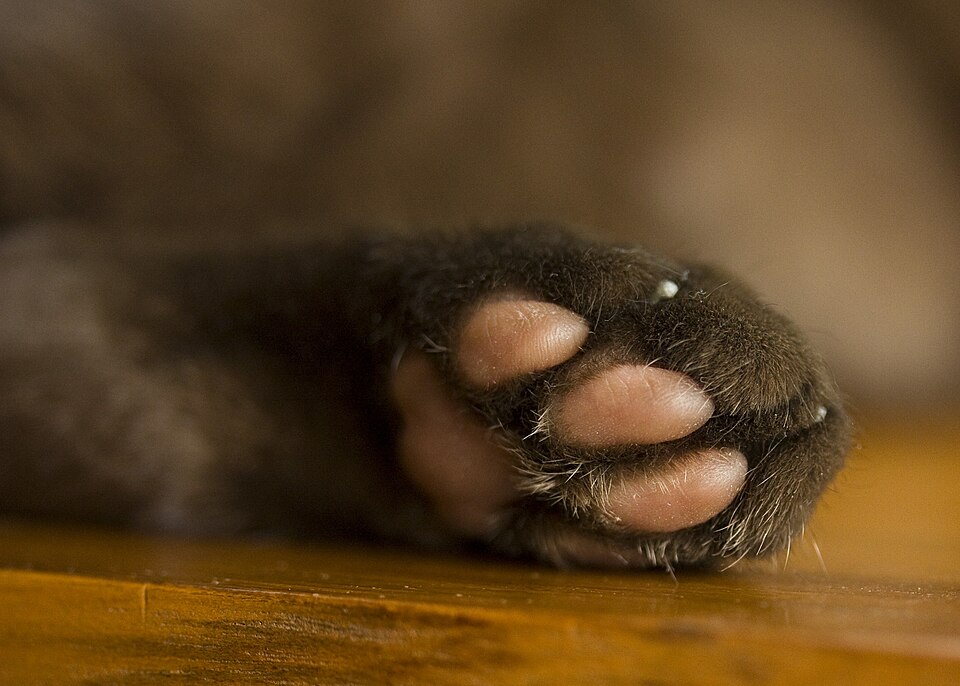
A Suphalak’s toe pads show their warm color. Maewboran, Wikimedia Commons[8]

Getting to know the coat during brushing
Choose a moment when your cat comes over of its own accord. Get down to its level and offer a hand to sniff. If it rubs a cheek against your hand, start by stroking a spot where it likes to be touched. Once it relaxes, use a brush suited to short hair and make a few gentle strokes in the direction the fur grows to lift away loose hairs. For the first session, one small patch where your cat is happy to be touched is enough. When it gets up to leave, let the session end. You can pick up again the next time it comes over. [2][3]
As you brush over the shoulders and back, notice how the coat usually lies and feel for any new lumps beneath it. Get to know which spots your cat can reach when grooming and where the fur has always been thin. If the hair on one flank suddenly looks shorter, you will have something to compare it with. Sometimes the first change you notice is simply that your cat keeps pausing to lick the same spot. [1][2][5]
Giving an indoor cat room to choose
Feline veterinary guidance for indoor cats offers a starting point for setting up a Suphalak’s home. Where can your cat retreat when visitors arrive? Where can it watch the room once things quiet down? A cardboard box on its side, lined with a blanket your cat has slept on, makes a hiding place with a familiar scent. Nearby, provide a stable perch with room to stretch out. A kitten or a cat with limited mobility may do better with a lower perch it can get onto and off by itself. [3][4]
Once everything is in place, trace the routes from your cat’s bed. Does it have to pass another cat’s food bowl every time it wants water? Can it reach any of the litter boxes without going through the same doorway? Spread food, water, litter boxes and resting spots around the home, with more than one place to meet everyday needs. In a home with several cats, pay particular attention to entrances. If one cat settles in a doorway, another should still be able to reach water, use a litter box or leave a hiding place through a second exit. [3][4]
Set aside a predictable time for play each day. Draw a wand toy along the floor away from your cat, then pause. Give the cat time to fix its gaze, crouch, chase and pin the toy with its front paws. If it likes to watch from the mouth of a box first, that wait is part of the game. When it pounces, let it hold its catch for a moment. Put toys with strings away afterward. Another option is to take a little food from the day’s allowance and divide it among a few easy-to-find spots. Over time, what your cat chooses to do will tell you whether it enjoys a chase, a food search or a quiet rest beside you. [3][4]
Which coat changes warrant a veterinary visit?
Fur that has always been sparse above the eyes tells a veterinarian something different from a patch of hair loss that appeared last week. Contact your veterinarian if your cat repeatedly licks or chews one spot until the skin shows or a sore develops. The Cornell Feline Health Center explains that itching and pain can both prompt licking. An examination can help the veterinarian investigate causes such as parasites or allergies. Take a photograph of the area, note when you first noticed the change and record how often your cat returns to the spot while awake. If you have recently moved furniture or brought home another cat, mention that alongside the physical changes you have seen. [1][5]
Changes can also appear when a cat grooms less. If a once-sleek patch of fur on the back looks dull and unkempt, and your cat is eating and moving less than usual, contact your veterinarian about those changes together. Bring any vaccination and parasite-treatment records to your cat’s first checkup so the veterinarian can plan ongoing care around its age, living conditions and examination findings. An ordinary photograph taken before a change can be useful, too. It shows the veterinarian how the coat used to look in that particular spot. [2]
References
-
[1] World Cat Federation. Suphalak (SUP). November 1, 2024.
-
[2] Cornell Feline Health Center. Choosing and Caring for Your New Cat.
-
[3] AAFP and ISFM. AAFP and ISFM Feline Environmental Needs Guidelines. 2013.
-
[4] Feline Veterinary Medical Association. New Feline Veterinary Medical Association Position Statement Reimagines Life for Indoor Cats. August 28, 2025.
-
[5] Cornell Feline Health Center. Cats that Lick Too Much.