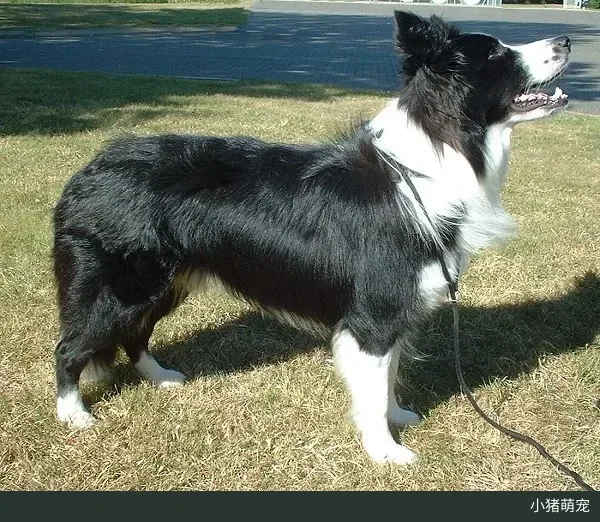
A Border Collie competing at the 2003 Birmingham Championship Dog Show in the United Kingdom. Photo: Sannse; source: Wikimedia Commons; license: CC BY-SA 3.0

The Border Collie (often called a “Border” for short) comes from hill pastures along the England–Scotland border. Generations of shepherds selected dogs for working ability, and sheepdog trials further fixed those traits. Smart and eager to learn, Borders also need plenty of exercise and chances to use their brains. Drawing on breed standards, research papers, and veterinary sources, this article covers origins, herding style, day-to-day care, and three health topics: CEA, NCL, and MDR1.
Origins, trials, and breed standards
The “Border” in the name refers to the border country between England and Scotland; the Royal Kennel Club’s introduction also includes the Welsh borders. In Scots dialect, “collie” is a general term for a sheepdog. Per the American Kennel Club (AKC) official standard, local shepherds valued two things when breeding: a nature that answered commands and minded stock, and the stamina to work a full day on rough hills. Early dogs were called by many names—“working collie,” “farm collie,” “shepherd’s dog,” and more. Per Fédération Cynologique Internationale (FCI) illustrated breed materials, International Sheep Dog Society (ISDS) secretary James Reid first called the breed “Border Collie” in 1918.
Sheepdog trials weighed heavily in the breed’s formation. The ISDS website records that the first documented sheepdog trial was held in 1873 at Bala in North Wales; in 1906, shepherds from England and Scotland met and founded the ISDS, and soon held the first International Trial at Gullane in Scotland—held every year since except in wartime and during the pandemic. FCI materials quote the early breeding principle “Let the hills prove the dog,” and call Old Hemp (1893–1901), bred by Adam Telfer, the “father of the breed,” saying almost all Border Collies today can be traced to him. To this day the ISDS still registers more than 6,000 Border Collie puppies a year for members, and breeders can use the stud book to look up pedigrees by working ability and trial results.
Among kennel organizations, the FCI formally recognized the Border Collie in 1977 as standard No. 297, Group 1 (Sheepdogs and Cattle Dogs), country of origin the United Kingdom, and listed it as a breed requiring a working trial; the current English standard was published on 28 October 2009. The FCI standard gives an ideal height at the withers of 53 cm for males and slightly less for females, and describes temperament as “tenacious, hardworking, of great tractability; keen, alert, responsive and intelligent; neither nervous nor aggressive.” The AKC recognized the Border Collie in 1995 in the Herding Group; the breed page lists reference figures of height 19–22 inches (about 48–56 cm) for males and 18–21 inches (about 46–53 cm) for females, weight 30–55 pounds (about 14–25 kg), and expected lifespan 12–15 years.
Eye herding and learning ability
The Border’s most distinctive feature is how it herds. The preface to the AKC official standard describes it this way: the Border first runs a wide arc behind the sheep, gathers them, and brings them back to the shepherd, then uses an intense stare—called “eye” in the trade—together with a stalking gait to control the flock. FCI materials also say dogs with “eye” control stock better, so it was treated as a virtue in selection. The FCI standard describes the gait as “free, smooth and tireless, with minimum lift of the feet, giving the impression of the ability to move with great stealth and speed.” The AKC also notes that one of the Border’s greatest strengths is deciding what to do when the handler is out of sight and no command is given.
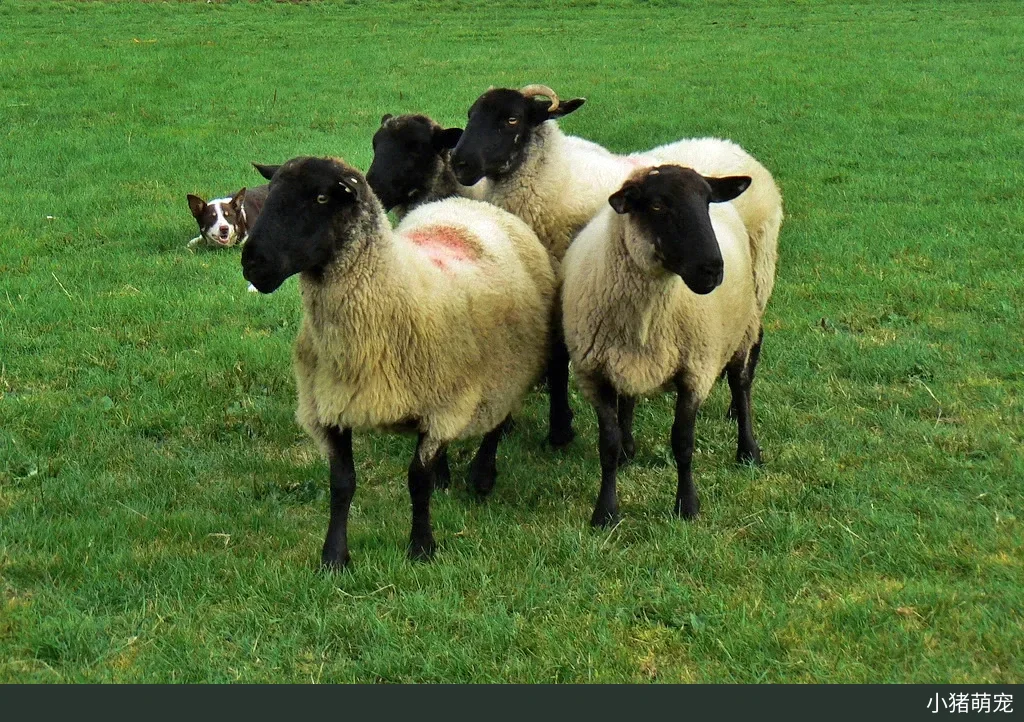
At a sheepdog trial at the Ballingeary Show in County Cork, Ireland, a Border Collie crouches low and locks onto the flock. Photo: mozzercork; source: Wikimedia Commons; license: CC BY 2.0

On learning ability, the most often cited case is a Border named Chaser. Psychologists John W. Pilley and Alliston K. Reid published a 2011 paper in Behavioural Processes: Chaser was born in May 2004, came to Pilley’s home at eight weeks, and after three years of intensive training learned and remembered the individual names of 1,022 objects; monthly tests of the full vocabulary yielded accuracy above 95% every time. Follow-up experiments also showed she could separate object names from commands such as “fetch,” “paw,” and “nose,” learn category labels such as “toy,” “ball,” and “Frisbee,” and map new names onto newly introduced objects by exclusion.
Note that this was a single-dog case study: Chaser received 4–5 hours of training daily from early on, with a focus on word learning from the fifth month, and was also the researchers’ family pet. It shows what a Border individual can reach under long, systematic training—not that every Border can memorize a thousand words, and not a yardstick for scoring your own dog.
Exercise needs and day-to-day care
Borders have high exercise needs. The AKC’s line is that daily exercise far exceeds a stroll around the block or a short run in the yard; Borders not working stock need vigorous exercise every day. The Royal Kennel Club’s reference is more than two hours a day. Running alone is not enough—they also need mental work. The AKC recommends starting obedience training young and continuing it for life; herding, obedience, agility, rally, tracking, disc, and flyball all suit the breed. The AKC breed notes warn that a working dog that needs mental jobs will invent its own if none are provided—and those jobs are rarely ones owners welcome.
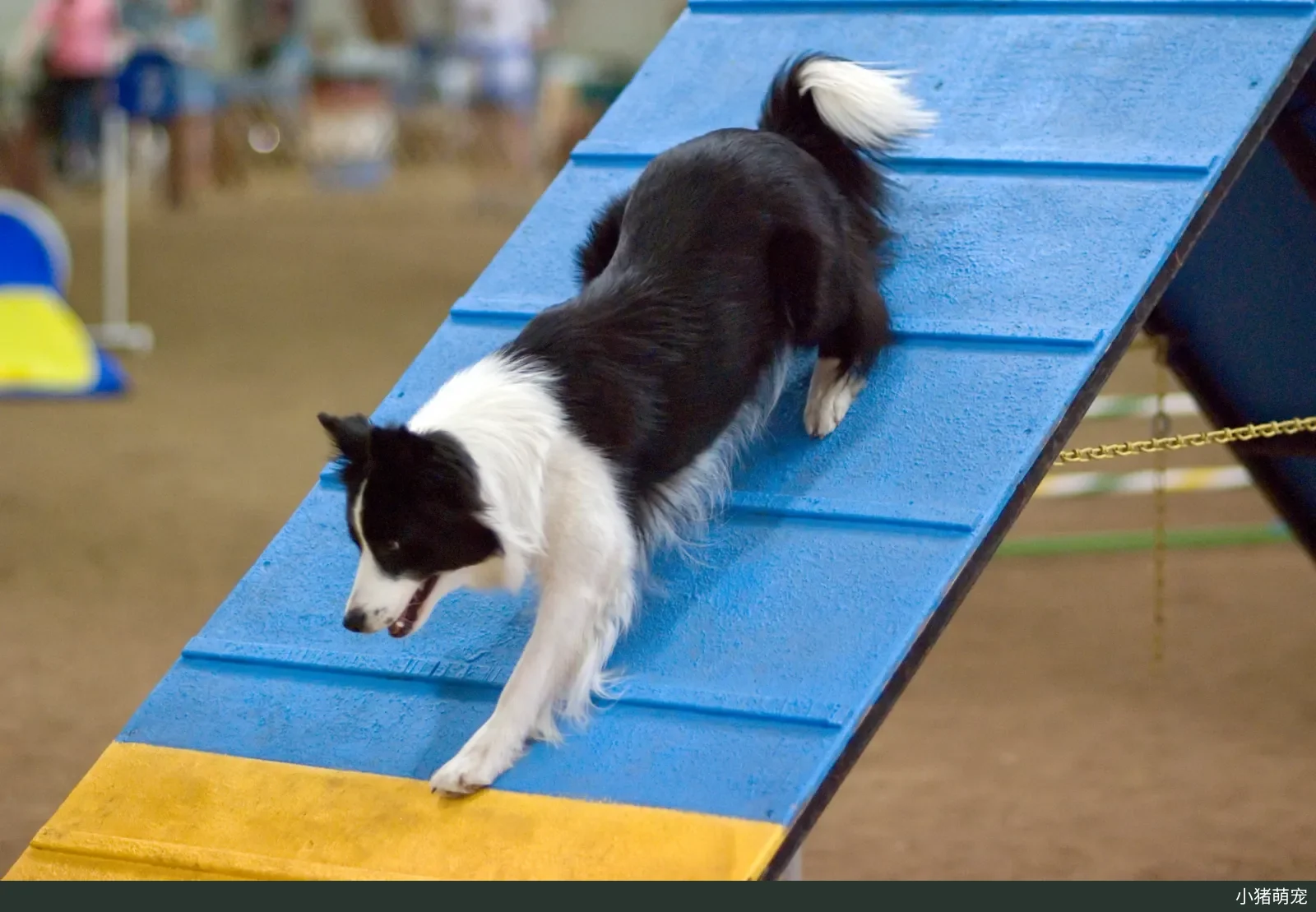
A Border Collie descending the A-frame in agility. Photo: Ron Armstrong; source: Wikimedia Commons; license: CC BY 2.0

Because of herding instinct, Borders may try to “herd” children and other animals at home. The AKC considers them a better fit for families with older, well-mannered children, and for owners with time and experience; first-time dog owners should think carefully about long-term commitment. Early socialization is critical: the AKC suggests pleasant contact with many people and environments from puppyhood through about seven months of age. Borders are affectionate with family and may be somewhat reserved with strangers.
On day-to-day care, Borders come in rough and smooth coats; both are dense, weather-resistant double coats with the same grooming: the AKC recommends brushing once or twice a week with a pin brush, daily during coat-blow seasons. Also trim nails regularly, check ears for signs of infection, and brush teeth often. For diet, a quality dog food suited to life stage is enough; watch calories and weight, and do not overdo training treats.
Genetic screening and drug caution
The AKC regards Borders as generally hardy, but responsible breeders screen breeding stock for hip dysplasia, deafness, epilepsy, Collie Eye Anomaly, neuronal ceroid lipofuscinosis, and trapped neutrophil syndrome, among other issues. The Royal Kennel Club also recommends eye exams before breeding and lists DNA tests including CEA, NCL, and MDR1. When choosing a puppy, ask the breeder for parental test results. Three of these are covered below.
Collie Eye Anomaly (CEA). The UC Davis Veterinary Genetics Laboratory (UC Davis VGL) describes CEA, also called choroidal hypoplasia, as a hereditary disorder of intraocular structural development. It is autosomal recessive: a dog must inherit a disease allele from each parent to be affected. Presentation varies widely: some dogs have normal vision for life; most affected dogs have choroidal hypoplasia; some may develop microphthalmia, intraocular hemorrhage, or retinal detachment, and severe optic-nerve coloboma can impair vision or cause blindness. DNA testing can classify dogs as clear, carrier, or affected. A 2017 study of 103 Norwegian Border Collie puppies aged 5–9 weeks found good agreement between genetic and ophthalmic results, with a disease-allele frequency of 6.3%. UC Davis also notes that optic-nerve coloboma is not fully explained by this mutation alone, so genetic testing does not replace a veterinary ophthalmic exam.
Neuronal ceroid lipofuscinosis (NCL). This is a group of lysosomal storage diseases in which abnormal material accumulates in nerve cells and causes premature cell death. Per the Online Mendelian Inheritance in Animals (OMIA) database, the Border Collie form is caused by mutations in CLN5 and is likewise autosomal recessive; affected dogs usually show clinical signs at 18–24 months of age, with progressive behavior change, hyperactivity, aggression, ataxia, and blindness. Disease-allele frequency in Australian Border Collies has been estimated at 3.5%; a Japanese study of 500 Borders also obtained 0.035. Genetic testing is available; OMIA recommends testing relatives of affected dogs and avoiding carrier-to-carrier matings.
MDR1 drug sensitivity. Washington State University (WSU) College of Veterinary Medicine explains that MDR1 (also called ABCB1) mutations weaken the mechanism that limits drug entry into the brain; dogs with the mutation given certain common drugs may develop tremor, disorientation, blindness, severe muscle weakness, or even death. The mutation is uncommon in Borders: WSU estimates frequency below 5%; in a 2008 North American genotyping study published in the Journal of the American Veterinary Medical Association (JAVMA), of 306 Border Collies, 301 were normal, 4 carried one mutant copy, and 1 carried two. Only testing tells you your own dog’s status. Among problem drugs listed by WSU, the antidiarrheal loperamide (Imodium) can cause neurotoxicity in mutant dogs at antidiarrheal doses and should be avoided entirely; ivermectin is safe at heartworm-prevention doses, but higher doses used for mange and similar treatments can poison; acepromazine, butorphanol, and some chemotherapy drugs need dose reduction. A prudent approach is one MDR1 test for a Border, sharing the result with the veterinarian, and never giving human antidiarrheal medicine on your own.
References
-
FCI. FCI-Standard N° 297 Border Collie (English version published 2009-10-28)
-
FCI. BORDER COLLIE (297)
-
FCI. FCI Model for Illustrated Presentation of the Border Collie
-
American Kennel Club. Border Collie Dog Breed Information
-
American Kennel Club. Official Standard of the Border Collie
-
American Kennel Club. Is the Border Collie the Right Breed for Your Lifestyle?
-
The Royal Kennel Club. Border Collie | Breeds A to Z
-
International Sheep Dog Society. The International Sheep Dog Society
-
Pilley, J. W., & Reid, A. K. (2011). Border collie comprehends object names as verbal referents. Behavioural Processes, 86(2), 184–195.
-
UC Davis Veterinary Genetics Laboratory. Collie Eye Anomaly (CEA)
-
(2017). Compliance between clinical and genetic diagnosis of choroidal hypoplasia in 103 Norwegian Border Collie puppies. Veterinary Ophthalmology.
-
OMIA. OMIA:001482-9615: Neuronal ceroid lipofuscinosis, 5 in Canis lupus familiaris (dog)
-
Washington State University WADDL. MDR1
-
Washington State University WADDL. MDR1 in Dogs
-
Washington State University WADDL. Is your pet at risk of an adverse reaction to common drugs? (2021-10-19)
-
(2008). Breed distribution of the ABCB1-1Δ (multidrug sensitivity) polymorphism among dogs undergoing ABCB1 genotyping. Journal of the American Veterinary Medical Association, 233(6).
-
Piggy Tuck Pets · Welcome to my pet planet