In the woods at night, a hunter could lose sight of both the raccoon and the dog tracking it. With its nose down, a Black and Tan Coonhound could follow the trail through woods and wetlands, giving long, drawn-out calls along the way. Once the raccoon climbed a tree, the hunter could follow the sound to the hound at its foot. The American Kennel Club (AKC) recognized this American-bred scenthound in 1945. That history helps explain what happens on a walk today. A path that looks empty to you may already hold a scent worth following for your dog. [1]
Seen from the side in Canarian's photograph, the hound has a level back, a deep chest and long legs. This is a large dog built to cover ground in long strides. A tall male can stand 27 inches (about 69 centimeters) at the shoulder. Picture that size at the other end of a leash. Whoever takes the dog out needs to be able to hold it steady when an easy amble turns into a sudden change of direction at the sight of a squirrel. [1][2]

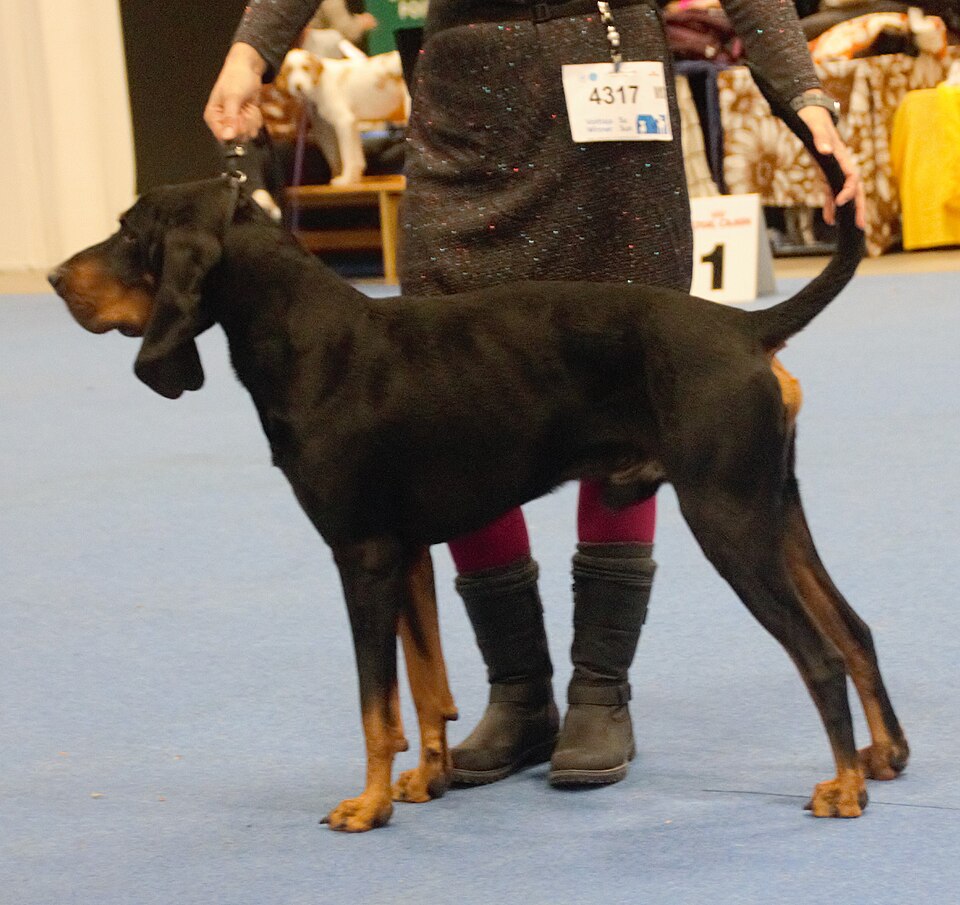
A Black and Tan Coonhound stands in profile. Canarian, Wikimedia Commons[2]
From the front, it's easy to see where the breed gets its name. Most of the coat is black, with a tan spot about the shape of a pumpkin seed above each eye. Tan also runs along both sides of the muzzle, setting off the black nose. The long, soft ears are set low and well back and hang in folds against the cheeks. Scraig's close-up gives a good view of all three features, from the spots over the eyes to the markings on the muzzle and the folds of the ears. [1][3]

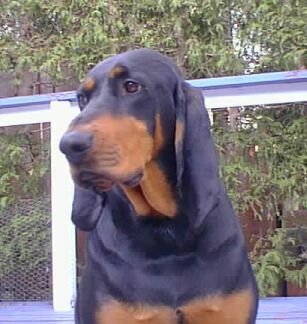
Tan spots sit above the eyes and the ears hang low. Scraig at the English Wikipedia, Wikimedia Commons[3]
Leave time to sniff
The AKC recommends moderate daily exercise, which can take the form of a long walk or time playing together in a fenced yard. Think about the route you usually walk. If your front door opens onto a busy street, keep the hound beside you there. When you reach an open stretch of grass well away from traffic and the dog stops to sniff a clump of grass, you can stop too. Allowing time for that part of the walk gives the hound a chance to use its nose without anyone having to hurry it along to finish a circuit on schedule. [1]
It takes only a step to go from noticing a scent to running after it. A small animal that has already vanished into the bushes may leave a trail the hound wants to follow. Clip on a sturdy leash before opening the door. Along the way, give the dog a choice of places to sniff within safe reach of the leash. If the trail leads toward traffic, stop at the edge of the grass and guide the dog back. At home, walk the fence line, check that the side gate latches and look for gaps underneath. The AKC recommends a tall, secure fence wherever the hound can run free. [1]
Practice turning back to you
In the woods, a Black and Tan Coonhound had to work out for itself which way a trail led. That independence comes along on a family walk. Give the dog one clear action to learn. On a familiar cue, have it turn to look at the person holding the leash and walk alongside for a few steps. Start somewhere quiet and reward the dog as soon as it turns. Once the action is familiar, practice on your usual route while you still have the dog's attention. After crossing a road, give the hound time to sniff again when you reach a safe spot. Coming back to you can be part of the same walk as following an interesting scent. [1]
The AKC recommends socialization and basic training from puppyhood and notes that once these hounds learn a way of doing something, it tends to stick. If several people share the walks, agree on a routine. Everyone can wait for the dog to stand quietly, clip on the leash and then open the door. At a crossing, everyone can use the same cue to bring the dog alongside. It's easier to teach that sequence to a puppy than to slow down a full-grown hound that has spent years getting out the door first. [1]
At home, the same hound may happily settle close to the family and sleep for hours beside the sofa. Before deciding on the breed, picture an ordinary workday. Who will take the morning and evening walks? Who has time to linger when the dog stops to sniff? How long will it be alone while everyone is busy? Black and Tan Coonhounds enjoy company. Left alone in a yard for long stretches with little to do, one may let out a long howl the neighbors can hear. A big lawn gives the dog somewhere to move, but it still needs someone to walk with and someone to come home to. [1]
Check the ears during weekly brushing
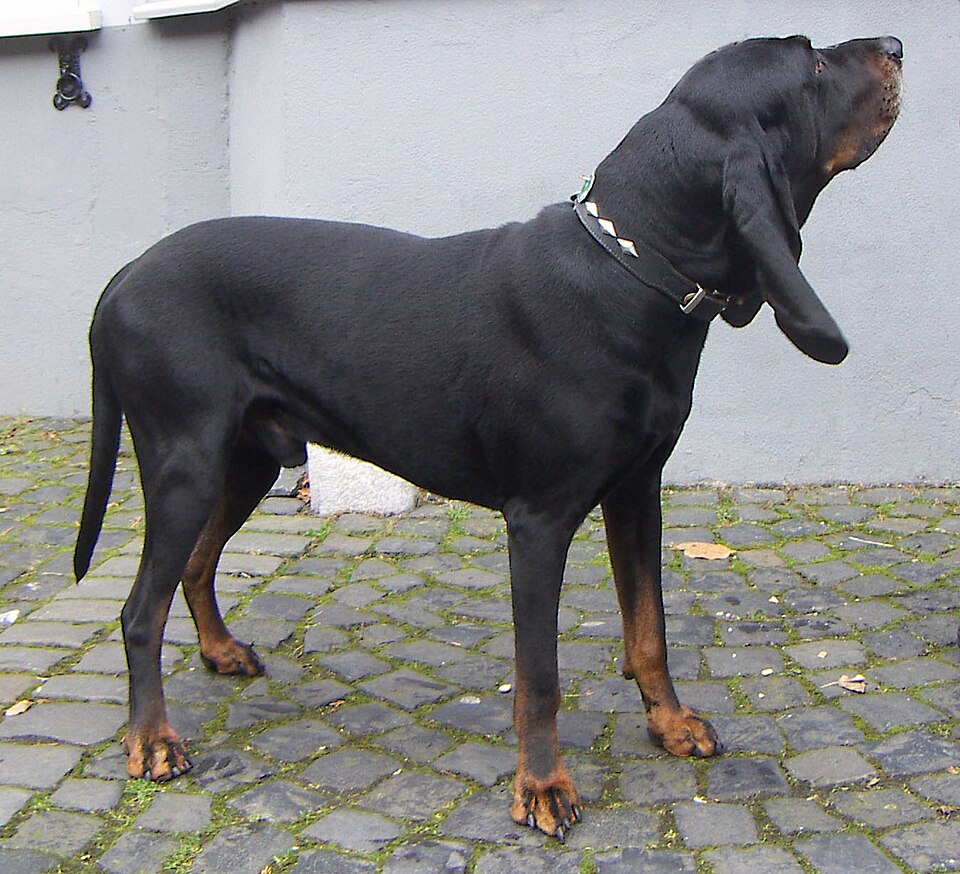
The short black coat gives way to tan at the feet. Steffen Heinz (Caronna), Wikimedia Commons[4]

In Steffen Heinz's full-length photograph, you can see the outline of the shoulders and back through the hound's short coat. The coat is dense, and it sheds. A weekly brushing with a medium-bristle brush or a rubber grooming mitt removes loose hair. Bathe the dog as needed. When you reach the head and neck, gently lift each ear flap so the weekly ear check becomes part of the same routine. Brush the teeth regularly and trim the nails as they grow. Overlong nails can make it uncomfortable for this long-striding dog to put its feet down on a walk. [1][4]
When asking about a puppy's family health history, ask the breeder to show you the parents' screening records. Look together at which dog each record names and which examination it documents. The AKC lists hip dysplasia, cataracts and thyroid problems among the breed's health concerns. The screening recommendations on its breed page include a hip evaluation, a cardiac exam and an evaluation by a veterinary ophthalmologist. The parents' records tell you what screening the family has had. If your own dog begins to struggle on walks or repeatedly shakes its head or scratches its ears, take it to the veterinarian. Describe when the change began and whether it affects the dog's walks. [1]
References
-
[1] American Kennel Club. Black and Tan Coonhound Dog Breed Information.
-
[2] Canarian. File:Blacktancoon.jpg. Wikimedia Commons.
-
[3] Scraig. File:BTCoonhnd.jpg. Wikimedia Commons.
-
[4] Steffen Heinz (Caronna). File:Black and Tan Coonhound.jpg. Wikimedia Commons.