In the late eighteenth century, the Dogue de Bordeaux guarded estates for members of the French nobility. After the French Revolution, these dogs found work driving cattle and earned the nickname “butcher’s dog.” They also pulled carts. With that history, it is easy to overestimate how much exercise a young Dogue can handle. The American Kennel Club (AKC) recommends keeping exercise low impact until the dog is at least 18 months old. Before choosing a puppy, walk from the spot you have in mind for its bed to the door. How many steps and drops will it meet along the way? [1]
A deep chest seen in profile
When a Dogue de Bordeaux stands side-on, look just behind the front leg. The chest reaches below the elbow and is slightly deeper than the space between its underside and the ground. The male standing on sand shows that proportion particularly well. His thick neck runs from the back of his head into powerful shoulders. The whole frame gives the dog its substantial appearance. The female on grass has the same broad shoulders and chest, and her close-fitting fawn coat reveals the contours of her shoulders and hind legs. [1–3]
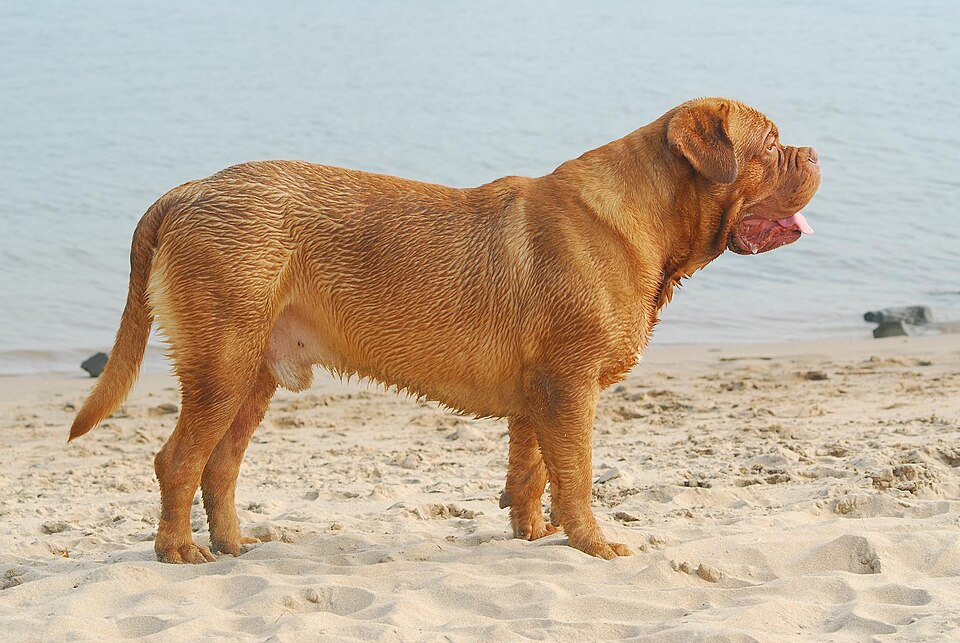
The chest reaches below the elbow. DJT at Dutch Wikipedia, Wikimedia Commons[2]

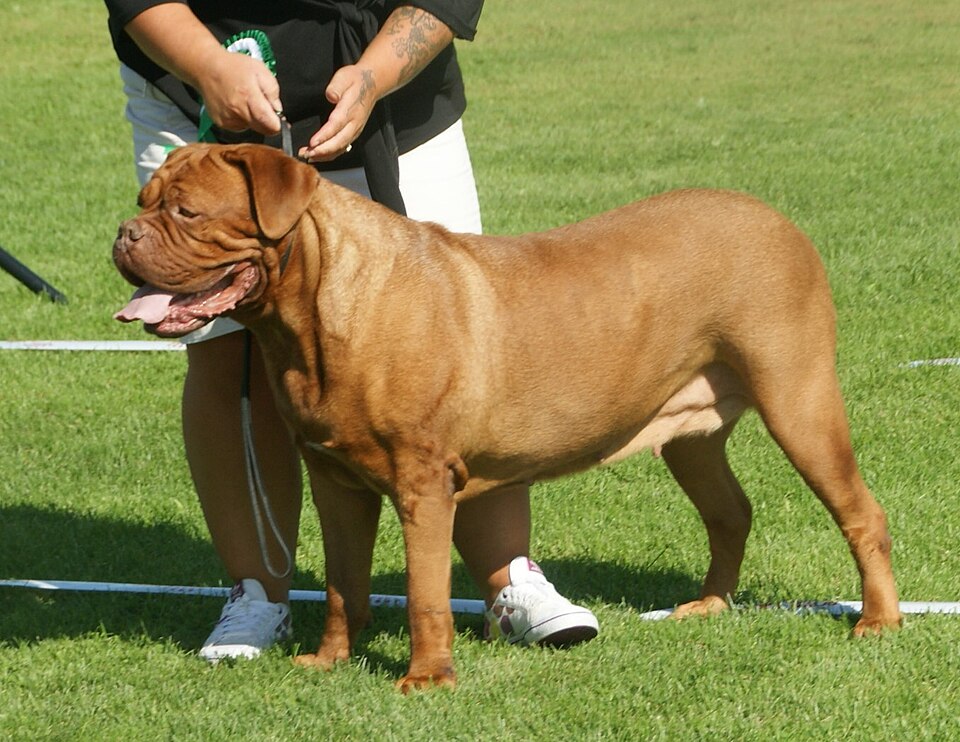
The short fawn coat outlines the shoulder. Canarian, Wikimedia Commons[3]

Now look at the head. It is broad, with a short muzzle, wide-set eyes, and ears that look small beside it. Wrinkles run from between the eyes toward the bridge of the nose, and the lower jaw projects forward. The furrowed brow and heavy, hanging lips give even a dog standing quietly a solemn expression. With family, this guardian can be affectionate and sensitive. To get a feel for the individual dog, watch what happens when someone comes through the door. Can the dog wait in place? Does a familiar cue draw its attention back to the person holding the leash? [1,4]
Walk the puppy’s daily route
Trace the trips a puppy will make every day, from its bed to the water bowl and outside for a toilet break. If the bed is upstairs and the family spends the day downstairs, the puppy may race down the stairs looking for company every time it wakes. Moving the bed to the floor where people spend their time and putting a gate across the stairs can spare it several trips. The AKC advises keeping a growing Dogue from running up and down stairs or jumping from surfaces higher than its own back. Both precautions ease the strain on developing bones and joints. [1]
Crouch beside the puppy and use the height of its back as a guide. A sofa seat may be higher than you think. So may the lip of the car’s cargo area. For evenings together, a mat beside the sofa gives the puppy a place to settle. For car trips, choose a stable ramp with good grip and let the puppy practice walking across it on level ground first. The same thinking applies to a home or a walking route. A level exit reached by elevator can be more useful than a big yard at the bottom of a long flight of stairs. [1]
There is still plenty to do together on level ground. Let the puppy walk at an easy pace and stop to sniff. At a corner, practice changing direction together. One outing gives the puppy time to explore and a chance to learn how to follow your lead. The AKC also suggests swimming as a low-impact activity. Choose a spot where the puppy can walk smoothly into and out of the water. Cart pulling can wait until the dog is physically mature. Once it reaches 18 months, how much activity to add depends on its condition and how much exercise it is used to. [1]
Teach the puppy to wait at the door
For a dog that may one day be strong enough to pull a cart, waiting while someone opens a door is worth learning early. Start at a quiet interior door. Reward the puppy when all four paws are planted and the leash hangs loose. Open the door a crack. If the puppy stays put, reward it again, then give the cue to go through together. If it pushes forward, open the door a little less on the next try. Once the puppy knows the routine, practice at the building entrance, at the elevator, and beside the car. That pause gives you time to see what is ahead before you both move. [1]
The doorway is also a place to begin socializing a young guardian. When a friend visits, one family member can open the door while another stands a little way back with the puppy. Reward it when it calmly turns to look at its handler. Everyone who walks the dog can use the same cue and give it at the same point in the routine. A Dogue de Bordeaux is sensitive to how people handle it, and clear, consistent feedback helps build trust. Before bringing one home, decide who can take it out on weekdays and who can stay with it when guests arrive. The family needs time for this practice every day. [1]
Clean inside the facial folds
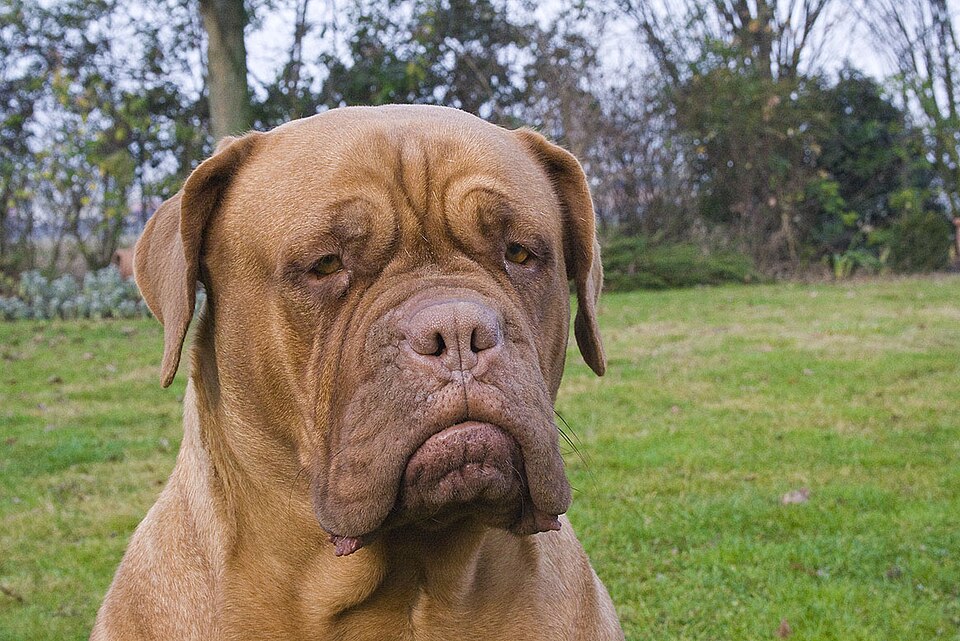
Facial folds frame the muzzle. spaceodissey, Wikimedia Commons[4]

In the portrait, the skin forms grooves on either side of the bridge of the nose. A Dogue de Bordeaux drools heavily. After wiping around the mouth, gently part the facial folds and check that the skin inside is clean and dry. The AKC recommends tending to the folds at least weekly, and some dogs need daily care. Keep a clean, soft cloth near the water bowl so it is handy when the puppy finishes drinking. As soon as the puppy is comfortable with a gentle touch on the cheek, practice on one small area, then let go and offer a reward. That makes a full face check easier later. [1,4]
The short fawn coat sheds year-round. Run a rubber grooming brush over the body to lift loose hair. Bathe the dog about every four weeks and wipe off dirt with a damp towel between baths. Check the ears weekly and clear away debris, brush the teeth regularly, and check the nails about once a month for trimming. Baths may be weeks apart, but a damp facial fold can need attention that same day. [1]
Before bringing a puppy home, ask the breeder for both parents’ hip, elbow, shoulder, and cardiac evaluation records. These show which screenings each parent has had. Everyone in the household should also recognize the warning signs of gastric dilatation-volvulus (GDV), or bloat, a risk for this breed. If the dog suddenly keeps trying to vomit and nothing comes up, go to an emergency veterinarian immediately, especially if its belly looks swollen or it is pacing or visibly distressed. When you walk the route from the front door to the car, note the nearest emergency veterinary hospital and work out how you would get there at night. That route needs to serve a growing puppy today and a full-grown dog that may one day need urgent care. [1,5]
References
-
[1] American Kennel Club. Dogue de Bordeaux Dog Breed Information.
-
[2] DJT at Dutch Wikipedia. File:DJT 0086.jpg. Wikimedia Commons.
-
[3] Canarian. File:French Mastiff female 4.jpg. Wikimedia Commons, 2020.
-
[4] spaceodissey. File:Dogue de Bordeaux serious.jpg. Wikimedia Commons, 2008.
-
[5] Cornell University College of Veterinary Medicine. Gastric dilatation volvulus (GDV) or “bloat”. Updated April 2025.