
The Maltese is a small Toy Group companion, typically 7–9 inches at the shoulder and under 7 pounds. Life expectancy is around 12–15 years. The breed standard prefers 4–6 pounds and gives priority to overall conformation.[1][2] The single, silky white coat can reach the floor, framing dark, round eyes. Most Maltese do well with short daily walks and play indoors or in a fenced yard. Set aside time for daily brushing, dental care, and keeping a small dog safe around feet and furniture.[1]
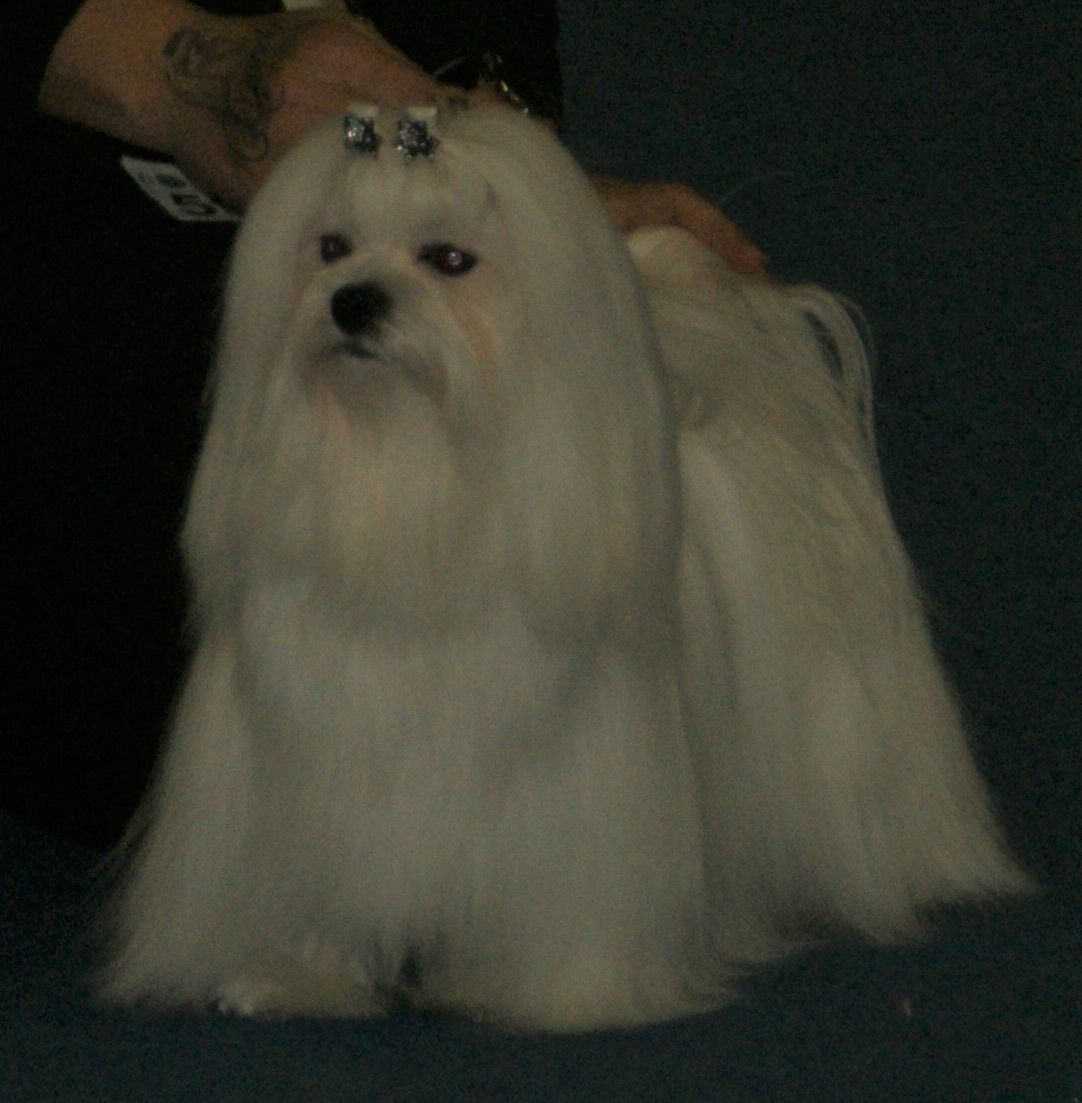
Figure: Show Maltese on a dark mat. Canarian, Wikimedia Commons[3]

Form and breed background
The Maltese is associated with a Mediterranean lapdog tradition centred on Malta: Phoenicians may have brought the dog to the island; Greeks of the fourth and fifth centuries B.C. were drawn to its proportions—the “Melitaie Dog” appears on Golden Age ceramics, and Aristotle calls it “perfectly proportioned” despite its diminutive stature; Roman aristocrats made it a status and fashion emblem, and one legend has Publius presenting a Maltese to Saint Paul after the apostle’s shipwreck on Malta.[1] After Rome’s fall, the narrative credits Chinese breeders with judicious crosses that helped keep the type alive through Europe’s Dark Ages, before Renaissance courts again prized the lap companion.[1] That club history explains the name and role; it is not a promise about any one dog’s temperament, exercise load, or health. Modern registration and show type still orbit small size, a long white silky coat, and gentle, lively companionship.[1][2]
The standard’s overall picture is a toy dog covered head to foot in long, silky white hair—gentle-mannered, sprightly in action, and, despite its size, vigorous enough for a satisfactory companion.[2] The head is medium length; drop ears are heavily feathered; eyes are very dark and round with black rims; the nose is black. The coat is single (no undercoat), hanging long, flat, and silky, almost or quite to the ground; the plumed tail is carried over the back.[2] The outline is compact, with height roughly equaling length, and the gait is jaunty and flowing.[2] Pets clipped short may lose the floor-length mantle; identification should still combine size, ear set, black nose and dark eyes, and a white coat—not “tiny and white” alone. Standards describe ideals; individuals vary.
Activity, training, and the household
Maltese are lively. Short daily walks and play in a fenced yard or indoors often provide enough activity.[1] That matches the standard’s sprightly companion picture, but it is not a license to treat a toy dog as zero-activity—short walks and interactive play still matter; the load is short-range and indoor-friendly rather than long-distance running.[1][2] Maltese learn quickly and notice when a family member lets a rule slide, so consistency matters. They can be stubborn, yet usually respond well to positive, reward-based methods, and they can be athletic partners in obedience or agility.[1] Competition is optional; everyday life still needs predictable short activity and clear rules, not “small means laissez-faire.”
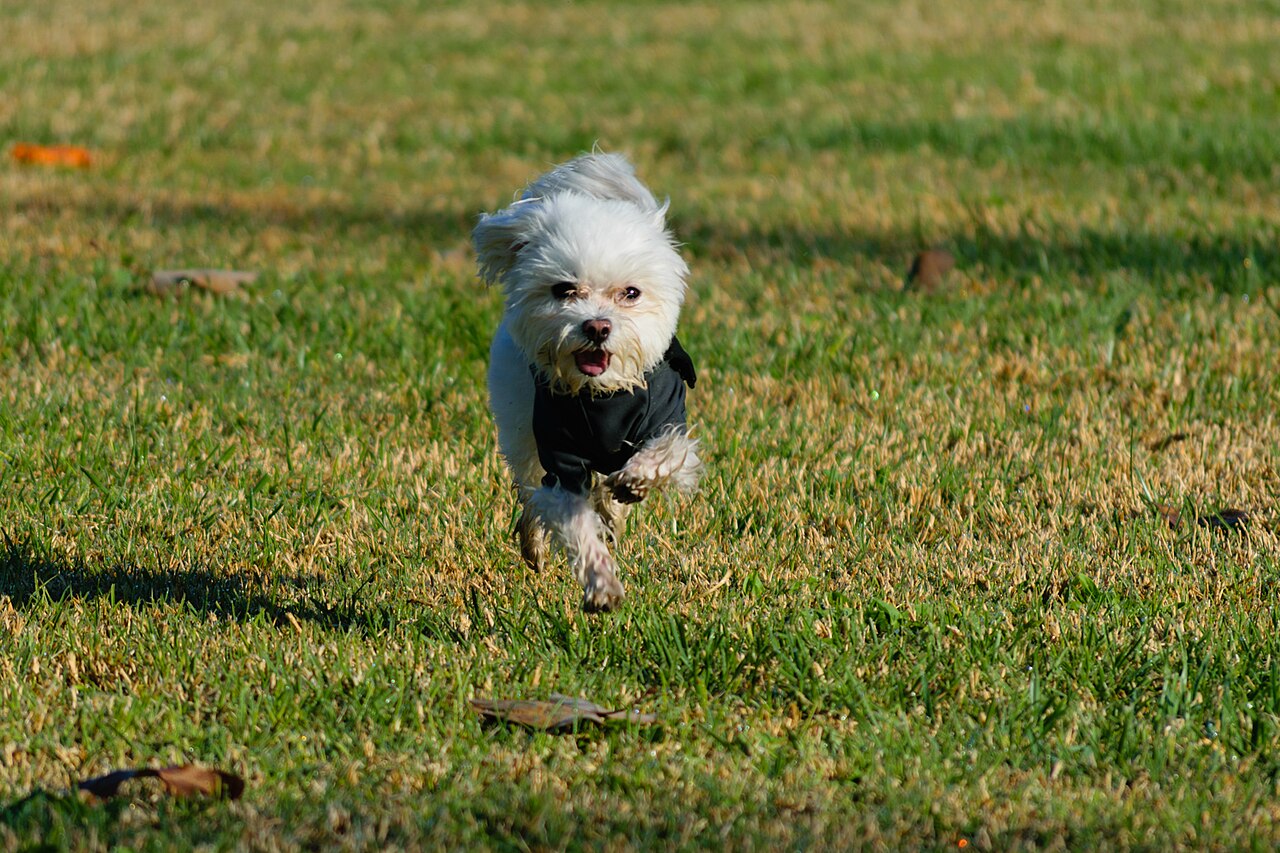
Figure: Maltese running on grass. Pwnsey, Wikimedia Commons

Many Maltese are affectionate, lively, and quick to notice a visitor. Short, reward-based sessions can build everyday manners, and some enjoy agility games.[1][2] A small dog can slip from someone’s arms or get caught under a door or foot. Use non-slip surfaces, supervise time on furniture, and teach children to handle the dog gently.
Coat care and health topics
The long white coat is the breed’s calling card and the core daily cost. Brush gently in layers down to the skin every day to prevent mats; regular baths and conditioning; frequent nail trims; weekly ear checks to remove excess hair, wax, and debris.[1] Toy breeds are prone to dental disease with age, so teeth should be brushed often—ideally whenever the coat is brushed—plus routine veterinary cleanings; excess tear staining warrants a vet visit to look for causes.[1] Maltese usually shed little, but low shedding must not be rewritten as “will not cause allergies.” Allergy triggers are complex; household reactions need real exposure and medical advice. Public breed copy does not offer an allergy-free promise.[1]
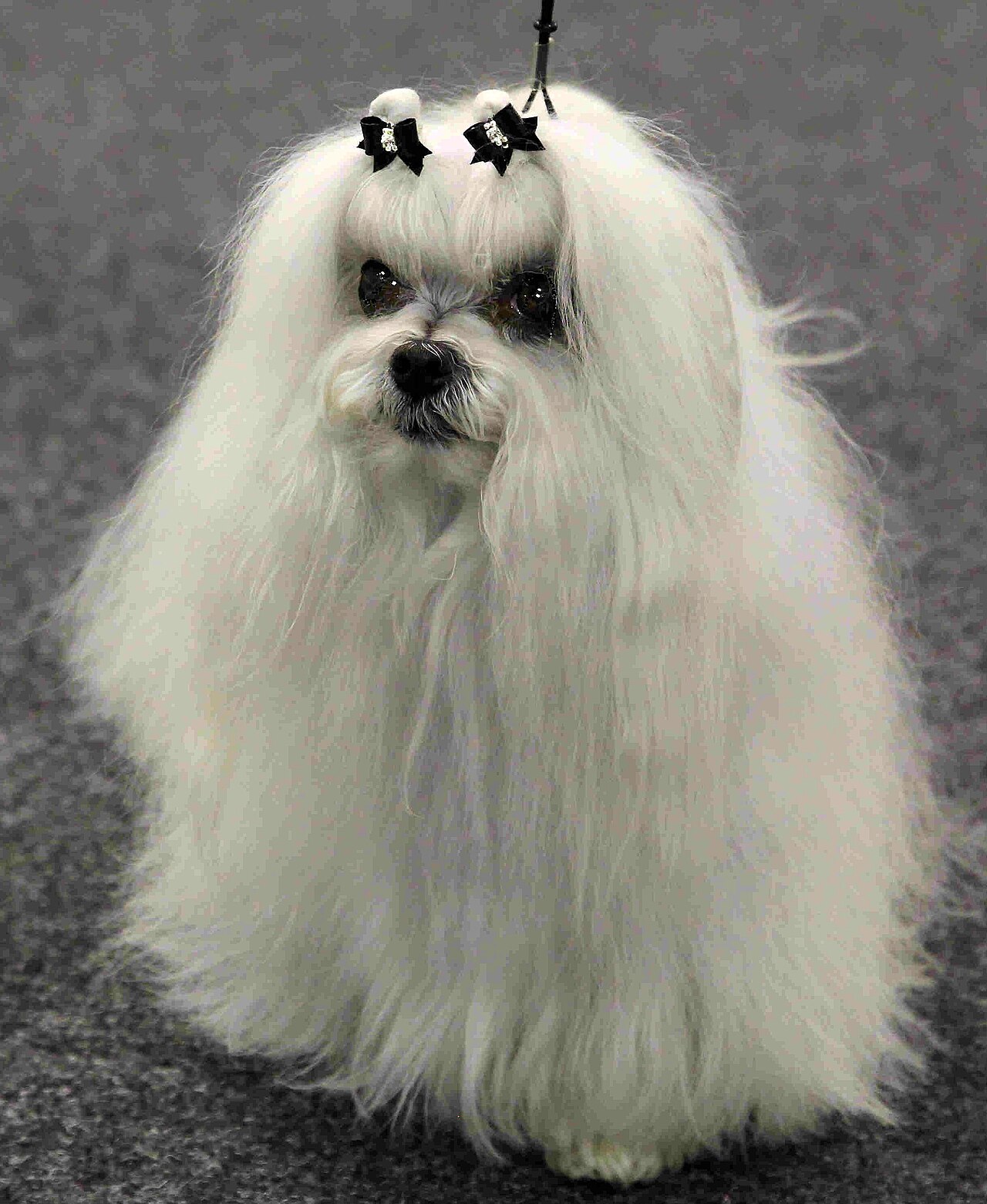
Figure: Show Maltese standing on carpet. Chantiquemaltese, Wikimedia Commons

Before choosing a puppy, ask whether the parents were screened for luxating patella and heart anomalies such as patent ductus arteriosus (PDA); bile-acid testing of puppies is recommended to help rule out congenital liver issues such as liver shunt and microvascular dysplasia (MVD).[1] Encephalitis (also called GME) has been reported; no screening test is available yet, and the American Maltese Association works with researchers.[1] As in all toys, dental care matters.[1] These are listed watch-points and screening directions—not a bedside diagnosis or health guarantee for any dog. When buying or adopting, ask what tests and vet records exist; at home, follow veterinary exams, dentistry, and imaging as advised, and do not treat a refined look as a free pass.
Small size makes the Maltese easy to carry and keeps exercise loads short, but it trades for daily floor-length coat work, dental care, and fall awareness. Apartment routines can include short walks and indoor play; training should stay consistent and positive—acknowledge that the breed is clever at bargaining, without treating stubbornness as a reason to drop rules. Fit depends on whether a household can sustain grooming and supervision—not on seeing “under seven pounds” or “low shedding” alone. Individual temperament, true activity need, and health still rest on living with the dog and veterinary judgment.
References
-
American Kennel Club. Maltese Dog Breed Information. https://www.akc.org/dog-breeds/maltese/
-
American Kennel Club. Official Standard of the Maltese (Approved March 10, 1964). https://images.akc.org/pdf/breeds/standards/Maltese.pdf
-
Wikimedia Commons. File:Maltese1.jpg. https://commons.wikimedia.org/wiki/File:Maltese1.jpg