The Bambino takes its name from a breeding project that set out to combine two physical traits. The preliminary standard issued by CATZ Inc, a New Zealand cat registry, describes a cross between the Sphynx and the Munchkin. The aim was a cat with a coat so sparse it can be hard to see and limbs that are short in proportion to its body. Both traits matter when choosing a place to sleep. A thick cushion may offer plenty of warmth, but a cat that struggles to get onto or down from the windowsill has little opportunity to choose that bed for itself. [1][2][4]
CATZ Inc lists the Bambino as a preliminary breed. Cats in that category can be entered only in its experimental register. They may be exhibited for evaluation and are ineligible for points or awards. The International Cat Association (TICA) made a separate decision at its 2025 annual meeting. Its board voted to end experimental status immediately for several breeds that had not met its registration rules. The Bambino was on that list. An old show photograph can document that a cat was exhibited under the name at the time. Its standing with a particular association is recorded in that association’s categories and decisions. [2][3]
Short limbs in proportion to the body
To see the proportions, compare the distance from shoulder to hip with the distance from shoulder to front paw. The CATZ Inc standard describes a medium to slightly long body, a broad chest and a rounded belly. The hind legs may be a little longer than the front legs. Two photographs from a show in Vantaa, Finland, show the same cat, Monti Rey Admiral Le Grand Oray. In the colour photograph, the handler supports the chest with one hand and the hind feet with the other, giving a clear view of the forelegs against the length of the body. In the black-and-white photograph, the cat has bent its forelegs, and the skin folds at the side of the neck and around the elbows are easier to see. [1][10][11]
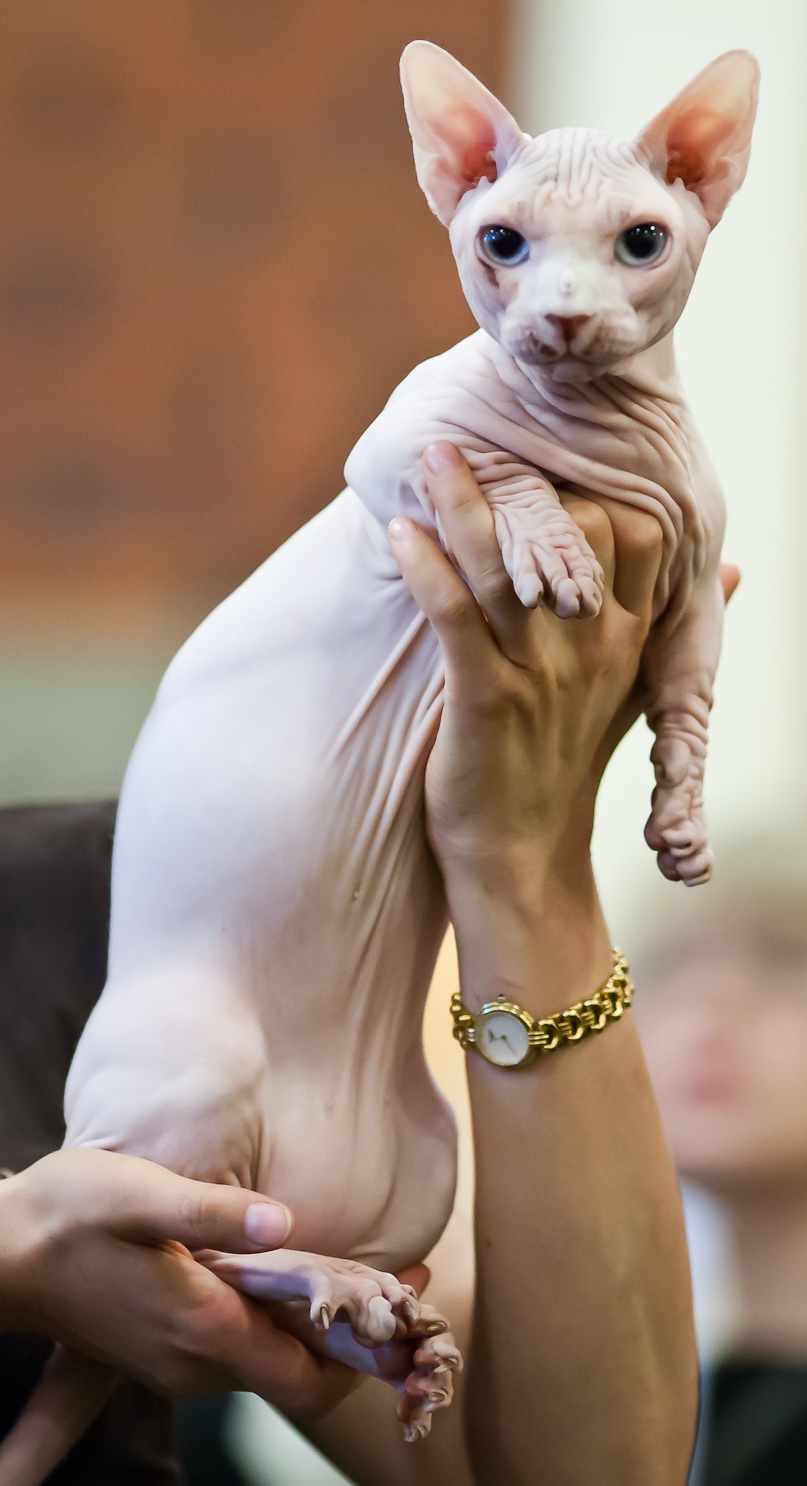
The Bambino’s forelegs are short in proportion to its body. Heikki Siltala, catza.net[10]
At home, watch how the cat gets around with all four paws on the floor. Follow a familiar route. What does the cat have to step over between its bed and its water bowl? How high must it lift a paw to enter the litter box? How does it get down from a favourite perch? Try a bed with a low entrance in a spot away from draughts. If the cat likes to sit up high to watch people, a wide, stable step can give it a place to pause on the way. Once the step is in place, watch whether the cat uses it on its own and whether it hesitates when turning or climbing down. It should be as easy to leave a warm spot as it is to enter it. [4][5]
A short-legged cat still needs places to hide and watch, and chances to stalk, chase and catch things. Draw a wand toy along the floor and around the corner of a cardboard box. Give the cat time to crouch, wait and pounce. In a home with several cats, pay attention to who can use each route. If another cat stretches out at the foot of the step, can the Bambino still walk away, reach water or find somewhere quiet? Separate, accessible places for food, water, litter boxes and rest give the cat more choice than grouping everything around one low shelf. [4][5]
How do you care for the skin between the folds?
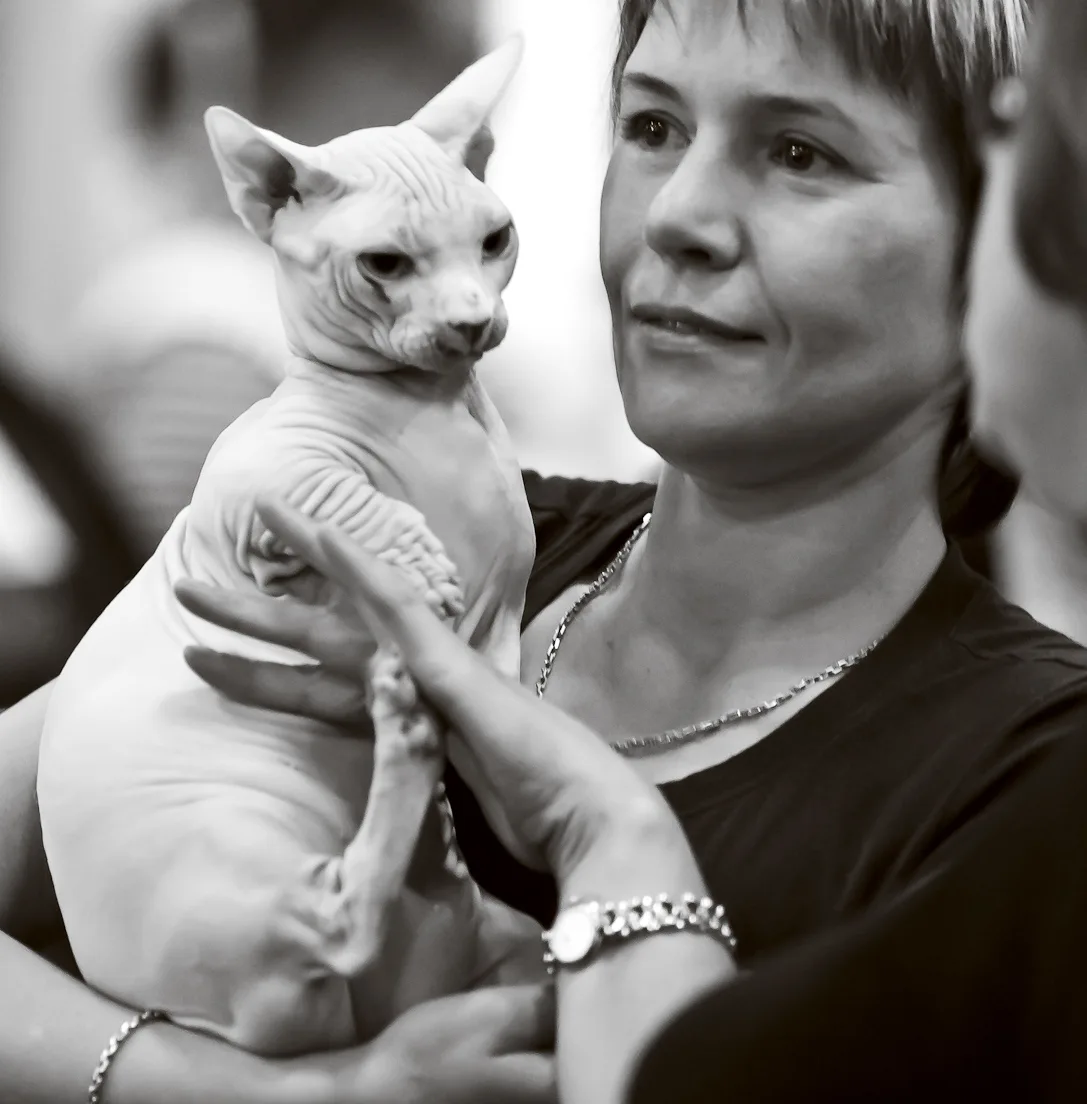
Skin folds form as the foreleg bends. Heikki Siltala, catza.net[11]
The Bambino is often called hairless, though the preliminary standard allows a covering of very fine down. Sometimes the hairs are easier to see along the rim of a side-lit ear than across the body. With little coat to absorb skin oils, oil can remain on the surface and build up between folds or around the claws. As you handle the cat, get to know which folds are usually there, which places tend to feel oily and where the cat is comfortable being touched. A change in a familiar spot then becomes easier to notice. [1][4][6]
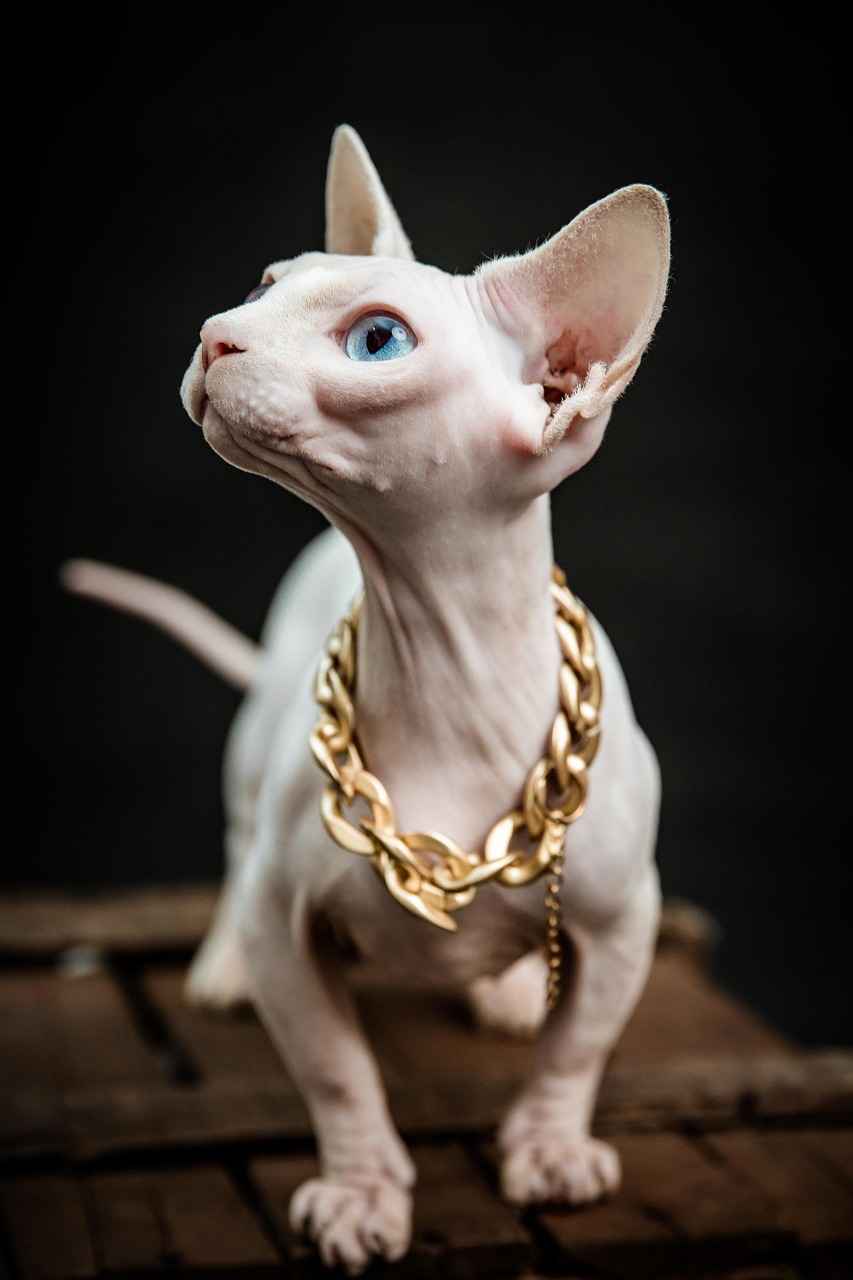
Fine hairs catch the light along the ear rim. petfoto, Pixabay[12]
An oily mark on the bedding is a cue to look at the part of the cat that usually rests against it. If cleaning is needed, notice whether oil collects in one spot or keeps building up in several places. That detail can help you and your vet decide how to clean the skin and how often. Normal folds open out as the cat changes position. There is no need to rub at a crease to make it disappear. Arrange a veterinary examination if an area stays red, the skin breaks, or the cat repeatedly licks or scratches it or pulls away when touched. Tell the vet where the change started, how long it has lasted and which cleaning products you have used. That information is more helpful than simply bathing the cat more often. [4][6]
A coat helps keep a cat warm by trapping a layer of air next to the skin. Veterinary experts at Utrecht University also point out that a Bambino’s exposed skin is vulnerable to injury and sunburn. A warm bed need not be in direct sunlight. Choose a spot away from draughts, put down soft, washable bedding and leave a sheltered place to rest nearby. If the cat likes to watch from a window, give it an easy route back into the shade so it can leave the sun whenever it chooses. [4][6]
What does the evidence tell us about short limbs?
An imaging study measured the limbs of five cats with inherited disproportionate dwarfism and compared them with those of cats with typical skeletal proportions. The researchers found differences in bone alignment in both the forelimbs and hindlimbs of the short-legged cats. For example, the radius, one of the two bones in the forearm, was twisted outwards. A difference in visible leg length can therefore be accompanied by a difference in the angles of the bones. Only two of the short-legged cats had MRI scans of the spine. The authors concluded that how often intervertebral disc degeneration occurs remains an open question. The study gives no disease rate for Bambinos, and a photograph of a cat standing cannot tell us whether that cat is in pain. [7]
Britain’s Governing Council of the Cat Fancy (GCCF) discusses the Munchkin, the Minuet and other dwarf breeds together in its account of breeds it does not recognise, citing reported health problems. The Feline Veterinary Medical Association approaches the question through responsible breeding and opposes selecting for appearance at the expense of a cat’s health and comfort. For a Bambino already living in your home, the most useful comparison is with that cat’s own habits. Does it now go around a step it once used every day? Does it pause several times at a litter box it used to enter easily? If the change persists, describe both the familiar movement and what you see now. That gives the vet a specific difficulty to investigate. [4][8][9]
References
-
CATZ Inc. BAMBINO — Preliminary Standard.
-
CATZ Inc. Breed Categories.
-
TICA. Minutes of TICA Board of Directors - 2025 Annual Meeting. 2025. Page 2, item 8.
-
Universiteit Utrecht, Faculteit Diergeneeskunde. Fokken van designerkatten als de Bambino Sphynx. 2018.
-
Feline Veterinary Medical Association. New Feline Veterinary Medical Association Position Statement Reimagines Life for Indoor Cats. 2025.
-
VCA Animal Hospitals. Sphynx.
-
GCCF. Unrecognised Breeds.
-
Feline Veterinary Medical Association. Responsible Breeding in Feline Medicine. 2024.
-
Heikki Siltala. Monti Rey Admiral Le Grand Oray (BAM), photo 157066. catza.net.
-
Heikki Siltala. Monti Rey Admiral Le Grand Oray (BAM), photo 157065. catza.net.
-
petfoto. Hairless Sphynx cat with blue eyes and a gold chain against a dark background. Pixabay.