
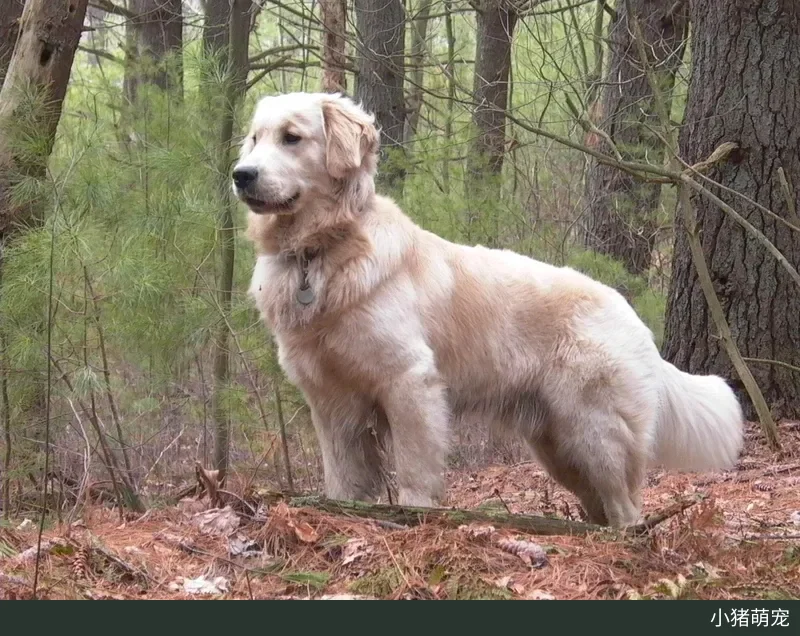
A light-gold adult Golden Retriever resting on a lawn. Photo: Santiago Samaniego (lamimesis); source: Flickr; license: CC BY 2.0.
The Golden Retriever was born in the nineteenth-century Scottish Highlands as a gundog that fetched game from land and water; today it more often appears as a guide dog, search-and-rescue dog, and family companion. It is sturdy, friendly, and cooperative—but needs plenty of daily exercise and regular brushing, and owners must watch long-term risks around weight, joints, eyes, and tumors.
Origins and breed recognition
The Golden’s story begins at Guisachan estate in Inverness-shire, Scotland. The estate’s owner, Dudley Marjoribanks—later the first Lord Tweedmouth—kept decades of breeding notes in a leather-bound book. Per pedigrees compiled by the Golden Retriever Club of America (GRCA), in 1865 he bought a yellow retriever named Nous from a Brighton cobbler; The Kennel Club notes that this yellow dog came from Wavy Coated Retriever lines. An AKC history article records that three years later Nous was bred to a Tweed Water Spaniel named Belle (now extinct); the 1868 litter’s Cowslip, Crocus, Primrose, and others are treated as the earliest Goldens; both The Kennel Club and GRCA record four yellow puppies in that litter.
The Kennel Club notes that later breeding also brought in Bloodhound and Irish Setter blood. An early romantic tale that Goldens descended from Russian circus dogs faded only after Lord Tweedmouth’s estate records were published in Britain’s Country Life in 1952 and the pedigree evidence took the field.
On recognition, The Kennel Club page states the breed was accepted in 1913 as the “Yellow or Golden Retriever,” and after the Golden Retriever Club formed in 1920 the name Golden Retriever was fixed (sources disagree on the British recognition year; this article follows The Kennel Club page). The American Kennel Club (AKC) recognized the breed in 1925 and completed the first registration that November. The Fédération Cynologique Internationale (FCI) formally recognized it on 2 December 1954, placing it in Group 8, Section 1 Retrievers, with Great Britain as country of origin and a working-trial requirement.
Appearance and temperament
Goldens are balanced, powerful medium-large dogs. Per the AKC standard, dogs stand 23–24 inches (about 58–61 cm) at the withers and bitches 21½–22½ inches (about 55–57 cm); weight is 65–75 lb (about 29–34 kg) for dogs and 55–65 lb (about 25–29 kg) for bitches. The current FCI standard (published 8 September 2026) sets dogs at 56–61 cm and bitches at 51–56 cm, with no weight listed. The head is broad, eyes deep brown, expression kind; the tail continues the line of the croup, and the AKC standard calls its swing “merry action.”
The trademark golden coat is double: an outer coat straight or slightly wavy and lying close to the body; a dense, water-resistant undercoat. Longer feathering sits on the front of the neck, the backs of the forelegs, the backs of the thighs, and under the tail. On color, FCI accepts any shade of gold or cream, but not red or mahogany, with only a little white allowed on the chest; the AKC standard wants rich, lustrous gold and finds very light or very dark body color undesirable. So dogs all called “Golden Retrievers” can differ in shade between countries’ show rings.
Temperament is why Goldens are so loved. The FCI standard describes them as “biddable, intelligent and possessing natural working ability… kindly, friendly and confident”; the AKC standard says “friendly, reliable, and trustworthy,” and treats unprovoked aggression or extreme shyness as out of breed character. The AKC breed page also notes that adults keep a puppy-like playfulness. PDSA says well-socialized Goldens usually get along with children and other pets, but even a gentle dog has limits—supervise around kids. Remember: standards describe the ideal; each dog’s temperament also depends on genetics, early experience, and daily life.
A male Golden named Tucker standing in profile, showing balanced build, neck and leg feathering, and a plumed tail. Photo: Edward (from Boston, USA); source: Wikimedia Commons; license: CC BY 2.0.

Exercise, training, and daily care
Do not let the gentle manner fool you—at heart this is still a working dog bred to enter water and retrieve. The Kennel Club (UK) lists daily exercise as “more than 2 hours”; PDSA also recommends at least 2 hours a day, ideally spread out, including walks, free running, play, and training. AKC warns that under-exercised Goldens often develop frustrating behaviors; they can join you for long runs or bike rides, but have a veterinarian assess bones and joints before high-intensity or high-impact work. Swimming and retrieving are almost instinct; agility, obedience, and tracking also suit them well.
On training, Goldens are smart and eager to please; AKC finds them relatively easy to train and advises gently exposing them to many people, places, and situations between about 7 weeks and 4 months, plus puppy classes. PDSA recommends reward-based positive training and notes Goldens bore easily—they need mental work as well as physical outlet. Puppies chew and mouth a lot, especially while teething; that is not aggression—redirect with positive methods. PDSA also advises not leaving a dog alone more than 4 hours.
Shedding is another constant. AKC notes Goldens blow coat heavily once or twice a year and shed moderately year-round; brush thoroughly with a pin brush once or twice a week normally, daily during coat blow. PDSA recommends at least three times a week and warns against clipping the coat short unless a veterinarian advises it, so temperature regulation is not impaired. After baths, wait until the coat is fully dry before brushing; trim nails regularly.

A Golden Retriever swimming; entering water is almost instinct for the breed. Photo: Johnathan Nightingale (Johnath); source: Flickr; license: CC BY-SA 2.0.
Common health issues
The AKC breed page lists screens responsible breeders should do: hip and elbow dysplasia; eye diseases such as juvenile cataracts, pigmentary uveitis, and progressive retinal atrophy; and heart disease such as subvalvular aortic stenosis; breed-club recommendations also include neuronal ceroid lipofuscinosis (NCL5) DNA testing. PDSA adds multifocal retinal dysplasia, retinal pigment epithelial dystrophy, glaucoma, and ichthyosis that thickens paw pads and leaves greasy skin flakes, and recommends yearly eye exams for breeding dogs. AKC also advises weekly ear checks and frequent tooth brushing. When welcoming a puppy, ask the breeder for the parents’ health-screening records.
Cancer is the research focus most often discussed for Goldens. Morris Animal Foundation’s Golden Retriever Lifetime Study enrolled 3,044 U.S. Goldens from June 2012 to April 2015, aged 6 months to 2 years at entry, and follows their lives and disease with emphasis on hemangiosarcoma, lymphoma, osteosarcoma, and high-grade mast cell tumors. A 2022 PLOS One cohort profile reported that by 31 May 2021, 352 study dogs had died, of which 70% (248) were attributed to cancer; the paper also cites a 1998 Golden Retriever Club of America survey: among 420 deaths in 1,444 Goldens, about 61% were due to cancer. These figures come from a U.S. volunteer cohort and are interim results to that date—not each Golden’s lifetime risk.
UK data offer another view. The Royal Veterinary College VetCompass team, in a BSAVA 2018 Congress abstract, analyzed 5,439 Goldens seen in UK primary-care practices in 2013 and sampled records for 3,999: the most common problems were overweight or obesity (9.9%), otitis externa (8.1%), osteoarthritis (7.5%), and periodontal disease (7.2%). During the study 589 dogs died; median lifespan was 12.4 years for both sexes, and leading cause-of-death categories included spinal disease (15.2%) and neoplasia (13.2%). That abstract differs from the U.S. study in population and recording methods; cancer shares differ sharply and should not be compared directly. On lifespan, AKC gives 10–12 years; The Kennel Club and PDSA write “over 10 years.”
Weight management is something owners can do every day. PDSA notes The Kennel Club places Goldens in “Category 2,” watching legs that are short relative to the body and a tendency to overweight; Goldens are famously food-motivated—guard bins and tables. Both AKC and PDSA advise calorie control and modest treats; PDSA’s guide is treats under 10% of daily calories. If you see stiff gait, frequent ear scratching, cloudy eyes, or unexplained lumps, seek veterinary care promptly; this article is educational and does not replace a diagnosis.
References
-
American Kennel Club: Golden Retriever Dog Breed Information
-
American Kennel Club: Golden Retriever History: Where the Breed Originated
-
FCI: FCI-Standard N° 111 GOLDEN RETRIEVER (current standard published 8 September 2026)
-
Golden Retriever Club of America: Jeffrey Pepper, The Origins of the Golden Retriever Revisited
-
Labadie J, et al. Cohort profile: The Golden Retriever Lifetime Study (GRLS). PLOS One, 2022-06-09