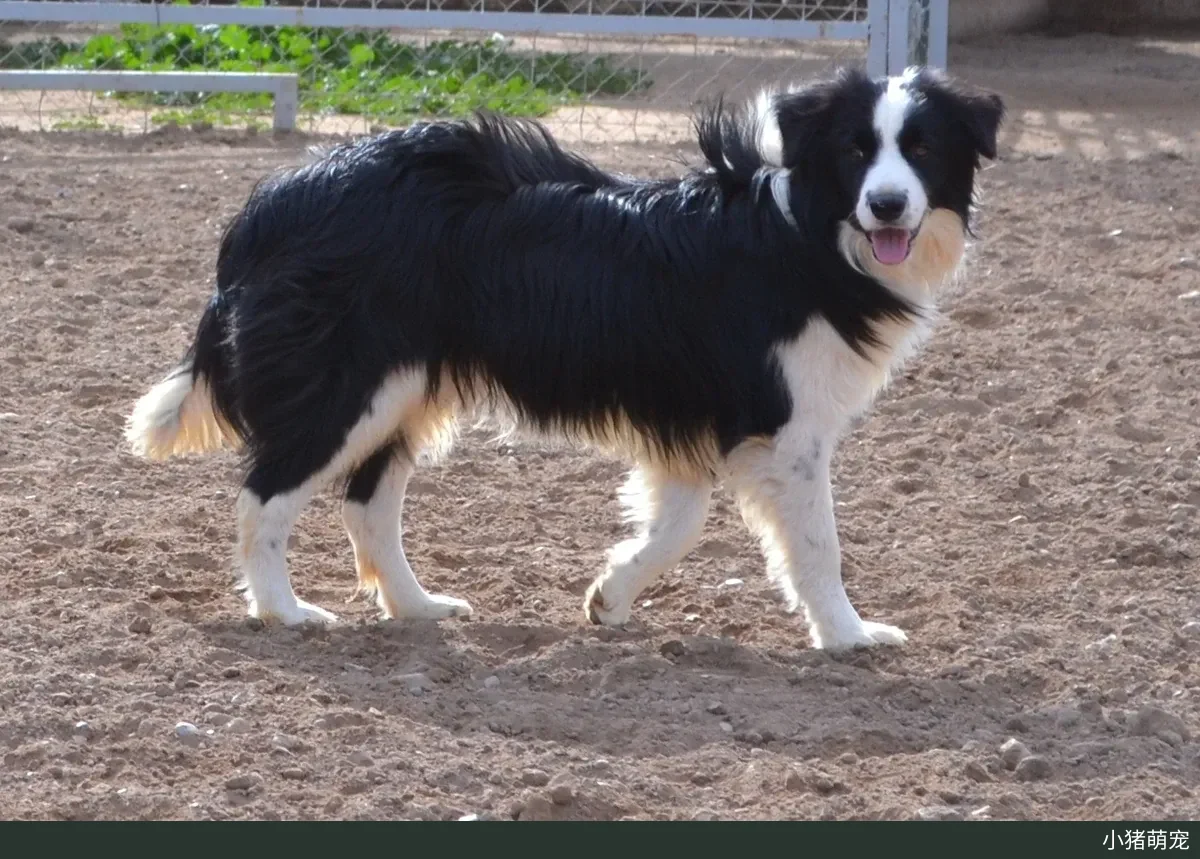
Black-and-white male Border Collie “Batman.” Photo: Rocbag, source: Wikimedia Commons, license: CC BY-SA 4.0.

The Border Collie is a medium herding dog from the Scotland–England border country, known for wide outruns that gather sheep and a focused “eye” that controls the flock; both FCI and AKC place it in the herding group. It is intelligent, energetic, and trainable, but needs heavy daily exercise and mental work. Drawing on kennel-club standards and veterinary sources, this article covers origins, appearance, temperament, exercise and training needs, and common health issues.
Origins and classification
The preface to the AKC breed standard says the Border Collie originated in the border region between Scotland and England. Local shepherds selected for two traits: biddable stock sense—working under command—and the ability to work a full day over rough ground. Long selection produced a distinctive style: a wide outrun behind the flock, then gathering and bringing stock to the handler; control relies on the intense stare called “eye,” paired with a crouched stalking gait. The standard stresses that this working intensity, drive, and trainability matter as much as conformation, and notes that Border Collies still herd worldwide. The AKC breed page also notes that “collie” is a Scottish dialect word for a sheepdog, and that the breed was once called the “Scotch Sheep Dog.”
In kennel-club classification, FCI Standard No. 297 lists the Border Collie as a Group 1 (Sheepdogs and Cattle Dogs, except Swiss Cattle Dogs), Section 1 Sheepdogs, originating in Great Britain, with a working trial required; FCI officially recognized the breed on 27 September 1977, the current official standard dates from 24 June 1987, and the English version is dated 28 October 2009. AKC recognized the Border Collie in 1995 in the Herding Group; the current AKC standard was approved 21 April 2015 and effective 1 July 2015. The two standards are not identical in every detail; differences below are noted separately.
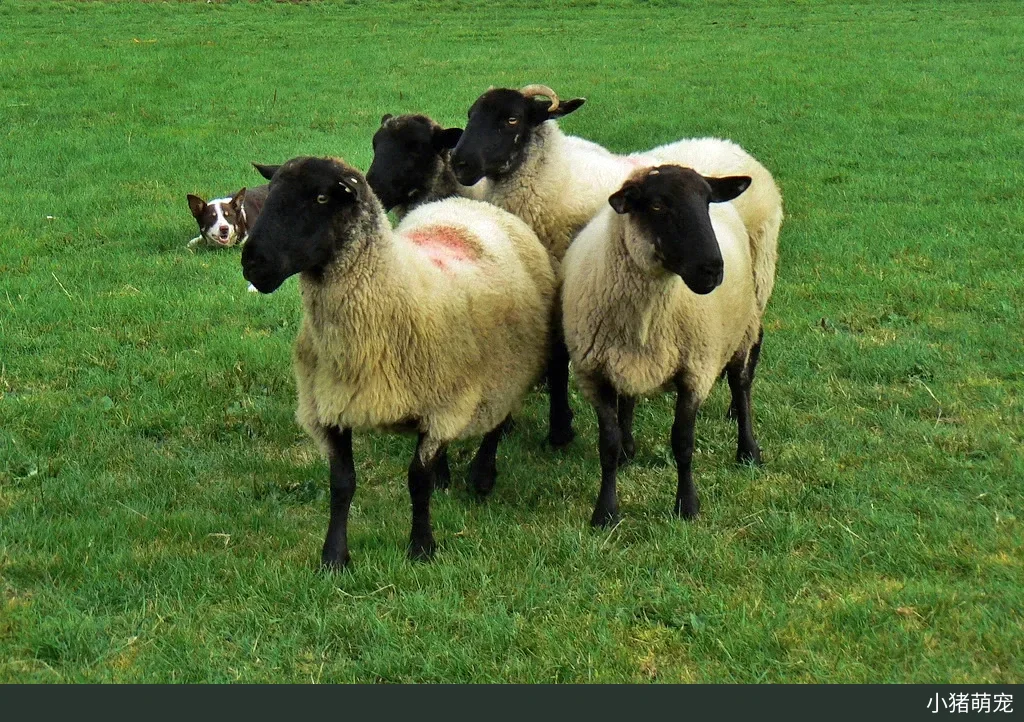
A Border Collie at the Ballingeary Show sheepdog trial in County Cork, Ireland. Photo: mozzercork, source: Wikimedia Commons, license: CC BY 2.0.

Size and coat
The AKC standard describes the Border Collie as a balanced, athletic medium dog with solid muscle; in profile, body length is slightly greater than height at the withers, about 10:9. Ideal height is 19–22 inches (about 48–56 cm) for males and 18–21 inches (about 46–53 cm) for females; the AKC breed page gives weight as 30–55 lb (about 14–25 kg) and expected lifespan 12–15 years. The FCI standard only sets an ideal male height of 53 cm (21 inches), slightly less for females, with no weight specified. As a real-world reference, the UK VetCompass project summarized 61,802 Border Collies seen in primary veterinary practice in 2019: median adult weight 21.0 kg (bitches 19.5 kg, dogs 22.4 kg)—UK clinical reality, not the breed standard.
Coat comes in two types: AKC calls them rough and smooth; FCI medium-long and short. Both are dense, weather-resistant double coats; seasonal shedding is normal. Medium-long coats have furnishings on the forelegs, hindquarters, chest, and belly, with short smooth hair on the face, ears, and front of the legs. On color, AKC accepts all colors and combinations; FCI allows many colors, but neither wants white to predominate. Eyes are oval and set fairly wide: FCI requires brown, with merles allowed one, both, or part blue; AKC accepts any eye color but does not prefer blue eyes in non-merles. Ears are erect or semi-erect and mobile. For care, AKC suggests brushing once or twice a week with a pin brush, daily in heavy shed, and regular nail trims.
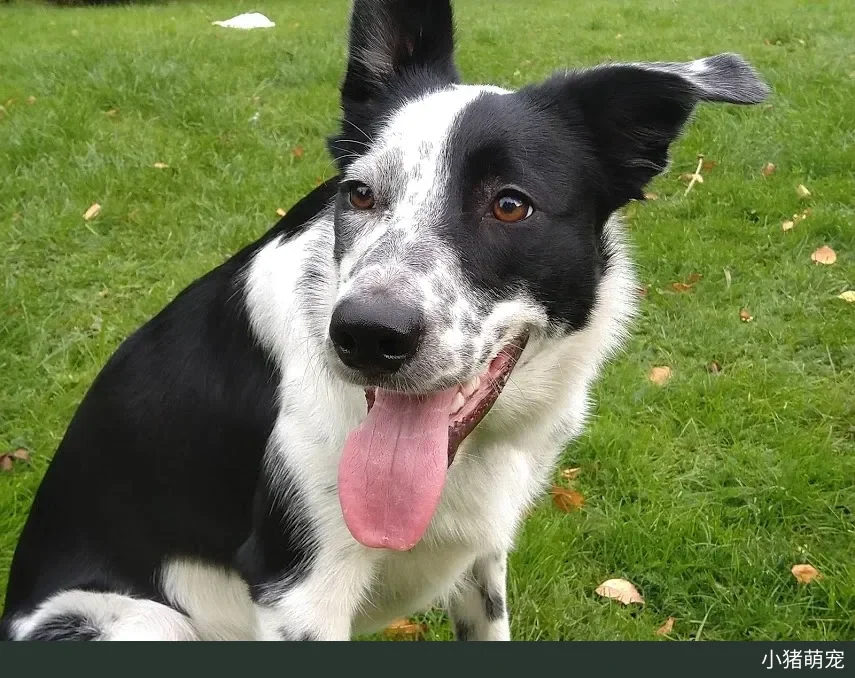
A 9-month-old smooth-coated Border Collie. Photo: Diepizza, source: Wikimedia Commons, license: CC BY-SA 4.0.

Temperament, exercise, and training
The FCI standard describes temperament as tenacious, hard-working, highly biddable, keen, alert, responsive, and intelligent—neither nervous nor aggressive; marked aggression or excessive shyness is a disqualifying fault. The AKC standard is similar: energetic, intelligent, and keen; affectionate with familiar people, possibly reasonably reserved with strangers, and should stand its ground when approached without showing fear or resentment. These are ideal temperaments and population tendencies in the standards; any one dog still depends on breeding, early socialization, and training history.
On exercise, AKC calls the Border Collie a high-drive athletic dog whose daily needs go far beyond a neighborhood walk or a run in the yard; dogs not working stock need vigorous exercise every day and suit active owners who are not often away for long stretches. They commonly compete in herding, obedience, agility, rally, tracking, and sports such as disc and flyball. The AKC breed page places them among breeds that “need a job or activity”: without mental stimulation they invent their own work—and that is usually not what owners want. On training, AKC recommends active socialization from puppyhood to about seven months, exposing the dog to many people and environments; obedience should start early and continue for life. Because of the drive to herd animals and people, they suit households with older children who know how to live with dogs.
Common health issues
AKC considers the Border Collie overall a fairly hardy breed while listing conditions responsible breeders should screen for, including hip dysplasia, deafness, epilepsy, Collie eye anomaly (CEA), neuronal ceroid lipofuscinosis (NCL), and trapped neutrophil syndrome (TNS). Recommended tests listed on the AKC page from the national breed club are hip evaluation and an ophthalmologist exam, plus regular ear checks for infection and regular tooth brushing. UC Davis Veterinary Genetics Laboratory offers genetic tests for the breed including CEA (a hereditary disorder of intraocular structure development), multidrug sensitivity (MDR1, from an ABCB1 deletion—dogs with two copies can show neurotoxicity with certain common drugs, and some with one copy may too), and progressive retinal atrophy PRA-prcd. The lab page lists the tests without giving carrier or prevalence rates in Border Collies.
On actual disease experience, The Kennel Club’s pedigree breed health survey collected information on 1,005 living and 119 deceased Border Collies: median lifespan of deceased dogs was 12 years; among living dogs, 75.32% reported no disease, with the most common being arthritis (2.99%), lipoma (2.69%), hip dysplasia (1.79%), and epilepsy (1.69%). Owner-reported, UK purebred sample, possible selection bias, and no survey year on the file—so use as reference only, not exact prevalence.
This section is breed-level summary and cannot judge any one dog’s health. When buying or adopting, ask breeders or organizations for hip, eye, and genetic screening records on the parents; if the dog shows signs, needs medication (especially MDR1-related drug sensitivity), or you need help reading genetic results, consult a veterinarian.
References
-
American Kennel Club. Border Collie Dog Breed Information. Page undated; accessed 2026-10-24. https://www.akc.org/dog-breeds/border-collie/
-
American Kennel Club. Official Standard of the Border Collie. Approved 2015-04-21, effective 2015-07-01, in Herding Group Breed Standards. https://cdn.akc.org/PDF/Herding_Group_7-15.pdf
-
Fédération Cynologique Internationale. FCI-Standard N° 297 BORDER COLLIE. English version 2009-10-28; official valid standard published 1987-06-24. https://www.fci.be/Nomenclature/Standards/297g01-en.pdf
-
Fédération Cynologique Internationale. BORDER COLLIE (297) breed directory page. Accessed 2026-10-24. https://www.fci.be/en/nomenclature/BORDER-COLLIE-297.html
-
UC Davis Veterinary Genetics Laboratory. Border Collie. Page undated; accessed 2026-10-24. https://vgl.ucdavis.edu/breed/border-collie
-
O'Neill DG, McMillan KM, Church DB, Brodbelt DC. Dog breeds and conformations in the UK in 2019: VetCompass canine demography and some consequent welfare implications. PLoS ONE, 2023, 18(7): e0288081. https://doi.org/10.1371/journal.pone.0288081
-
The Kennel Club. Border Collie Pedigree Breed Health Survey. File year not stated. http://www.bordercollieclub.com/documents/KC%20BC%20Breed%20Health%20Survey.pdf
-
Piggy Pets · Welcome to my pet planet