The World Cat Federation (WCF) lists the breed as the British Longhair, abbreviated BLH. To see its shape clearly, start where the hair leaves the features in view. The ears sit wide apart, with broad bases and slightly rounded tips. The large, round eyes are also widely spaced. Full cheeks and prominent whisker pads give the short muzzle a distinct outline. In profile, the rounded forehead curves gently into a short, broad, straight nose. Beneath the coat, the standard describes a medium to large, compact cat with a broad chest, shoulders and back, muscular legs and thick, round paws.[1]
Look at how the hair sits on that frame. The WCF describes a long, smooth, very dense coat. The undercoat gives it enough support to stand away from the body. Longer hair may form a ruff around the neck and hang like loose breeches down the backs of the hind legs. The tail itself is thick, with a rounded tip, and its abundant hair fans out when the cat rests it to one side. Trace the outline of a seated British Longhair from ruff to flank to tail and your eye follows the ends of the hairs, some distance from the skin.[1]
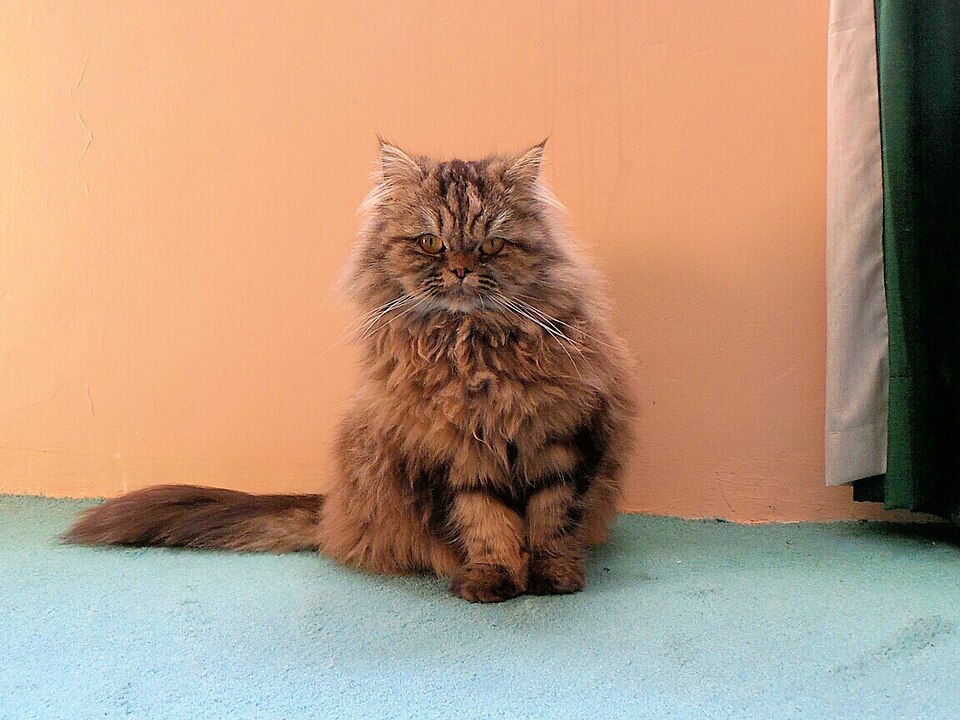
Figure: The British Longhair’s bushy tail. Brn370z, Wikimedia Commons[6]

A coat can look tidy across the back while tangles are forming underneath. Keep a long-toothed metal comb suitable for medium to long hair within reach. For a daily comb-through, let the cat come to you and begin somewhere it likes being touched, perhaps across the shoulders. Part a small section with your fingers so the teeth reach into the coat, then comb gently in the direction the hair grows. When the comb passes easily through that section, move to the next. Once you have done one side, let the cat shift its own weight or turn before working on the other.[2]
Feel behind the ears, under the forelegs and along the backs of the thighs. When the cat lies with its paws tucked in, the ruff can drape over the forelegs. A hand stroking down the chest can pass straight over the fold where the upper leg meets the body. Wait for the cat to stand or stretch, then see whether the hair in that fold parts easily. Work on a small tangle a few hairs at a time and ease off if the skin moves with the comb. Leave a tight mat against the skin to a professional groomer or veterinarian. Scissors slipped underneath can catch the thin skin drawn up into it.[2]
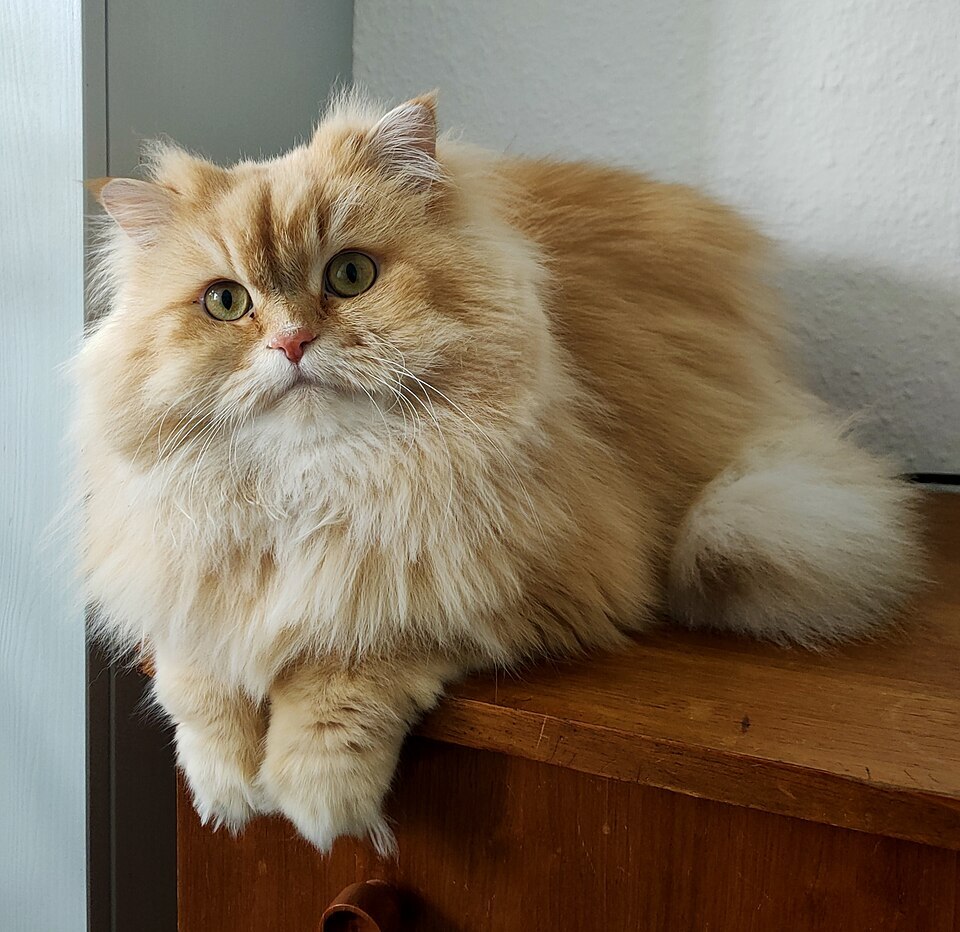
Figure: The British Longhair’s ruff. Fanta3, Wikimedia Commons[7]

A cat may rub its cheek against your hand and still get up when the comb reaches its belly. Follow both cues. Sit beside the cat with a clear path for it to leave, and pause after a small section to see whether it leans in again. If it moves away, put the comb aside and leave the remaining hair for another visit. Some encounters can end with the cheek rub the cat came for. When everyone at home responds consistently, the cat has a say in where it is touched and how long contact lasts, an important part of the feline veterinary association’s advice on indoor life.[3][4]
The next time the cat stretches out on the sofa, notice the distance from its rump to its outstretched front paws. Use that length when choosing a perch. A round bed that looks ample when the cat sits curled up can leave little room to lie on one side, extend a leg or turn around. On a platform with a raised rim, measure the space inside it. Watch whether the perch wobbles on landing, whether the hind paws find firm footing on a turn and whether the cat has an easy route down. A quiet, sheltered hiding place gives it another choice when it wants privacy.[3][4]
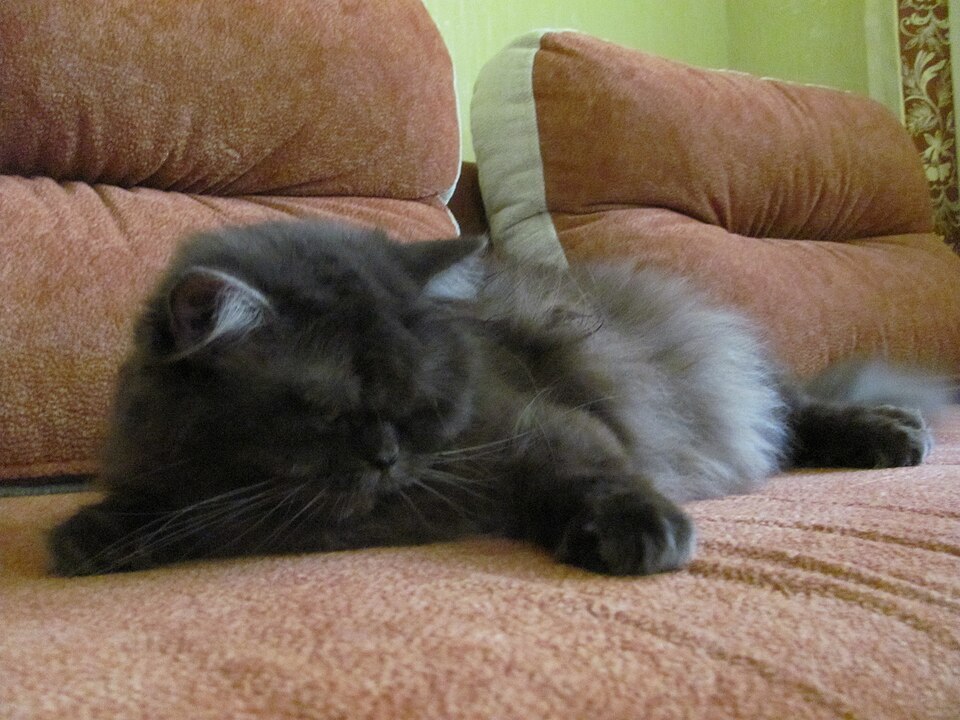
Figure: A British Longhair at full stretch. Fanni 93, Wikimedia Commons[8]

Leave some floor space for stalking, chasing and catching, too. Draw a toy mouse along the floor, let it disappear behind a chair leg, then bring it into view on the other side. Give the cat time to follow and a chance to pin the mouse under a paw. If it watches from across the room, let it choose when to join in. Hunting play is a need British Longhairs share with other indoor cats. Provide scratching surfaces and separate places to eat, drink, use the litter tray and rest. In a household with several cats, watch whether the quieter one can reach each place without having to pass a housemate.[3][4]
One useful thing to learn by touch is how the ribs feel. While the cat stands comfortably, rest your hands on either side of its chest. Let your fingertips settle through the coat and feel the layer of tissue over the ribs. On the World Small Animal Veterinary Association’s feline body condition chart, the ribs of a cat in ideal condition can be felt beneath a slight fat covering, and a waist is discernible behind them. A British Longhair’s broad chest and thick fur can make that waist hard to judge from above. Ask your veterinarian to demonstrate on your cat at a routine visit, and record its weight and body condition score together so you can follow changes over time.[1][5]
Parting the coat each day also gives you a look at the skin. If you find redness beneath a mat, or a spot that used to comb through easily is now painful to touch, stop grooming that area and contact your veterinarian. Describe exactly where it is, when you first noticed it and how the cat reacted as your hand approached and touched the spot. Knowing how your cat usually stands, stretches or leans into a stroke helps you recognise a change that a glance at its still-fluffy coat could easily miss.[2][4]
References
-
[1] World Cat Federation. British Longhair (BLH). Updated 13 August 2023.
-
[2] VCA Animal Hospitals. Grooming and Coat Care for Your Cat.
-
[3] Feline Veterinary Medical Association. New Feline Veterinary Medical Association Position Statement Reimagines Life for Indoor Cats. 28 August 2025.
-
[4] American Association of Feline Practitioners. Your Cat’s Environmental Needs: Practical Tips for Pet Owners.
-
[5] WSAVA Global Nutrition Committee. Body Condition Score. Nine-point chart for cats.