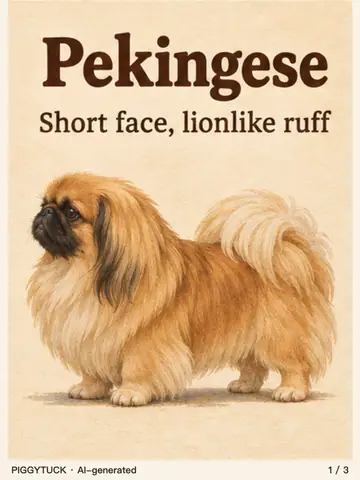
The Pekingese is a small companion dog of Chinese origin in the Toy Group. The compact body is heavier in front, lighter behind, and framed by a mane that gives the dog a lionlike outline. Pekes are often self-assured and independent, forming close bonds with familiar people. They can be quiet around the house and alert to sounds at the door.[1]
These flat-faced lapdogs were once kept by the Chinese imperial household, where stories circulated of the severe punishment for stealing one. Pekes became known in the West after British troops entered Beijing in 1860. They reached the United States in the late nineteenth century and were registered by the American Kennel Club in 1906. A Pekingese was among the few dogs that survived the sinking of the Titanic in 1912.[1]
Envelope head, lion mane, and rolling gait
A Pekingese is compact and stocky, weighing up to about 14 pounds (6.4 kilograms). The wide, flat face has a short muzzle, large dark eyes set apart, and heart-shaped ears that lie against the sides of the head. The long hair around the neck and shoulders forms the mane. The breed comes in a variety of colours, including reds from light golden red to deeper shades.[1][5]
From the side, the pear-shaped body sits low, with a deep chest and sturdy, short forelegs. The elbows stay close to the body while the front feet turn slightly outward. The heavy front and light rear give the shoulders a gentle roll as the dog walks. The long, coarse outer coat covers a thick, soft undercoat, and longer hair fringes the ears, tail, legs and toes. Look at the outline of the shoulders, legs and tail as well as the coat. Actual weight and registration records help confirm what the eye sees.[1][5]
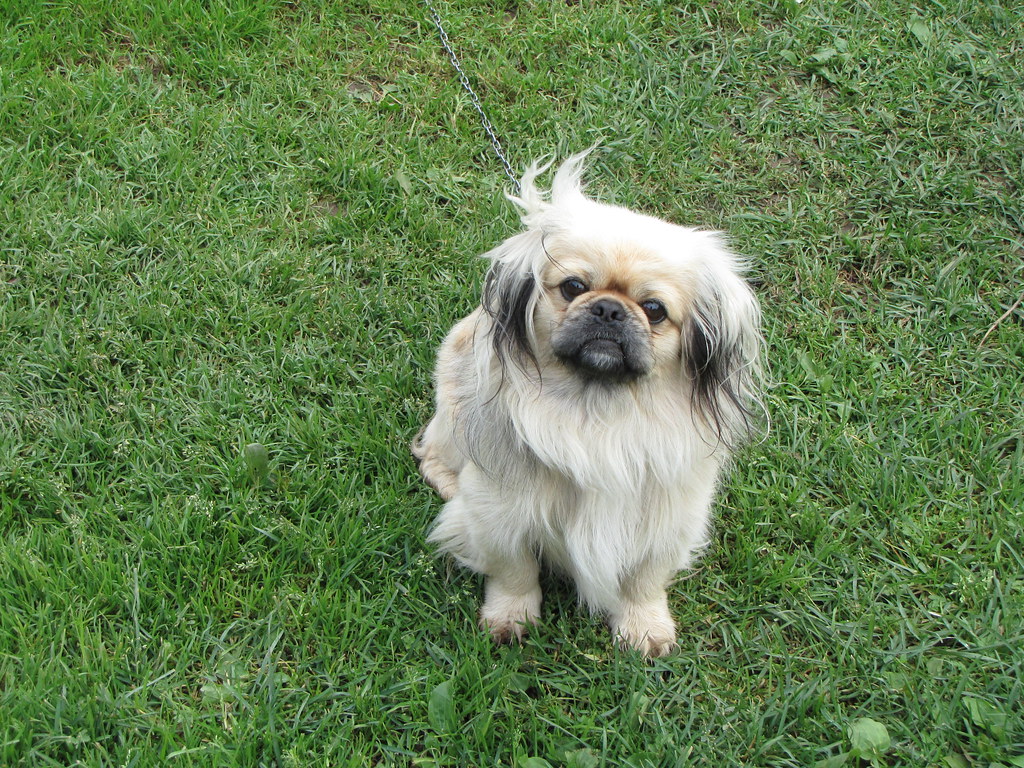
Figure: Cream long-coated Pekingese sitting on grass with flat muzzle and feathered ears. Helmuts Rudzītis, Flickr[2]
Modest exercise and close companionship
Pekes generally need modest exercise. Short walks and play indoors fit into an ordinary day, and willing dogs can take part in canine activities at their own pace. Leave time to sniff and rest on walks, and adjust activity to the dog’s age, condition and how it is moving and breathing that day. Mats on slick floors make frequently used routes easier to walk.[1][6]
A Pekingese can be clever, affectionate and independent. Gentle leash manners, accepting a brush and getting used to handling are useful early lessons. An adult should stay with children and show them how to pet gently, keeping their hands away from the dog’s ears, face and long coat. Introduce other pets gradually and set a bed and bowls away from busy walkways. A Peke may bark briefly to alert the household to an outdoor sound, a habit worth considering when choosing a dog for the home.[1]
Choose a complete food suited to the dog’s age and keep track of its weight. Training treats count toward the day’s food. A long coat can hide changes in body shape, so regular weigh-ins and gently feeling the ribs and waist can help track condition. Keep clean water within easy reach.[1]
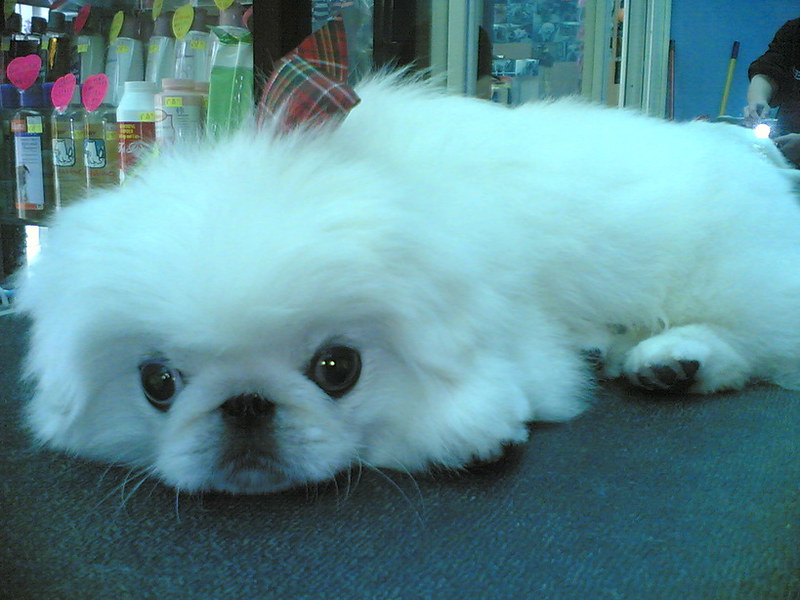
Figure: White long-coated Pekingese lying on a mat, round eyes and short muzzle toward the camera. 紫流, Flickr[3]
Weekly work on the double coat
The Pekingese sheds seasonally and needs at least about an hour of brushing each week. Several shorter sessions can help remove loose hair and prevent mats. Hair tangles readily behind the ears, around the mane and under the front legs. Separate it into small sections and gently work tangles from the ends with a slicker brush or metal comb. Continue along the back and legs, then check between the toes for debris and see whether the nails need trimming.[1]
An occasional bath cleans the coat. Dry it thoroughly afterwards, including the undercoat next to the skin. Persistent moisture or a smell around the ears, or red skin that the dog keeps scratching, warrants a veterinary check. Allow time for both brushing and cleaning up loose hair when deciding how a Pekingese will fit into the household routine.[1]
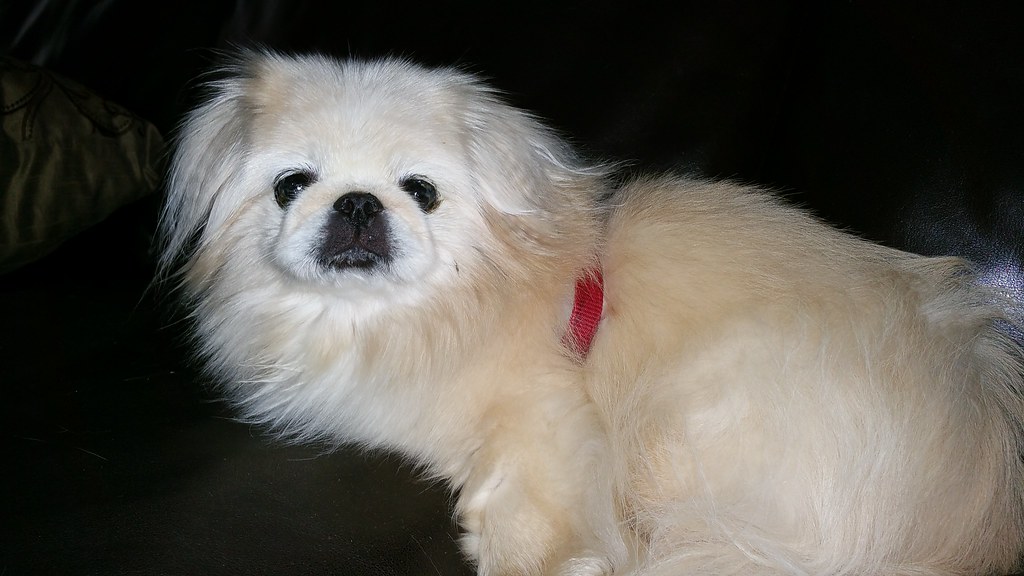
Figure: Cream long-coated Pekingese on a sofa with short muzzle and red collar. Eli Christman, Flickr[4]
Nostrils, eyes, and cooler comfort
When choosing a Pekingese, look for open nostrils on a moderate nose and pay attention to breathing both at rest and after light activity. In hot or humid weather, go out when it is cooler and provide a place to rest and drink. Obvious difficulty breathing calls for emergency veterinary care. Before bringing a puppy home, ask about the parents’ health screening and discuss the records with a vet.[1][6][7]
The short muzzle leaves the eyes relatively exposed. Move pointed toys, branches that jut into paths and other hard objects away from places the dog sleeps or walks. Seek prompt care for sudden squinting, repeated rubbing, redness or unusually watery eyes. Changes in appetite or energy are worth recording too, so the vet can compare them with the dog’s usual behaviour.[1][8]
The envelope-shaped face, lionlike mane and compact pear-shaped body help identify the Pekingese. Everyday fit comes down to modest activity, time for weekly brushing, a cool place to rest, and room in the routine to keep track of weight, breathing and eye health.
References
-
American Kennel Club. Pekingese.
-
Rudzītis, H. Pekingese.
-
紫流. 北京犬.
-
Christman, E. Ellie.
-
American Kennel Club. Official Standard of the Pekingese.
-
Cornell University College of Veterinary Medicine. Brachycephalic Obstructive Airway Syndrome.
-
Cornell University College of Veterinary Medicine. Recognizing and Responding to Canine Respiratory Distress.
-
VCA Animal Hospitals. Corneal Ulcers in Dogs.