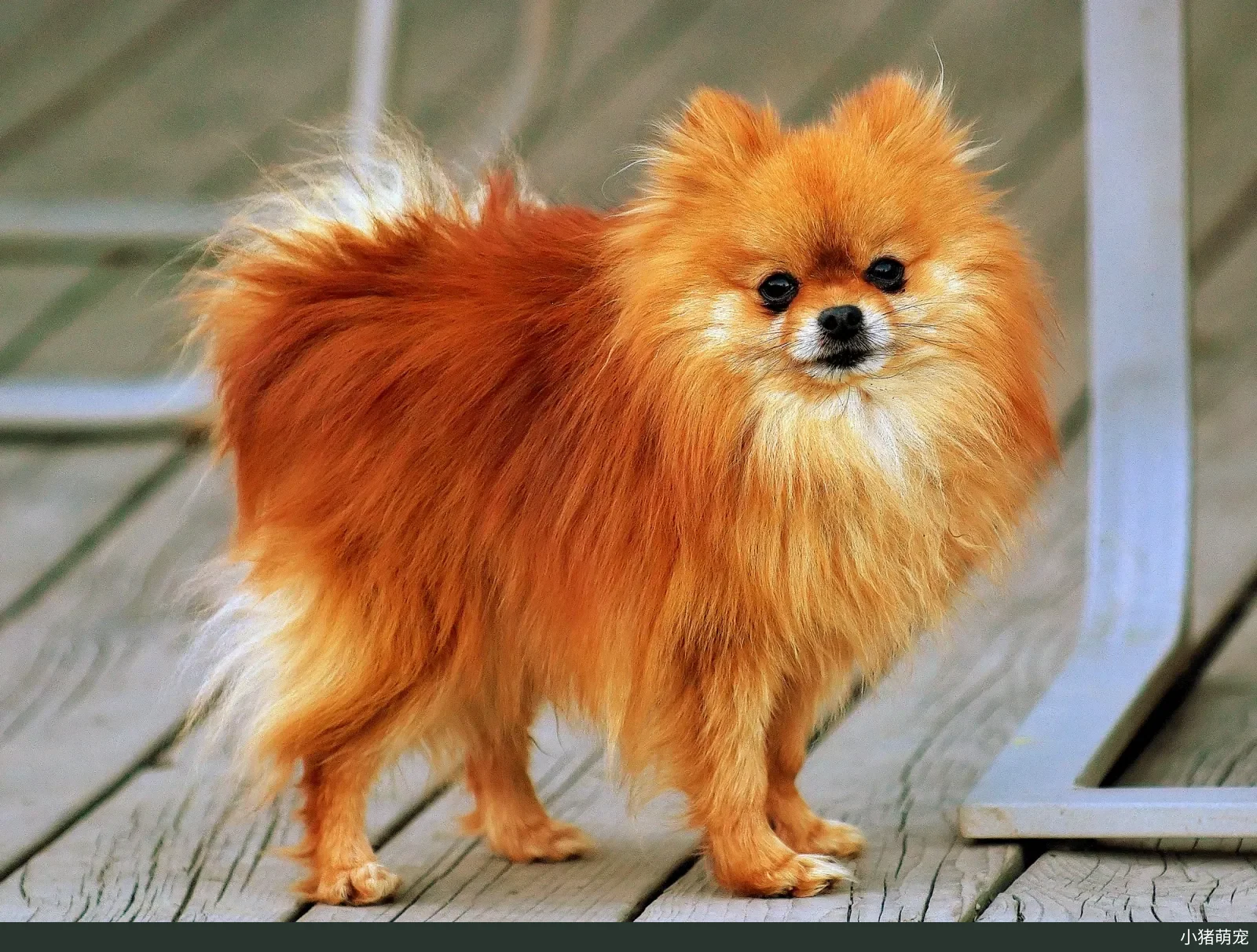
An orange-sable Pomeranian named Coco (photographer’s date: 2 May 2007). Photo: Rob Hanson; source: Wikimedia Commons (originally on Flickr); license: CC BY 2.0.

The Pomeranian is a toy dog that weighs only 3–7 pounds (about 1.4–3.2 kg), yet it still carries the fluffy double coat, small erect ears, and tail curled over the back of northern fox-type dogs. It is alert, trainable, and very attached to its people; it can live in an apartment but still needs daily walks and play. Patellar luxation, tracheal collapse, and other small-dog issues are worth knowing about before welcoming one home.
Origins and name
The Pomeranian’s name comes from Pomerania—a region on the southern Baltic coast that today lies in Poland and Germany. The American Kennel Club (AKC) describes it as a “miniature relative” of the sturdy Arctic fox-type sled dogs, while noting that the name does not necessarily mean the place of origin; it more likely reflects where the breed was gradually bred down in size.
The Fédération Cynologique Internationale (FCI) takes a slightly different line: it lists the Pomeranian as the smallest “toy Spitz / Pomeranian” within the German Spitz (standard No. 97), with Germany as country of origin, in Group 5 “Spitz and primitive types.” The FCI standard’s historical note says the German Spitz is among Central Europe’s oldest breeds, with ancestors tracing to Stone Age “peat dogs”; in non-German-speaking countries the toy Spitz is usually simply called Pomeranian. The current English version of that standard is dated 20 September 2024.
In the United States, the AKC breed page records AKC recognition in 1888; the same page’s history section also says Pomeranians appeared at U.S. shows as early as 1892, with a formal group established only in 1900. Both years appear on the AKC page without further clarification of the two accounts. Unlike the FCI, both the AKC and The Royal Kennel Club (formerly The Kennel Club) place the Pomeranian in the Toy Group.
Looks and coat
Small as it is, the build is distinctly “square.” The current AKC standard (approved 12 July 2011, effective 31 August) describes the Pomeranian as a northern-bred, compact, short-backed, active toy dog, with body length to height at the withers in a 1:1 ratio, weight 3–7 pounds (about 1.4–3.2 kg), and an ideal show weight of 4–6 pounds (about 1.8–2.7 kg). The AKC breed page gives average height as 6–7 inches (about 15–18 cm); the FCI standard specifies 21 cm ± 3 cm at the withers, with weight in proportion to size. The two sets of figures come from different organizations for different purposes and should not be treated as the same ruler.
The coat is what people love most: a short, dense undercoat that pushes out a longer, rather harsh outer coat into a plume; neck and shoulders form a mane-like ruff, and the plumed tail is carried high and flat over the back. The FCI standard describes a fox-like head, almond-shaped dark eyes, and small triangular ears set high, close together, and always erect; accepted colors include white, black, brown, orange, wolf-sable, and others. The AKC notes nearly twenty coat colors, with orange or red the most common.
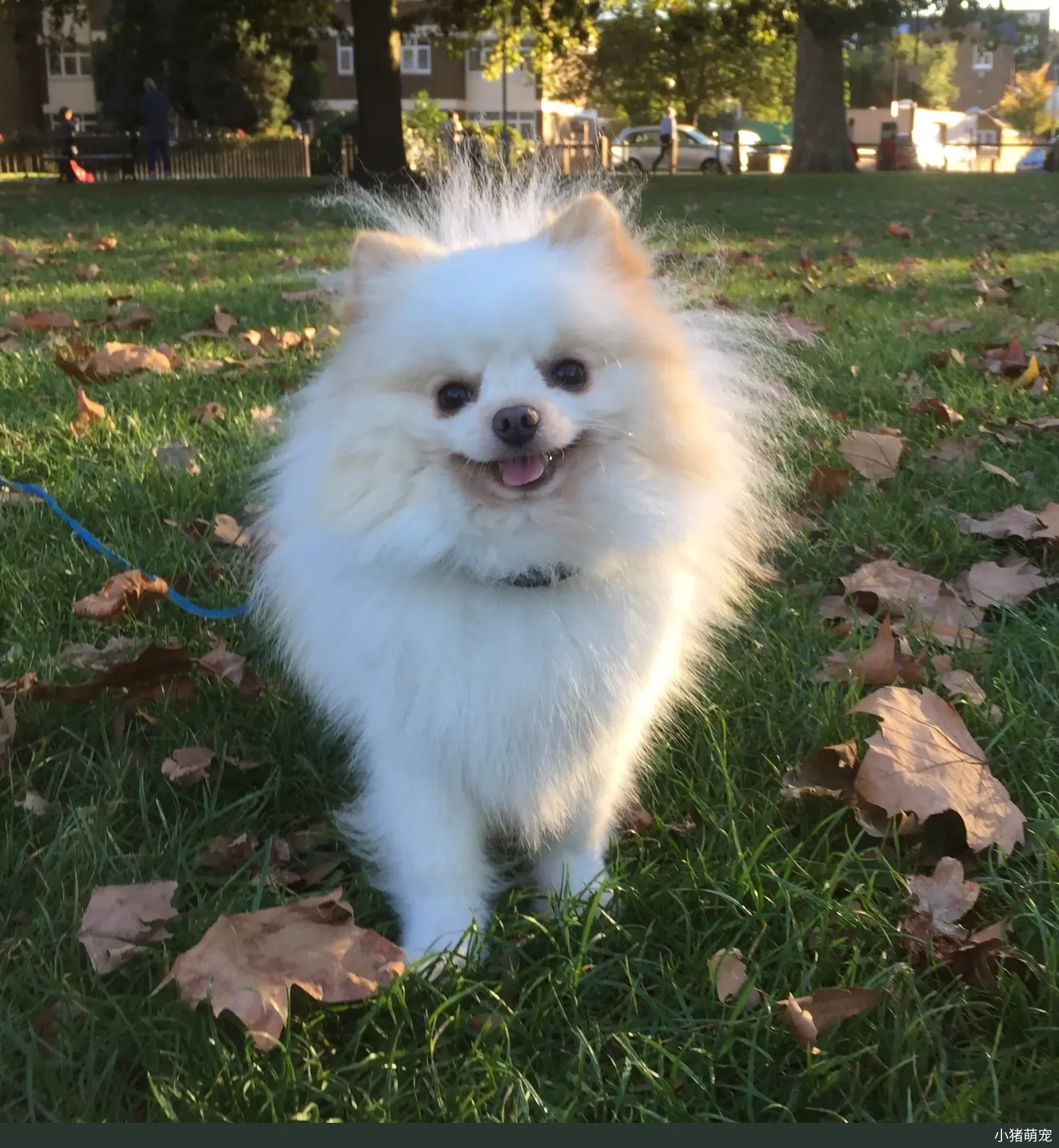
A white-and-cream parti-colored male Pomeranian stands among autumn leaves in London’s Eel Brook Common park, on a leash and wearing a collar (photographer’s date: 3 October 2016). Photo: Hanwedm; source: Wikimedia Commons; license: CC BY-SA 4.0.

That coat takes time to maintain. The AKC suggests brushing at least once a week with a pin brush and slicker all the way to the skin to prevent mats, trimming nails short, and brushing teeth during the same weekly session; if home grooming is difficult, a full salon groom every 4–6 weeks helps. The Royal Kennel Club’s grooming frequency is “more than once a week.”
Temperament, exercise, and training
In the FCI standard’s words, the Pomeranian is “always alert, lively and exceptionally devoted to his owner,” “very trainable and easy to train,” neither shy nor aggressive, and suited to apartment life as a companion and watchdog. The AKC standard likewise calls it alert and inquisitive, with a cocky gait. The AKC breed page adds that Pomeranians make capable alarm dogs and suit households where children are old enough to tell a “toy dog” from a “toy”—the breed really is small and cannot withstand being hugged and tossed like a stuffed animal.
Exercise need not be large, but it cannot be zero. The Royal Kennel Club suggests up to about 30 minutes of exercise a day and notes suitability for apartments and small-to-medium gardens. The AKC finds that indoor play plus short walks meets the need, while flagging a few small-dog specifics: Pomeranians are skilled at slipping through fence gaps or clearing low barriers; outdoors they may be taken for prey by large raptors such as hawks and owls; and on walks one must also watch for uncontrolled other dogs.
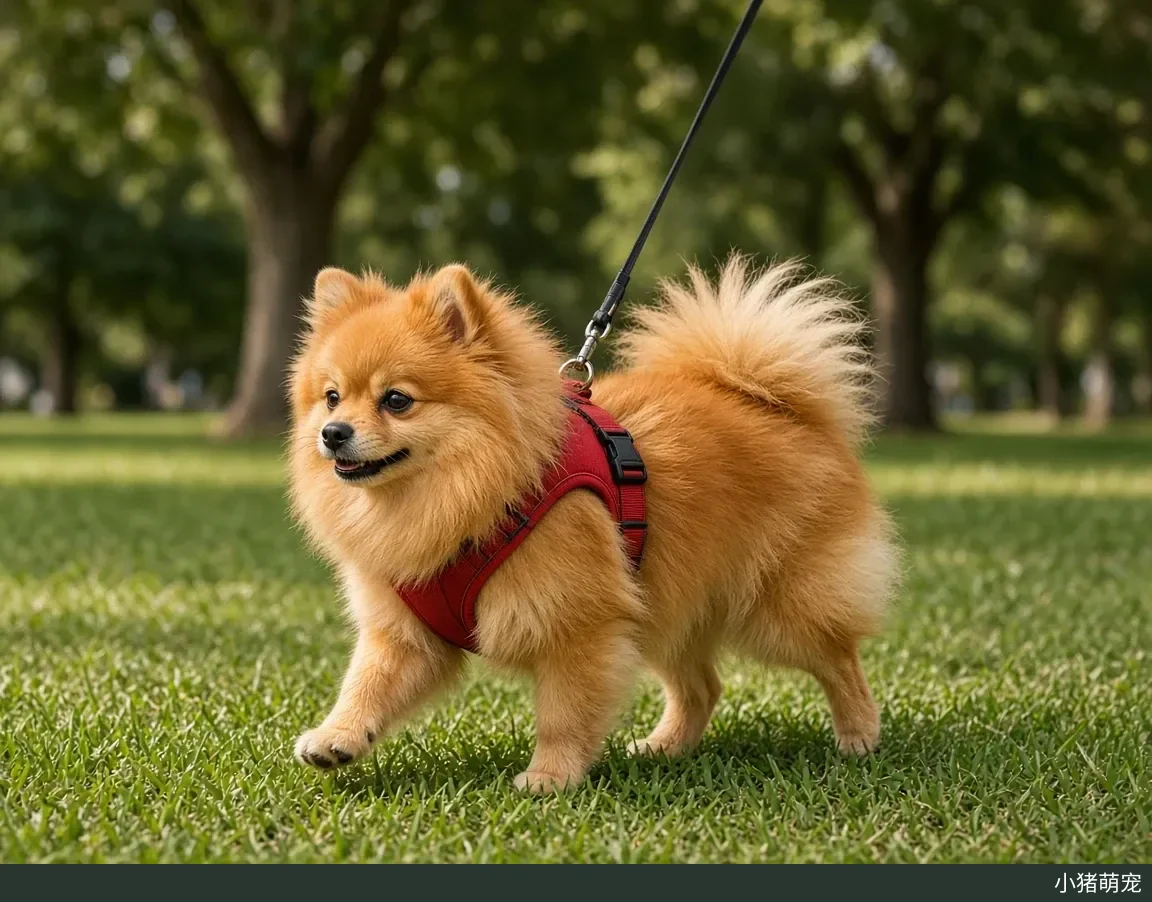
AI-generated illustration: a harnessed Pomeranian walking on grass on a leash, with the leash clipped to the harness on the back rather than to a collar.
On training, the AKC advises teaching leash walking and recall early; house-training can take more work, with consistency and patience the keys. Also avoid frequent jumps on and off sofas and beds, which can injure joints or even cause fractures. Pomeranians are smart and trainable and can excel in agility, rally, obedience, and similar dog sports, or serve as therapy dogs.
Common health issues
The AKC considers Pomeranians generally healthy small dogs, with average lifespan 12–16 years (The Royal Kennel Club marks “12+ years”). Responsible breeders screen for patellar luxation, hypothyroidism, tracheal collapse, congestive heart failure, seizures, and alopecia X (often called “black skin disease”); the American Pomeranian Club’s recommended tests include patella evaluation, cardiac exam, and eye evaluation. When choosing a puppy, ask the breeder for the parents’ test records.
Patellar luxation is when the kneecap “slips out” of its normal groove and can cause lameness, arthritis, and pain. A 2016 study by the Royal Veterinary College’s VetCompass team analyzed 210,824 dogs from 119 primary-care clinics in England between September 2009 and August 2014: overall diagnosis rate was 1.30%; for Pomeranians it was 6.5% (95% CI 3.9%–9.2%, n = 1,040), highest among the high-risk breeds listed; after adjusting for other factors, Pomeranians had about 6.5 times the odds of diagnosis versus mixed-breed dogs. Note that these are diagnosis records from English clinic files and cannot be equated directly with prevalence elsewhere.
Tracheal collapse is another issue to watch. Cornell University College of Veterinary Medicine’s Riney Canine Health Center notes that this progressive disease is common in middle-aged and older small breeds such as Yorkshire Terriers, Pomeranians, and Toy Poodles, with a classic harsh dry cough like a “goose honk”; it cannot be cured, but many dogs improve with medical management. Day-to-day adjustments include using a harness instead of a collar, avoiding cigarette smoke and other airway irritants, and steering clear of hot, humid environments; obesity worsens signs, and the AKC notes that some Pomeranians gain weight easily, so training treats must count toward total calories. Seek immediate care for breathing difficulty, purple gums or tongue, or syncope.
References
-
American Kennel Club. Pomeranian Dog Breed Information (accessed 2026-10-17)
-
American Kennel Club. Official Standard of the Pomeranian (approved 2011-07-12, effective 2011-08-31)
-
Fédération Cynologique Internationale. FCI-Standard N° 97: German Spitz (English version 2024-09-20)
-
Fédération Cynologique Internationale. Deutscher Spitz (97) (accessed 2026-10-17)
-
The Royal Kennel Club. Breeds A to Z (Pomeranian entry) (accessed 2026-10-17)
-
O'Neill DG et al. The epidemiology of patellar luxation in dogs attending primary-care veterinary practices in England. Canine Genetics and Epidemiology, 2016-06-08
-
Cornell University College of Veterinary Medicine, Riney Canine Health Center. Tracheal collapse (page undated, accessed 2026-10-17)