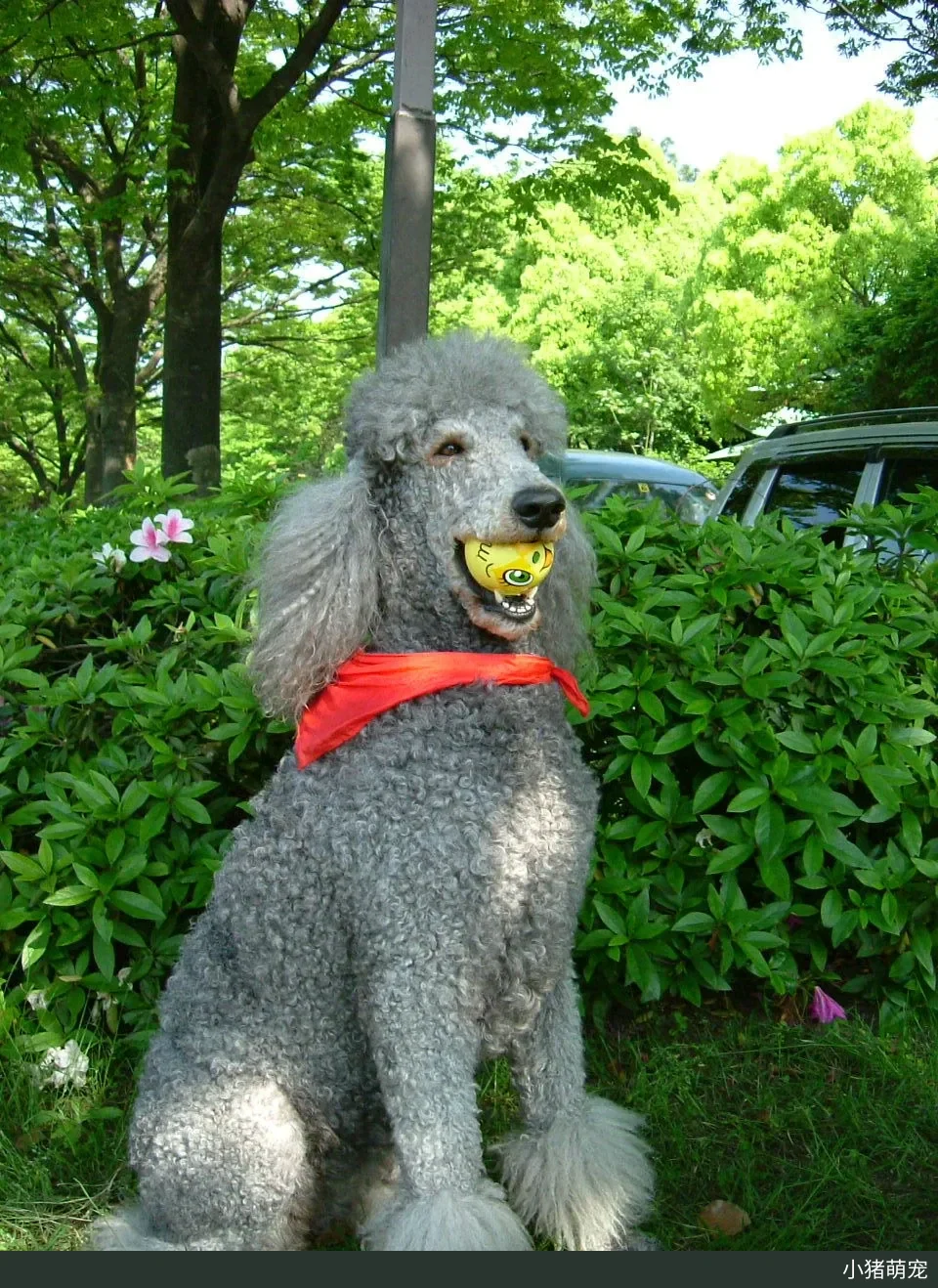
A gray Standard Poodle sits on grass holding a yellow ball, with a red scarf around its neck, photographed in Japan in May 2003. Photo: Sakurai Midori; source: Wikimedia Commons; license: CC BY-SA 3.0.

The Poodle often reads as a “refined little curly,” but its ancestors were hunting dogs that swam out to retrieve wild ducks. The Fédération Cynologique Internationale (FCI) lists France as the country of origin; American Kennel Club (AKC) materials point more toward Germany. Poodles are smart, people-oriented, and highly trainable, with sizes from Toy to Standard—but they need daily exercise, regular coat care, and attention to several hereditary conditions.
Origins and the Name
Authoritative bodies do not fully agree on where the Poodle began. The current FCI breed standard (No. 172; French original published March 2024, effective August of the same year) lists France as the country of origin and explains the French name “Caniche”: it comes from “cane,” meaning “female duck.” The standard says the dog was first used to hunt waterfowl, developed from the Barbet while retaining many Barbet traits; in 1743 it was called “caniche,” and only later gradually separated from the Barbet.
AKC materials lean more toward Germany: the English name Poodle comes from the German “pudeln,” meaning to splash about in water. An AKC breed-history article also acknowledges that origins may involve Germany, France, and Russia, and that the trail is too old to pin down with certainty. What everyone agrees on is clear enough: the Poodle began as a swimming water retriever that brought downed game back to shore.
Even today’s classic clip—with pompons on the legs and a ball of fluff at the end of the tail—ties back to that work. Per the AKC, hunters clipped the coat on the legs, neck, and tail so the dog could swim more lightly, while leaving thicker hair on the chest, hips, and joints to protect vital areas and joints in cold water. Later, with the friendly, happy, loyal temperament described in the FCI standard, plus many sizes and colors to choose from, the Poodle became a popular companion. The AKC recognized the Standard Poodle in 1887; the FCI formally recognized the breed in 1955 and places it in Group 9, Companion and Toy Dogs.
Appearance, Size, and Coat
What stands out most is the dense curly coat. The FCI standard describes a medium-built dog with a curly coat (curly or corded), looking intelligent, alert, and active, with balanced proportions and an elegant, confident bearing. For color, the FCI groups black, white, and brown; gray and fawn; and other colors.
How sizes are divided depends on which standard you follow. The FCI defines four heights at the withers: Standard over 45 cm up to 60 cm (2 cm over allowed); Medium over 35 to 45 cm; Miniature over 28 to 35 cm; Toy over 24 cm (1 cm under allowed) to 28 cm, with an ideal of 25 cm. The AKC uses only three: Standard over 15 inches (about 38 cm) at the withers, Miniature 15 inches and under, Toy not over 10 inches (about 25 cm). Both emphasize that the varieties differ only in size—structure and proportions should match; the FCI also expressly excludes dogs with “dwarfism” traits.
Using AKC Standard figures as an example, adult males weigh about 60–70 lb (about 27–32 kg), females about 40–50 lb (about 18–23 kg), with an expected lifespan of 10–18 years.
The curly coat sheds little, but the trade-off is frequent grooming. The AKC notes that unless the dog is kept in a short clip, it needs daily brushing that reaches the skin; brushing only the surface leaves mats at the roots that eventually have to be shaved and grown out again. Most households choose a shorter trim—some learn to clip at home, others take the dog to a professional groomer every 4–6 weeks for a bath and nail trim at the same time. The AKC regards it as relatively low-shedding and worth considering for allergy-prone people; individual reactions differ, so households with allergy histories should spend time with a Poodle before deciding.
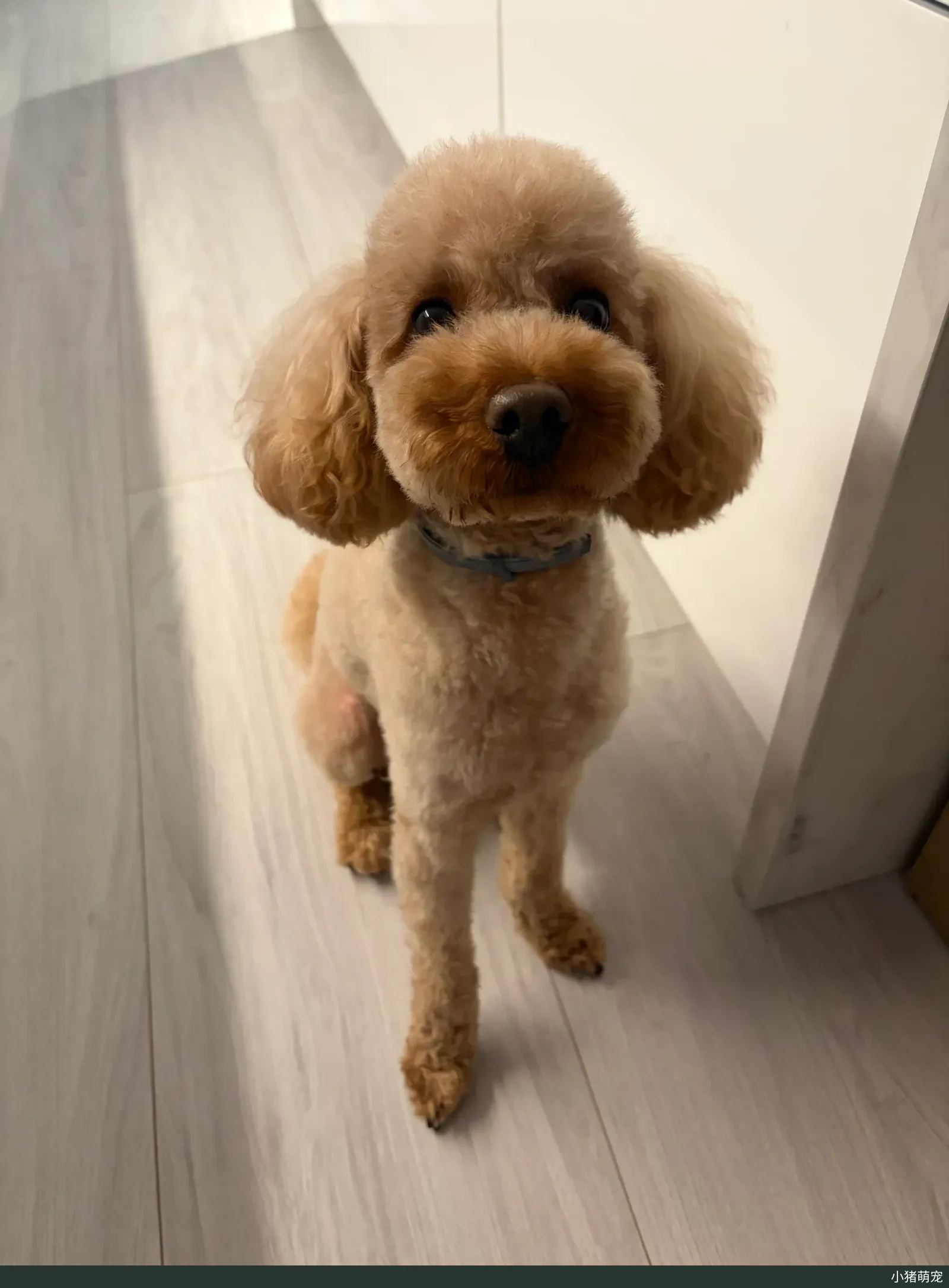
A Poodle named London, labeled by the uploader as a Miniature, photographed in Hungary in March 2026. Photo: UszkarFoto92; source: Wikimedia Commons; license: CC0 1.0.

Temperament, Exercise, and Training
The FCI standard’s temperament note is brief: noted for loyalty, strong learning ability, and ease of training, making an especially appealing companion. The AKC is more direct: Poodles are highly intelligent and easy to train, agile and elegant, excel in agility, obedience, tracking, and other dog sports, and can also compete in dock diving and retrieving field tests.
Do not be misled by the word “Toy.” The AKC points out that whatever the size, Poodles are energetic and need ample daily exercise. They retain a retrieving drive—throwing a ball or toy for them to bring back works both body and mind; most enjoy water, so swimming is excellent exercise; jogging or long walks also suit them. Of the three AKC sizes, the Standard has the most size and power and, in the AKC’s view, is the most complete athlete.
For training, the AKC recommends keeping sessions fun and positive: Poodles are very people-oriented and eager to cooperate when training is enjoyable. Consistency matters—allowing the sofa one day and forbidding it the next will confuse even a smart dog.
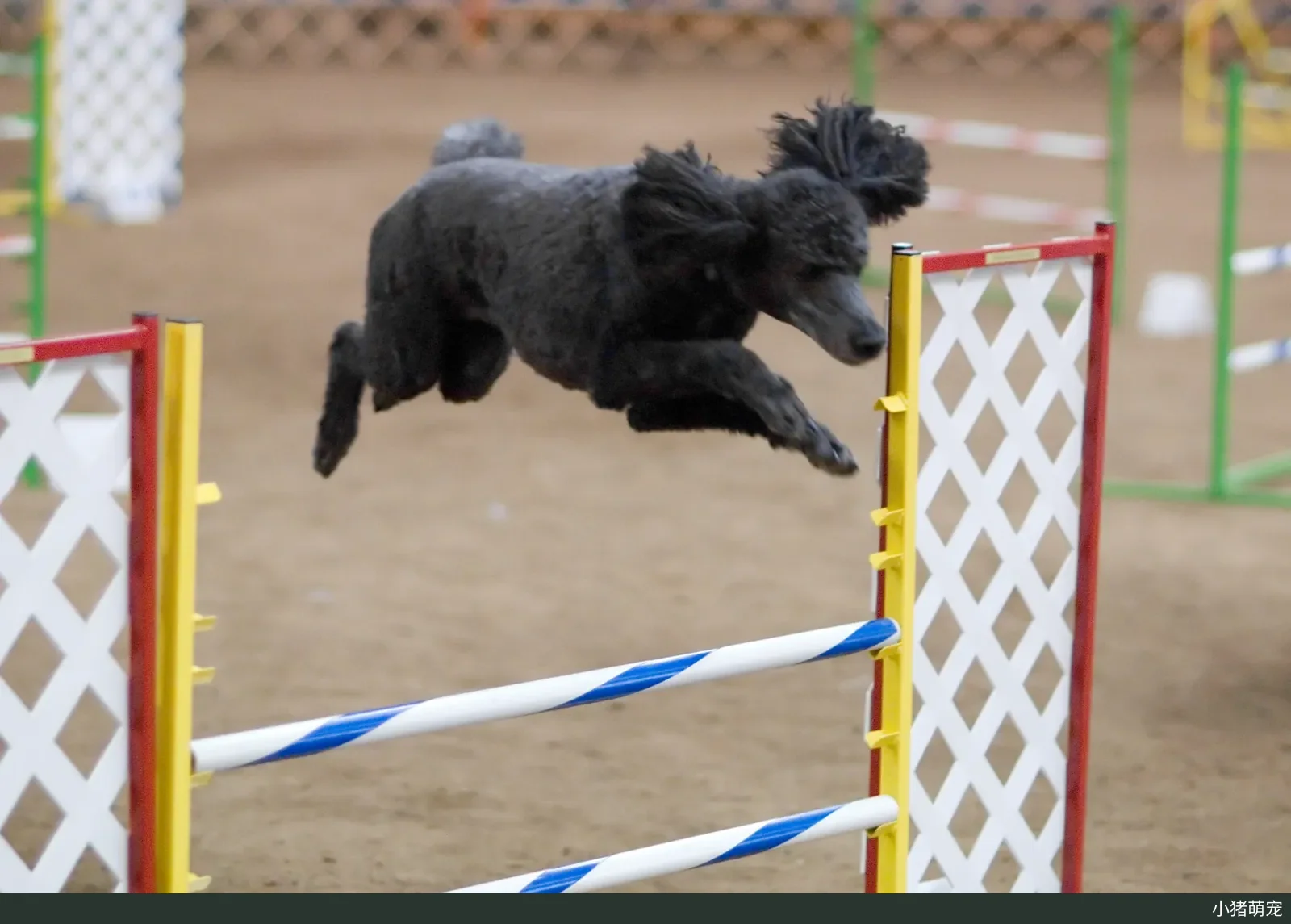
A “blue” (blue-gray) Poodle competing in agility at the HMKC Spring Agility Trial in April 2007. Photo: Ron Armstrong; source: Wikimedia Commons; license: CC BY 2.0.

Common Health Issues
Per the AKC, most Poodles live long, healthy lives thanks to responsible breeders who routinely test breeding stock. Like all breeds, they can develop hip dysplasia and several eye diseases, and occasionally idiopathic epilepsy, sebaceous adenitis, von Willebrand disease, and immune-mediated disease. Risk varies by size: Legg-Calvé-Perthes disease and patellar luxation are more common in Toys and Miniatures; Standards are more prone to gastric dilatation-volvulus (bloat) and sebaceous adenitis.
Gastric dilatation-volvulus is an emergency. The Poodle Club of America (PCA) explains that when the stomach fills with gas or food it can twist, cutting off its own blood supply and exit path; without prompt treatment, a dog can die within hours. If a household Poodle’s abdomen suddenly swells and the dog seems in severe pain, seek veterinary care immediately.
Three other conditions are worth knowing in advance. First, Addison’s disease (hypoadrenocorticism): VCA Animal Hospitals veterinary materials list Standard Poodles among higher-risk breeds. Signs are often vague—lethargy, vomiting, diarrhea, increased thirst—and easy to miss; the most reliable diagnosis is an ACTH stimulation test, and most dogs do well once diagnosed, stabilized, and on medication. Second, sebaceous adenitis, in which the immune system attacks the skin’s sebaceous glands, usually in young to middle-aged dogs, with increased dandruff, thickened skin, and a moth-eaten sparse coat; diagnosis requires skin biopsy and lifelong management. Third, progressive retinal atrophy (PRA), mainly in Toys and Miniatures: the PCA notes that the main form, prcd-PRA, is typically found on eye exam around age three and can be DNA-tested, though not every PRA type is covered by current tests.
If you plan to get a Poodle from a breeder, ask for the parents’ health-test records. The AKC page lists Poodle Club recommended items including hip evaluation, veterinary ophthalmologic exam, and von Willebrand Type I DNA testing; Standards also have neonatal encephalopathy with seizures (NEwS) DNA testing and autoimmune thyroiditis evaluation.
References
-
Fédération Cynologique Internationale (FCI). FCI-Standard N° 172 CANICHE (Poodle). French original published 2024-03-20, effective 2024-08-01.
-
Fédération Cynologique Internationale (FCI). CANICHE (172).
-
American Kennel Club. Poodle (Standard) Dog Breed Information.
-
Elaine Waldorf Gewirtz, American Kennel Club. Poodle History: From Water Retriever to Versatile Companion. Updated 2026-08-11.
-
The Poodle Club of America. Health Concerns.
-
VCA Animal Hospitals. Addison's Disease in Dogs.
-
VCA Animal Hospitals. Sebaceous Adenitis in Dogs.