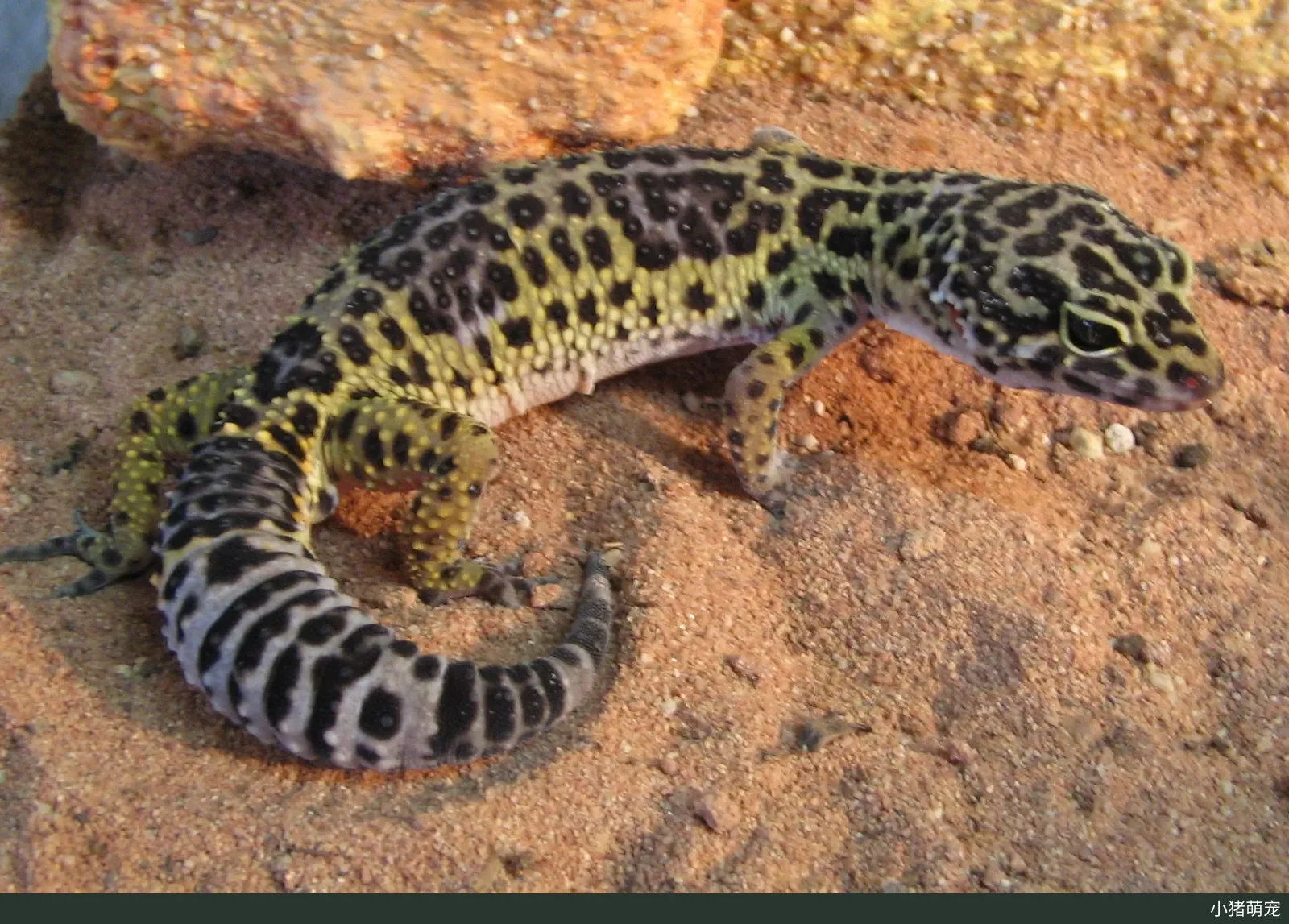
A wild-type (natural-pattern) leopard gecko. Photo: Kerstin Franke (Tinie); source: Wikimedia Commons; license: CC BY-SA 3.0.

The leopard gecko is native to dry rocky country across Pakistan, Afghanistan, Iran, northwestern India, and Nepal. It is small and generally mild-tempered, and veterinary sources often list it as a beginner-friendly reptile pet. “Easy” does not mean “low-effort”: it needs an enclosure with a temperature gradient, suitable substrate, a live-insect diet with calcium dusting, and may stay with you for ten to twenty years. Drawing on veterinary and herpetological sources, this article covers beginner husbandry points and common health problems.
Wild range, habits, and fit for beginners
The leopard gecko (Eublepharis macularius) is a terrestrial lizard named in 1854 by British herpetologist Edward Blyth. Its wild range spans Pakistan, Afghanistan, Iran, northwestern India, and Nepal, in dry to semi-arid grassland and rocky scrub. A 2024 veterinary review in Veterinarska stanica cites Pakistani field material: by day they hide in rock crevices, burrows, even wall gaps; after dusk they forage alone and return to shelter before dawn; in the wild they mainly eat beetles, locusts, spiders, scorpions, centipedes, and other arthropods. Per the IUCN Red List rating cited via the Taiwan Catalogue of Life, it is currently Least Concern (LC), though the review notes that data on wild population status remain scarce.
Unlike many geckos, leopard geckos have movable eyelids and claws rather than adhesive pads, so they are poor climbers on smooth glass and prefer the ground and low rocks. The tail stores fat and can be dropped when threatened. Sex is determined by egg incubation temperature; after years of captive breeding, more than 160 combinations of color, pattern, and morph exist.
It is often recommended to beginners for solid reasons: adults are about 20–25 cm total length and about 45–60 g, temperament is usually gentle, captive breeding is well established, and space needs are modest. Aliso Beach Animal Clinic’s veterinary guide stresses that “beginner reptile” does not mean “low maintenance”—heat, UVB, calcium, live insects, and regular veterinary care all still matter. Lifespan is long: VCA Animal Hospitals cites 10–15 years, PetMD 10–20 years, some captives have lived past 20, and the St. Louis Zoo record is 28.5 years. Before deciding, treat it as a decade-plus commitment.
Enclosure, substrate, and temperature gradient
Leopard geckos are terrestrial, so floor area matters more than height. Minimum sizes differ by source: VCA says a single animal can live in a 10-gallon (about 38 L) tank at least 15 cm high; PetMD suggests starting juveniles in 10 gallons and moving adults to 20 gallons (about 76 L) or more; Aliso Beach Animal Clinic prefers a long-term adult enclosure of about 91×46×46 cm (36×18×18 in) or larger, because a tank that is too small makes it hard to create a gradient and fit multiple hides. Use a ventilated escape-proof mesh lid. Provide at least three hides: one warm, one cool, plus a humid hide lined with damp sphagnum to aid shedding. Males fight; housing singly is usually safest.
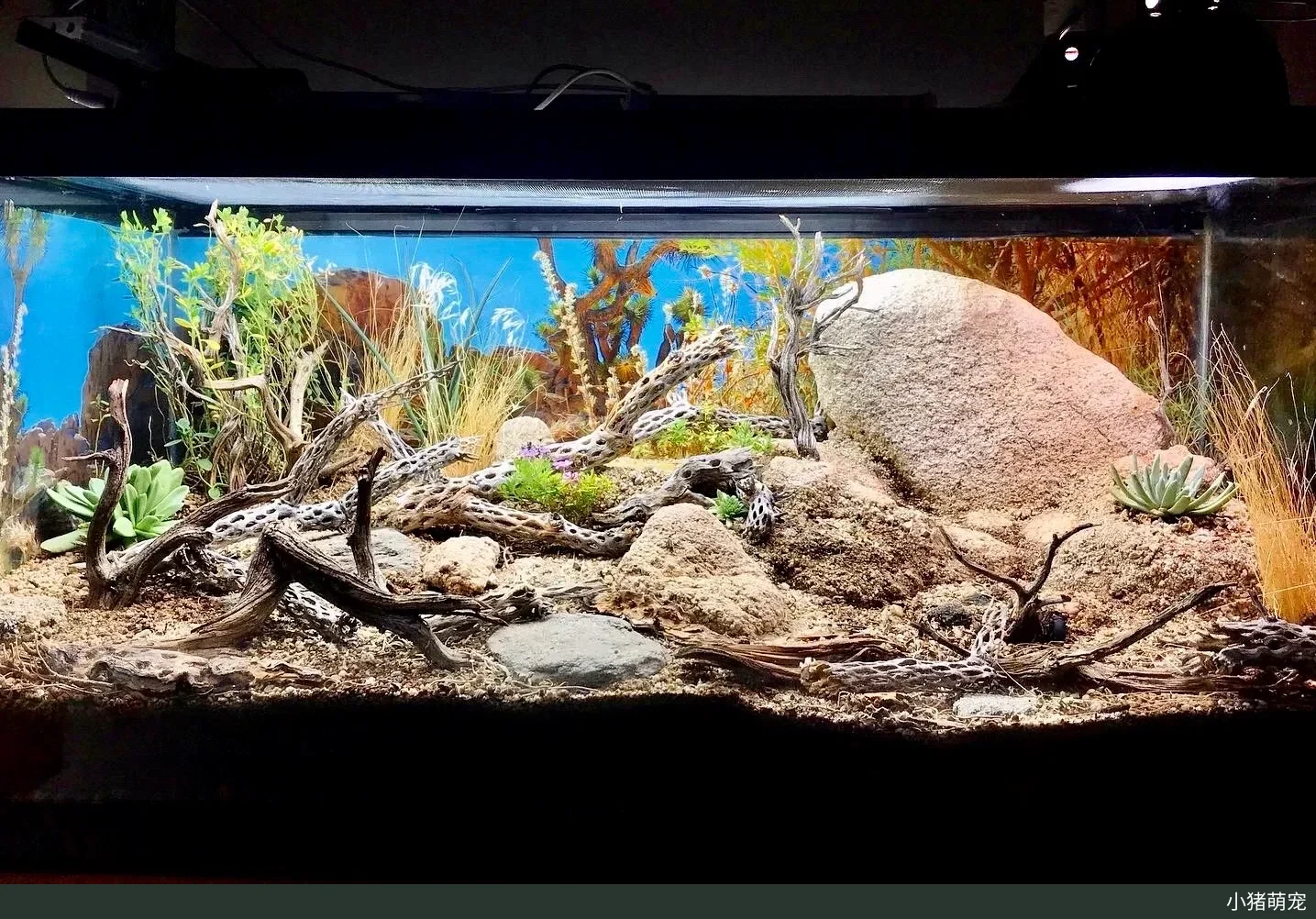
An example arid bioactive vivarium for a leopard gecko with live plants; substrate and hide choices should still follow the points in the text and the individual animal’s condition. Photo: Connor Long; source: Wikimedia Commons; license: CC BY-SA 4.0.

For substrate, kitchen paper is simplest for new arrivals, juveniles, or sick animals—feeding, feces, and bleeding are easy to see. VCA advises against coarse sand, corncob, and crushed walnut shell, which can be swallowed and block the gut; Aliso Beach also lists calcium sand, crushed walnut, gravel, and coarse wood chips as substrates to avoid, while noting that healthy adults, when other conditions are right, may use slate tiles or a properly mixed soil–sand blend. With loose substrate, PetMD suggests feeding insects in a dish to reduce substrate ingestion.
Leopard geckos are ectotherms and regulate body temperature via the environment, so the enclosure needs a warm end and a cool end. Aliso Beach suggests warm-zone air about 28–30°C (82–86°F) and cool-zone about 24–26°C (75–79°F); the review above cites a warm zone of 29–33°C and cool about 24°C. Figures differ partly because some sources measure air temperature and others the heated surface. Put an electronic thermometer at each end and check the ground with an infrared gun. Night temperatures may drop; VCA notes tolerance down to about 21°C.
Heat can come from under-tank pads, heat tape, low-wattage heat lamps, or ceramic emitters—all on a thermostat, with measured temperature as the authority, not the dial setting alone. The review suggests a pad covering about 25%–35% of one end of the floor. Do not use “hot rocks,” which can burn locally; keep heat lamps so the gecko cannot approach within 15 cm, and turn luminous heat sources off at night. UVB was once treated as optional; VCA says “not essential but recommended,” while Aliso Beach suggests low-intensity, shaded UVB plus fully dark hides. One study found that even about 2 hours of UVB raised vitamin D3 metabolites in leopard gecko blood. Keep overall humidity relatively dry (about 30%–40%); shedding humidity comes from the humid hide.
Live insects and calcium / D3
Leopard geckos are insectivores; captive diets center on farmed live insects—crickets, dubia roaches, silkworms, black soldier fly larvae, mealworms—rotated rather than fed as a single staple. Superworms and waxworms are higher in fat and only occasional treats. PetMD advises prey no wider than the space between the gecko’s eyes, and remove uneaten live insects promptly so they do not bite or harass the gecko. Feeding frequency depends on age: VCA suggests every 1–2 days for juveniles and 2–3 times a week for adults; Aliso Beach notes there is no one schedule for every animal—weigh regularly on a small digital scale and adjust to weight change.
Calcium supplementation matters because feeder insects are typically low in calcium and high in phosphorus. Veterinary sources generally recommend two steps: gut-loading insects for 24–48 hours before feeding with a complete diet, then dusting with phosphorus-free calcium powder before offering. VCA also suggests a small dish of calcium in the enclosure for free choice, and fresh water in a shallow dish changed daily.
Vitamin D3 dosing needs more care. PetMD alternates calcium with and without D3, plus a reptile multivitamin 1–2 times a week, and notes that if appropriate UVB is already provided, every-other-day D3 is unnecessary. Aliso Beach stresses that more D3 is not better—dose depends on UVB and the product; photograph supplement labels for the veterinarian. The review also notes that most reptile vitamin D toxicities come from over-supplementation, causing hypercalcemia and soft-tissue calcification.
Shedding, tail loss, common disease, and buying notes
Healthy leopard geckos shed regularly; PetMD says most every 4–8 weeks, and they usually eat the shed skin. If the environment is too dry, old skin may stick on toes, the tail tip, and around the eyes: retained toe bands can cut off circulation; eye rings impair vision. Keeping the humid hide available is the key prevention; a supervised warm shallow soak can help, but do not force off tightly stuck skin. Eye involvement, swollen or discolored toes, or repeated bad sheds warrant a veterinary visit.
Tail autotomy is a defense: if the tail is grabbed, the gecko may drop it. Never lift by the tail—support the whole body from below. The tail regenerates, but shape and pattern differ, and dropping costs stored energy. Conversely, a progressively thinning “stick tail” is a warning that may involve parasites (including Cryptosporidium), gut disease, nutrition, or environment. Do not try to fix it only by feeding more high-fat insects—see a veterinarian promptly.
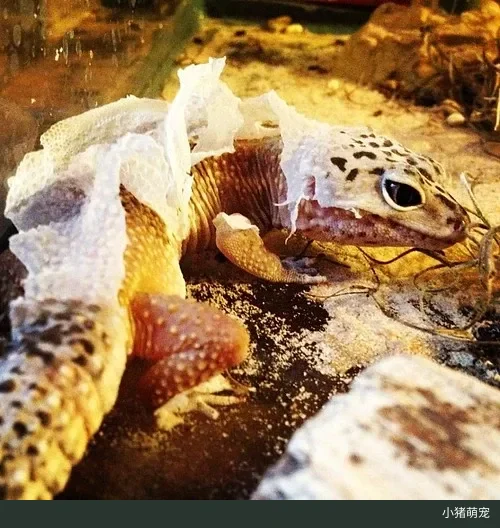
A pet leopard gecko in shed. Photo: Amy Windsor; source: Flickr; license: CC BY 2.0.
Data cited in the review rank leopard geckos as the second most common reptile in veterinary clinics, about 13% of reptile cases, most tied to poor husbandry. Common problems include metabolic bone disease, vitamin A deficiency, incomplete shed, intestinal parasites, gut blockage from substrate ingestion, egg binding in females, and eye infections. Metabolic bone disease (nutritional secondary hyperparathyroidism) deserves special beginner attention: chronic calcium deficiency, Ca:P imbalance, insufficient vitamin D, lack of UVB, or inadequate temperature can make the body “borrow” calcium from bone until bones soften and deform. Signs include tremors, weakness, difficulty walking, a soft jaw (“rubber jaw”), swollen or bent limbs, fractures, and reduced appetite. Aliso Beach notes that once signs appear, extra calcium dust alone is not treatment—veterinary assessment for fractures, severe calcium imbalance, or dehydration is needed. PetMD suggests a yearly checkup and bringing photos of the enclosure, lights, heat gear, and feeders.
When buying, prefer captive-bred animals with a clear source; ask what it eats and whether it has been feeding normally—the U.S. CDC notes that refusal to eat may signal a health problem. Do not catch wild individuals, and do not release unwanted geckos. Rules on reptile sale, transport, and keeping vary by country and region, and some rentals restrict pets; verify with local authorities—this article does not replace local law. If other reptiles are already in the home, quarantine newcomers separately without shared gear. Hygiene matters: CDC notes reptiles may carry Salmonella even when they look healthy—wash hands after contact with the gecko, feeder insects, and enclosure items; with children under 5, adults over 65, or immunocompromised people in the home, CDC suggests considering other pets.
References
-
Gregory Rich, DVM. Leopard Geckos: Care and Feeding. VCA Animal Hospitals (undated page).
-
Maria Zayas, DVM (reviewed by Ivan Alfonso, DVM). Leopard Gecko Care Sheet. PetMD, updated 2026-05-08.
-
Aliso Beach Animal Clinic (reviewed by Bryan Hayter, DVM). Leopard Gecko Care Guide. Last reviewed 2026-10.
-
Franco F. L., Patrício R., Oliveira P. A., Faustino-Rocha A. I. The lifestyle of the leopard gecko and the importance of ultraviolet radiation, vitamin D and calcium. Veterinarska stanica 55(4), 2024.
-
Vickie Woods. Eublepharis macularius (Common Leopard Gecko). Animal Diversity Web.
-
Leopard gecko Eublepharis macularius. Taiwan Catalogue of Life (TaiCOL), citing IUCN Red List rating LC.
-
CDC. Reptiles and Amphibians | Healthy Pets, Healthy People. 2026-01-13.