The Airedale Terrier takes its name from the Aire Valley in northern England, where mill and factory workers bred dogs to hunt ducks and catch rats in the mid-1800s. Seen from the side, the largest of the terriers stands high on long, muscular legs. Males measure about 23 inches at the shoulder, females a little less. The tan legs and black markings across the body are easy to pick out at a distance. Up close, look for the long head, dark eyes, neatly folded ears and the beard and mustache that frame the muzzle.[1]

Figure: The Airedale in profile. Flickr user Srinayan Puppala (TigerPuppala), Wikimedia Commons[2]

To picture life with an Airedale, start with a typical workday. The American Kennel Club (AKC) suggests several walks or spells in the yard each day, plus a daily play session of moderate length with a family member.[1] Put those on the calendar separately. If someone can take the dog out before work and someone else enjoys a game after dinner, who can offer an outing in between? A fenced yard makes it easier to open the door for a break. Playing together still calls for someone to step outside with the dog.
Give the game a natural place to finish. In an enclosed space, toss a toy and pause when the dog comes back. Is the Airedale watching your hand, ready for the next throw? Has the dog put the toy down and wandered off to sniff? The pause gives you a chance to notice either response. You can put the toy away and still go for the usual walk later. The AKC describes the length of play in broad terms, leaving room to judge what suits the dog in front of you.[1]
A favorite toy can also give a short lesson a satisfying finish. Airedales tend to bond closely with their families and learn readily, though doing the same drill over and over can bore them. The AKC recommends teaching come, sit and stay.[1] In a quiet yard, put the toy aside, call the dog to you and reward the return by starting the game again. On another occasion, ask for a sit before you open the door for a walk. Agree on the cue each person will use. Varying the occasion keeps practice interesting while the familiar word still means the same thing.
An Airedale may be a willing playmate for children, but consider where a tossed ball will send those long legs. A strong dog turning sharply after a toy can knock over a toddler who is still finding their balance. The AKC advises close supervision around toddlers and other young children.[1] If the usual route across the living room takes the dog past a child’s feet, move the game somewhere with room to run. One adult can handle the throws and keep the chase clear of the spot where the child is watching.
Count the hours when everyone is out, too. An Airedale that regularly spends long stretches alone with little to do may find its own occupations, some unwelcome at home. A puzzle toy can give the dog a problem to solve.[1] Try it first while you are there. Does the dog enjoy working out how to reach a piece of food, or walk away after the first nudge? Choose a toy that holds this dog’s interest, count any food rewards toward the day’s intake, and keep a place in the schedule for someone to come home and take the dog out.
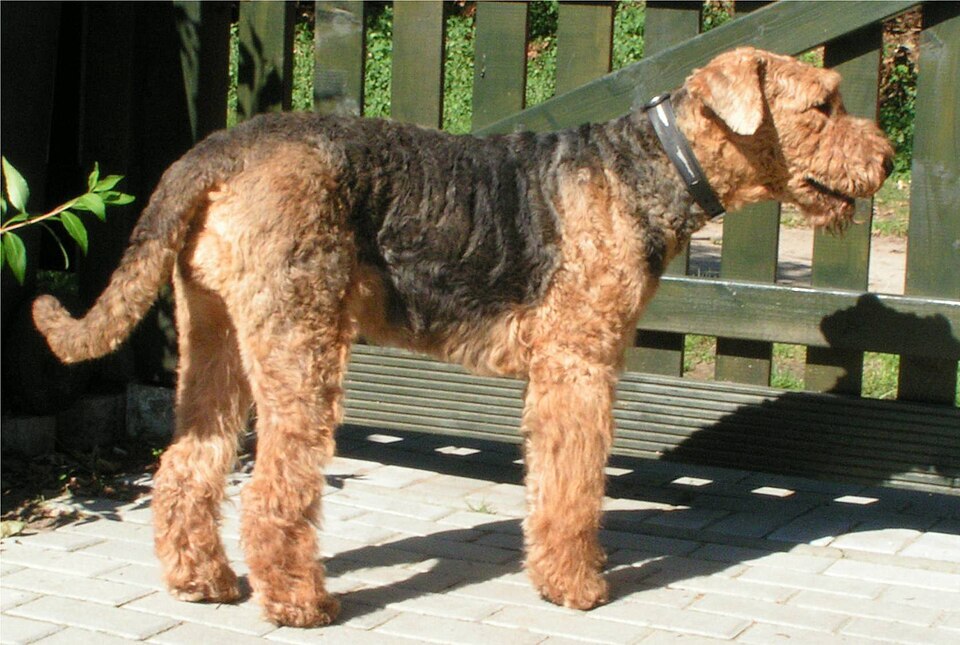
Figure: The Airedale’s wiry coat. Michail Jungierek, Wikimedia Commons[3]

The short, wiry coat can look tidy even when a little knot lies underneath. At the weekly brushing, work along one side of the dog in small sections. Part the hair with one hand and brush through the section with the other, feeling for places where the strands have drawn together. If you find a mat, stop there. Ease it loose with your fingers, then use a comb to tease the strands apart before moving on. Working this way collects dead hair in the brush and gives you a chance to find what a quick pass over the back would miss.[1]
A full groom comes around less often. The AKC suggests three or four a year, including a bath, brushing and either stripping or clipping the coat. An owner familiar with the work can do it at home or book a professional groomer.[1] For a family companion, choose a finish you can maintain between appointments. The sculpted outline seen in the show ring is optional. If the comb keeps catching in one place, point it out to the groomer and ask them to show you how to part and work through that patch at home.

Figure: The Airedale’s folded ears and beard. Angela Montillon, Wikimedia Commons[4]

When you reach the head, gently lift the ear flap and look for debris or a buildup of wax. Regular ear checks and toothbrushing both belong in an Airedale’s routine.[1] Hip health raises a different question when you are considering a puppy. Hip dysplasia involves abnormal development of the hip joint. Ask the breeder which hip checks the puppy’s parents have had and what the results showed. Those records tell you about the dogs used for breeding. They cannot diagnose the puppy or guarantee how its own hips will develop.[1]
A good way to decide is to put names to the small jobs on an ordinary weekday. Who would practice a sit at the door, put down their phone for a game after dinner, or stay beside a toddler when the dog is eager for the next throw? On brushing day, who would take a moment to loosen a knot by hand? If those sound like parts of the week your family would enjoy, you have a clearer picture of life with an Airedale than the occasional long weekend walk can give you.[1]
References
-
[1] American Kennel Club. Airedale Terrier Dog Breed Information.
-
[2] Flickr user Srinayan Puppala (TigerPuppala). File:Airedale Terriers Flickr.jpg. Wikimedia Commons.
-
[3] Michail Jungierek. File:Airedale.jpg. Wikimedia Commons.
-
[4] Angela Montillon. File:AiredaleDog.jpg. Wikimedia Commons.