Peary’s white coat almost disappears against the snow, yet the outline of this American Eskimo Dog is easy to pick out. Follow the upright ears down past the short hair on the cheeks to the long ruff around the neck and chest. Then follow the line of the back to where the tail curls up and its plume spills over. Those two sweeps of long hair give a compact dog much of its fullness. They also offer a clue to life with the breed. By the time the next brushing is due, that white coat may still look perfectly clean.[1][2]

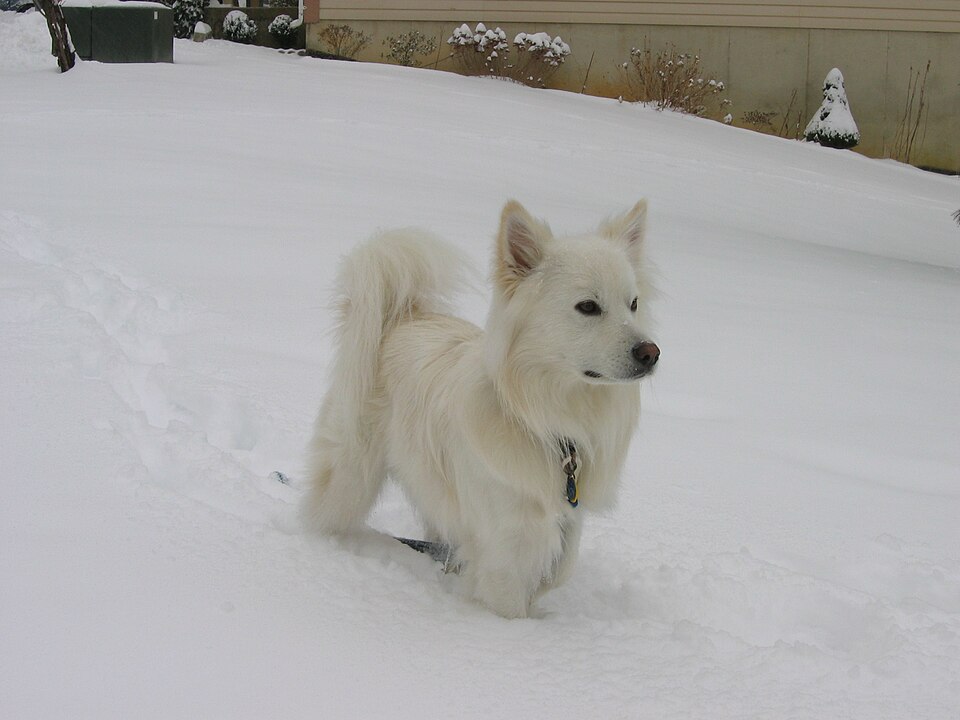
图:Peary in full profile. Michael L. Benton, Wikimedia Commons[2]
A Spitz from Midwestern Farms
The American Eskimo Dog traces its roots to the German Spitz dogs that German immigrants brought to the American Midwest. In the 19th century, these white dogs lived alongside farmers and helped with all sorts of jobs. Traveling circuses later prized their nimble footwork and knack for learning tricks. Their long white coats made it easy for an audience to follow the action. The breed took on its American name during the First World War. Part of its appeal as a family dog today is that same habit of watching what people do and readily learning from them.[1]
American Eskimo Dogs come in three sizes: toy, miniature, and standard. Together they span 9 to 19 inches (about 23 to 48 centimeters) at the shoulder as adults. When you meet a fluffy white puppy, asking how big its parents are gives you a better idea of its eventual size than trying to judge what’s under all that fur. All three sizes share a recognizable outline. The triangular ears stand high, the hair on the muzzle is short, and dark eye rims and lips stand out against the pale fur. The coat may be pure white or white with pale cream markings known as biscuit.[1]
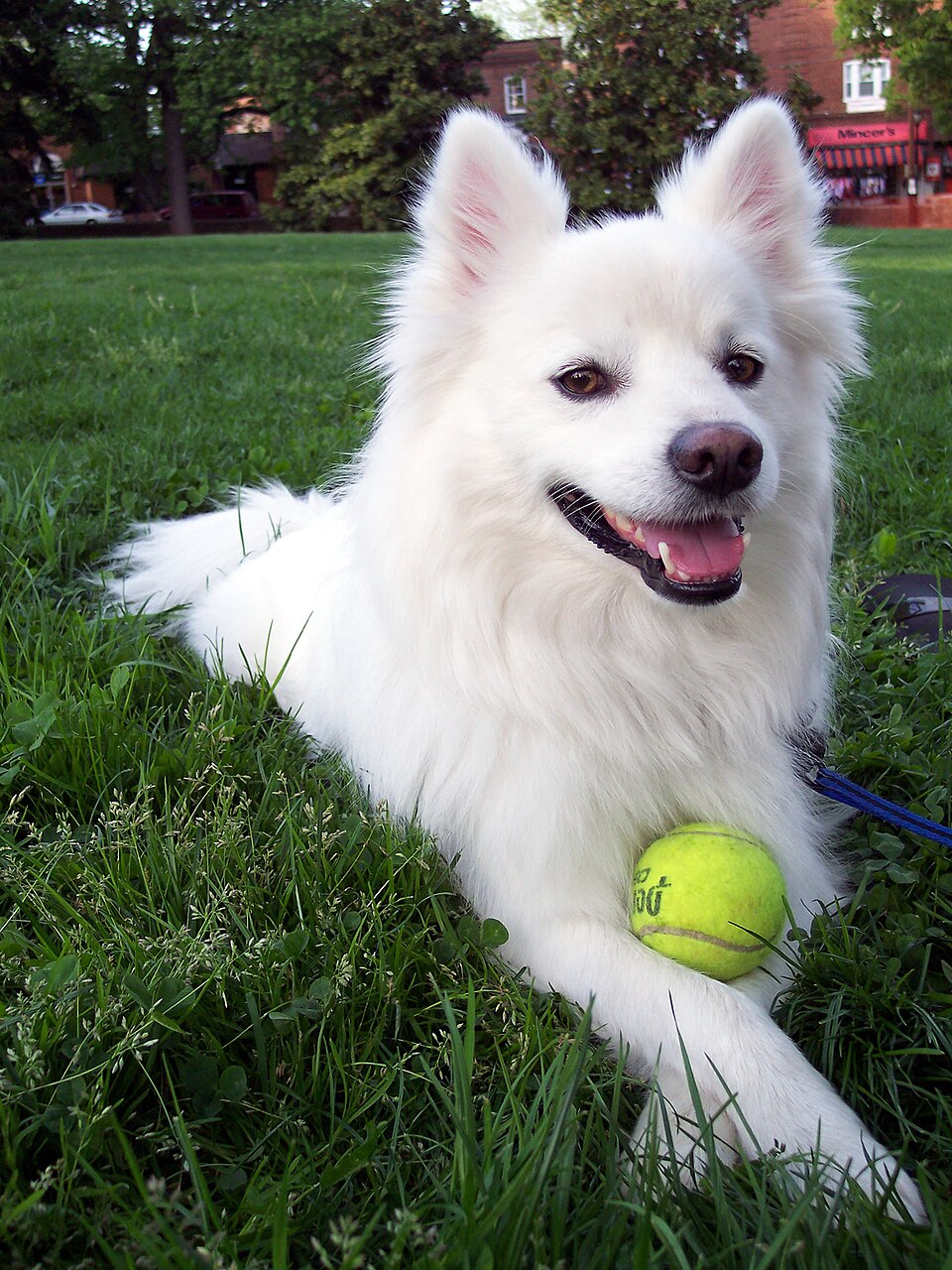
图:The American Eskimo Dog’s facial features. Ben Lunsford, Wikimedia Commons[3]

Learning on the Daily Walk
The American Kennel Club (AKC) describes the breed as curious, active, and interested in what the family is doing. An ordinary evening walk can give those qualities an outlet. Practice a brief wait at the door, leave a stretch of the route for unhurried sniffing, then find a quiet spot to practice turning toward you when you say the dog’s name. Even on a familiar route, the dog gets time to explore and a few occasions to pay attention to the person holding the leash. When you’re deciding whether the breed would fit your home, the time you can set aside for that kind of attention matters more than the size of the nearest field.[1]
When a puppy comes home, start with something everyone in the household can use, such as going to a mat. Put the mat in a quiet, familiar spot and reward the puppy as soon as it steps onto it. Once the puppy knows the action, add a cue the family has agreed on. These dogs often catch on quickly, and using the same word helps everyone call on the skill in daily life. If you use food rewards, set aside part of the day’s ration for practice. The AKC also recommends starting socialization and training early. An American Eskimo Dog may be reserved when meeting someone new. Give the puppy time to watch from your side and a chance to approach when ready.[1]
A fenced yard gives you room for a chase or a game of hide-and-seek with a toy. Much of the fun for this breed comes from having someone hide the toy, wait for the dog to find it, and play another round. That thick coat can make it easy to overestimate how well the dog would adapt to living alone outdoors. American Eskimo Dogs enjoy sharing the family home. Long, frequent stretches alone, coupled with too little activity, can lead to chewing or tearing things up. Picture your busiest workday. Who can take the dog out in the morning and evening? Who can come home in between to spend time together? With an older dog, you can shorten the route to suit the pace the dog sets that day and keep the sniffing stops and little games it still enjoys.[1]
Brush While the Coat Still Looks Clean
In the photograph on the grass, you can see where the coat changes length. The hair lies close along the muzzle, fans out across the chest, and gives the backs of the hind legs a fuller outline. When you brush, there’s another layer to reach that’s hard to see in a photograph. Part the longer, straighter outer hairs and you’ll find short, dense underfur. Oils on the outer coat help keep dirt from sticking, so ordinary dry soil often comes away with a brush. Loose hairs, meanwhile, can stay caught within the two layers. A coat that feels soft and looks freshly washed can still have plenty of loose underfur to brush out.[1][4]

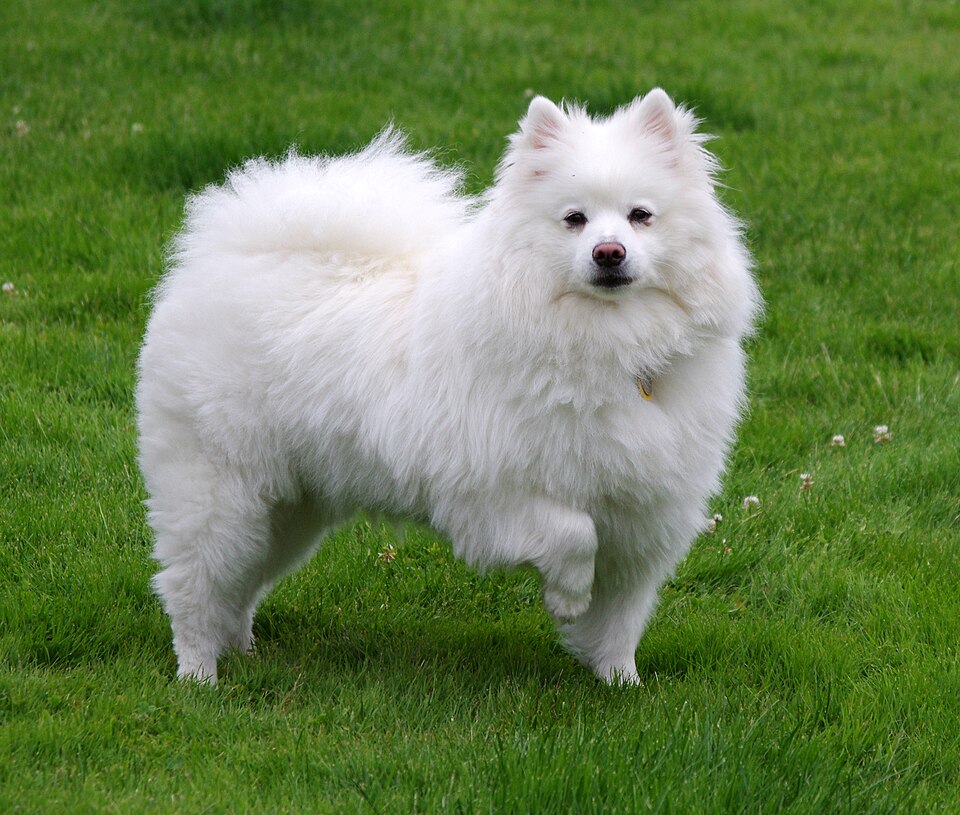
图:The American Eskimo Dog’s ruff. Christmas w/a K, Wikimedia Commons[4]
The AKC recommends a thorough brushing two or three times a week. Choose a few regular evenings and start when the dog is settled. Working along one side, part a small section of the long coat with your hand, gently brush out the loose hair beneath it, and move to the next section. A few strokes down the back cover only part of the job. Allow time for the chest ruff, the feathering behind the hind legs, and the tail. Some of the hair that would have landed on the sofa ends up in the brush, and the coat is less likely to mat. The breed sheds almost year-round, so brushing and cleaning up loose hair belong in the household routine in every season.[1]
Save baths for the occasional time the coat needs one. If the ends of the hair are dusty after a walk, try brushing once the dirt is dry. That may be all it takes. Frequent baths to keep the coat white can dry and irritate the skin. A weekly brushing session is also a good time to look in the ears for debris or excess wax. Make room for regular toothbrushing and nail trims, too. That way the bright white coat gets its share of attention, along with the less visible parts of the dog.[1]
Which Health Records Should You See Before Bringing a Puppy Home?
Even when a puppy moves easily and races after a toy, ask the breeder for both parents’ health records. Hip dysplasia and late-onset progressive retinal atrophy are concerns in the breed. The American Eskimo Dog Club of America lists a hip evaluation, an eye examination, and a DNA test for the prcd form of progressive retinal atrophy. Match each report to the sire or dam, then look at which tests each dog had and what the results were. The eye exam tells you what the examiner could see at the time. The DNA report tells you whether the dog carries the particular genetic variant tested. Each answers a question worth asking about both parents.[1][5]
Screening helps breeders reduce the risk of disease in the next generation. The puppy’s health still needs attention as it grows. Once you understand the records, consider an ordinary week at home. On a busy weekday, who will enjoy taking the dog out and teaching it something when they get back? And on brushing nights, who will sit down with a dog whose white coat already looks clean and work through it, section by section, to the dense undercoat?[1][5]
References
-
[1] American Kennel Club. American Eskimo Dog.
-
[2] Michael L. Benton. File:American Eskimo Dog Peary.jpg. Wikimedia Commons.
-
[3] Ben Lunsford. File:American-Eskimo-dog.jpg. Wikimedia Commons.
-
[4] Christmas w/a K. File:American Eskimo Dog 1.jpg. Wikimedia Commons.
-
[5] American Eskimo Dog Club of America. Parent Club Health Information to be Posted on AKC Online Breeder Classifieds. 2014-11-02.