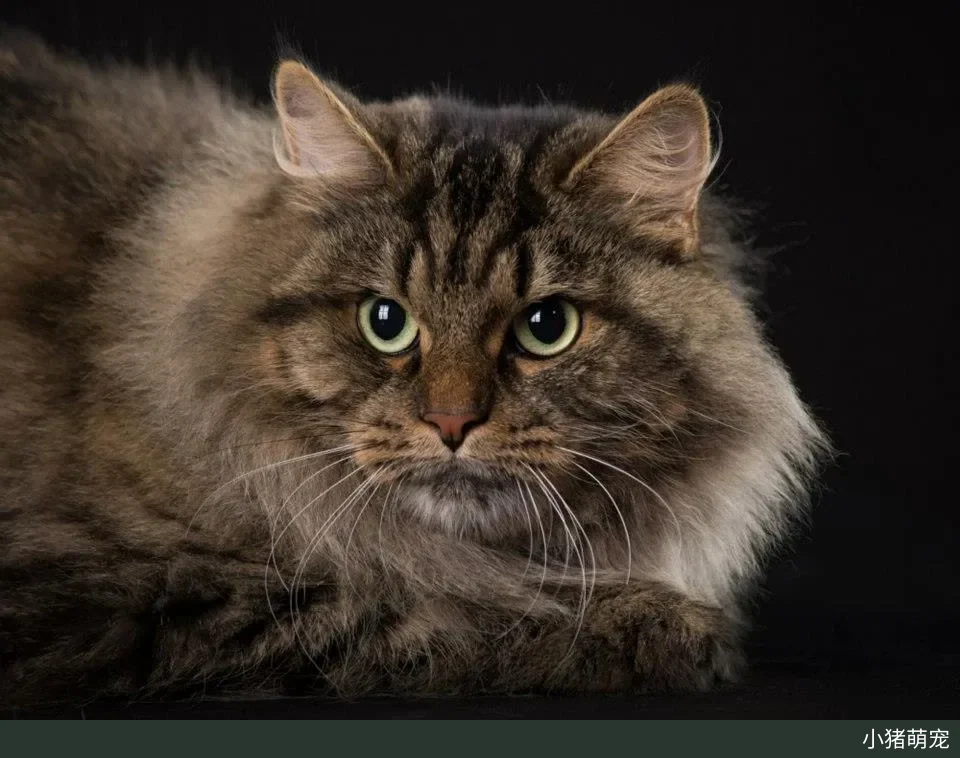
Brown tabby Siberian Arda, showing the fluffy facial furnishings and nearly round eyes. Image: Sibirela, from Wikimedia Commons, license CC BY-SA 3.0.
The Siberian is a large semi-longhaired cat native to Russia; CFA calls it Russia’s “national cat.” It has a waterproof triple coat and a rounded, solid build, is affectionate and curious, but grows slowly—often taking three to five years to reach full maturity. Drawing on breed-association materials and veterinary research, this article covers origin, appearance, temperament, health, and care essentials, and explains the limits of the “hypoallergenic cat” claim.
Origin and breed recognition
Siberians come from the forests and subarctic regions of Siberia in Russia. Both CFA and TICA trace the earliest local records to around the year 1000: farmers and merchants mainly cared for them then, their “day job” was catching mice, and in Russian fairy tales they often appear as guardians of children. TICA’s breed history notes that “Siberian cats” appeared at early cat shows in the 1870s and at the 1884 Madison Square Garden show in New York, and that works such as Harrison Weir’s Our Cats (1889) mentioned them, while also acknowledging that early written information is scarce.
Systematic records begin after Russian cat fanciers organized in the 1980s: Moscow’s Kotofei club drafted the first breed standard from two cats, and 12 Siberians were shown at the 1989 All-Union cat show. In 1990, Elizabeth Terrell (Starpoint cattery) brought the first breeding Siberians into the United States—three cats, according to TICA. Associations then accepted the breed in turn: TICA’s breed profile says it entered the new-breed program in 1992 and received championship status in 1996 (an older TICA page says 1993; the two accounts disagree); FIFe recognized it in 1997; CFA accepted registration in 2000 and championship status in 2007.
Appearance and coat
Siberians are medium-to-large cats that feel heavier than they look. CFA’s reference weights are about 12–18 lb (about 5.4–8.2 kg) for adult males and about 8–12 lb (about 3.6–5.4 kg) for females. It is one of the slowest-maturing breeds: CFA’s introduction says most reach adult size around age three, while the breed standard says full maturity may take five years; TICA likewise says they “fill out” around age five. The standard’s overall impression is “circles and curves, not rectangles and triangles”: the head is a modified wedge with rounded contours, the muzzle full, the eyes large and nearly round, the ears medium-large and slightly forward-tilted; the hind legs are a little longer than the front, the paws large and round, often with tufts between the toes. CFA’s standard also stresses that this is “a cat designed by nature for survival, with no extreme body type”; legs that are too short or too long, or a straight nose bridge, are penalized.
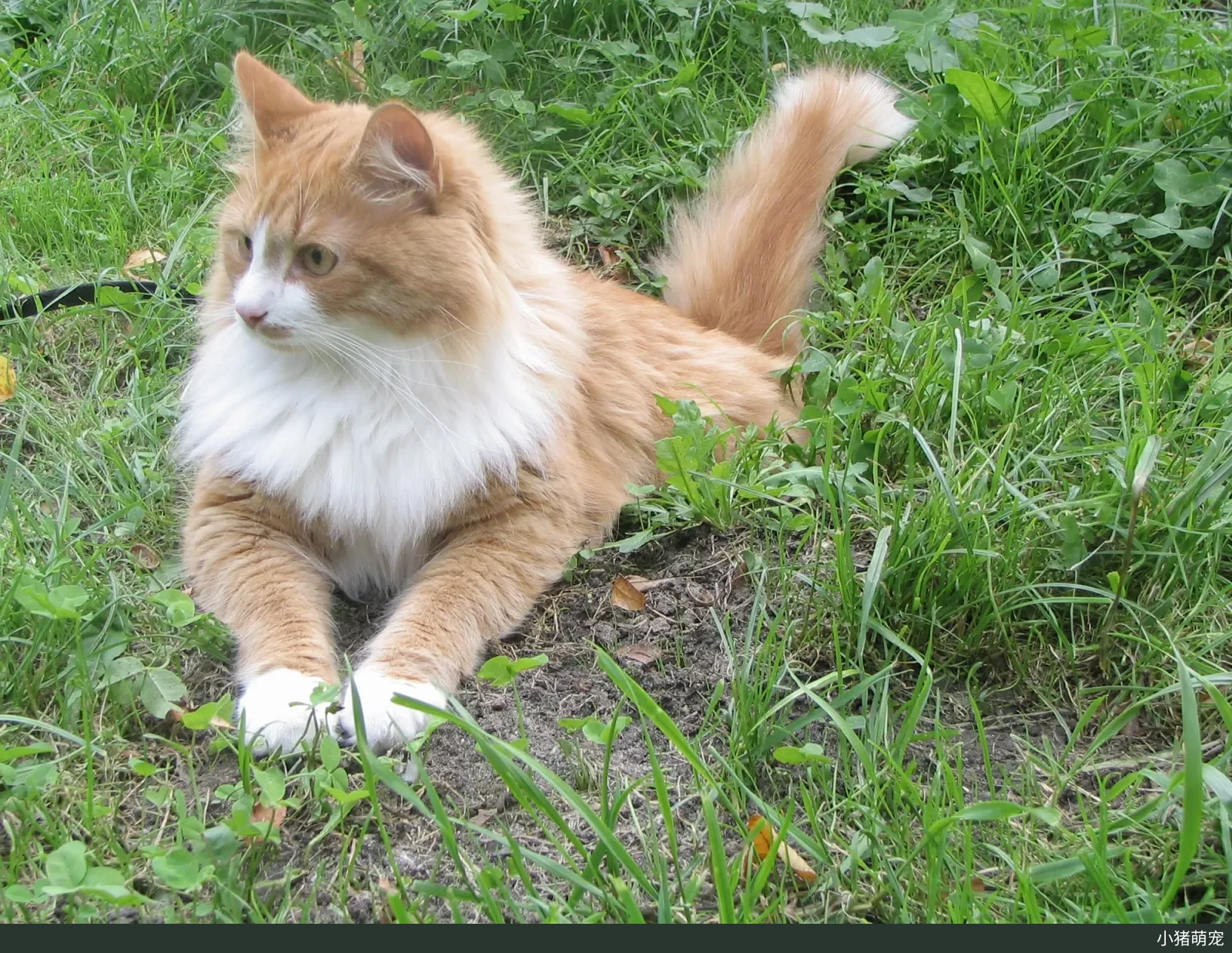
Red Siberian male Tofik, from a Siberian cattery in Poland; compared with the brown tabby in the hero image, the breed’s colors are clearly diverse. Image: Mstachul, from Wikimedia Commons, license CC BY-SA 4.0.
Its most distinctive feature is the coat. CFA and TICA both describe a triple coat; the FIFe standard calls it semi-long, very dense, with a fluffy undercoat and an outer coat that is waterproof and slightly hard to the touch. The coat changes markedly with the seasons: winter brings a full neck ruff, chest furnishings, and “breeches” on the hind legs; summer brings a shorter, thinner coat. Color rules differ by association: CFA accepts almost all colors, including pointed colors (darker face, ears, legs, and tail, as in Siamese) and “bi-metallic” silver-and-gold combinations, but not chocolate or lilac; FIFe’s Siberian does not accept pointed colors—pointed individuals belong to the separate breed Neva Masquerade, recognized in 2011.
Temperament and living together
Per CFA and TICA, Siberians are smart and curious, natural “puzzle solvers”: they investigate cabinets, closets, and suitcases, figure out how to open doors to find their people or the food, or dig out toys you have hidden. They are not loud or demanding, more like easygoing sidekicks who like to stay near the family and know what is going on at home. CFA quotes owners describing them as “90% quiet and gentle, 10% mischievous”; TICA says they love wand toys, follow family members around, and enjoy attention without being overly clingy.
Both associations say they usually get along with children, dogs, and other animals; they do not vocalize much, preferring deep, loud purrs, and TICA notes they may greet returning owners with a chirping trill. Their strong hind legs let them jump high and far. These temperament notes come from breed associations and owner experience, not behavioral science; each cat’s disposition also depends on the individual, upbringing, and socialization—observe the specific cat when you meet it.
Health issues and care essentials
TICA considers Siberians generally healthy, with a life expectancy of 11–18 years or more, but recommends screening for hypertrophic cardiomyopathy (HCM, a hereditary heart disease with abnormal thickening of the ventricular walls). CFA notes that responsible breeders test for HCM, polycystic kidney disease (PKD), and several other recessive genetic diseases, and choose breeding cats carefully to maintain genetic diversity. The difficulty is that no genetic test for HCM is currently available in Siberians: a 2009 study sequenced eight candidate genes in three affected Siberians and found no causative mutation; a 2020 Ghent University review noted that, except in Maine Coons and Ragdolls, other breeds rely on cardiac ultrasound by experienced cardiologists, with breeding cats ideally checked yearly during their breeding years.
For polycystic kidney disease, the UC Davis Veterinary Genetics Laboratory lists Siberians among breeds suitable for PKD1 genetic testing. PKD1 is autosomal dominant—one copy of the mutation is enough to cause disease: kidney cysts often appear before age one, while kidney failure usually shows later, so a healthy-looking kitten does not prove all is well. When choosing a kitten, ask the cattery for the parents’ PKD1 results and cardiac ultrasound reports. As for folded ears, short legs, or short faces and the controversies tied to conformation breeding, CFA’s “no extreme body type” standard places Siberians outside that category.
The often-cited “hypoallergenic cat” claim needs special caution. TICA’s breed page calls Siberians hypoallergenic because of lower levels of the major allergen Fel d 1, but current research does not support that conclusion: a 2017 University of Turin study tested only four Siberians; one with a particular gene mutation had low salivary Fel d 1 (0.48 µg/mL), while two others were above 1.5 µg/mL, and the authors themselves called for further study; a 2019 review in Allergy stated that all cats produce Fel d 1 regardless of breed or coat length, that no hypoallergenic cat exists, and that levels can vary widely among individuals and even in the same cat over time. If someone in the household is allergic to cats, consult a physician first and spend real time with the specific cat you plan to adopt before deciding.
Daily care centers on grooming. CFA notes that Siberian coats vary widely—some need weekly brushing, others go weeks without matting; the safest approach is to feel the belly, tail, and hind “breeches” several times a week, where mats form most easily, gently separate clumps with your fingers, then comb through with a steel comb. TICA recommends brushing several times a week, more often in spring and fall shed seasons; because the coat is highly water-resistant, baths are rarely needed. Also trim nails regularly, clean ears, brush teeth with veterinarian-approved pet toothpaste, and provide a tall scratching post; they love to jump high, so leave several elevated landing spots around the home. Keep vaccines, deworming, and routine checkups on schedule.
References
-
The Cat Fanciers' Association (CFA). Siberian (breed profile and standard). Accessed 2026-10-17.
-
The International Cat Association (TICA). Siberian. Accessed 2026-10-17.
-
Fédération Internationale Féline (FIFe). Siberian – Neva Masquerade breed standard. Revised 2026-07-01.
-
Schipper T, Peelman LJ, Smets P, Broeckx BJG. An overview of the current genetic and phenotypical selection strategies to reduce the prevalence of feline hypertrophic cardiomyopathy. Vlaams Diergeneeskundig Tijdschrift, 89, 2020.
-
Analysis of 8 Sarcomeric Candidate Genes for Feline Hypertrophic Cardiomyopathy Mutations in Cats with Hypertrophic Cardiomyopathy. Journal of Veterinary Internal Medicine, 2009.
-
UC Davis Veterinary Genetics Laboratory. Polycystic Kidney Disease (PKD1). Accessed 2026-10-17.
-
Sartore S, et al. Polymorphism Analysis of Ch1 and Ch2 Genes in the Siberian Cat. Veterinary Sciences, 4(4), 63, 2017.
-
Satyaraj E, Wedner HJ, Bousquet J. Keep the cat, change the care pathway: A transformational approach to managing Fel d 1, the major cat allergen. Allergy, 74(Suppl 107), 5–17, 2019.