The Biewer Terrier traces its beginnings to two tricolor puppies born in 1984 at the Biewers’ Yorkshire Terrier kennel in Germany. The couple continued breeding for those markings, and over time the dogs came to share a consistent set of traits. In 2021, the American Kennel Club (AKC) recognized the Biewer Terrier as a member of the Toy Group. The long, three-colored coat is one clue to the breed’s identity. Another is the shape of the dog underneath it.[1]
In the side view on the brick path, you can see all four legs and where the tail sits high on the body, its plume curving up over the back. The breed standard describes a dog with a level back, usually a little longer than it is tall. It stands 7 to 11 inches (about 18 to 28 cm) at the shoulder and weighs 4 to 8 pounds (about 1.8 to 3.6 kg). In the seated portrait against gray, small, upright V-shaped ears peek through the hair. Golden tan frames the face, and the white chest and front legs stand out against the dark coat along the side. When the coat grows long, it falls on either side of a part down the back and can hide much of the legs’ outline.[1]
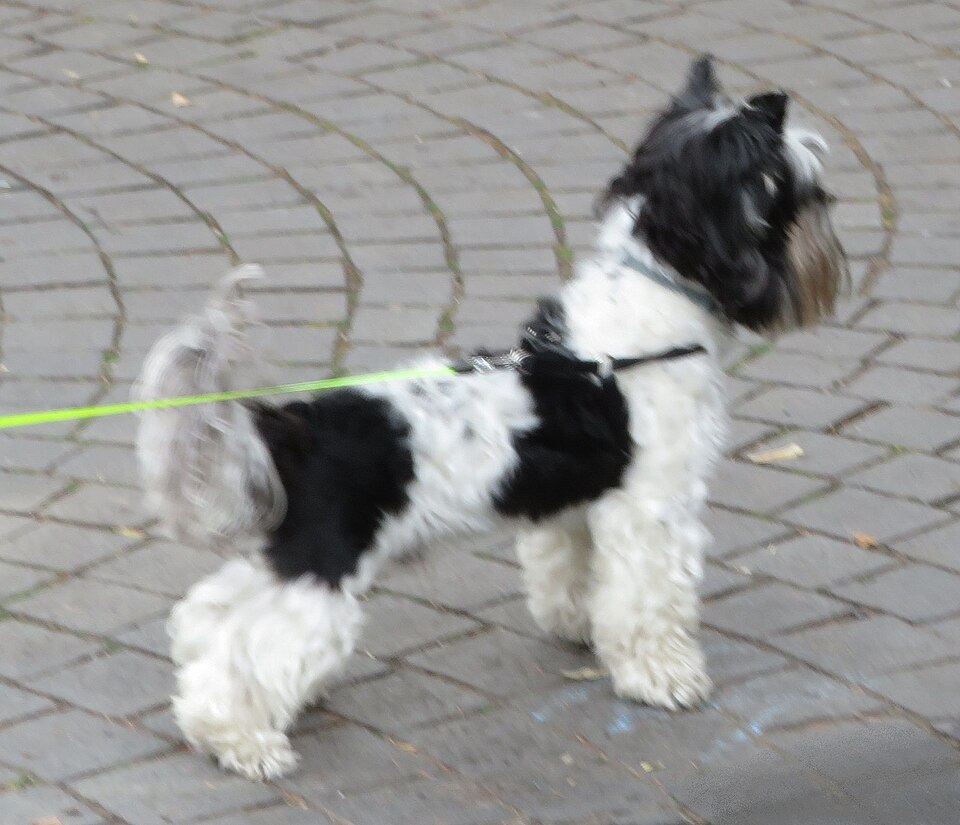
A Biewer Terrier stands in profile. Sciencia58, Wikimedia Commons[4]

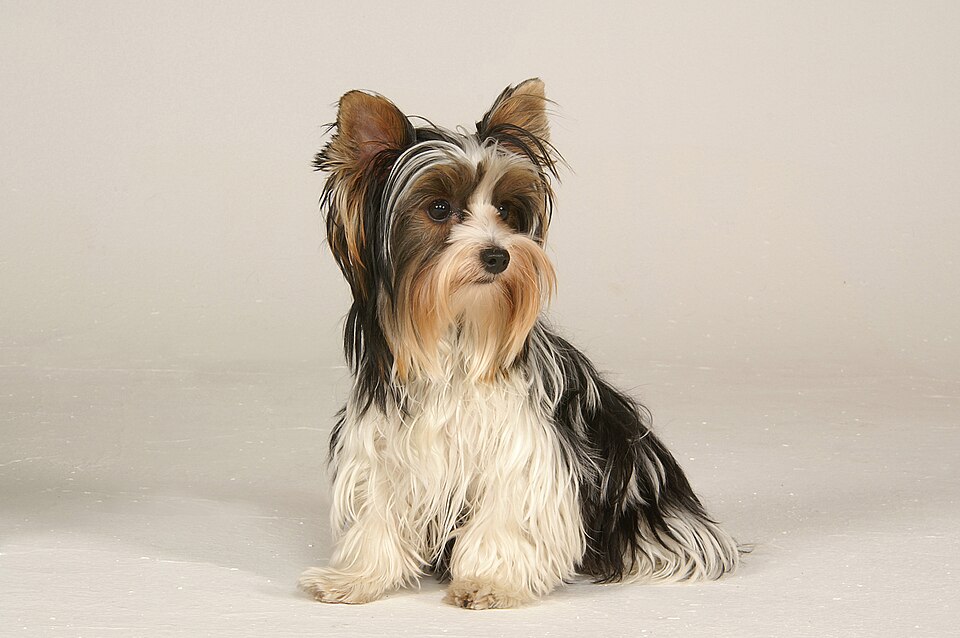
The portrait shows a Biewer’s upright ears and tricolor coat. Detlef Breiting, Wikimedia Commons[5]

Make room for a game at floor level
It’s easy to carry a dog this small for an entire outing. Yet Biewers are nimble, and many still follow the family around with a toy in their mouth well into adulthood. That gives you a place to start with play. Roll a ball gently across the floor and let the dog chase it. If your Biewer picks it up and takes a lap, leave room for the turn. Wait for the dog to come back for another round. All you need is a level stretch long enough for the dog to run out, turn and walk back.[1]
Crouch down and see where the ball is likely to roll. A dining chair could slide back at any moment. Someone coming through the front door with their hands full could miss a little dog underfoot. If the ball would head toward the stairs, aim it elsewhere. Keep both ends of the game on the same level. A child can sit on the floor to roll the ball while an adult keeps the dog in sight. That’s easier to supervise than a child trying to climb down from the sofa with the dog in their arms. Even a small apartment can work if the dog has room to play clear of the household foot traffic.
Outside, choose a stretch where you have time to put your Biewer down and walk at the dog’s pace. See whether your dog wants to keep going today or pause after a little while, and let that guide where you turn back. On rainy days, the AKC suggests short hallway walks or a game of hide-and-seek indoors. Start behind a partly open door, just a few steps away, so the dog can find you. Try another hiding place on the next round. Even on a day when a long outing is impractical, your dog gets to move, work out where you are and enjoy finding you.[1]
Follow playtime with a potty break
Biewers often enjoy learning tricks with people, though house-training can take longer. One easy opportunity to miss comes just as someone puts the ball away and everyone goes back to what they were doing. Puppies often need to go after play, on waking and after meals. Agree that whoever plays with the puppy will take it out afterward. Go to the same spot, wait quietly, then praise the puppy or offer a small treat right there as soon as it finishes. If the treat comes only after you’re back inside, the puppy may connect it with coming through the door.[1][2]
Before bringing a puppy home, try walking that route on an ordinary workday. Who can go downstairs with the puppy after breakfast? Who will be there when it wakes from a daytime nap? If there’s an elevator to wait for, where could you keep the leash so it’s ready to grab? If the puppy pees indoors, clean up and note when it last ate, woke up or played. Next time, head out a little earlier. For an apartment household, finding time for those brief trips can be harder than setting aside an hour for a weekend walk.[2]
Choose a coat length you can brush
Look at the Biewer standing on the gray bricks below. The hair on top of the head is tied up, but long sections still hang from the cheeks, chest and sides of the legs. If you like that look, think about who will sit down with the dog in the evening and brush each of those places. The AKC recommends daily brushing for a Biewer in full coat. Softer hair tends to tangle more readily than silkier hair. Once the glossy hair down the back is smooth, run the brush through the furnishings along the legs, where a tangle is easier to miss.[1]
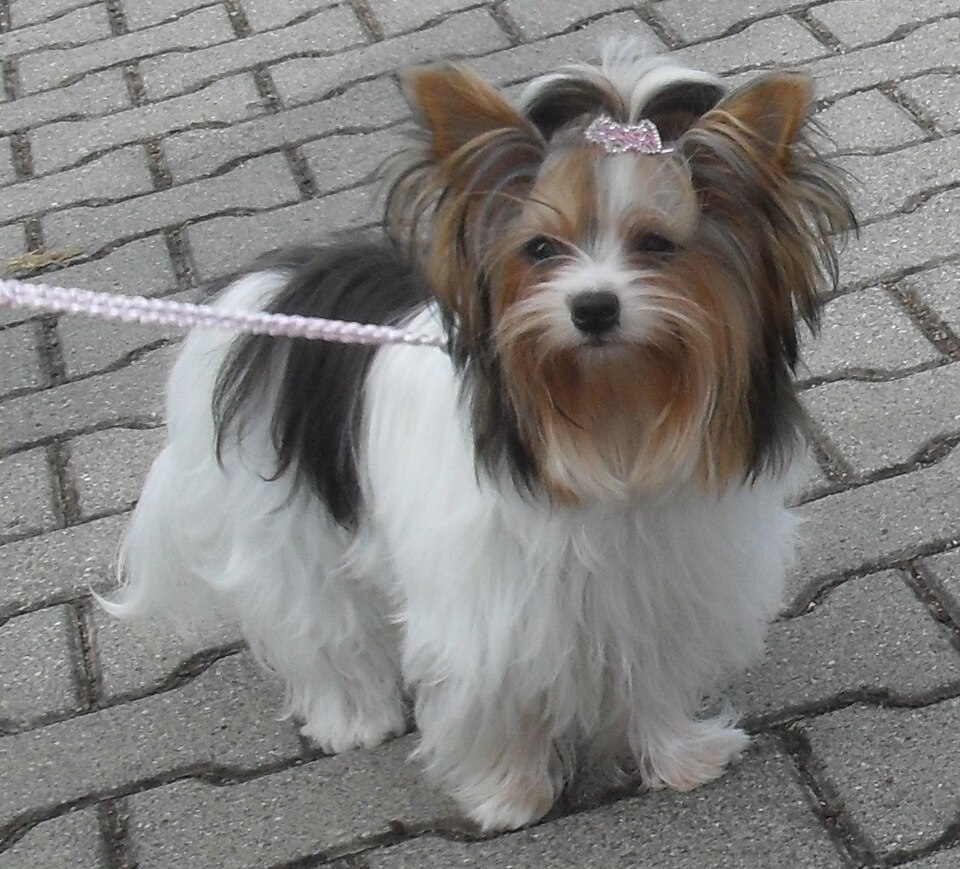
A Biewer Terrier wears its coat long. Sciencia58, Wikimedia Commons[6]

If your family enjoys taking the dog out but struggles to brush a full coat every day, a shorter cut is a practical choice. It reduces brushing time. You’ll still need to brush the dog’s teeth, check the ears for wax and debris, and trim the nails regularly. The mouth deserves particular attention. The Biewer Terrier Club of America identifies retained baby teeth and tartar buildup as concerns in this small breed. As your puppy’s teeth change, watch for an adult tooth coming in alongside a baby tooth that’s still in place. If you see one, point it out to your veterinarian for an examination.[1][3]
Before bringing a puppy home, ask the breeder for both parents’ screening records. Look for an eye examination by a veterinary ophthalmologist, a knee evaluation for patellar luxation, and two DNA tests. One tests for primary lens luxation (PLL), the other for the progressive rod-cone degeneration form of progressive retinal atrophy (PRCD-PRA). The breed club lists these screenings for breeding dogs. Each answers a different question, so ask to see the eye and knee examination records even if you already have the DNA results. Once the puppy is home, pay attention to changes in the puppy itself. Contact your veterinarian promptly if diarrhea or an unusual stool color persists.[1][3]
Picture your busiest day. Is there still a stretch of the walk your Biewer can cover on its own four feet? Can someone stay with the puppy long enough after a game to take it out? Who will pick up the brush that evening? The walk can be short, the game can change, and the coat can be clipped. Once you can put a person and a time to those everyday tasks, it’s easier to picture life with this little dog.
References
-
[1] American Kennel Club. Biewer Terrier.
-
[2] American Kennel Club. How to Potty Train a Puppy: Daily Habits That Build Success.
-
[3] Biewer Terrier Club of America. Health Statement for the Biewer Terrier Club of America. December 2025.