A coat of white fur and a full plume of a tail can make a Turkish Angora look like a quiet aristocrat. It is often an active companion that likes to climb and to take part in the household, and it is not only white. The breed, from the area of Ankara, passed through a period of being bred into the Persian and was later kept going by a zoo. To know it, look at the silky coat and also at what companionship it needs and which health risks are actually supported.
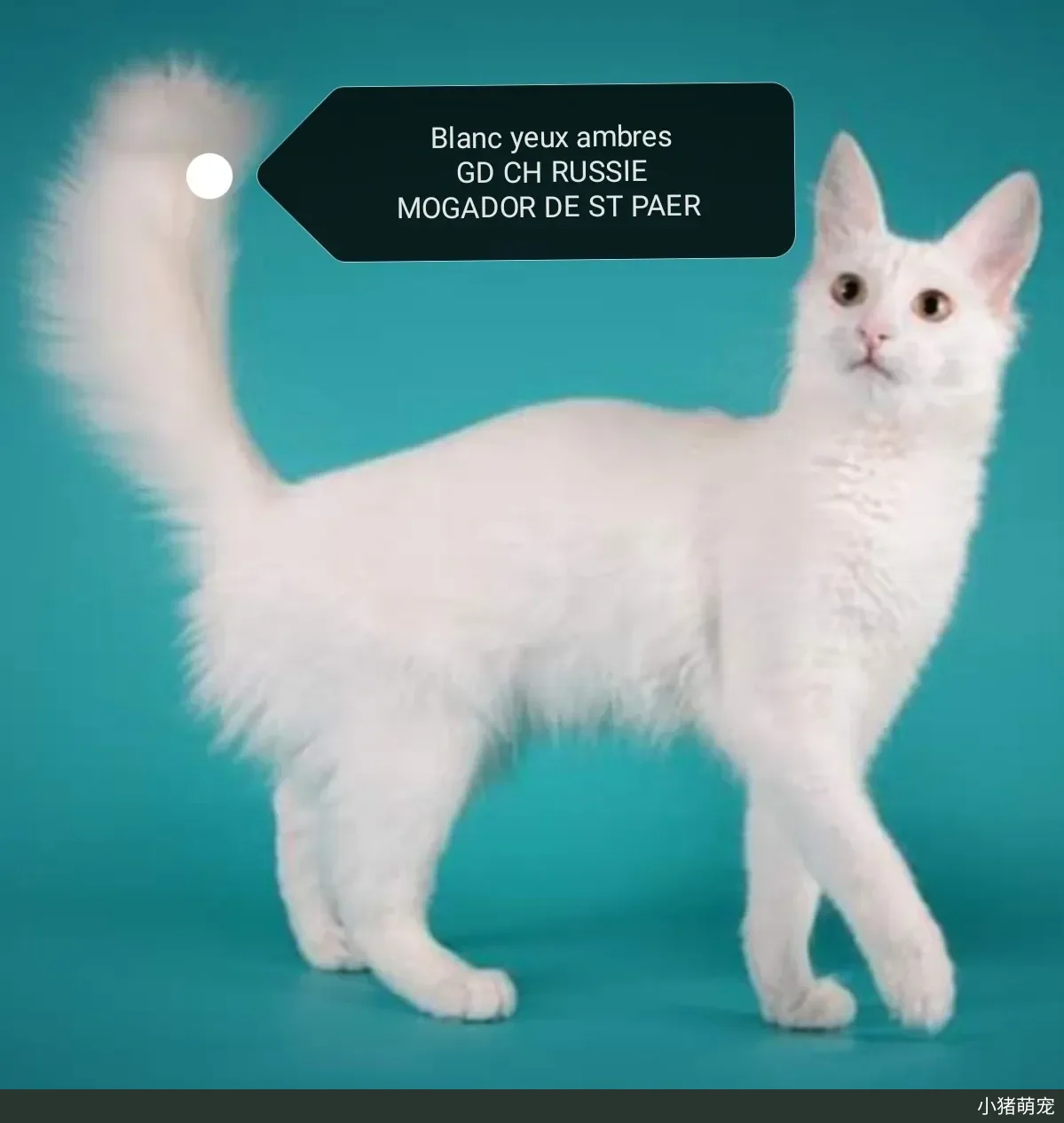
A white Turkish Angora with amber eyes. The label on the photograph reads “Blanc yeux ambres,” “GD CH RUSSIE,” and “MOGADOR DE ST PAER.” Photograph: Vinydeluz, File:Angora turc Blanc yeux ambres MOGADOR DE ST PAER.jpg, CC BY-SA 4.0. The original file is 1199×1228. The copy on this site keeps that width and adds a 38 px bottom bar reading 小猪萌宠; the file is 1199×1266.

From Ankara to a conservation breeding program
The Turkish Angora comes from the area of Ankara, and the name is tied to the older name Angora. The TICA breed history records that, in the early twentieth century, it was used in Persian breeding and for a time disappeared as a breed of its own. The conservation program at Ankara Zoo concentrated on breeding white cats. In 1962 the zoo allowed a pair to go to the United States, which gave a basis for rebuilding a breeding population there. TICA breed history[3]
This history comes mainly from the breed associations’ accounts. CFA and TICA do not agree on the date when the breed first reached Europe, and the year the conservation program began is also not settled.
A silky coat, and more than one color
The CFA standard stresses a medium size, a long and muscular body, and a single coat with a silky sheen. A ruff at the neck, furnishings on the hind legs, and a full long tail are conspicuous features. White is representative, but it is not the only color. Black, blue, red, tabby, and bicolor, among others, are also in the standard. Chocolate, lilac, and pointed patterns do not meet it. A long white coat, or eyes of different colors, is not enough to confirm the breed. CFA standard[1]
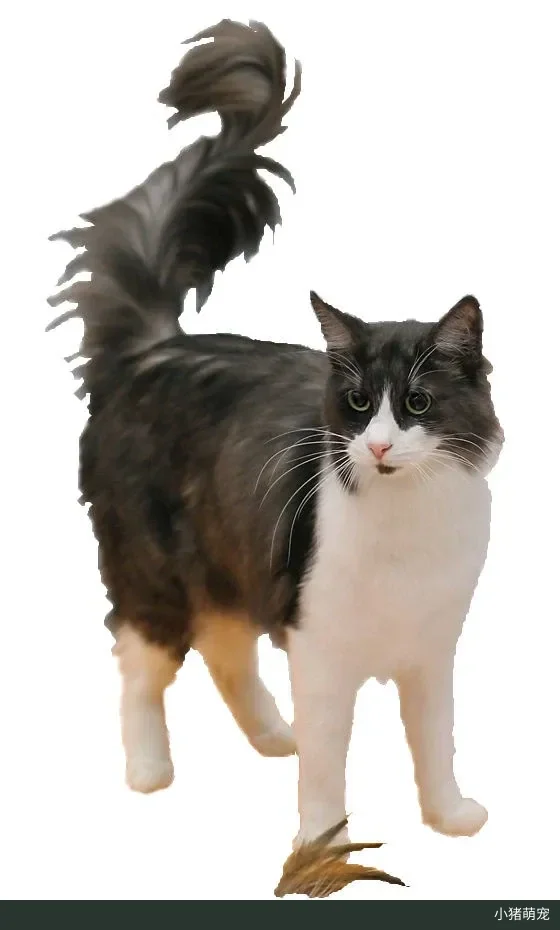
A dark-and-white cat with a white chest and a feathered tail, isolated on a white ground. Photograph: Desaix83, after the work of Heikki Siltala, File:Angora Turc Fond Blanc.jpg, CC BY 3.0. The original file is 560×900. The copy on this site keeps that width and adds a 30 px bottom bar reading 小猪萌宠; the file is 560×930.

An active character, and day-to-day care
TICA describes the breed as intelligent, active, curious, and fond of taking part in household life. The look is elegant, and the cat may still be the one at home that climbs and chases a toy. That is a breed tendency. The actual character still depends on the individual and on how it grew up. Care can start with a gentle combing once a week, adjusted for shedding and for mats. A silky semi-long coat usually tangles less, and it still needs regular grooming. Interactive play, a stable place to climb, and a safe spot by a window answer the need to be active. TICA profile[2]; grooming notes[3]
Hearing risk, and an open health question
The Cornell Feline Health Center notes that the risk of hereditary deafness in an all-white cat deserves attention, especially when one or both eyes are blue. The material is about white cats in general, not a rate specific to the Turkish Angora. Appearance does not replace a hearing test, and deafness on one side may be hard to notice in daily life. A hearing assessment can be discussed with a veterinarian at a checkup. A deaf cat should not be left outside alone where it could meet a danger, such as a vehicle, that it cannot notice in time. Cornell veterinary note[4]
It is often said online that the breed has “hereditary ataxia.” Veterinary research that would state a causal gene, a mode of inheritance, or a rate of occurrence is lacking so far, and there is no genetic test that can rule the risk out. A kitten with an abnormal gait should be examined by a veterinarian, and should not be explained by the breed on one’s own.
References
- CFA: Turkish Angora
- TICA: Turkish Angora
- TICA breed introduction and history (PDF)
- Cornell: White Cats and Blindness/Deafness
Checked on 18 October 2026.