A Bedlington Terrier standing still has the silhouette of a lamb. For a better idea of what it might be like to live with one, consider how the breed got its name. In the nineteenth century, people in the mining district around Bedlington in Northumberland, England, kept these terriers to catch rats in coal mines and pursue small animals. A Bedlington today may happily curl up beside you after a walk, yet break into a sprint at the sight of a squirrel. Both parts of that day deserve a place in your plans.[1]
Look at an adult from the side. The back arches over the loin, and the slim tail curves like a scimitar. A full topknot gives the head its pear-shaped outline, while a tassel of hair hangs from the tip of each folded ear. The crisp curls follow the lines of a lightly built dog. In motion, the Bedlington has a spring in its step and can gather speed quickly in pursuit. If you have a chance to meet one, watch how it sets off, turns and falls into step with the person walking it.[1]
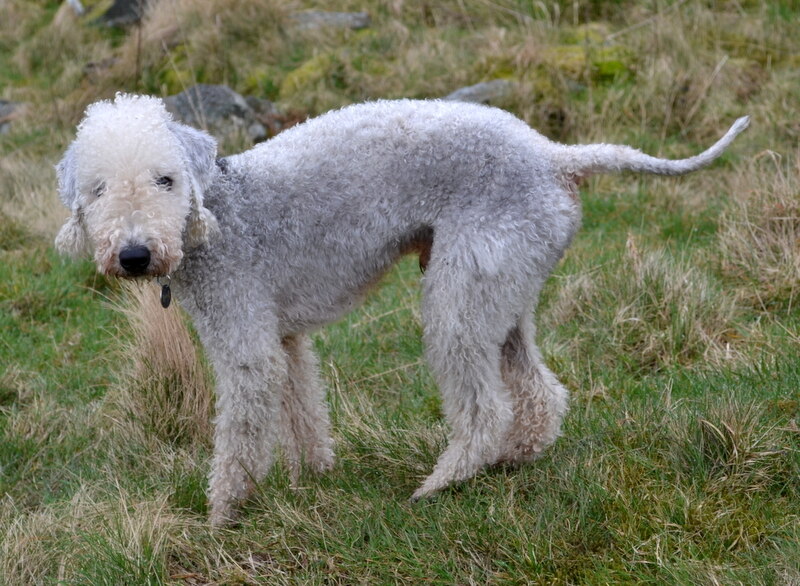
Figure: The Bedlington in profile. Jonathan Palombo, Wikimedia Commons[2]

Start with the walk someone in your household could take on an ordinary workday. The American Kennel Club (AKC) lists long walks, runs and games of fetch among the activities Bedlingtons enjoy. Clip on the leash before leaving home and choose a route with room to pause while the dog sniffs and a stretch where you can walk briskly together. Let the individual dog's age, stamina and energy that day guide your pace. A weekend hike is a pleasure, but the route from your front door is the one you are likely to use most often.[1]
For a game that lets a Bedlington stretch out in pursuit, take a toy to a securely fenced space. Keep the leash on during the walk there. Once inside, check that the gate latches and that there are no gaps under the fence. Throw the toy toward the middle so the dog has room to chase it down and carry it back, even if it takes an odd bounce. If you plan to play in your own yard, look at the gate from the dog's side. Can someone coming home with their hands full open it while the dog is loose?[1]
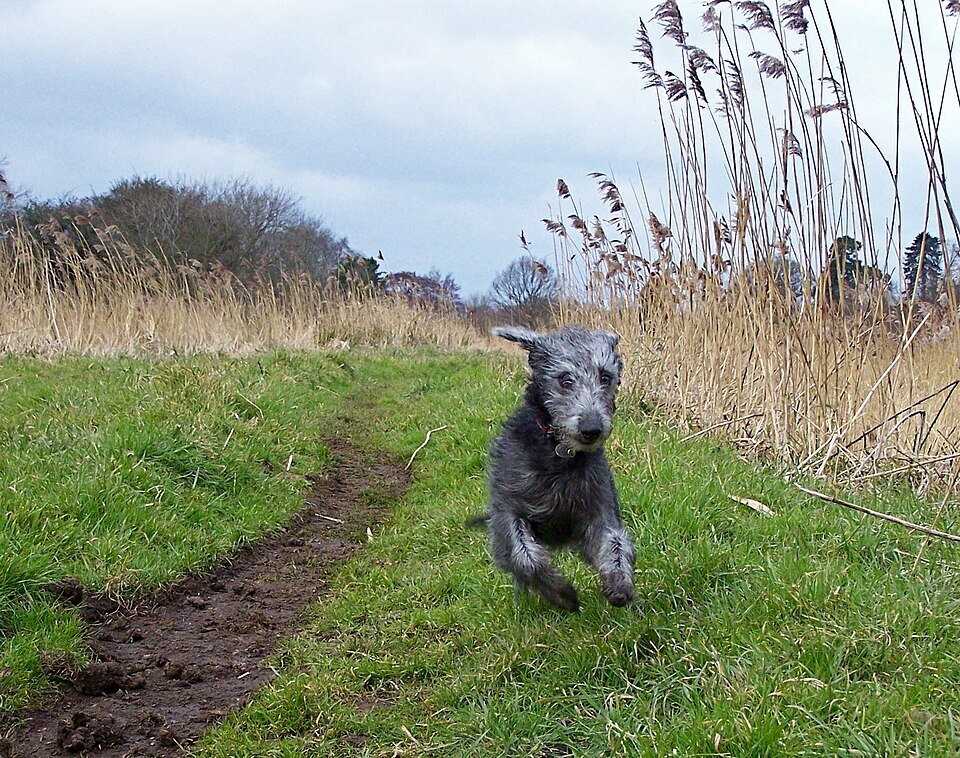
Figure: A Bedlington on the run. Whippetsgalore, Wikimedia Commons[3]

Fetch gives you a natural moment to practise coming when called. In a quiet enclosure, wait until the dog picks up the toy and turns toward you. Use a familiar call, praise the dog or offer a small treat as it reaches you, then throw the toy again. Coming back can mean another turn at a favourite game. Bedlingtons are bright and willing to cooperate, though they can have ideas of their own. If the toy has the dog's full attention, try a shorter throw and reward the return promptly. Harsh or physical corrections can turn practice into a contest of wills.[1]
Before a puppy comes home, agree on who holds the leash at the door, which word everyone will use to call the dog and how to reward it. Early socialization can fit into a walk. Let the puppy watch people from a distance where it can still pay attention to you, and praise it when it looks back. If you already keep small animals that dart or scurry, plan separate spaces and decide who will supervise when doors open. A Bedlington's affection for the family can coexist with a keen interest in anything that moves quickly.[1]
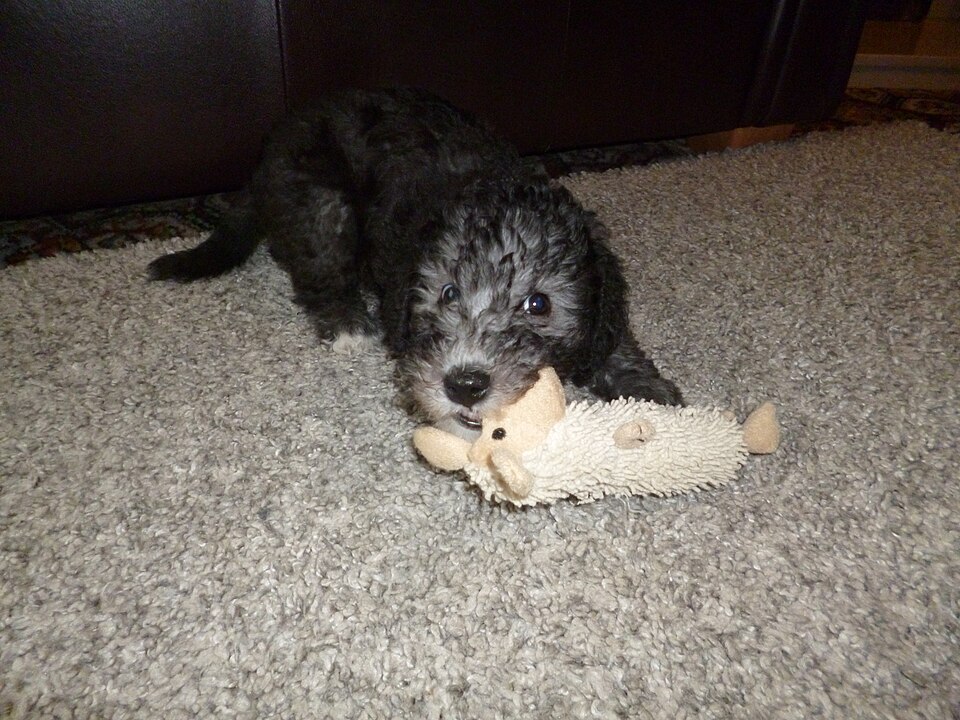
Figure: A Bedlington puppy's coat. Mball93, Wikimedia Commons[4]

Compare the puppy chewing its toy with the adult in profile. Dark hair lies close around the puppy's face, and its pale paws show against the rug. On the groomed adult, the hair left on the crown and at the ear tips accentuates the outline. Some of that familiar shape is the groomer's work. A Bedlington's curls contain a mixture of soft and harsher hairs that gives the coat a crisp texture without the wiry feel of some terrier coats. It sheds very little and grows quickly, so a clean sofa tells you little about when the next trim is due.[1]
Allow for two kinds of grooming in the family calendar. The AKC suggests brushing or combing once or twice a week and clipping about every two months. Some owners learn to use both electric clippers and scissors. Others book a groomer familiar with the coat and do the combing at home between visits. Before bringing a puppy home, find out where you could take it for a trim, how the journey would fit into your week and how to care for the curls between appointments.[1]
Grooming is a convenient time to check the ears and see whether the nails need trimming. Overlong nails can hurt and interfere with walking or running. Teeth need brushing daily. When talking to a breeder, ask to see both parents' health screening records. The AKC mentions hip and elbow dysplasia, hypothyroidism, certain eye problems and bleeding disorders including von Willebrand disease. For each result, check which parent was tested and for which condition. Your veterinarian can assess the puppy's own health through its history and examination.[1]
Picture a typical week with a Bedlington. Who would enjoy taking the leash on a weekday morning? Where could you throw a toy and let the dog run after it? There is also the quieter pleasure of a dog settling beside you afterward, and the regular business of getting out the comb or taking it for a trim. If the lamb-like profile first caught your eye, consider which of those ordinary moments you would look forward to sharing.[1]
References
-
[1] American Kennel Club. Bedlington Terrier.
-
[2] Jonathan Palombo. "Elvis" the dog (6990154625).jpg. Wikimedia Commons.
-
[3] Whippetsgalore. Running dog.jpg. Wikimedia Commons.
-
[4] Mball93. Bedlington Puppy.jpg. Wikimedia Commons.