California kingsnakes (Lampropeltis getula californiae / Lampropeltis californiae) are widely captive-bred mid-sized colubrids with steady rodent appetites, often labeled beginner-friendly. The Reptiles Magazine care sheet’s real test is escape-proofing, a thermal gradient, and solitary housing—these snakes find lid gaps and may treat cage-mates as prey.[1][2]
Enclosure security: gaps beat length
Adults need about a 50-gallon terrarium or larger; a 4×2×2 ft setup is generous. Hatchlings can start smaller, but every opening must lock. A practical perimeter check is that a touring snake should not cover more than about two-thirds of the cage edge—yet bigger is better. Kingsnakes are escape artists, so lids, cable ports, and sliding doors need attention first. They eat other snakes; never raise juveniles together, and isolate feeding even in adult breeding groups.[1][2]
Heat, substrate, and water
Target roughly 85°F on the warm end and the 70s°F on the cool end with thermostat-controlled belly heat or ceramic emitters—not hot rocks. Room daylight is usually enough lighting, but never park the cage in a sun-baked window. Aspen, cypress mulch, or coconut coir work as dry substrates; place a hide on each end. Offer a water bowl deep enough for soaking that will not flood the cage when half full; keep the enclosure dry and reduce standing water if humidity climbs.[1][2]

Figure: California kingsnake (Lampropeltis californiae). Caudatejake, Wikimedia Commons


Figure: Banded California kingsnake. Haplochromis, Wikimedia Commons

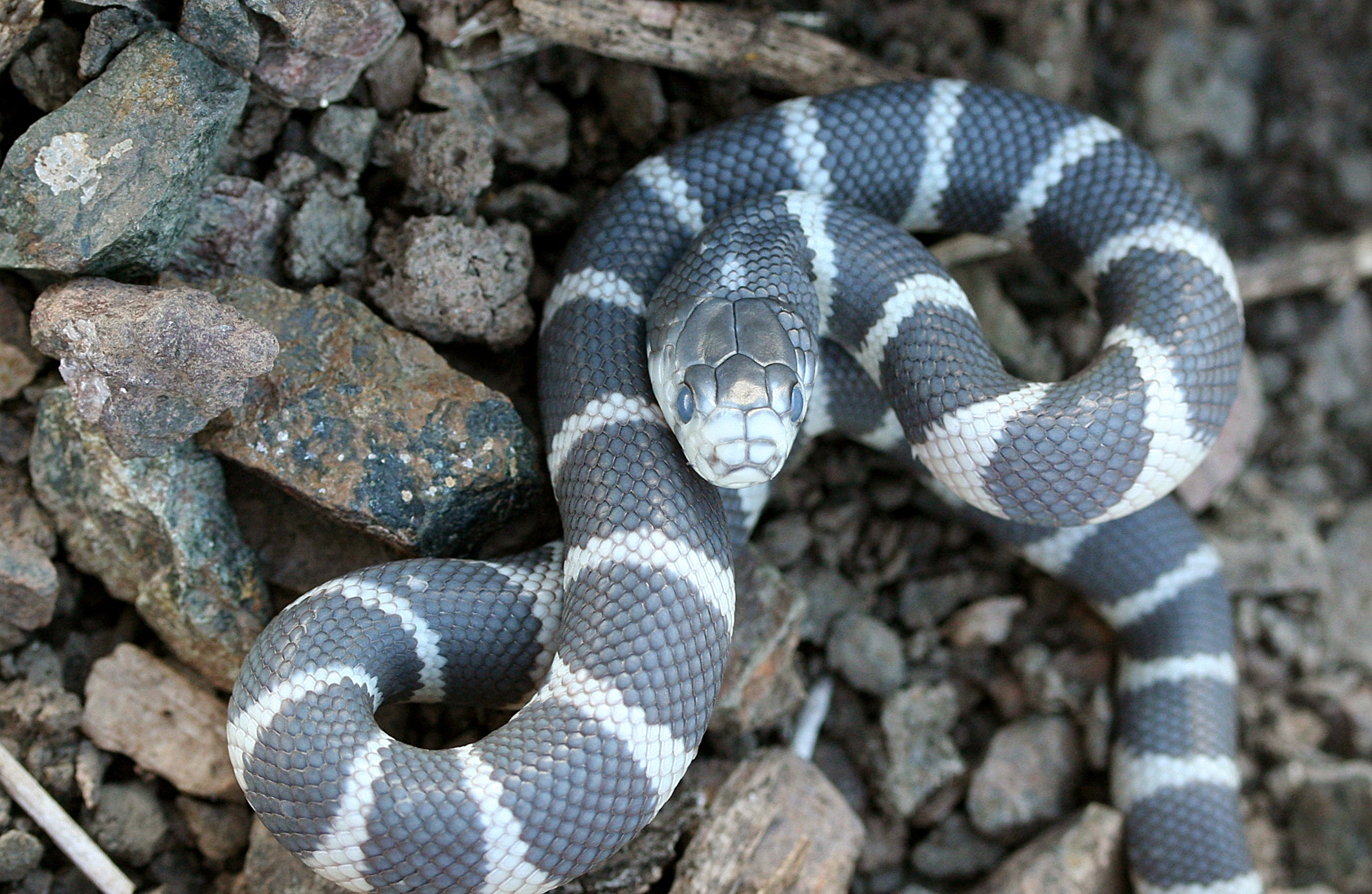
Figure: Coiled California kingsnake. Calibas, Wikimedia Commons

Feed appropriately sized rodents, preferring thoroughly thawed frozen prey; live adult mice can injure the snake. A post-feed bulge a bit wider than mid-body is enough, and new arrivals should be left alone until that meal digests. Adults need obesity control more than extra meals. Where wild populations remain common, follow local collection laws and choose captive-bred, rodent-feeding animals instead of wild-caught snakes.[1]
References
[1] Robert Applegate / Reptiles Magazine. California Kingsnake Care Sheet (updated 2023-01-27).
[2] John Virata / Reptiles Magazine. California Kingsnake Care Tips.