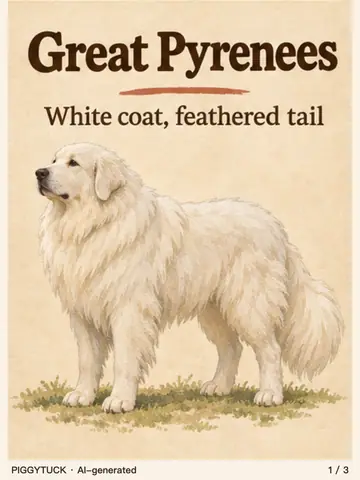
Great Pyrenees worked alongside shepherds and herding dogs on the France–Spain border, guarding flocks from wolves, bears, and rustlers. Long watches on steep slopes called for a dog that could tolerate cold, stay calm for hours, and respond quickly to a threat.[1] This Working Group breed can reach about 32 inches at the shoulder and often weighs more than 100 pounds. Its coat is white or mostly white with badger, grey, or tan markings. The standing and reclining photos show the body’s proportions, and the snowy close-up gives a clearer view of the head and ears.[1]
White double coat and head cues
The weather-resistant double coat may be all white or have grey, tan, reddish-brown, or badger markings. Look for a wedge-shaped head, slightly rounded crown, dark almond-shaped eyes with black rims, and V-shaped ears that usually hang low against the head. Longer hair forms a ruff, a plumed tail, and feathering on the thighs.[1] The outer coat lies flat or is slightly wavy over a dense undercoat. A curly or upright Samoyed-like coat is considered a fault in the breed standard.[1] Use the photos to compare proportions and measure the dog or check its records for size.
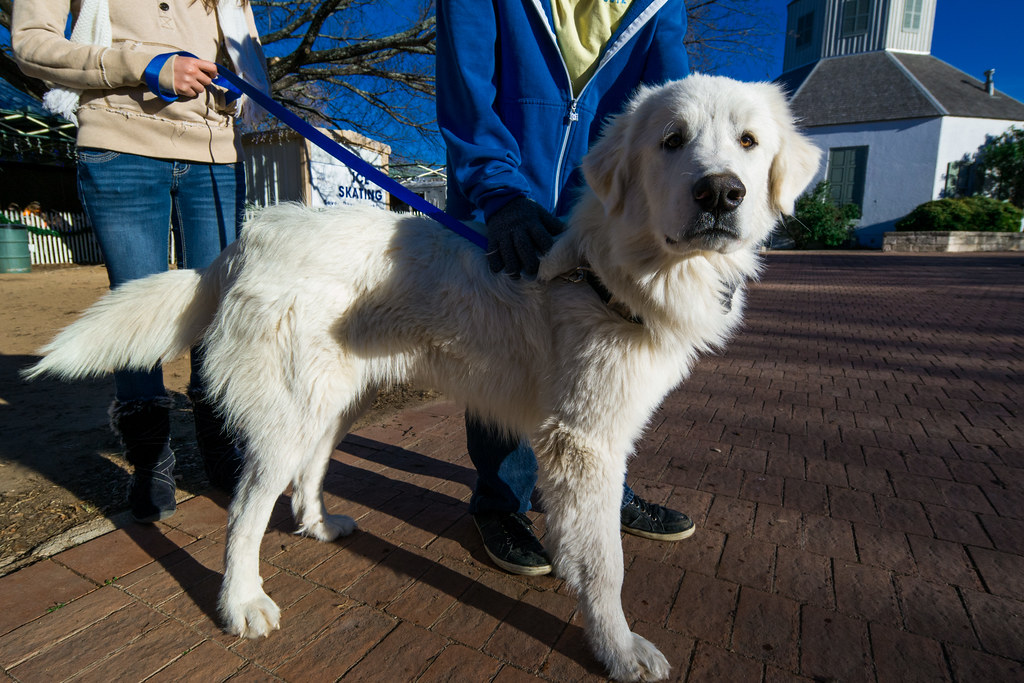
Figure: White Great Pyrenees standing on brick paving with a blue leash. Nan Palmero, Flickr[2]
Moderate exercise and independent training
Bred to patrol and save energy for genuine threats, Great Pyrenees usually do well with moderate walks. Some enjoy obedience or cart work. At home, leave enough space for a grown dog to turn and lie down, install secure fencing for outdoor patrols, and use leash equipment that can handle its strength.[1]
Historically, these dogs worked with little direction and guarded flocks overnight. They can take their time in repetitive obedience drills, yet early socialisation and puppy classes help establish everyday manners.[1] Night barking is common enough to consider before bringing a Pyr into an apartment or a noise-sensitive household.[6]
Some Great Pyrenees eat less than their size suggests. Discuss an appropriate large-dog diet with the veterinarian. Smaller, more frequent meals and avoiding vigorous exercise around feeding are common precautions against bloat and GDV.[1]
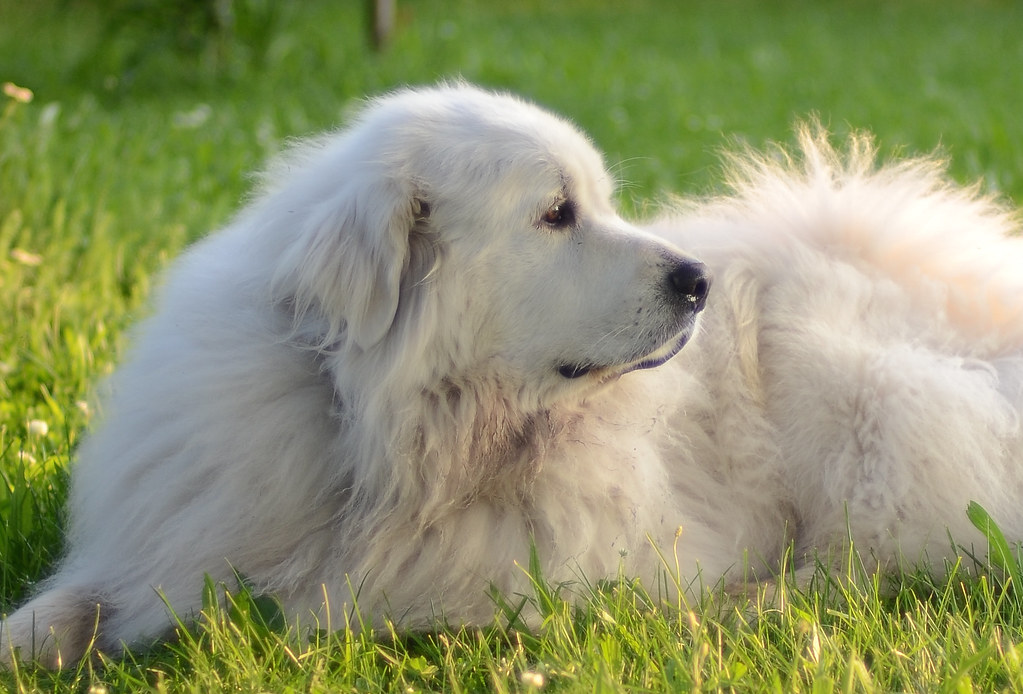
Figure: White Great Pyrenees reclining on green grass. Aiko, Flickr[3]
Dirt-resistant coat and shed “snowstorms”
The long outer coat tends to resist dirt and tangles, while the soft undercoat can come out in a “snowstorm” when it sheds.[1] Brush thoroughly at least weekly with a pin or slicker brush and increase brushing during heavy shedding. Washable covers and regular vacuuming help with loose hair. Trim nails regularly and brush teeth with dog toothpaste.[1]
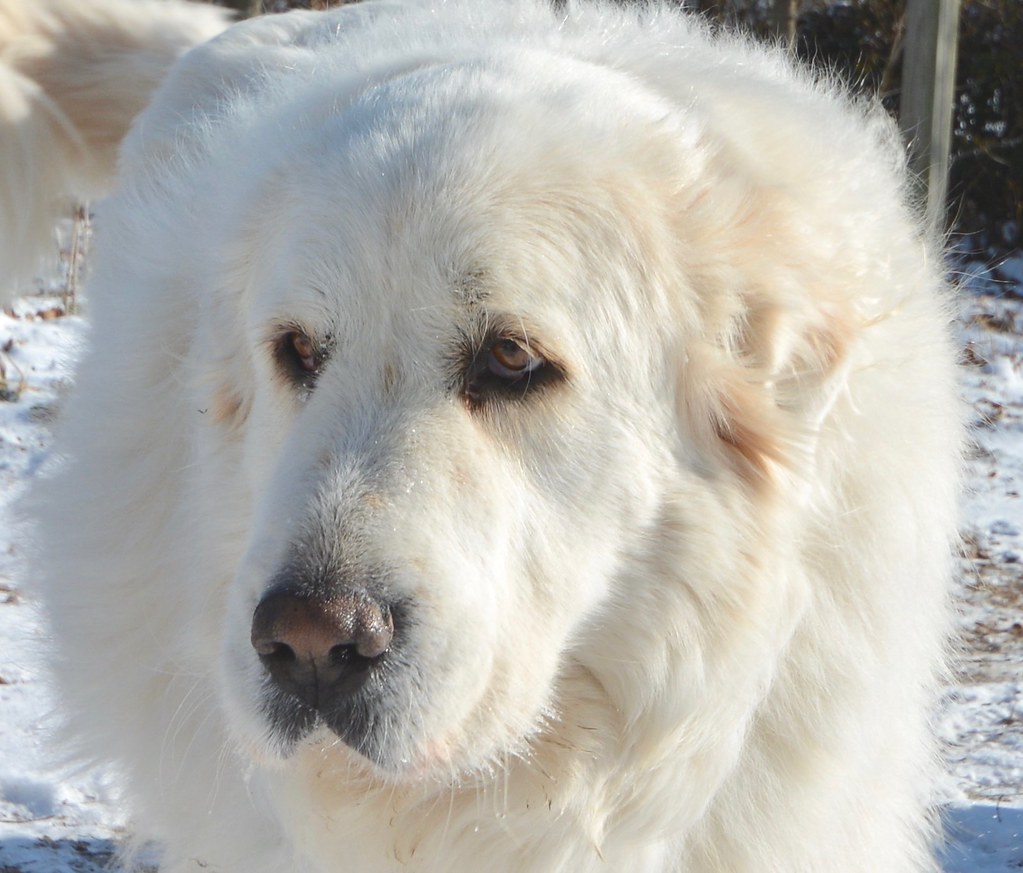
Figure: White Great Pyrenees head and upper body with snow behind. Aiko, Flickr[4]
Bloat/GDV and club screening talks
Ask breeders about screening for elbow and hip dysplasia, eye disorders, luxating patellas, and relevant neurological and immune-mediated problems. Some cancers occur in the breed. Large dogs can also develop bloat and GDV, so consider smaller meals and leave quiet time around feeding.[1] Abdominal swelling, heavy drooling, unproductive retching, restlessness, or trouble breathing can signal an emergency. Seek veterinary care immediately.[5] Ask a veterinarian to interpret screening results or evaluate changes in gait, breathing, or appetite.[1]
A white or white-marked double coat, wedge-shaped head, and low ears help identify a Great Pyrenees. Registration can confirm breed identity. Before bringing one home, plan for moderate walks, secure fencing, independent behaviour, weekly brushing, and space for a very large dog. Ask about joint and eye screening.[1] Be ready to seek emergency care for sudden abdominal swelling or unproductive retching.[5]
References
-
American Kennel Club. Great Pyrenees.
-
Palmero, N. Great Pyrenees Dog on a Leash.
-
Aiko, Thomas & Juliette+Isaac. Isaac on grass.
-
Aiko, Thomas & Juliette+Isaac. Miss “Dreamy eyes J”.
-
VCA Hospitals. Bloat: Gastric Dilatation and Volvulus in Dogs.
-
American Kennel Club. 11 Fun Facts About the Great Pyrenees.