The Shih Tzu was once a companion in Chinese courts and still fits easily into family life. It is small, heavily coated, and often wins people over with an affectionate yet somewhat independent temperament. Long hair needs ongoing grooming, though, and eye and short-muzzle health risks cannot be ignored. Getting to know the breed means weighing the cute looks against the daily care you will give.
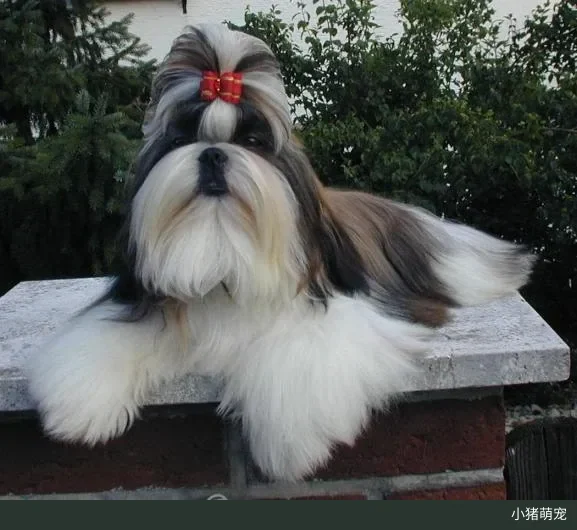
Photo: Melanie Dullinger — White Magic Kennels; source: Wikimedia Commons; license: CC BY-SA 3.0. Original converted to WebP.

Roots and court history
The Shih Tzu’s history is best framed as “roots in Tibet, developed in China.” FCI Standard No. 208 lists the country of origin as Tibet (China) and records that such dogs lived in Chinese courts; the standard also stresses clear differences from the Lhasa Apso—the two should not be conflated.
On earlier ancestry, AKC’s history article admits a precise origin is unknown and presents the view that the breed may descend from the Lhasa Apso. The same piece records that British breeders introduced a Pekingese in 1952. That is a concrete note in modern breeding history; it does not justify collapsing the breed’s ancient origins into “Lhasa Apso crossed with Pekingese.” Keeping those historical boundaries is safer than inventing a single legendary pedigree.
Looks, coat, and temperament
Though small, the Shih Tzu should be sturdy and compact, slightly longer than tall. A short, broad muzzle, a broad round head, large but not protruding eyes, and a well-furnished tail carried over the back make the familiar outline. Hair growing up the bridge of the nose creates the look often called a “chrysanthemum face.”
Size depends on which standard you use. The FCI standard in force with publication date 8 September 2026 lists height at the withers not exceeding 27 cm and weight 4.5–8 kg, ideally 4.5–7.5 kg. The AKC standard, effective 29 June 1989, gives ideal height 9–10½ inches and ideal adult weight 9–16 pounds. They are separate systems’ breed scales and must not be merged into one set of numbers.
Both standards describe a long, dense coat; FCI stresses moderate undercoat, and coat length must not impair vision or movement. Color rules also differ: AKC accepts all colors and markings; this FCI edition expressly does not accept merle. Friendly, affectionate, and lively wording in the standards describes ideal temperament; real life still depends on the individual. Short, reward-based training and gradual socialization help more than assuming the dog is “naturally well-behaved.”
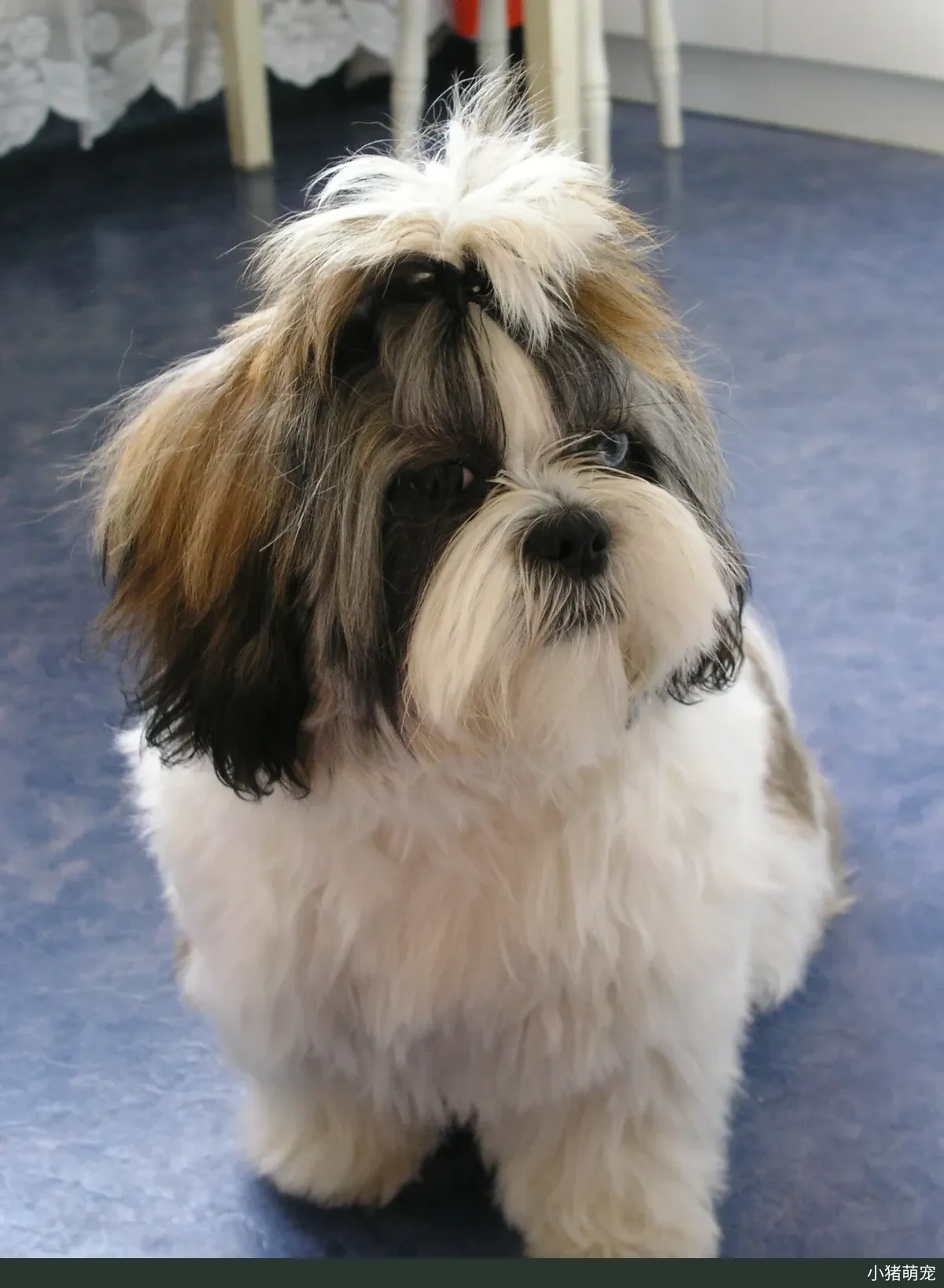
Photo: Wawri (Tomasz Wawak); source: Wikimedia Commons; license: CC BY-SA 2.5. Original converted to WebP.

Grooming and eye care
Long hair looks good and turns brushing into daily work. PDSA’s breed care advice stresses daily grooming to reduce mats; household pets may wear a shorter trim but still need regular upkeep. Head hair should be kept clear of the eyes; food debris gathers around the muzzle, and discharge can collect at the corners of the eyes—clean gently and watch carefully.
A clean eye area does not guarantee healthy eyes. Squinting, redness, abnormal tearing, cloudy cornea, or repeated rubbing warrants prompt veterinary contact. PDSA’s corneal ulcer page lists the Shih Tzu among higher-risk breeds and warns that ulcers can worsen quickly. Treating these signs as mere tear staining can delay care.
Breathing, heat, and health risks
The short muzzle’s cost shows first in breathing and heat dissipation. PDSA’s BOAS overview, dated September 2026, notes that short-muzzled dogs may develop brachycephalic obstructive airway syndrome from stenotic nares, elongated soft palate, and related issues. Loud breathing at rest or with light activity, easy panting, and exercise intolerance deserve veterinary assessment; snoring should not be dismissed as a cute breed trait.
Keep a healthy weight, use a well-fitted harness to reduce neck pressure, and pace activity to the individual. In hot weather walk only short distances in cool hours with enough water; if heat lasts all day, wait for cooler weather. Short-muzzled dogs cool less efficiently by panting and overheat more easily. Sudden breathing distress, cyanosis, or collapse needs emergency veterinary care at once.
PDSA’s breed materials also list dry eye, cataract and other eye diseases, dental crowding, renal dysplasia, and intervertebral disc disease. The risk list gives no incidence rates and does not mean every dog will be affected. Before bringing one home, learning the individual’s history, relevant parental health checks, and budgeting time and money for ongoing care is more practical than choosing by coat color and face alone.
-
FCI-Standard N° 208 SHIH TZU Verification notes: Official PDF read. Cover 06.10.2026; effective standard publication date 08.09.2026. Origin Tibet (China), developed in China and lived at court; distinct from the Lhasa Apso. Height not over 27 cm; weight 4.5–8 kg, ideally 4.5–7.5 kg; long dense outer coat with moderate undercoat; this edition does not accept merle. The standard describes ideal appearance, not proof of individual health.
-
Official Standard of the Shih Tzu Verification notes: Official PDF read. Approved 1989-05-09, effective 1989-06-29. Sturdy, long double coat, short square muzzle, eyes large but not protruding; ideal height 9–10½ inches, adult weight 9–16 pounds. All colors accepted; presented separately from FCI figures, not merged into one range. Temperament wording stresses friendly and affectionate.
-
Shih Tzu History: From Royal Dogs to Beloved Companions Verification notes: AKC Staff original read; readable page showed no publication date—do not substitute scrape date. Precise origin unknown; Lhasa Apso ancestry stated as speculation. Records a Pekingese introduced by British breeders in 1952; that does not collapse all ancient origins into a two-breed cross. Court legends and absolute historical claims not adopted.
-
Shih Tzu Verification notes: PDSA original read; no clear publication date. Supports daily grooming, muzzle and eye-corner cleaning, reward-based training, and individual temperament differences. Lists dry eye, cataract, progressive retinal atrophy, BOAS, dental crowding, renal dysplasia, intervertebral disc disease, and similar risks; no incidence rates—cannot claim every dog is affected or rank risks.
-
BOAS - breathing problems in flat-faced dogs Verification notes: Overview, causes, and symptoms sections read; publication date unknown. Short-muzzled dogs including Shih Tzu may have airway obstruction, respiratory noise, and exercise intolerance; heat stroke risk rises in hot weather. Sudden breathing distress, cyanosis, or collapse is an emergency; snoring is not cute or a guarantee of normality.