The Korean Jindo Dog takes its name from Jindo, an island off South Korea’s southwestern coast. Islanders relied on these dogs to hunt and guard their homes. They valued a dog that could pick up a sound and decide for itself which way to go, as well as one that formed close bonds with familiar people. Both traits can show up at home. When you move to another room, a Jindo may follow and find a corner to lie in. When someone visits for the first time, the same dog may prefer to keep its distance. The American Kennel Club (AKC) has recorded the breed in its Foundation Stock Service since January 2008. [1]
Start with the side view when looking at a Jindo. It is a well-proportioned, medium-sized dog with upright ears and a tail that may curl over the back or form a sickle shape. In the first photograph, the white dog’s tail extends behind it and turns upward at the tip. The red dog’s tail curves more tightly above its back. Look next at their heads. Both have ears that stand in distinct triangles. Despite the difference in coat color, the ears, body proportions, and curve of the tail give the two dogs a similar outline. [1–3]
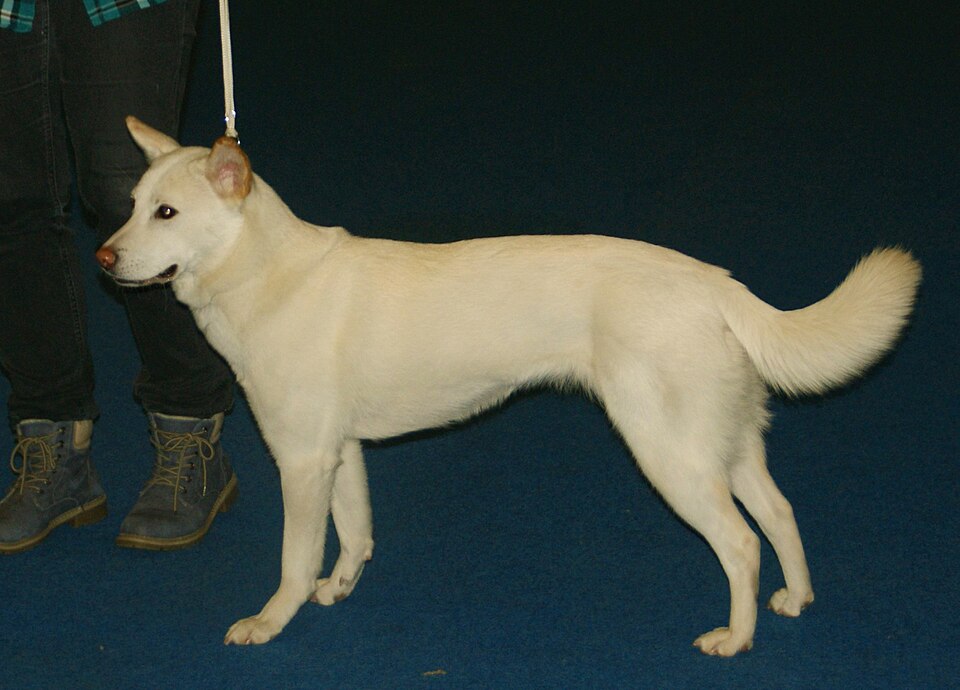
A white Jindo stands in profile. Canarian, Wikimedia Commons[2]

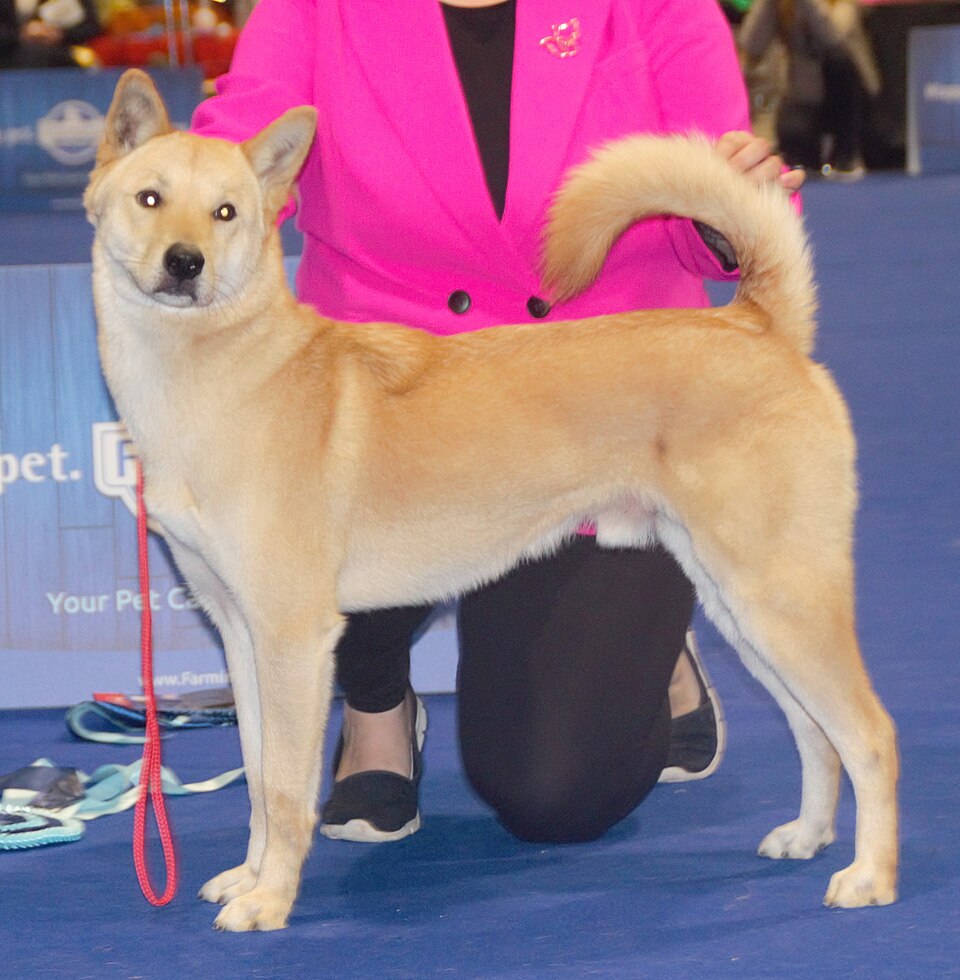
The red Jindo carries its tail in a curl. Canarian, Wikimedia Commons[3]

Leave room to go around on walks
A hunting Jindo could follow prey over long distances. Its day should allow time to stretch its legs and give it something to think about. Choose a wide route where you can turn easily, and vary the pace of a longer leash walk. Lead the way for a stretch, then give the dog time to stop and sniff. In a quiet spot, practice saying its name and having it turn to look at you. Once the dog knows the basics, a Jindo that enjoys jumping over obstacles and weaving around them might enjoy agility. Start with a distance your dog already covers comfortably and adjust for age, stamina, and interest. [1]
A wide path also gives you room to pass. Jindos have a strong instinct to chase and may have little patience with an unfamiliar dog coming straight toward them. When you see someone ahead walking a dog, cue yours to turn while there is still space and take a wide arc together. If your Jindo can look back at you and keep walking, it has practiced a skill it can use on the next walk. If a small animal suddenly darts out, the leash and the space you have left along the edge of the path help keep your dog safe. At home, check the bottom of the yard fence, the gate latch, and anything a dog could climb to get over the fence. Pay particular attention to whether a gate closes securely between the yard and the street. [1]
Let guests sit down first
Stand at your front door and look for the route back to the dog’s bed. Can your Jindo get there while visitors are taking off their shoes and setting down their bags? An entryway can quickly feel cramped for a watchful dog that dislikes being held in place by strangers. Try setting a mat to one side of the living room. Someone the dog knows can sit with it while guests come in, take a seat, and keep their hands to themselves. If the dog approaches, let it sniff and move away. If it watches from the mat, it can spend the whole visit there in your company. [1]
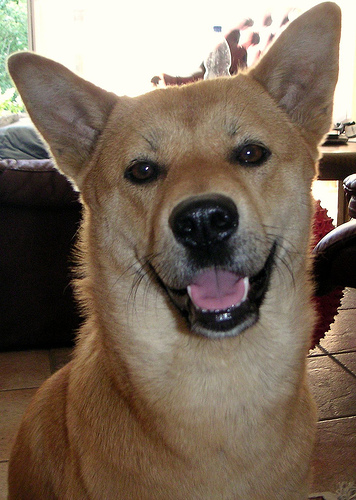
The Jindo’s upright ears form two triangles. Arotto, Wikimedia Commons[4]

Grooming, putting on a leash or harness, and veterinary visits all involve someone reaching for the dog. Practice with a familiar person first. Let the dog see the brush. When it chooses to stay beside you, make one gentle stroke along the side of its shoulder and pause. Before reaching again, see whether the dog stays or walks away. Once that stroke is easy for the dog to accept, try a different spot or brush for a little longer. Look for these same everyday skills in a puppy socialization or basic training class. The puppy should have room to watch, practice responding to you while people move nearby, and rest quietly after an interaction. [1]
Before bringing a Jindo home, talk through two ordinary parts of the week. Who has time for an unhurried walk on a workday? When friends or relatives come to stay, who will welcome them and who will stay with the dog? If you already have a dog, find out how each has behaved around other dogs. The AKC draws particular attention to the potential for conflict between dogs of the same sex in one home. Consider where each dog could eat and rest, and whether you could give them separate spaces when needed. Those arrangements tell you more about what your home can offer than choosing a companion on sex alone. A family that likes walking together and is happy to let a dog sit out the greetings will find these routines easier to sustain. [1]
Allow more brushing time when the undercoat sheds
The Jindo has a double coat. These dogs tend to keep themselves clean, and the outer coat helps shed water and dirt. For most of the year, a weekly session with a pin brush or slicker brush and a bath as needed will do. The work picks up about twice a year, when the undercoat comes loose over the course of a month or longer. Break up the usual longer brushing session into shorter, more frequent ones to lift out loose fur. Allow time to vacuum the floor and the dog’s favorite resting places more often, too. This is when those brief brushing sessions you practiced together pay off. [1]
Grooming also gives you a chance to learn what is usual for your dog. The AKC lists hypothyroidism and discoid lupus erythematosus among the breed’s health concerns. Historically, relatively few Jindos have had systematic health checks, so information on orthopedic and eye conditions remains limited. When you bring a Jindo home, ask the previous caregiver about its medical history and take any examination records to the first veterinary appointment. If a skin change persists, or your dog’s weight or eagerness to go for a walk changes noticeably, tell the vet when you first noticed it and how it has changed since. If your Jindo is reserved around strangers, mention how it is used to being touched when you book the visit. That gives the vet a familiar way to begin the exam. [1]
References
-
American Kennel Club. Korean Jindo Dog.
-
Canarian. White Korea Jindo Dog.jpg. Wikimedia Commons.
-
Canarian. Koreajindored.jpg. Wikimedia Commons.
-
Arotto. Jindo dog face.jpg. Wikimedia Commons.