American Foxhounds hunted foxes in packs, with riders following on horseback. Long after a fox had slipped out of sight, its scent on the ground gave the hounds a trail to run. In colonial Virginia, George Washington built a pack from English hounds and later brought in French hounds. Over generations of breeding in the American South, the American Foxhound developed a build distinct from that of its English cousin. That history still matters on a neighborhood walk. You may be ready to turn the corner just as your hound picks up a scent that leads across the street. [1]
Seen from the side, the American Foxhound has a deep chest, forelegs that run straight from elbow to paw, muscular hindquarters and a slight arch over the loin. Its legs are longer and more finely boned than the English Foxhound’s. In the photograph of Jääräpää Flikka, follow the line from the front of the chest down to the paws to see how those long legs support the body. Viewed from the front, the widely spaced eyes, straight muzzle and long ears set low and hanging close to the cheeks are easier to pick out. [1][2]
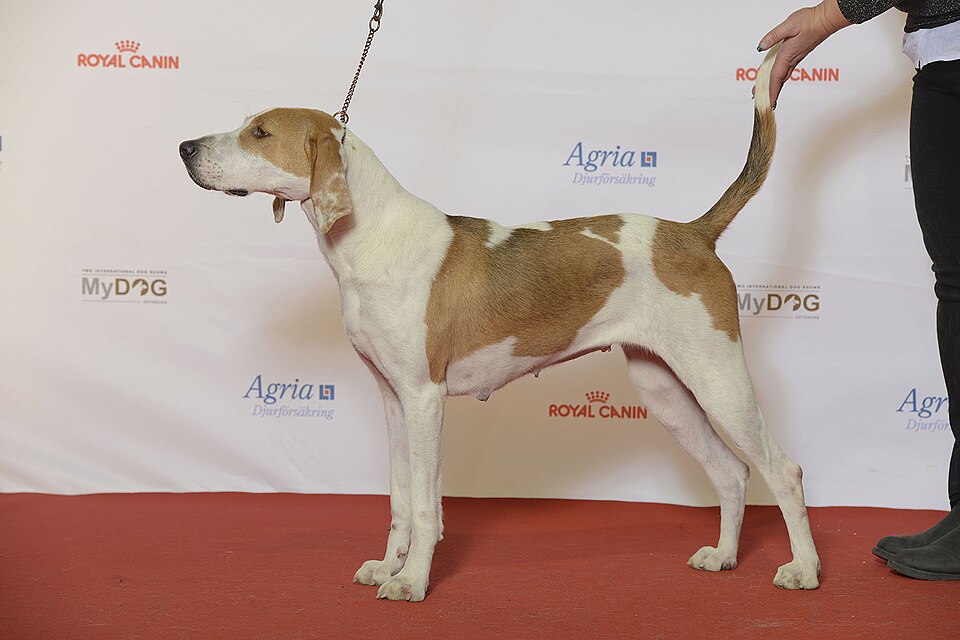
图:Jääräpää Flikka in profile. Svenska Mässan, Wikimedia Commons

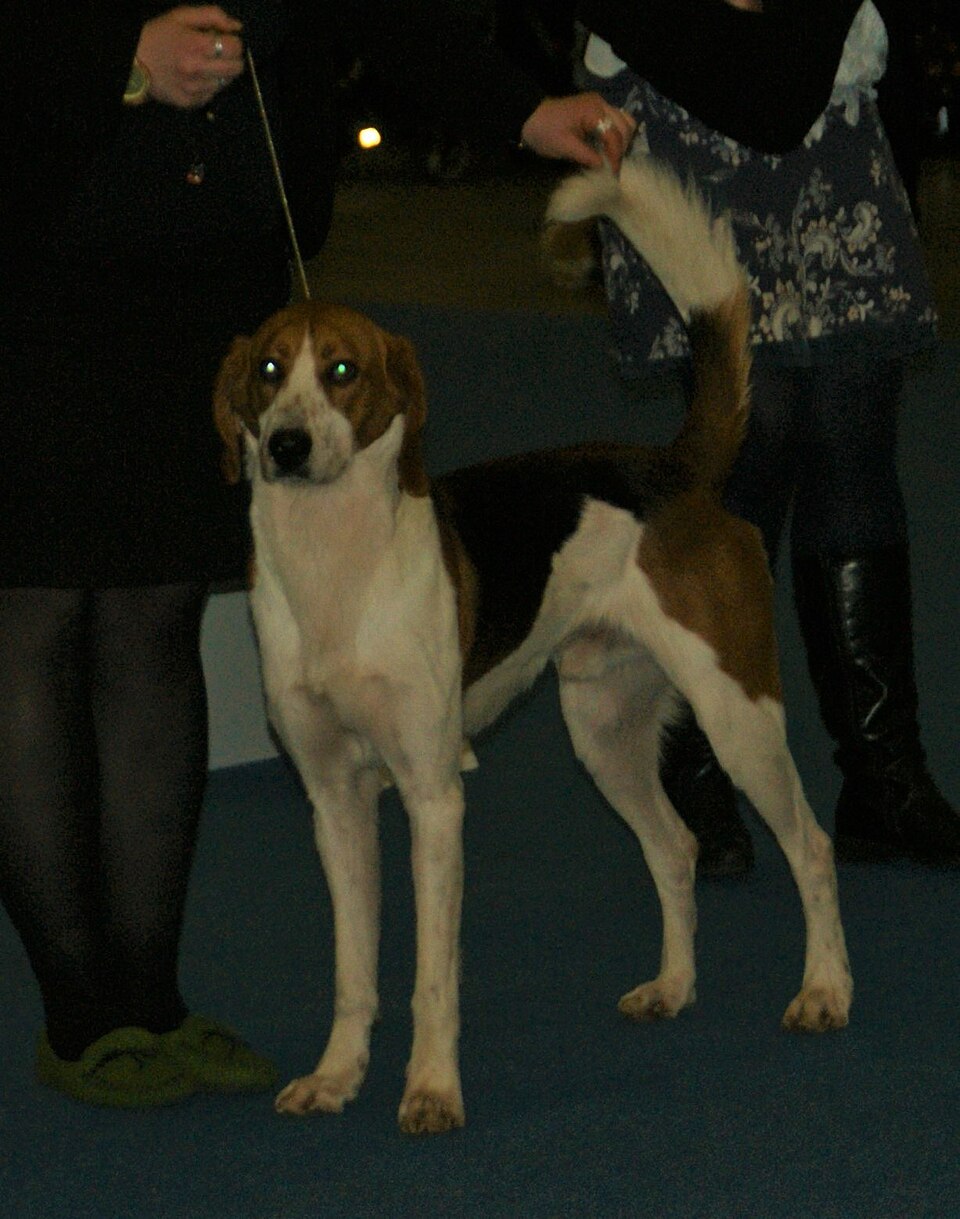
图:The American Foxhound’s head from the front. Canarian, Wikimedia Commons[4]

A weekday walk with time to sniff
The American Kennel Club (AKC) gives one to two hours of solid daily exercise as a guide for the breed. Long walks and hikes are among its suggestions. Try fitting that time into your busiest weekday. Who can take the morning walk? Who has time for a longer route in the evening, and where along it can the dog linger over an interesting smell? Count the time someone will actually spend out with the dog. If you have a yard, think through what happens after you open the door. How often will someone go out too, walk around with the hound or lay a trail for it to follow? [1]
Look at where the route ends. The edge of a grassy patch beside a parking lot is obvious to a person. For a hound with its nose down, the trail can carry straight on across the pavement. Clip the leash on before you head out and choose a stretch away from traffic where the dog can take its time sniffing. For a free run, use a securely fenced area. Once inside, check that the gate has latched before unclipping the leash. Everyone who walks the dog needs to follow the same routine, right down to the last few yards before home, when it is tempting to let go early. [1]
Make coming back part of the game
A hound following a scent makes its own decisions about where to go next. That independence shows up in training, too. The AKC recommends obedience classes and notes how hard it can be to call an American Foxhound back once it is on a trail. Start small in a quiet room. Call from a few steps away and reward the dog when it turns and comes all the way to you. Move the exercise to a fenced space, starting where the dog can still give you its attention. Gradually practice around more interesting smells. Sometimes, after the dog comes back, release it to sniff again. Coming when called can lead straight back to what it was enjoying. [1]
If your hound keeps working the same strip of fence, give that interest a trail with a beginning and an end. In a small patch of fenced grass, have the dog wait while someone walks a short route and leaves a familiar reward at the far end. Bring the dog to the starting point and give it time to pick up the scent. Families who enjoy working together this way can also try organized tracking. On everyday outings, look for small signs of progress. When an interesting smell has the dog’s attention, can it turn back toward you? Can you change direction together? On an open trail, set out with the leash on. [1]
How a hound’s bay carries at home
American Foxhounds are generally gentle, enjoy their family’s company indoors and often get along well with children and other dogs. They also have a distinctive, drawn-out bay that carries a long way. It is easy to overlook the sound when thinking about the size of your home. Who would hear it through a shared bedroom wall? Does anyone in the household sleep during the day after a late shift? When you meet a dog you might bring home, ask its current caregiver what usually prompts it to bay and how it responds on leash when it catches a scent. Those details tell you something about daily life with this particular hound. [1]
If the dog starts wandering around the house looking for something to do or chewing things up, think back over the past few days. Have long walks dwindled to quick bathroom trips? When the usual walker had to work late, was anyone else free to go? A hound bred for endurance can get bored when it has too little to do. An occasional all-day hike tells you less about the fit than an ordinary week does. Picture the route you can walk regularly and the person who could take the leash on a late workday. [1]
A few minutes of care after a walk
The American Foxhound’s coat lies close enough to show the outlines of its shoulders, back and legs. Its firm texture helped protect the hound as it ran through brush. A weekly once-over with a bristle brush or rubber grooming mitt usually takes care of the coat, with a bath after a particularly muddy outing. Lift the long ears regularly, especially after a walk through grass, and look for trapped debris or a buildup of wax. Putting the leash away makes a handy reminder to check the ears. Make time for toothbrushing and regular nail trims as well. [1][2]
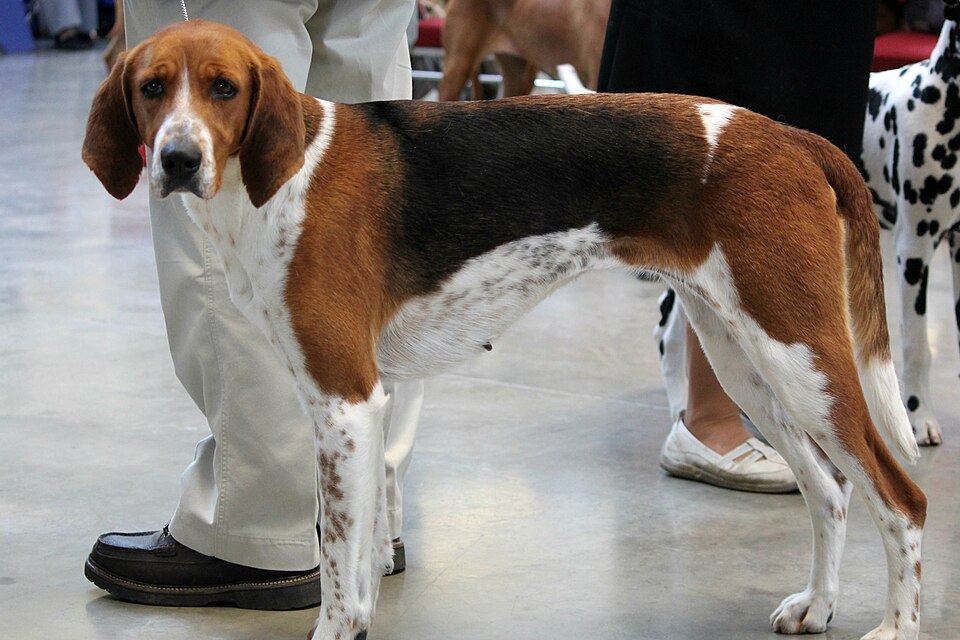
图:The close-fitting tricolor coat. daveynin, Wikimedia Commons[5]

When asking a breeder about a puppy’s health background, the AKC identifies two subjects worth discussing: hip development and platelet function. Ask to see the records for each parent so you can tell which dog was examined and what was checked. Platelets help stop bleeding. If your dog bleeds unusually heavily from a small cut, contact a veterinarian promptly and describe how the injury happened. The parents’ records give you family history. The bleeding itself needs veterinary assessment. [1]
Recall practice also figures into feeding. American Foxhounds love food, and a reward for each good return can add up to quite a serving on top of regular meals. For an adult dog, measure out the day’s food, allow for the rewards you plan to use and divide the meals into two servings. When you picture life with this long-legged hound, think of the whole day: someone holding the leash on a long walk, a safe place to follow a trail and company at home from people who will notice a change in its health. [1]
References
-
[1] American Kennel Club. American Foxhound Dog Breed Information.
-
[2] American Kennel Club. Official Standard for the American Foxhound.
-
File:BIR Grupp 6- AMERICAN FOXHOUND, Jääräpää Flikka (23607404123).jpg
