The Greyhound’s original job was to spot moving prey and give chase. The American Kennel Club (AKC) traces that hunting history to ancient Egypt, where hounds pursued swift animals across the desert. Picture what happened when the quarry turned. The hound was close enough to see the change of direction and had to decide where to put its feet next. A person some distance behind could hardly direct each turn. That independence still matters on an ordinary walk. A Greyhound may catch sight of something moving and set off before the person beside it has time to call.[1]
To recognize the build that made such a chase possible, look at a standing Greyhound from the side. In the photograph of the brindle dog, follow the lower edge of the rib cage. The chest extends well down between the legs, then the belly sweeps upward toward a narrow waist. The AKC describes the resulting outline as an “inverted S.” The front view of the blue Greyhound offers a different clue. From this angle it is easier to see the proportions of the slender head and long forelegs. The two dogs have quite different coats, yet much the same unmistakable build.[1]
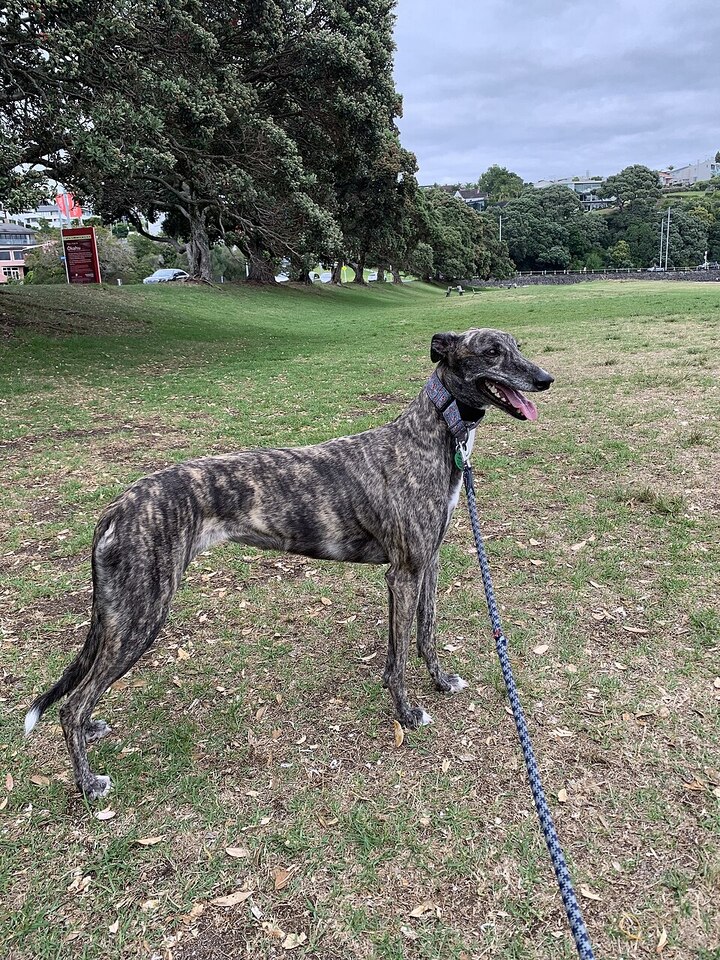
Figure: The Greyhound’s tucked waist. Blueskinbay, Wikimedia Commons[3]

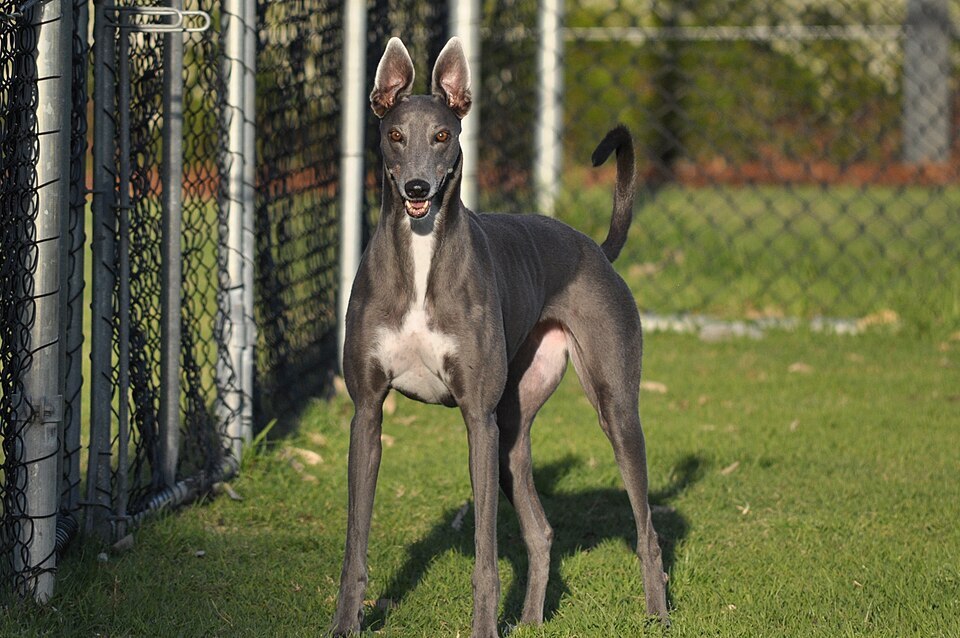
Figure: A Greyhound seen from the front. Speddie23, Wikimedia Commons[4]

At home, a dog built for speed may be perfectly content to lie watching people come and go. Take that same dog outside and a tennis ball rolling across the grass may have it on its feet in an instant. Make room for both parts of its day. Indoors, look for a spot where it can stretch out without having to move each time someone passes. Keep regular outings on the family schedule even when the dog looks thoroughly settled on its bed. Let its age, stamina and interest guide the pace of a walk and the length of a game.[1]
Decide where you can safely unclip the leash before you set out. The AKC recommends regular exercise and opportunities to run at full speed inside a securely fenced area. When choosing a field, imagine where a ball could roll. Is there a gap where a path cuts through the fence? Does a second gate lead to a parking lot? Walk in with the dog on leash and check that the exits are closed before letting it run. On an open woodland trail or a strip of grass beside a road, keep the leash attached even when there is no other animal in sight.[1]
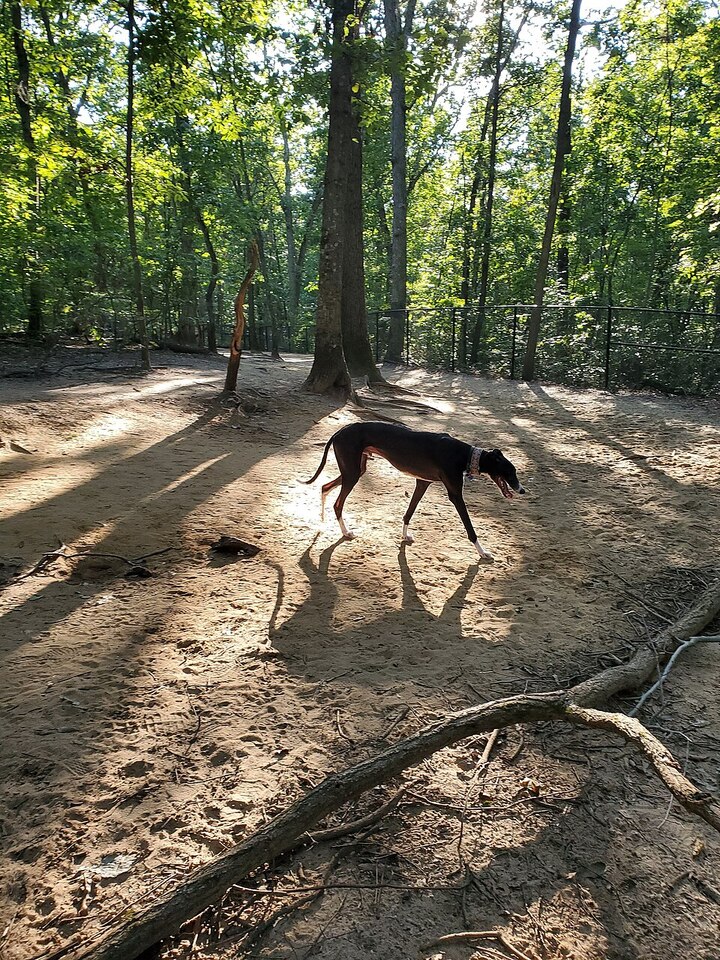
Figure: A Greyhound in mid-stride. Supreme Chungus, Wikimedia Commons[5]

Try naming two places your family would use on an ordinary week: the route you would take for a leash walk and the enclosure you could reach for a run. If you have a yard, consider where the gate opens and whether everyone who uses it remembers to latch it. If you live in an apartment, consider how often you can get to the fenced field. Work through a day when someone has a late shift or has to collect the children. Who can take the dog out then? The answers say more about the fit than the size of your home alone.[1]
Pausing to have the leash clipped on is a useful first lesson. Begin in a quiet room and reward the dog when it turns toward you and stands still for a moment. Once that feels familiar, try the same exercise beside the closed door. Greyhounds can be affectionate with their families and still lose interest when asked to repeat a task over and over. Keep practice brief and gentle. Finish while the dog is still engaged, then pick it up again before another walk. Even a Greyhound that responds readily at home needs its leash in an open space.[1]
Greyhounds often show affection freely with family and take their time with strangers. A visitor can sit down and give the dog room to approach or stay on its bed. Children can learn to wait for the dog to come to them. The AKC encourages early socialization with children and small animals. If you are bringing an adult Greyhound into a home with a cat, ask its previous caregiver which animals it lived with and how it reacted when a cat ran. Have an adult supervise introductions and arrange a space where the animals can be kept apart.[1]
The short, smooth coat needs regular baths and a weekly rubdown with a damp cloth or grooming mitt. While you have the mitt out, check the ears for wax or debris and clean them if needed. This pairs the ear check, due at least weekly, with a job that is easy to remember. Pay attention to the feet, too. Greyhound nails are strong and grow quickly. Trim them regularly if walks do not wear them down enough, since overly long nails can become uncomfortable. For the teeth, use toothpaste made for dogs and aim to brush daily.[1]
The deep chest that helps you recognize a Greyhound also puts it at greater risk of gastric dilatation-volvulus (GDV), an emergency in which the stomach expands and twists. If your dog repeatedly tries to vomit but brings nothing up, or its abdomen suddenly swells, call an emergency veterinarian and take the dog in immediately. Restlessness or pacing can accompany either sign. For routine health planning, ask the breeder which heart, eye and inherited-condition screenings the parents had and what the results showed. The AKC also identifies Greyhound neuropathy as a breed concern. Your veterinarian can interpret family records alongside your dog’s own history and examination.[1][2]
References
-
[1] American Kennel Club. Greyhound Dog Breed Information.
-
[2] Cornell University College of Veterinary Medicine. Gastric dilatation volvulus (GDV) or “bloat”.