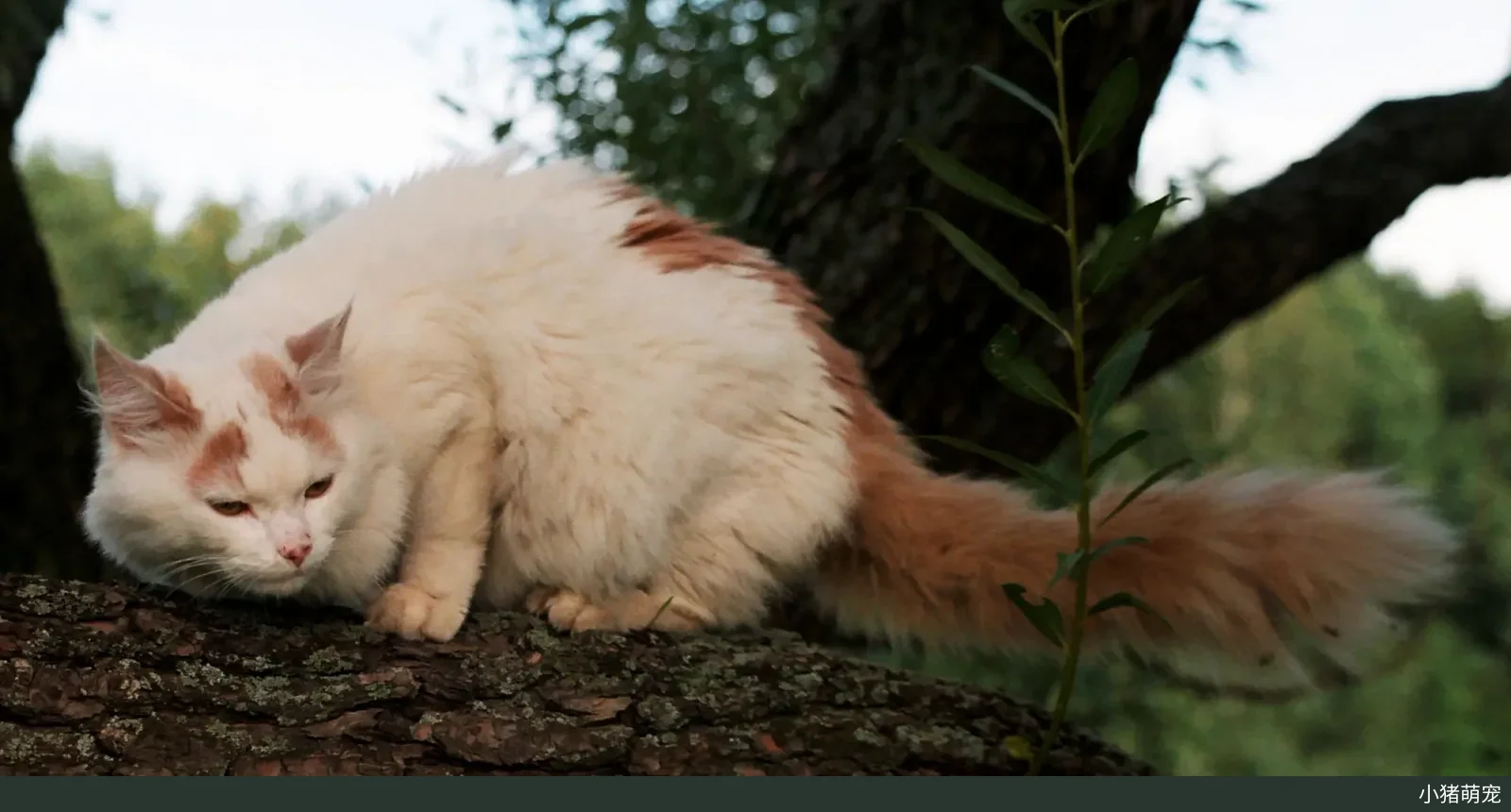
A red-tabby-and-white Turkish Van lying in a tree; the photographer says this is her 15-year-old male (dated 20 April 2007). Photo: Helen Filatova (freefoto.ca); source: Wikimedia Commons; license: CC BY-SA 3.0.

The Turkish Van comes from the Lake Van region of eastern Turkey. Its chalk-white body carries color mainly on the head and tail, and it is often called the “swimming cat.” It is solidly built, with an easy-care single-layer semi-long coat; it is smart and active but dislikes being held. CFA, TICA, GCCF, and other associations regard it as generally healthy, but blood type and white-cat hearing details are worth knowing in advance for newcomers.
Origins and recognition history
The Turkish Van is a natural breed; “Van” in the name refers to the Lake Van region of eastern Turkey. GCCF notes that Lake Van is Turkey’s largest lake, with humid summers and winters that can fall to −12°C or colder—a climate linked to a coat that thickens in winter and thins in summer. Tales of Noah’s Ark and cats swimming ashore near Mount Ararat are long-lived folklore, not history.
Its modern Western history starts with two British women. Laura Lushington and Sonia Halliday, working in Turkey for the tourism authorities, were given an unrelated male and female kitten, brought them to Britain to breed, and the offspring grew nearly the same head-and-tail markings as the parents. The year is disputed: GCCF writes 1954; CFA, TICA, and FIFe write 1955. In 1959 the pair brought another pair from Turkey. GCCF granted championship status in 1969; FIFe’s breed standard marks recognition in 1960; TICA awarded championship in June 1979; CFA first recognized the breed in 1988 and elevated it to championship in 1994. In the United States, Barbara and Jack Reark of Florida began importing breeding cats from 1983; CFA credits them with much of the breed’s U.S. promotion and recognition.
Turkish Vans are often confused with Turkish Angoras; they are different breeds from different parts of Turkey. CFA offers a vivid comparison: putting a solid, athletic Van beside an elegant, slender Angora is like standing a swimming champion next to a ballet dancer.
Appearance, color, and coat
The Turkish Van’s clearest marker is the “Van pattern”: a chalk-white body with color mainly on the head and tail. When similar head-and-tail markings appear in other breeds, they borrow the name “van” as well. The CFA standard allows a few body spots, but colored area outside head and tail must not exceed 15% of the body, and the head patches are preferably divided by a white blaze. The traditional color is auburn; cream, black, blue, tortoiseshell, and various tabbies are also seen today. GCCF and TICA also accept all-white types—GCCF as Turkish Vankedisi, TICA as Van Kedi. Eyes may be amber, blue, or odd-eyed (one blue, one amber).
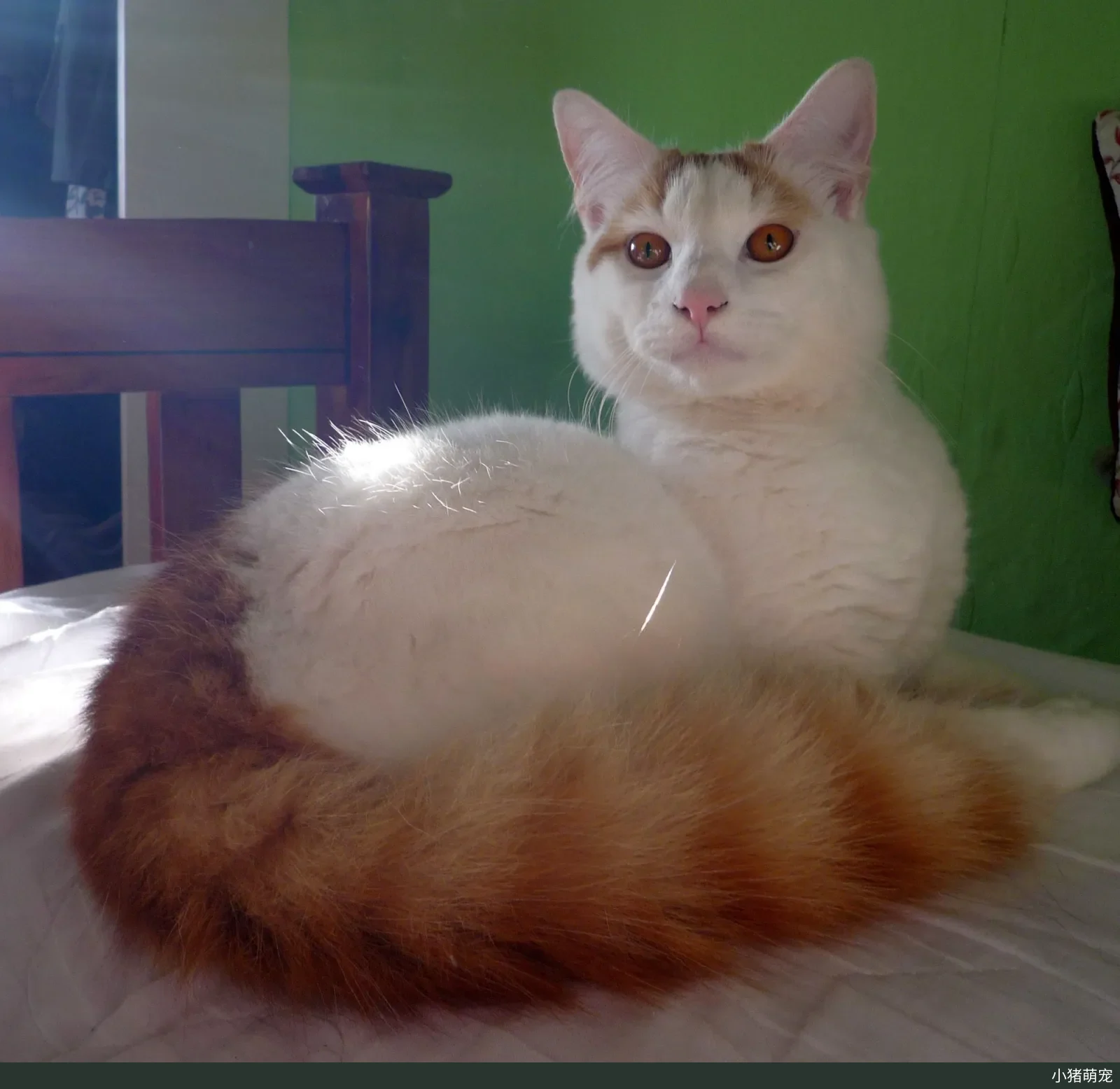
A red-tabby-and-white Turkish Van named Morris with a classic Van pattern and ringed tail (dated 6 December 2009). Photo: Effervescing Elephant; source: Wikimedia Commons (originally on Flickr); license: CC BY-SA 2.0.

The build is on the large side, muscular, with a broad chest. TICA and GCCF give adult weights of about 10–20 lb (about 4.5–9 kg) for males and 7–12 lb (about 3.2–5.4 kg) for females. It is a late-maturing breed, taking three to five years to fill out fully.
The coat is semi-long, often likened to cashmere, without a dense undercoat, and with some water- and dirt-shedding quality. In summer it can look almost short-haired; in winter it lengthens and thickens markedly. A frontal ruff and a brush-like full tail become more pronounced with age.
Temperament and water habits
Associations describe temperament quite consistently: intelligent, energetic, and people-oriented, but not fond of being held. TICA says it likes following family from room to room and will settle nearby for petting, yet does not want long periods of being carried; FIFe likewise notes it is usually not a “lap cat,” preferring to stay beside the owner rather than on them.
It is an able jumper and climber, often claiming the highest spots in a room, chasing and retrieving toys, and sometimes figuring out how to open the cat-food cupboard. CFA advises that it suits older children who understand “no forced hugs, no tail-pulling”; with proper introductions it can live with dogs. It is not a loud vocalizer, but it “talks” a lot.
The “swimming cat” nickname comes from interest in water. CFA cites early breeders saying Van kittens would voluntarily play and swim in pools or lakes; GCCF’s picture is more domestic—fascination with dripping taps, toys dropped in water bowls, and possible company at bath time. That is a breed tendency with large individual differences; whether to play in water is best left to the cat.
Health and care points
On health, CFA says there are currently no known genetic problems that specially affect the breed; TICA and GCCF also call it generally healthy. It lacks structural traits deliberately bred for extreme looks such as folded ears, short legs, or flat faces: the CFA standard asks that “no feature be exaggerated,” penalizes a flat profile, and lists skeletal faults such as kinked tails, flattened chests, and abnormal toe counts as disqualifications. These are mainly registry judgments; the breed is rare, and large public health datasets are limited.
Two points are worth knowing early. First, blood type. A 2003 study in Turkey typed 85 Van cats and found 60% type B; the authors noted higher risks of transfusion incompatibility and neonatal isoerythrolysis, and advised typing before breeding or transfusion. A 2004 study of 78 cats found 57.7% type B, and anti-A antibodies were detectable in the plasma of those type-B cats. Both studies sampled local Turkish Van populations; results may not transfer directly to registered Turkish Vans in Europe and North America.
Second, hearing in white cats. Cornell Feline Health Center materials show congenital deafness is markedly more common in white cats, and higher still with blue eyes: about 17%–22% in non-blue-eyed white cats, about 40% with one blue eye, and about 65%–85% with two. Those figures cover white cats overall, not Turkish Vans specifically, but they matter for all-white individuals and for blue-eyed or odd-eyed cats; a veterinary hearing check before bringing one home is reasonable.
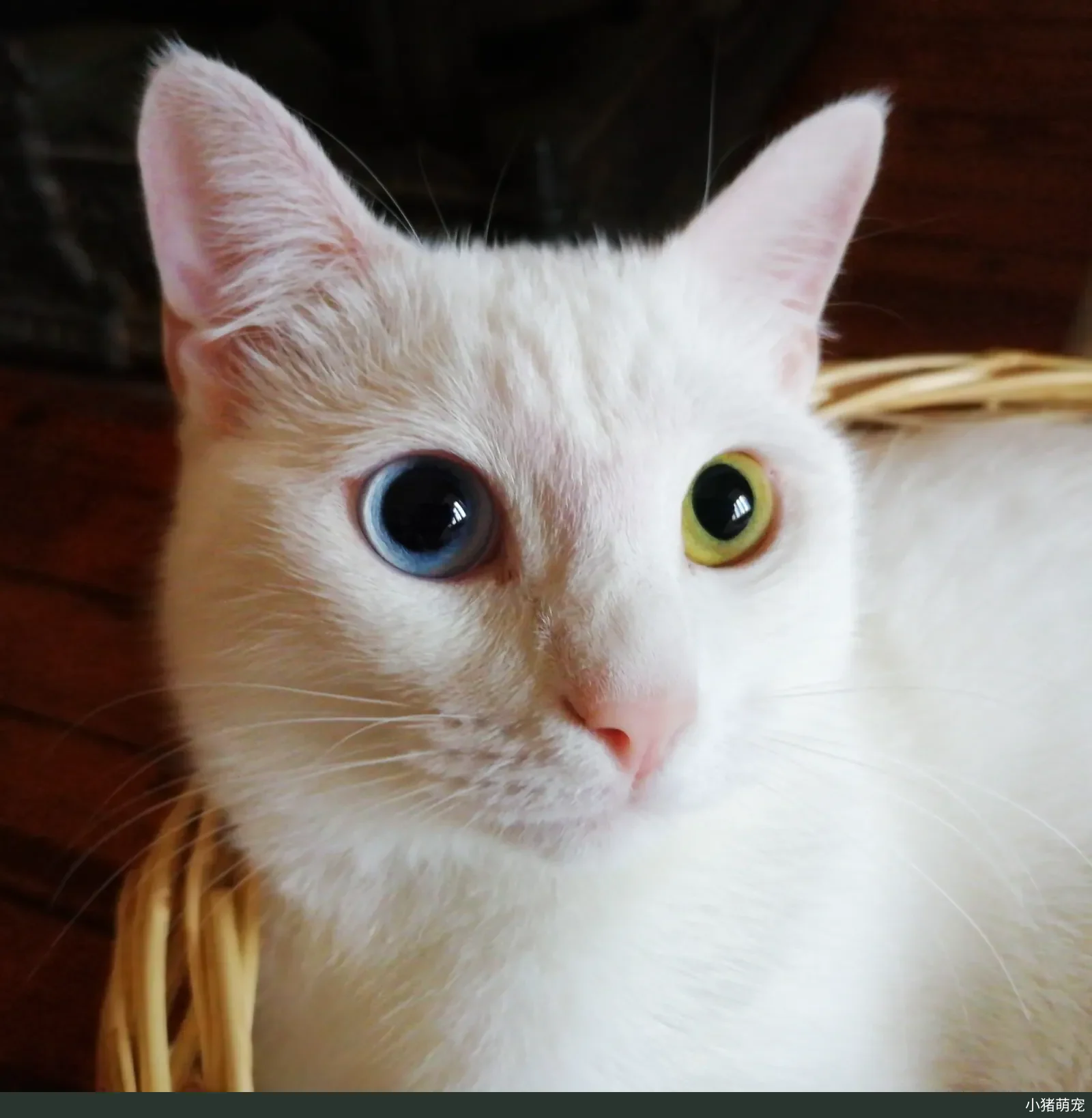
An all-white, odd-eyed Van cat (Van kedisi, dated 31 March 2020). This is a local Turkish Van cat and may not be a registered Turkish Van. Photo: Estin Giç Giç; source: Wikimedia Commons; license: CC BY-SA 4.0.

Day-to-day care is straightforward. The single-layer coat seldom mats; a weekly pass with a steel comb usually suffices, more often when winter coat is heavy. Vans are typically clean and do not need frequent baths. CFA notes the large, active build needs enough space and regular interactive play or weight gain comes easily; sturdy tall cat trees, retrieve toys, and puzzle toys help. TICA sees no special nutritional needs beyond quality dry or wet food; vaccines, parasite control, nail trims, ear cleaning, and tooth brushing proceed as usual. Lifespan: GCCF gives about 12–14 years; TICA writes 13–17 years and beyond.
References
-
The Cat Fanciers' Association (CFA). Turkish Van (breed introduction and standard; page undated)
-
The International Cat Association (TICA). Turkish Van (page undated)
-
The Governing Council of the Cat Fancy (GCCF). Turkish Van & Turkish Vankedisi (page undated)
-
Fédération Internationale Féline (FIFe). Turkish Van; TUV breed standard (version of 1 January 2026)
-
Arikan Ş, Duru SY, Gurkan M, Agaoglu ZT, Giger U. Blood Type A and B Frequencies in Turkish Van and Angora Cats in Turkey. Journal of Veterinary Medicine Series A, 2003.
-
Titres of naturally occurring alloantibodies against feline blood group antigens in Turkish Van cats. Journal of Small Animal Practice, 2004.
-
Cornell Feline Health Center. Ask Elizabeth: White Cats and Blindness/Deafness (page undated)