The World Cat Federation (WCF) calls this breed the Don Sphynx and gives it the code DSX. You may also come across the name Donskoy. The UK’s Governing Council of the Cat Fancy (GCCF) uses both names in one entry and lists the Canadian Sphynx separately as an alternative breed. Bare skin may be the first thing you notice in a photograph of either cat, and the amount of visible hair tells you little about which breed you are looking at. If you are tracing a cat’s background, look for the full breed name on its registration papers. [1][3]
In profile, look along the back to the tip of the tail. The WCF describes a solid, medium-sized cat with a straight back and a rump wider than the shoulders. Muscular legs of moderate length end in slightly rounded paws with long toes. The tail is long and straight, with a rounded tip. Seen from the front, the cheekbones and brows give definition to a wedge-shaped head. Vertical wrinkles mark the forehead between large, high-set ears that tilt slightly forward. The ear tips are rounded and the almond-shaped eyes sit at a slight slant. The standard accepts every colour and pattern, including any amount of white. [1]
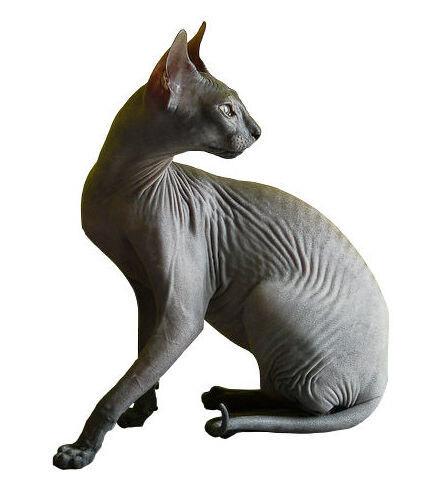
Figure: Neck profile of a seated Don Sphynx. Hneepy ChS Pyrel *Sk / Desaix83, Wikimedia Commons[4]

The word “hairless” leaves out much of what you might feel when you stroke a Don Sphynx. Under the WCF standard, the skin may be entirely bare or covered in fine down. On the legs, paws, tail and muzzle, the standard allows short hair up to two millimetres long. A cat that looks bare from across the room may have tiny hairs around its mouth or a tail that feels velvety under your fingers. The WCF favours a bare coat and considers whiskers desirable. Even on the same cat, the texture can change from one part of the body to the next. [1]
The skin changes shape as the cat moves. The WCF describes it as elastic, with prominent wrinkles on the head, neck, legs and belly. Watch a seated cat turn its head and you can see folds gather along one side of the neck. When your cat stretches or comes over for company, take a moment to notice where the down grows and which patches of colour are usually visible. If something changes later, you will be able to say whether it appeared inside a familiar fold or on a patch that usually lies smooth. Much of this is visible without picking the cat up. [1][2]
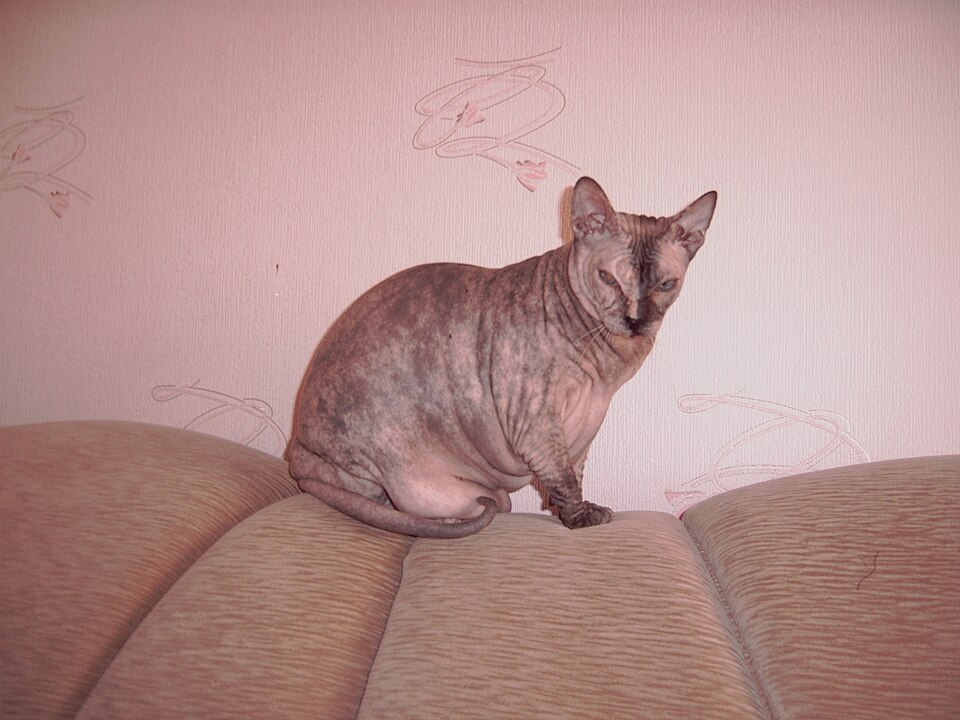
Figure: Skin folds in a sitting posture. Français anonyme, Wikimedia Commons[5]

When setting up a sleeping area, give the cat a choice about warmth. A soft, washable pad in a quiet corner away from draughts is one option. Leave a cooler, open resting place within easy reach. See where the cat settles during the day and at night, and whether it curls up under cover or stretches out in the open. Those choices can guide where you put the bedding. Safe places to rest are among the needs the Feline Veterinary Medical Association identifies for indoor cats. For a cat with sparse hair, that can be as simple as a sheltered bed it can move out of whenever it likes. [1][2]
Now look at the room from the bed. Where can the cat scratch when it wakes up, watch people go by or get away from a noisy visitor? A sturdy perch with an easy way up and down offers both a lookout and a reason to climb. Put a scratcher along a route the cat already takes and leave a hiding place on the quieter side of the room. In a home shared by several cats, picture one stretched across a doorway. Can the others still reach water, a litter tray and somewhere to rest? These everyday needs apply to indoor cats of any breed. [2]
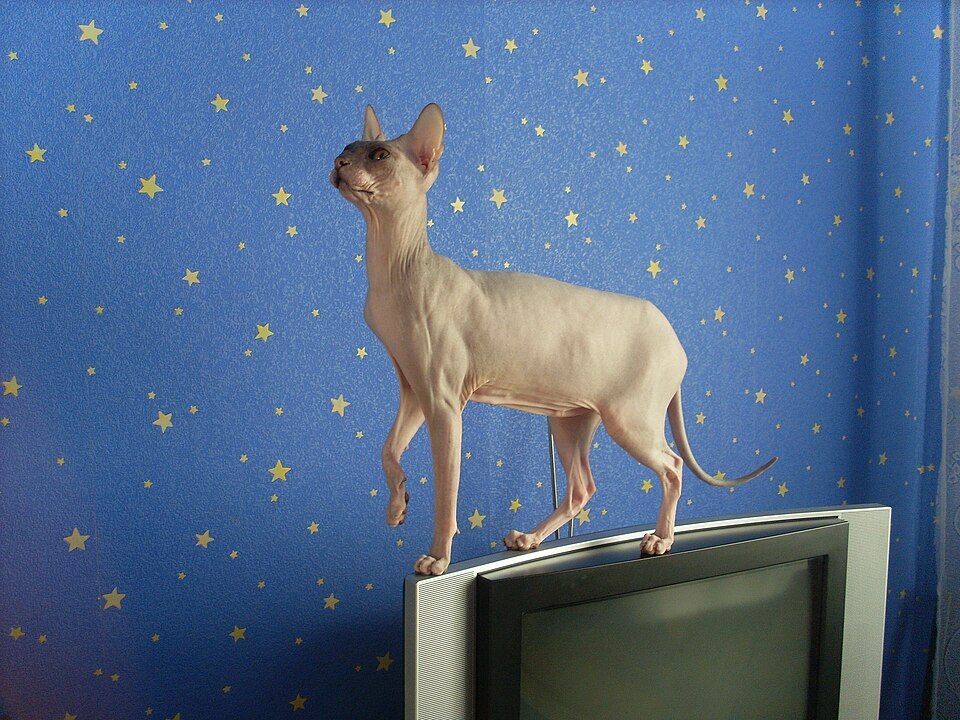
Figure: Legs and tail of a standing Don Sphynx. Smser, Wikimedia Commons[6]

Give the cat a say in social contact, too. The feline veterinary association recommends pleasant, consistent and predictable interactions. Once an alert cat has noticed a toy, draw it along the floor and give the cat time to stalk or pounce. Let play end if it heads back to bed. When the cat approaches you, try a brief stroke, then pause. It might lean in again or settle beside you for quiet company. If several people in the household are curious about how its skin feels, agree to leave the cat undisturbed in its resting place. [2]
A measurement of coat length tells you little about how often an individual cat needs a bath. When bringing a Don Sphynx home, ask how its skin has been cleaned, which products have been used and whether any areas have been sore. Bring that history to the next routine veterinary visit. Between visits, watch for a patch that stays red, repeated licking or scratching in one spot, or flinching at a touch the cat used to welcome. If a change persists or the skin breaks, arrange a veterinary examination. Describe where you first noticed the change, when it appeared and how the area was last cleaned. [1][3]
If you are considering adoption, the two registries offer different kinds of information. The WCF standard describes the features a judge looks for. The GCCF lists the Don Sphynx or Donskoy among its unrecognised breeds, citing concerns about health problems associated with hairlessness and the level of care an owner may need to provide. Ask about this particular cat’s skin history and any veterinary follow-up already under way. Think about who will notice a change while swapping a sleeping pad or playing with the cat. Its own records and those everyday observations give you and your vet a starting point for decisions about cleaning and follow-up care. [1][3]
References
-
[1] World Cat Federation. Don Sphynx (DSX). 1 January 2010.
-
[2] Feline Veterinary Medical Association. New Feline Veterinary Medical Association Position Statement Reimagines Life for Indoor Cats. 28 August 2025.
-
[3] The Governing Council of the Cat Fancy. Unrecognised Breeds.