A dog mummy from a Wari site in Peru gives a new clue to how people and dogs lived together a thousand years ago. Dartmouth College reports that radiocarbon dating puts one of the dogs at least 1,200 years old, and that the skin and the teeth also point to a hairless dog. Whether it was kept as a pet is not something the archaeological evidence can answer.
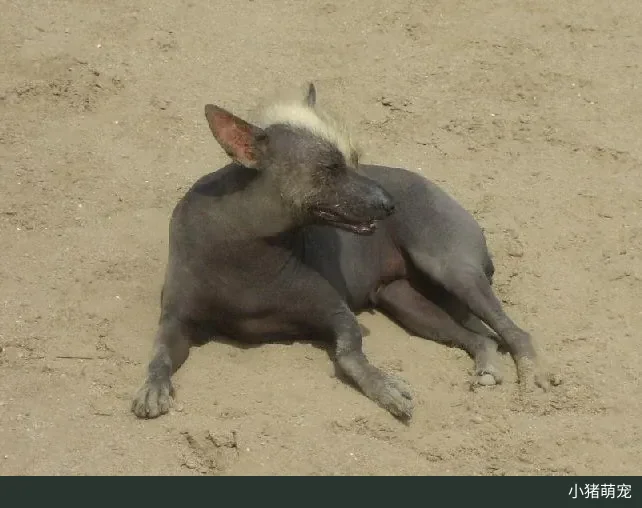
Dog remains at the Wari site
The find comes from Castillo de Huarmey, on the north coast of Peru. It was an administrative and burial center in the Wari period, in use from about 600 to 1050 CE. The extremely dry local conditions let some dog remains become mummies naturally. Dartmouth College published an institutional account on 20 May 2026. ScienceDaily published a related report on 17 October. October is the date of the news page, not the date of the discovery. [1][2]
The research was done by Weronika Tomczyk and others. The institutional account concentrates on three groups of remains: a dog skull that still has skin and ears and is painted with cinnabar; another, larger skull; and, in a shallow pit, a nearly complete male dog mummy missing the lower forelegs. The site also produced many scattered dog bones. Not every individual can be counted as a hairless dog. [2]
What the evidence can say
The study was published in the Journal of Anthropological Archaeology. The DOI listed by ScienceDaily is 10.1016/j.jaa.2026.101767. The abstract shown on the author’s page cautiously calls three individuals a “tentative identification” of Peruvian hairless dogs. [1][3][4]
The clues used for the identification include visible hairless skin and some teeth that never erupted. They support the judgment that these were hairless dogs. They do not, by appearance alone, prove that these ancient dogs are the direct ancestors of the breed registered today. The date has to be read on its own. The institutional account says the male dog mummy was radiocarbon dated, and the result is at least 1,200 years old. The full paper was not obtained this time. The specific calibrated range and the details of sample handling have not been checked, so a more precise year is not added here. [2][4]
The team also analyzed carbon, nitrogen, oxygen, and strontium isotopes in bone and tooth, looking for clues to diet and to where the dogs were active. The results suggest the dogs ate maize, and that the dietary signal of some of the suspected hairless dogs, while they were young, was closer to that of local children. That cannot separate food a person offered on purpose from leftovers or rubbish the dog ate. Organized breeding also remains a conjecture. [2]
Burial can supply another layer of evidence, and it cannot directly recover an emotion. Some dog remains entered burials. Others were mixed with waste. Earthquakes and looting also disturbed some of the upper deposits. Being buried with a person does not automatically mean the dog was cherished, and it cannot be used to call all of them pets. What the authors emphasize is that these dogs were not all treated the same way. [2]
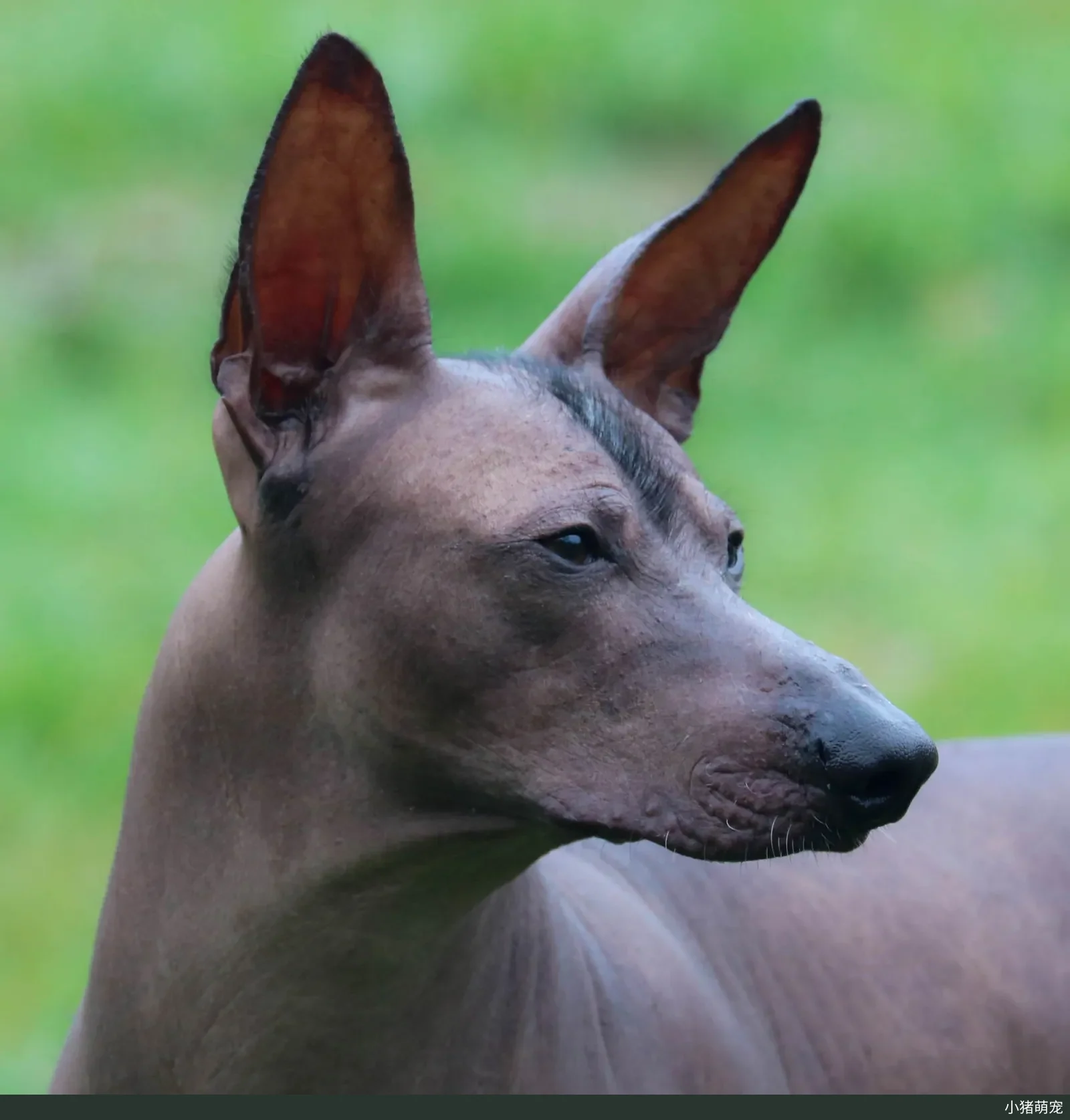
Today’s hairless dog, and care
The FCI’s formal name for today’s Peruvian hairless dog is Perro sin pelo del Perú, standard number 310. The historical introduction in the standard mentions that hairless dogs already appear on pottery of several pre-Inca cultures. That is a pictorial clue to a long local history. This study of the remains adds evidence from the animals’ bodies. The two should not be mixed into a proof of the pedigree of the modern breed. [5]
A “hairless dog” also has haired members. The FCI standard recognizes a hairless type and a haired type, and it describes the incomplete set of teeth that is common in the hairless type and is present from birth. The standard also says a hairless dog’s body temperature is the same as that of other dogs. Feeling warm to the touch does not mean the temperature is higher. [5]
Living with one of them, the emphasis of care moves from combing the coat to the skin and the mouth. A health statement adopted in 2020 by the Peruvian Inca Orchid Club of the United States suggests attention to keeping the skin clean and to sun protection, regular brushing with a dog toothpaste, and a dental check once a year. The inherited missing teeth are not a reason to skip dental care. [6] The AKC also notes that this kind of hairless dog may need clothing for warmth in cool weather. [7] Sunscreen, how the skin is cleaned, and arrangements for warmth should fit the individual dog. A fixed schedule should not be deduced from the word “hairless” alone.
Whether an ancient dog was held cannot be read off the bones. A keeper today can still make skin protection, mouth care, and ordinary company concrete.
References
-
ScienceDaily: Archaeologists discover 1,200-year-old mummified hairless dog in Peru. Page date 2026-10-17.
-
Dartmouth: Peruvian Hairless Dogs Discovered at Ancient Site. Amy Olson, 2026-05-20. The archaeological detail in this article follows that institutional account.
-
Tomczyk and others, The many lives of companion species: a zooarchaeological and isotopic research on Wari dog remains from Castillo de Huarmey, Peru, Journal of Anthropological Archaeology 82, 101767, 2026. The bibliographic details follow ScienceDaily. The full paper was not obtained this time.
-
Weronika Tomczyk’s author page and the paper abstract, used to check the subjects of the study and the wording “tentative identification.”
-
FCI standard 310, PERRO SIN PELO DEL PERÚ. English edition 2021-10-26. Effective standard date 2021-09-15.
-
Peruvian Inca Orchid Club of the United States, health statement, adopted 2020-04-20.
-
AKC: Does Your Dog Need a Sweater?, used for the suggestion that a hairless dog may need warmth in cool weather.