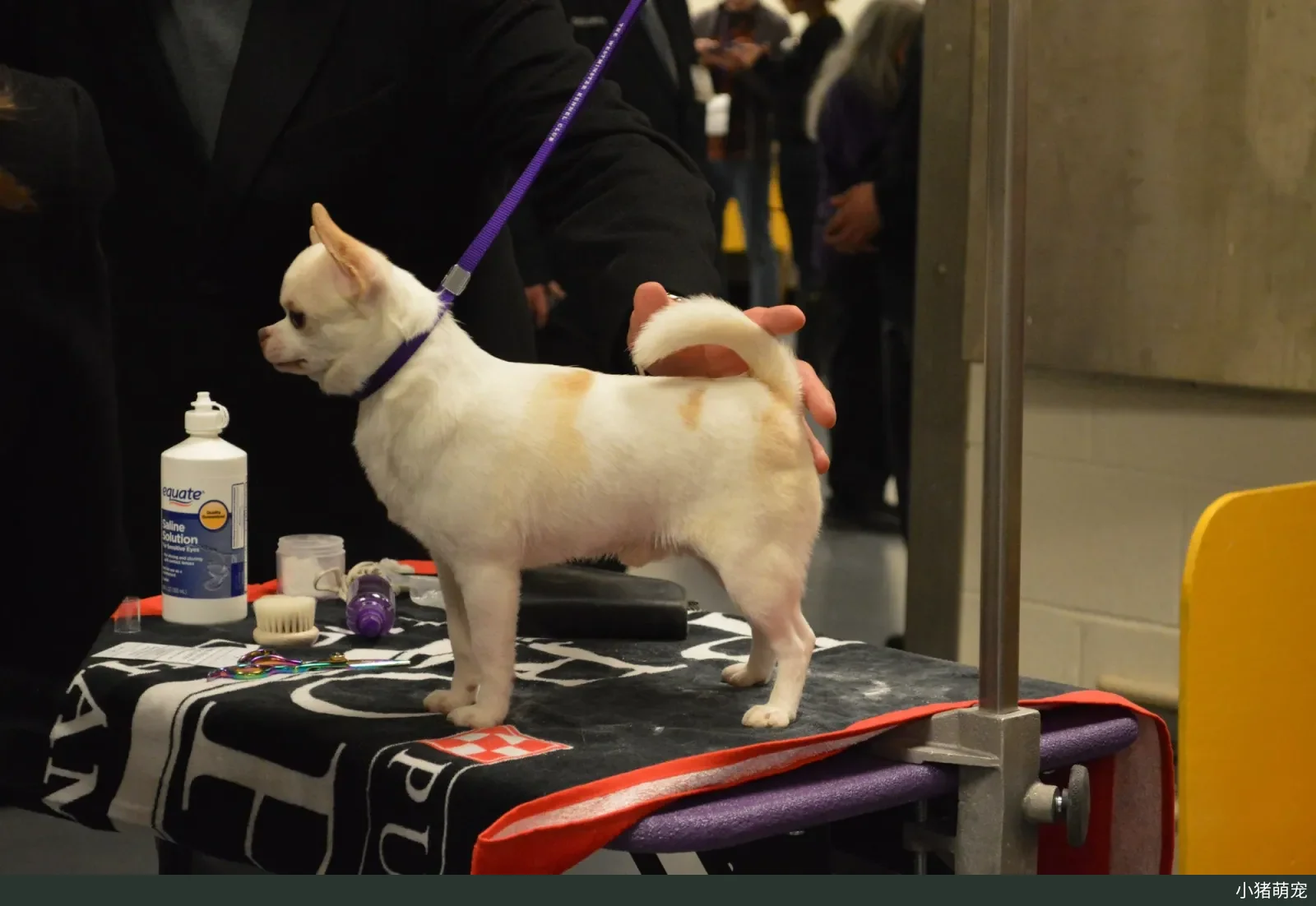
Smooth-coat Chihuahua GCH Sonnus Filho (Sanchez) at the 2015 Westminster Kennel Club Dog Show. Photo: Pets Adviser (www.petsadviser.com); source: Wikimedia Commons; license: CC BY 2.0.
The Chihuahua is often treated as the world’s smallest purebred dog; the name comes from Chihuahua, Mexico’s largest state. Though AKC limits weight to no more than 6 pounds (about 2.7 kg), temperament is alert and brave—AKC calls it “a small dog with a big personality.” Drawing on AKC and FCI breed standards and veterinary sources, this article covers origins, appearance, temperament, exercise and training needs, and common health issues.
Origins: from Toltec legend to Chihuahua State
The Chihuahua is named for Mexico’s Chihuahua State—per the FCI standard, the largest state in the Mexican Republic. Earlier ancestry is framed as conjecture: AKC and FCI both link it to the small Toltec dog “Techichi”; AKC writes that Toltec people lived in what is now Mexico as early as the ninth century CE; FCI notes Techichi figures on buildings at Tula resemble today’s Chihuahua closely. AKC also suggests modern small size may come from Techichi crossed with a small hairless dog that reached the Americas from Asia via the Bering land bridge—again only a hypothesis. VCA Animal Hospitals notes that early origins are debated; another view holds that ancestors were small Chinese dogs brought to Central America by Spanish traders.
Written history is much later. Per VCA, three small dogs were brought from Chihuahua State to the United States in 1850, with more following; they were called “Arizona dogs,” “Texas dogs,” “Mexican dogs,” and the like before the name Chihuahua stuck. AKC recognized the breed in 1904; VCA records the first registered dog as a smooth-coat named Midget. FCI formally recognized the breed in 1959, country of origin Mexico, Group 9 “Companion and Toy Dogs.”
Appearance: apple head, large erect ears, and two coats
AKC describes the Chihuahua as a graceful, alert, swift-moving compact little dog with a saucy expression. Its most recognizable feature is the rounded “apple head,” which AKC and FCI treat as a breed hallmark; large erect ears tilt about 45 degrees to the sides when relaxed; eyes are large and round but should not protrude; a medium-length tail is often carried high in a sickle or semicircle. AKC’s breed page gives height of about 5–8 inches (about 13–20 cm).
Weight is the most strictly policed item. AKC allows no more than 6 pounds (about 2.7 kg)—overweight is a disqualification; FCI looks only at weight, not height, requiring 1–3 kg with an ideal of 1.5–2.5 kg—under 1 kg or over 3 kg disqualifies. In other words, “smaller is better” is not what the standards ask for. Other differences matter: AKC allows a skull “with or without molera” (an open fontanelle soft spot on the crown); FCI lists an open fontanelle as a disqualification; on color, AKC accepts any color, FCI all colors except merle.
Chihuahuas come in smooth and long coats; AKC says the two are identical except for coat. Smooth coats are soft, close, and glossy—occasional brushing and regular baths keep them neat; long coats are soft, straight or slightly wavy, with furnishings on ears, neck, legs, and tail—AKC suggests brushing at least weekly to prevent mats. Either coat needs regular nail trims, ear checks and cleaning, and dental care.
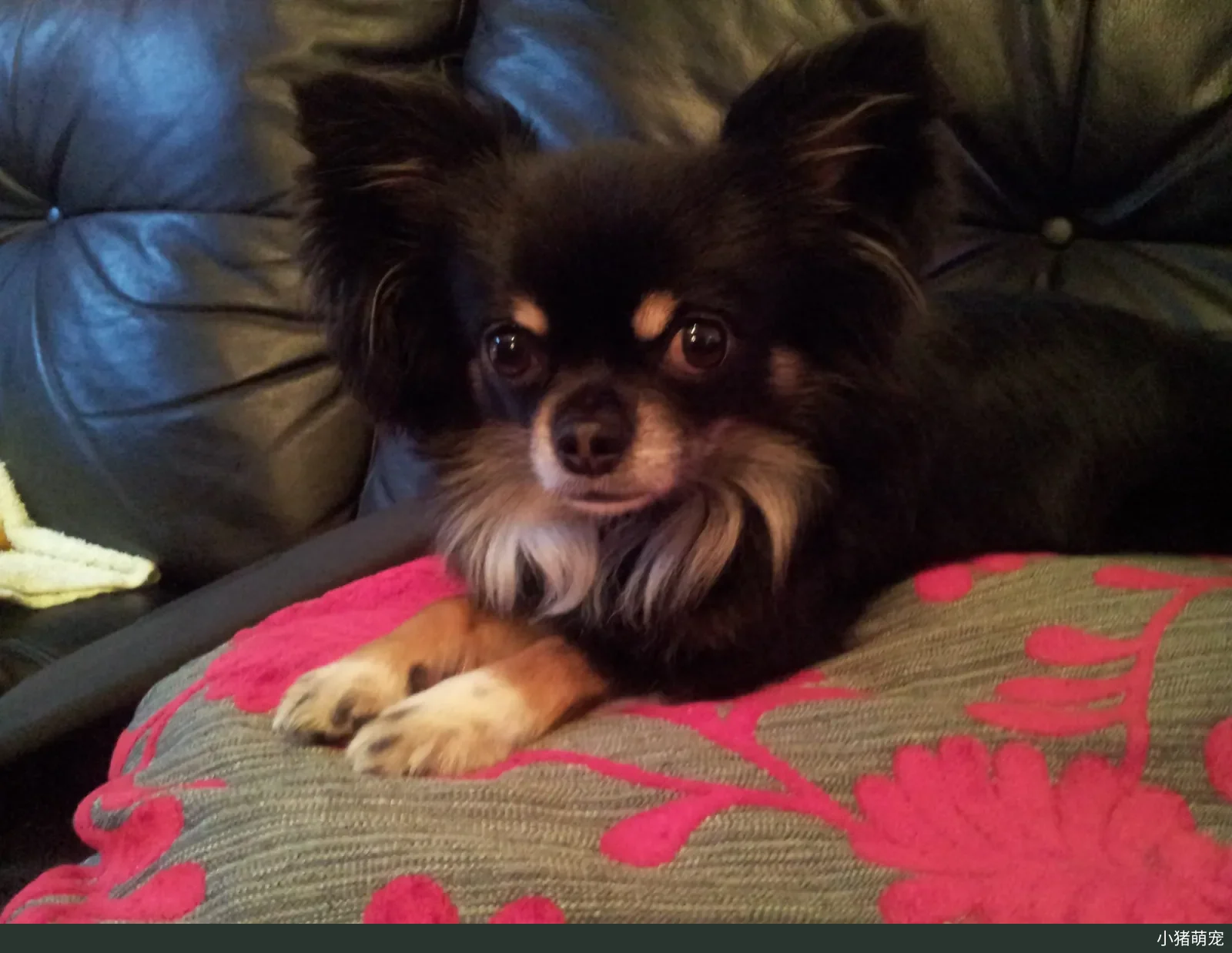
A long-coat Chihuahua; the photographer introduces this as their dog Bentley. Photo: Crawfordpowl; source: Wikimedia Commons; license: CC BY-SA 4.0.
Temperament, exercise, and training
FCI summarizes temperament as “lively, alert, active, and very courageous”; AKC’s standard credits a terrier-like self-importance and confidence. VCA’s picture is more everyday: a devoted lap dog and playful companion that often bonds to one person or household and stays reserved with strangers—so early socialization matters. They may challenge much larger unfamiliar dogs beyond their size; with children, adult supervision is needed because kids can easily injure so small a dog by accident.
Exercise needs are modest. AKC notes that trotting after the owner indoors often suffices; short, easy walks maintain weight and condition, but avoid overexertion—if panting hard or falling behind, carry them home. VCA suggests one or two neighborhood walks a day for outdoor sniffing and mental stimulation; dog parks are more suitable when limited to small dogs; games and tricks also exercise the brain. Chihuahuas chill easily—small bodies lose heat fast—so dress for cold outings.
Positive methods work best in training. AKC finds them intelligent and eager to please, responsive to positive training, and capable in obedience and dog sports; VCA adds that they learn fast but can be stubborn—force fails, food rewards work well—and house-training may take more effort than with many breeds. AKC also warns not to allow as a puppy what will be forbidden as an adult, or this clever little dog may “rule” the house.
Common health issues
AKC says most Chihuahuas are healthy, listing expected lifespan of 14–16 years on the breed page, but the breed can show heart issues such as patent ductus arteriosus and mitral valve disease, eye disease, and patellar luxation (loose kneecaps), with idiopathic epilepsy also reported. The U.S. national parent club recommends health checks including patella evaluation, cardiac exam, and eye evaluation; ask breeders whether breeding stock were screened when choosing a puppy.
Teeth deserve special attention. A 2020 VetCompass study from the Royal Veterinary College randomly reviewed records of 5,660 of 11,647 Chihuahuas under UK primary veterinary care in 2016: the most common specific problems were periodontal disease (13.5%), obesity (5.9%), retained deciduous teeth (5.7%), anal-sac impaction (4.9%), and aggression (4.2%); all dental conditions combined were 19.0%. Authors note a young median age of only 2.8 years, yet the results still flag dental risk in the breed. VCA also notes Chihuahuas are prone to periodontal problems; regular tooth brushing can largely prevent them.
Additionally, the American College of Veterinary Surgeons (ACVS) lists Chihuahuas among breeds commonly affected by tracheal collapse—a classic dry, goose-honk cough, or coughing when picked up or when a collar is pulled; overweight dogs or those in smoking households may face higher risk. VCA also warns that Chihuahuas gain weight easily—treat calories add up fast—and that puppies are prone to hypoglycemia and need frequent small meals. Seek care promptly for lameness, recurring cough, or lethargy.
References
-
American Kennel Club. Chihuahua Dog Breed Information
-
American Kennel Club. Official Standard of the Chihuahua (approved 12 August 2008, effective 1 October 2008)
-
Fédération Cynologique Internationale. FCI-Standard N° 218 CHIHUAHUEÑO (Chihuahua) (official standard published 4 September 2019)
-
Fédération Cynologique Internationale. CHIHUAHUEÑO (218)
-
VCA Animal Hospitals. Chihuahua Smooth Coat
-
O'Neill DG, Packer RMA, Lobb M, Church DB, Brodbelt DC, Pegram C. Demography and commonly recorded clinical conditions of Chihuahuas under primary veterinary care in the UK in 2016. BMC Veterinary Research, 2020, 16:42.
-
American College of Veterinary Surgeons. Tracheal Collapse