In 1972, two coated Rat Terriers in Louisiana produced a litter that included a hairless puppy. She was named Josephine and went on to have hairless puppies of her own. Her line became the American Hairless Terrier, which the American Kennel Club (AKC) formally recognized in 2016. The breed shares the Rat Terrier’s keen interest in whatever moves nearby. Two questions are worth asking on a walk. If something stirs in the grass, is there room to bring the dog safely to a stop? When the sun is on the dog’s back, how far is it to the next stretch of shade? [1]
Look at the dog standing on the grass in the first photograph. Its front legs are straight, its chest reaches nearly to the elbows, and the line of its belly rises from the chest toward the waist. An American Hairless Terrier is slightly longer than it is tall. It typically stands 12 to 16 inches (about 30 to 41 centimetres) at the shoulder, with clearly defined muscles. The patches of light and dark skin catch the eye first. Trace the outline from shoulder to chest, then along the waist to the hind legs, and you can see the build of this small, athletic dog. [1][2]

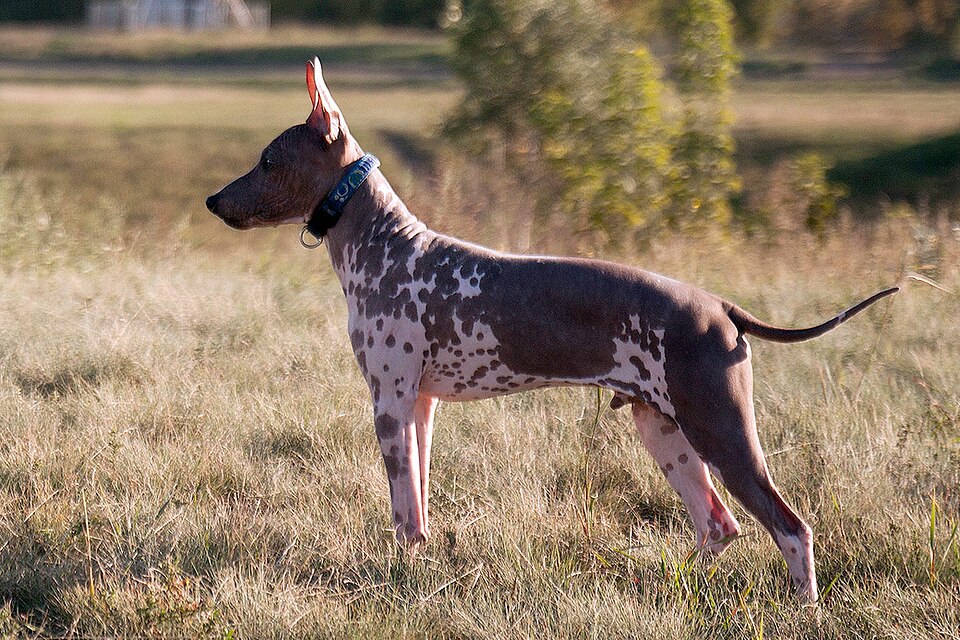
图:The American Hairless Terrier in profile. Sergey Akishev, Wikimedia Commons[2]
The breed has both hairless and coated varieties. Both have a broad, wedge-shaped head that narrows from the forehead toward the nose, with some width even at the tip of the muzzle. In the portrait of Adelor, you can see the breadth of the forehead between the upright ears and a few fine whiskers on either side of the muzzle. Hairless dogs can retain whiskers and eyebrows. They are even born with a fine covering of hair that falls out within a few weeks. The coated variety keeps its short, glossy coat. The two varieties have a similar build, but getting them ready for a walk involves different kinds of care. [1][3]

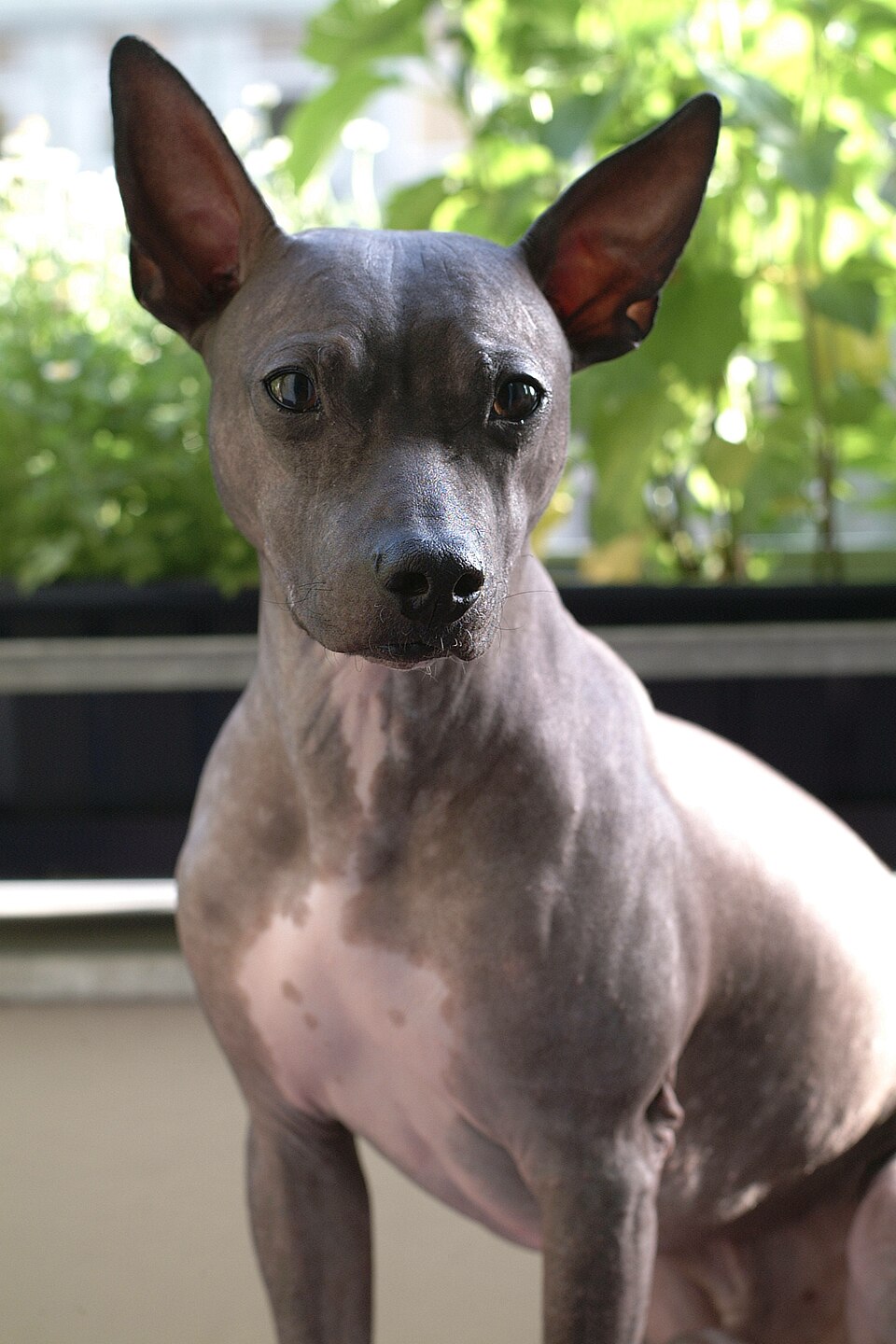
图:Adelor’s wedge-shaped head. Nyaah, Wikimedia Commons[3]
Making room for short walks
American Hairless Terriers are playful and curious, with moderate exercise needs. The AKC describes a fairly simple routine of regular walks or short play sessions in a fenced yard, with several chances to get outside each day. A short loop close to home can anchor a weekday routine. The morning walker can give the dog time to sniff, someone else can take the daytime outing, and the family can set aside time to play in the evening. A dog that enjoys exploring with its people may be just as happy to curl up beside them once it gets home. [1]
Let the weather help set the length of the walk. When choosing a summer route for a hairless dog, look at where the shade falls at the hour you usually go out. Pay particular attention to the way home. A path can start under trees and still leave you crossing an open field on the return leg. In strong sun, save the longer walk for a cooler part of the day and keep essential daytime trips close to home. In cold weather, put the dog in a well-fitting warm coat and choose a path where it is easy to turn back. It helps to know two ways home, one with time to linger and sniff and another that gets you indoors quickly. [1]
Allow some space for the urge to chase. Rat Terriers tracked down and pursued small animals, and an American Hairless Terrier may take a sudden interest in an animal darting across its path. Along an open lawn, let the dog sniff the edges on leash. For a game where it can run flat out after a toy, use a securely enclosed area. A family can arrange both kinds of activity without a yard of its own. Think about an ordinary workday: who can take each outing, and where nearby can the dog explore while the walker keeps an eye on it? [1]
Teaching your terrier to look back
American Hairless Terriers are generally willing to work with people. Start with a skill that comes in handy on nearly every walk. In a quiet spot, wait until the dog looks slightly away, then say its name once. Reward it the moment it turns toward you, and let it go back to sniffing. Once the response is familiar, try it outside your door and then on a quiet stretch of your walk. If the dog stares straight ahead the instant it reaches the grass, give it more distance from whatever caught its eye. Next time, start where it can still turn back to you. Using the same cue lets family members pick up the practice when they take turns walking the dog. [1]
A puppy can get to know the neighborhood one new experience at a time. The AKC recommends gentle exposure to different people, places and everyday situations from about seven weeks to four months of age. A puppy might first watch someone push a stroller past from a little distance. Once it can watch comfortably, move a little closer. Puppy classes also give family members a chance to practice the timing of rewards. Later, a dog and handler who enjoy working together might try rally, obedience or agility. An ordinary walk offers plenty of chances to engage the dog’s mind, too. [1]
Walk-day care for each coat type
As the dog on the blue floor lifts its head, you can see the patches of exposed skin along its neck, across its shoulders and back, and down its legs. For the hairless variety, sun protection starts before the walk. Even a tree-lined route may take you into direct sun. A well-fitting sun shirt can cover the dog’s body. Let the dog take a few steps in it before heading out so you can see whether it can lift its legs and turn freely. When you remove the shirt at home, look for reddened skin where the edges touch, especially around the neck and behind the front legs. Doing this as you take off the leash makes a skin check part of even a short outing. [1][4]

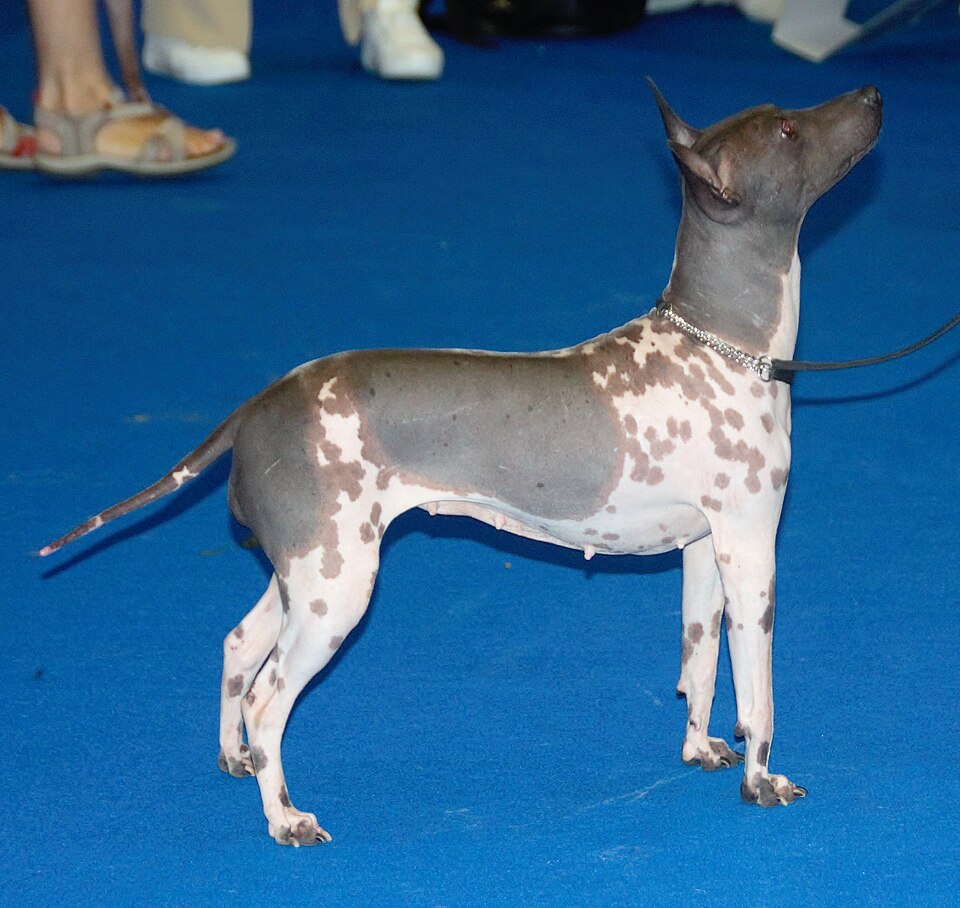
图:Skin markings on a hairless terrier. Canarian, Wikimedia Commons[4]
For the coated variety, a quick weekly brushing with a soft-bristled brush and a bath when the dog gets dirty will generally take care of the short coat. Both varieties need regular nail trims, toothbrushing and ear checks. After a walk, look for bits of grass in the ears or a noticeable buildup of wax. Families can share the work quite simply. Whoever walks the dog that day can check its skin and ears, while weekly brushing gets its own place in the routine. [1]
When asking about a puppy’s family health history, ask to see the hip, kneecap and heart evaluation results for both parents. The AKC breed page lists all three checks. Conditions of concern include hip dysplasia, a kneecap that slips out of place, and heart disease. The AKC also mentions Legg-Calvé-Perthes disease, in which the head of the thighbone loses its blood supply. The parents’ records help you understand the puppy’s breeding background. If your own dog repeatedly limps or starts struggling on a short walk it usually enjoys, pause the chase games and tell your veterinarian which leg seems affected and when you noticed the change. Knowing how your dog usually moves on that familiar loop makes a change in its gait easier to spot. [1]
References
-
[1] American Kennel Club. American Hairless Terrier Dog Breed Information.
-
[2] Sergey Akishev. File:Wudnway Magnetic Spots.jpg. Wikimedia Commons, 2012.
-
[3] Nyaah. File:American Hairless Terrier Adelor.jpg. Wikimedia Commons, 2009.
-
[4] Canarian. File:Americanhairlessaht3.jpg. Wikimedia Commons, 2023.