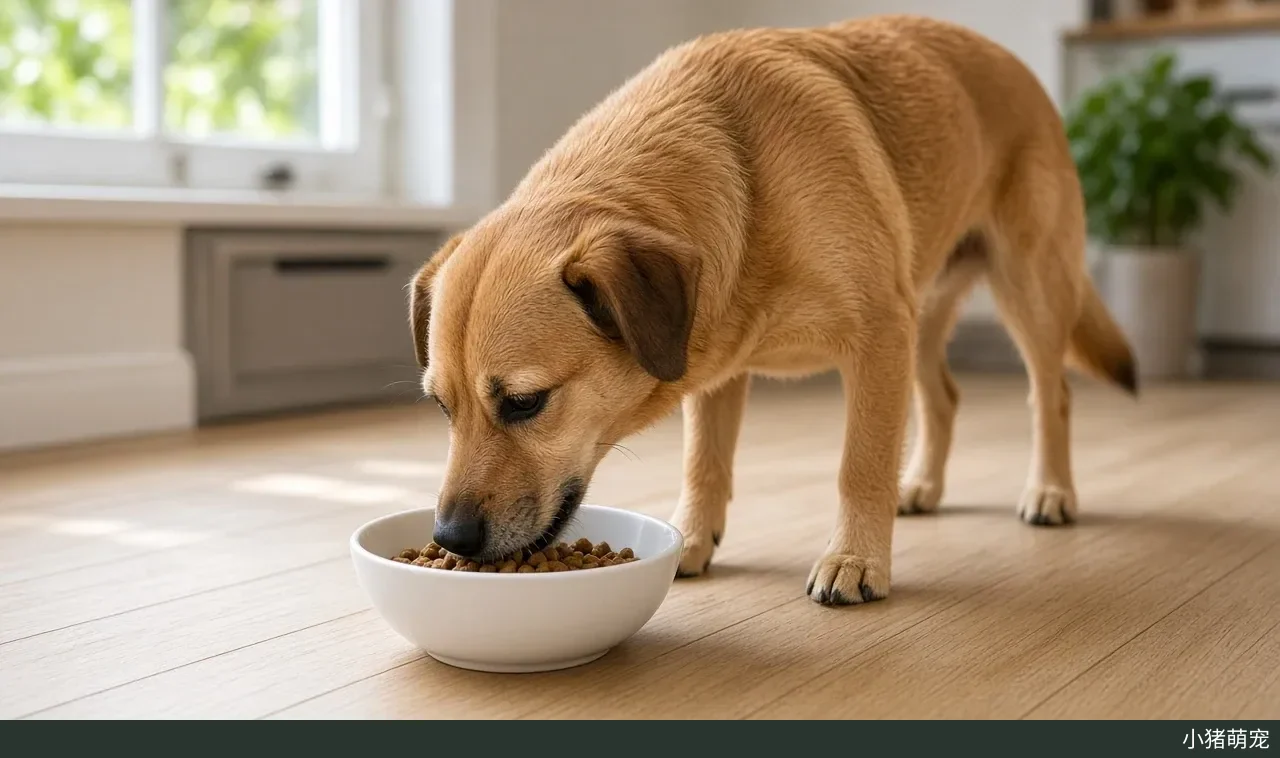
An adult dog indoors eating kibble from a white bowl. AI-generated illustration.
On October 21, 2026, Dutch pet-food company HenArt announced LEVENDO dog food, built around PEKILO mycoprotein produced by fermentation at Finnish biotech firm Enifer. The semi-moist baked food is aimed at adult and senior dogs, formulated as a complete diet under Fédération Européenne de l’Industrie des Aliments pour Animaux Familiers (FEDIAF) guidelines, and sold in Europe and the UK. The manufacturer’s numbers look strong, but independent published research is still limited.
Formula and Sales Channels
Per Enifer’s website press release and same-day PetfoodIndustry coverage (both October 21, 2026), LEVENDO’s recipe and its “fermented protein blend” were developed in-house by HenArt, headquartered in Oosterhout, the Netherlands, and produced at partner plants in Europe. Instead of the usual extruded kibble process, it is gently baked into semi-moist pellets; HenArt’s product page lists 15% moisture and says ordinary dry food is typically about 8%–9%. For Enifer, this is PEKILO’s first appearance as an international consumer product.
On the ingredient list published on HenArt’s product page, fungal protein (Paecilomyces variotii strain KCL-24) ranks first at 11.5%, followed by pea flour, glycerol, rapeseed oil, potato flour, “microbial protein,” potato protein, dried pumpkin, pea protein, hydrolyzed yeast, and more; the formula contains no meat, dairy, egg, grains, or soy. Guaranteed analysis shows crude protein 26.6%, crude fat 12.9%, crude fiber 5.5%, crude ash 8.3%, metabolizable energy about 3,214 kcal/kg, plus taurine, L-carnitine, DL-methionine, vitamin B12, and various minerals. In other words, fungal protein is the “star” of the bowl, but overall protein also comes from peas, potato, yeast, and other sources.
On sales, LEVENDO is currently sold through HenArt’s webshop and specialty distributors in Europe and the UK; HenArt says it is opening to national pet chains, online pet retailers, and supermarket channels. The product page shows a 750 g bag, at about €2.04–€3.40 per day for a 5–10 kg dog. HenArt also plans to apply this fermented-protein approach to later wet-food products. We found no information on sales in mainland China or the United States.
Where PEKILO Mycoprotein Comes From
PEKILO is mycelial protein from the filamentous fungus Paecilomyces variotii—not a brand-new invention. Per the FAO journal Unasylva, in the 1970s Finland’s pulp industry grew this fungus on sulfite pulping waste liquor to make feed protein; the first commercial plant was at the Jämsänkoski pulp mill, with annual capacity of 10,000 tonnes. Enifer’s site says PEKILO was industrially produced as animal feed from 1975–1991, and the company now holds the original strain from that era.
Per Enifer’s description, today’s process is a bit like brewing beer: liquid by-products from food, agriculture, or forestry are continuously fed into steel fermenters; the fungus rapidly consumes sugars and other carbon sources; most water is then filtered off, leaving a mycelial mass with a fresh-cheese texture that is hot-air dried, milled to powder, and stored in silos for partner manufacturers. Enifer says pet-food-grade PEKILO contains more than 60% protein, 22% fiber (high in β-glucans), and less than 8% ash.
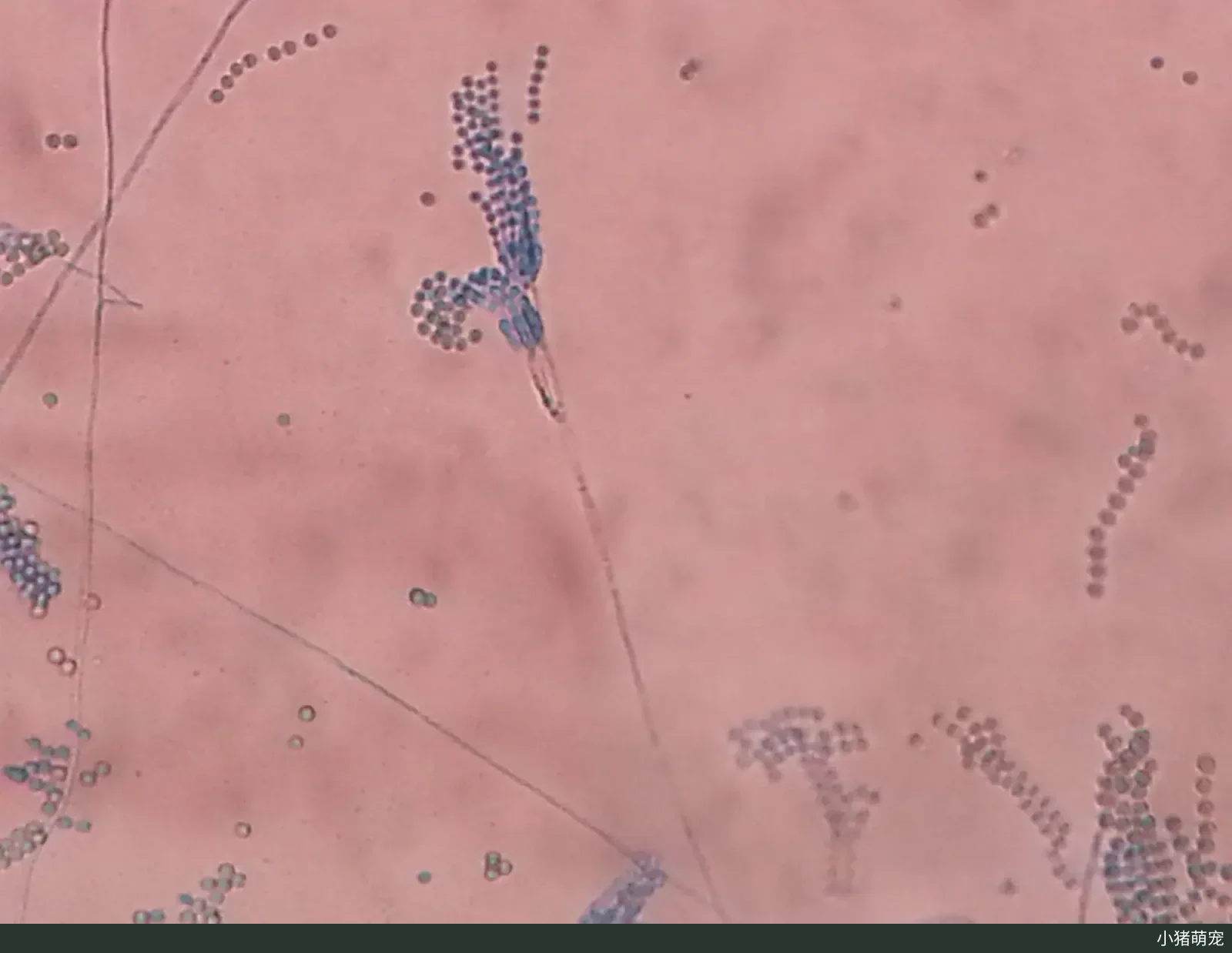
Conidiophores and conidia of a Paecilomyces fungus under the microscope; the original image does not name a species and is for genus-level reference only. Figure: Ajay Kumar Chaurasiya, source Wikimedia Commons, license CC BY-SA 4.0.
Enifer’s site also claims that, compared with animal and soy protein, PEKILO can cut greenhouse-gas emissions by more than 70% and needs less land and water. That is the company’s own statement; we did not find a matching independent full life-cycle assessment, so one bag of LEVENDO should not be equated with “more eco-friendly.” On capacity, Enifer is commissioning a PEKILO plant rated at 3,000 tonnes a year, aiming for full production in 2027.
Regulatory Status and Research Evidence
As a feed material, PEKILO has a clear EU trail: Commission Regulation (EU) 2022/1104 updates the Catalogue of feed materials, entry 12.1.9 “fungal single-cell protein,” covering products obtained by fermenting fungi such as Paecilomyces varioti on mainly plant-derived substrates. Enifer therefore says PEKILO may be used in pet food across the EU single market (its site dates catalogue inclusion to 2021; the regulation text we checked was published in July 2022). Separately, PEKILO for human food remains a novel food: as of August 2026 the European Food Safety Authority (EFSA) risk assessment of the dried biomass was still ongoing, and a similar UK Food Standards Agency (FSA) application was still in risk assessment.
On research evidence, the peer-reviewed paper we could find is a June 2026 trial in Frontiers in Veterinary Science from the canine nutrition lab at Brazil’s Federal University of Paraná. The study added 0%–16% of this fungal protein to extruded diets across three experiments with 15, 16, and 12 adult dogs (digestibility work used Beagles, 21 days per period). Results: apparent crude-protein digestibility of the ingredient was 83.9%, dry-matter digestibility 64.3%; palatability did not differ significantly at 4%, 8%, or 16% inclusion, and fecal scores were unaffected; but as inclusion rose, whole-diet dry-matter digestibility and metabolizable energy fell and fecal volume rose. The authors concluded that 4% and 8% had smaller effects on digestibility and might beneficially modulate fecal microbiota. The work was funded by Brazilian company FS Fueling Sustainability, with ingredient data from Enifer.
The study is small and short, and it tested a single ingredient in extruded food—not finished LEVENDO. Enifer’s press release mentions a “60-day feeding study” (high digestibility and palatability, no effect on fecal quality, early signs of possible immune support) without design or data, and we found no published version; “immune support” can only be read as a preliminary manufacturer signal for now. HenArt’s product page also states it makes no health claims for spermidine in the formula.
Choosing Food from a Veterinary Nutrition Angle
Whether a dog food can serve as a sole diet depends less on whether protein is animal, plant, or fungal than on whether the whole formula is complete and balanced. FEDIAF’s 2025 nutritional guidelines define a “complete” food as one that, as the sole long-term diet for the relevant life stage, meets all of that animal’s nutrient needs; they also recommend chemical analysis of the finished product before each product launch. LEVENDO is labeled as a complete adult dog food; HenArt says the same formula also suits seniors, but it is not formulated to growth or reproduction nutrient standards.
The World Small Animal Veterinary Association (WSAVA) Global Nutrition Committee’s pet-food selection guidelines note that words like “premium” and “natural” on labels are mostly marketing; more useful questions for the maker include who formulated the diet and whether a PhD in animal nutrition or a board-certified veterinary nutritionist was involved; whether the recipe was calculated to nutrient standards or backed by feeding trials; whether finished product gets chemical analysis and quality control; and whether product research appears in peer-reviewed journals. Against those criteria for LEVENDO: it is formulated to FEDIAF guidelines; public materials do not mention feeding trials on the finished product; HenArt says it was developed with “qualified pet nutrition experts” but does not name people or credentials.
One more point: the food is grain-free, with pea and potato-type ingredients high on the list. Since 2018 the U.S. Food and Drug Administration (FDA) has investigated a possible link between some grain-free diets heavy in legumes or potato and canine dilated cardiomyopathy (DCM); in December 2022 it said available reports were insufficient to establish causation and stopped routine updates. HenArt’s product page also acknowledges the science is unsettled and adds taurine and L-carnitine to the formula. For ordinary dog owners trying a novel-protein food, a safer path is to talk with a veterinarian first (especially for dogs with heart or kidney disease, food allergy, or special life stages), transition over 7–10 days, and watch weight, demeanor, and stool.
References
-
PetfoodIndustry: HenArt launches Levendo dog food with Enifer mycoprotein (2026-10-21)
-
Enifer: PEKILO® makes its European debut in HenArt’s dog food (2026-10-21)
-
HenArt: LEVENDO Semi-Moist Dog Food for Adult Dogs (product page, accessed 2026-10-22)
-
Enifer: Technology
-
Enifer: PEKILO®Pet
-
Enifer: Homepage
-
FAO Unasylva No. 106: Feeding cattle at the pulp mill
-
EUR-Lex: Commission Regulation (EU) 2022/1104 on the Catalogue of feed materials (2022-07-01)
-
de Souza R.B.M.S. et al.: Effects of a single-cell protein source from Paecilomyces variotii on diet digestibility and palatability and intestinal functionality of adult dogs, Frontiers in Veterinary Science (2026-06-10)
-
FEDIAF: Nutritional Guidelines for Complete and Complementary Pet Food for Cats and Dogs (2025)
-
WSAVA Global Nutrition Committee: Guidelines on Selecting Pet Foods
-
FDA: FDA Investigation into Potential Link between Certain Diets and Canine Dilated Cardiomyopathy
-
小猪萌宠 · Welcome to my pet planet