
The Papillon is a small Toy Group spaniel with bright, fringed ears that resemble butterfly wings. It is quick, curious, and often keen to play. Typical height is about 8–11 inches, weight about 5–10 pounds, and life expectancy around 14–16 years.[1] In the Papillon Club of America’s show guidance, the ideal weight is about 3–9 pounds. Companion dogs may fall outside that range. Their size still leaves room for agility, obedience, and tracking.[2]
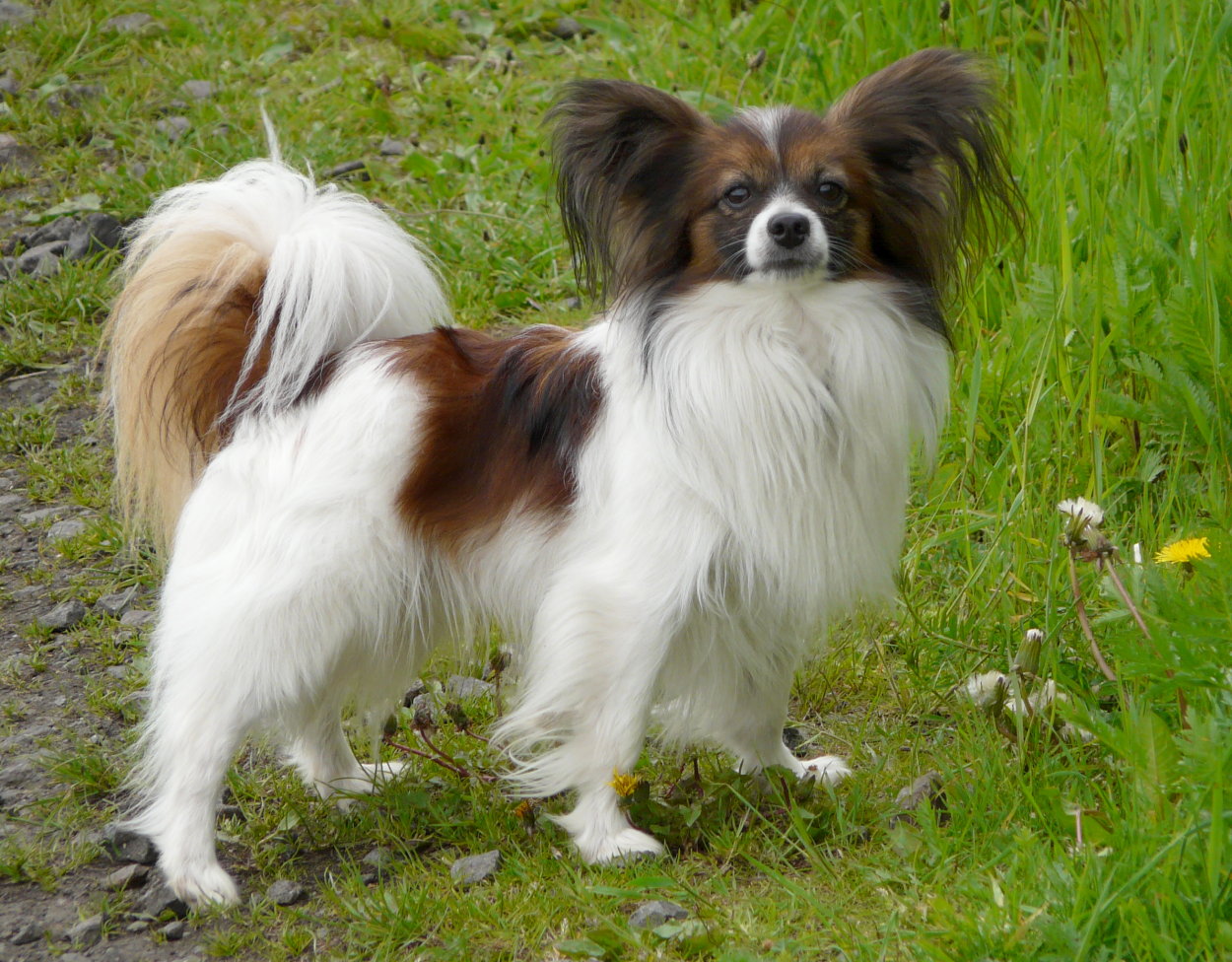
Figure: Outdoor Papillon standing on grass. Gvdmoort, Wikimedia Commons[3]

Ear type and breed background
Papillons descend from Europe’s courtly toy spaniels: continental court favorites by the Renaissance, appearing in art by masters such as Rubens, Watteau, and Fragonard. The French name Papillon (“butterfly”) mainly marks the erect-eared dog; the drop-eared Phalene (“night moth”) is a separate breed in some European countries but a variety of the same breed in the U.S. and U.K., shown together.[2] Older names include Continental dwarf spaniel and Belgian toy spaniel; drop ears were historically common, and today’s popular erect ear is described as a late-1800s mutation.[2] Early dogs were often solid-colored; modern AKC registrations are mainly white with black, lemon, red, sable, or tri-color markings.[2] This is club history for understanding butterfly ears—not a promise about any one dog’s temperament or exercise load.
Identification starts with a fine-boned toy outline and large, fringed erect ears that read like open butterfly wings; drop-eared dogs look different but remain the same breed under U.S./U.K. rules.[2] These small dogs can be athletic and agile.[1] Household dogs may fall outside show size bands; recognition should combine ear carriage, parti-color coat, and overall proportion—not “tiny” alone. Standards and club notes describe ideals and group tendencies; individuals vary.
Activity, training, and household setup
Papillons can live in small homes and enjoy exploring outdoors, where many will chase birds, squirrels, insects, or other small animals. Some also catch mice. Their size makes travel in a suitable carrier easier.[2] Agility, obedience, and therapy or assistance work suit some individuals.[2] At home, short walks, sniffing games, and brief training sessions give an alert dog something to do each day.[1][2]
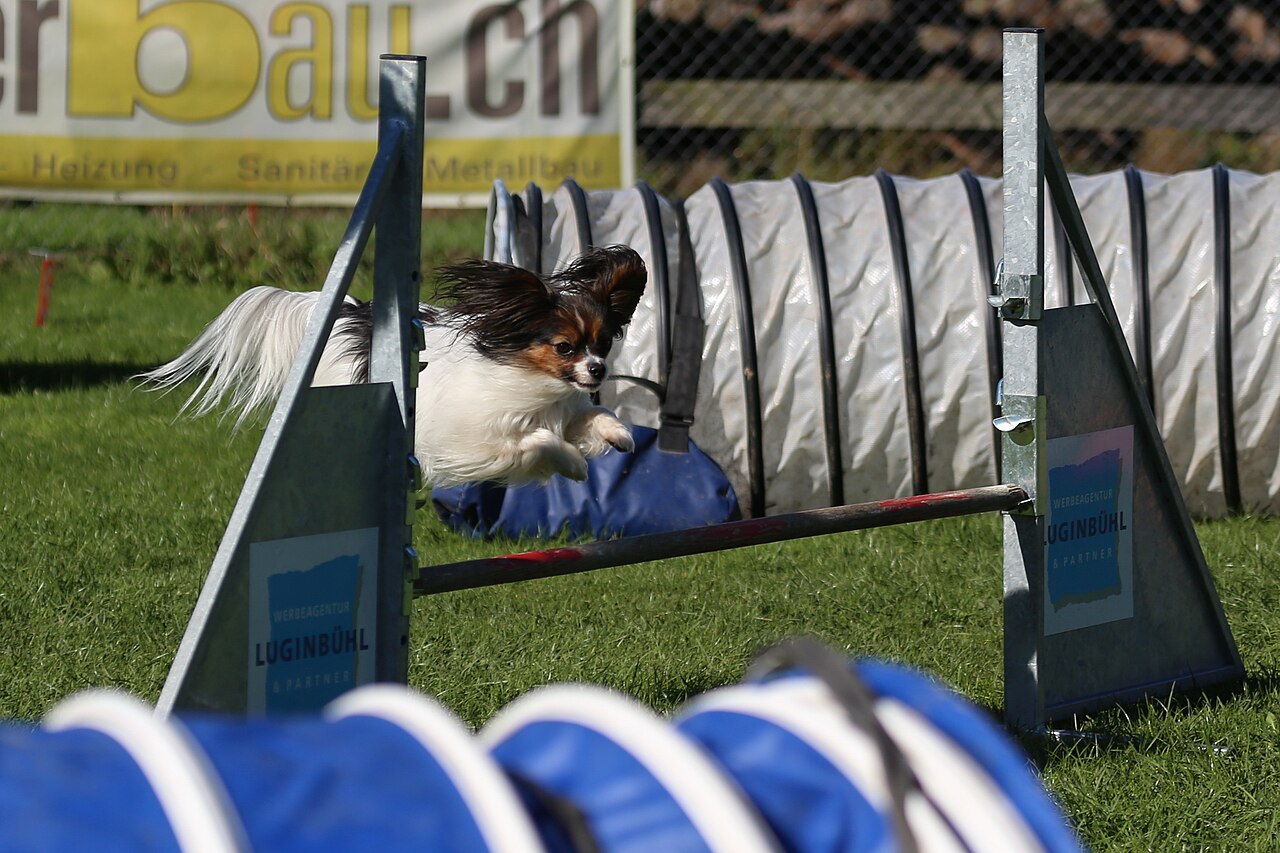
Figure: Papillon leaping an outdoor agility bar. A. Buser, Wikimedia Commons

Check the yard for fence gaps before bringing a puppy home: spaces between panels and posts, gates and walls, or under the fence can tempt an active pup.[2] Most dogs are outgoing with people and, if raised with them, usually adapt to children, cats, and other dogs—yet they may be possessive or bossy with other dogs, and a Papillon in motion can look like prey to some breeds, so size-related risk needs constant attention.[2] They may not grasp their own vulnerability; they jump well, and puppies especially must be kept from leaps or from wriggling out of a child’s arms onto a hard landing. Some breeders hesitate to place pups where children are too young to understand toy-breed fragility.[2] Obedience training helps counter spoiling; housetraining can take longer than in large dogs; Choose a reward-based class in a controlled setting or an individual lesson.[2] These are club risk notes, not guarantees for one dog.
Grooming, teeth, and health screening
The soft, glossy coat needs light grooming, with particular attention to the ear fringe. Papillons lack the heavy undercoat that some breeds shed seasonally. Check the ears and paws when you comb the fringe.[2] Small dogs often need regular dental care. If a cleaning or surgery is planned, discuss individual anaesthesia risk and monitoring with the veterinarian.[2]
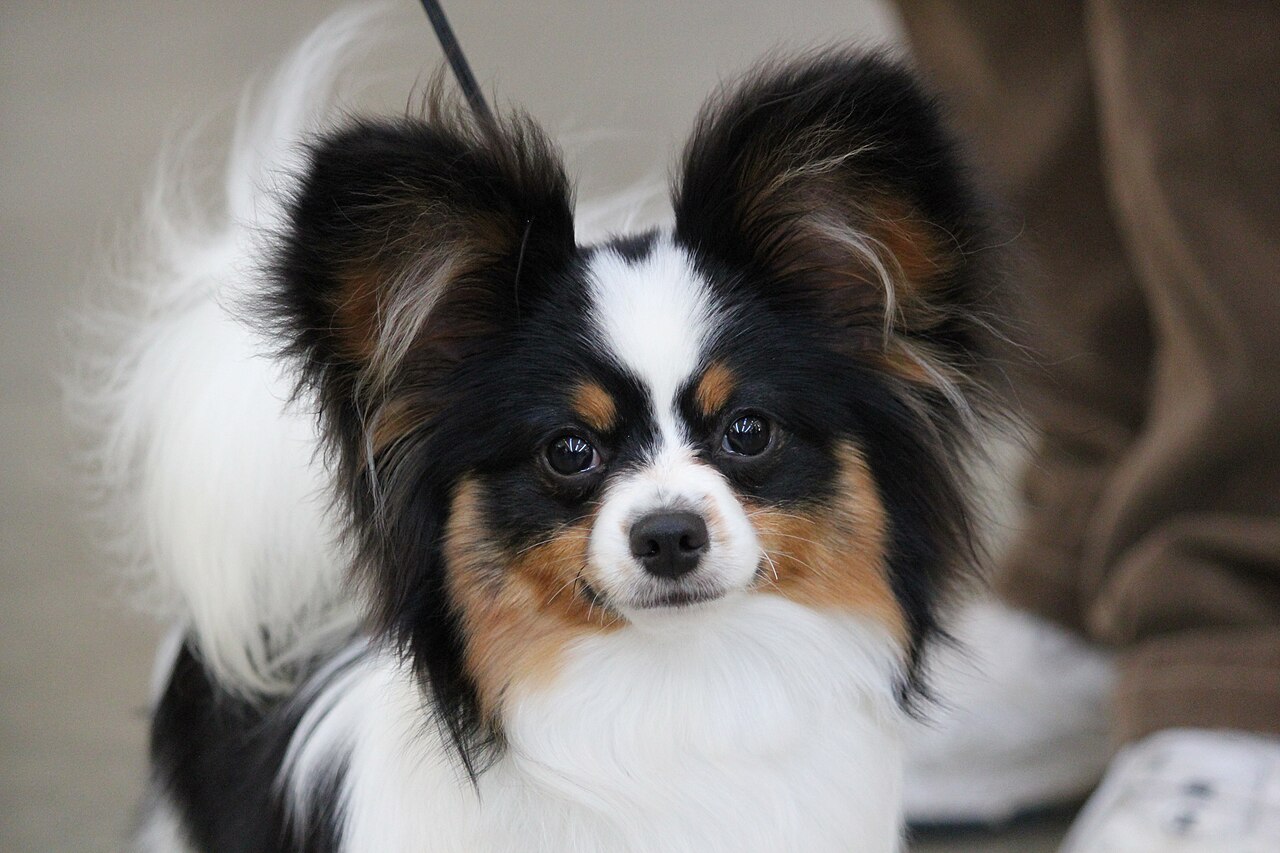
Figure: Tricolor Papillon head and chest. daveynin, Wikimedia Commons

Many Papillons stay active into their teens. Few diseases are framed as breed-unique, but small-dog problems such as patellar luxation, open fontanels, and bite or palate defects still occur; progressive retinal atrophy (PRA) has been found, and conscientious breeders test stock and register with CERF—work for which PCA has been recognized.[2] Patella and eye screening are questions for acquisition, not on-the-spot diagnoses. Household care means choosing sources that share health information and following veterinary exams, dentistry, and joint checks as advised—not treating a refined toy outline as a free pass.[2]
Butterfly ears and toy size make Papillons portable, but daily activity cannot shrink to zero. Play, training, secure fencing, ear care, dental anesthesia planning, and patella/eye questions belong on the same list. Adjust exercise and care as you learn the needs of your own dog and veterinary judgment.
References
-
American Kennel Club. Papillon Dog Breed Information. https://www.akc.org/dog-breeds/papillon/
-
Papillon Club of America (Beverly Miller). Papillon FAQ. https://papillonclub.org/articles-papillon-faq/
-
Wikimedia Commons. File:Outdoor Continental Toy Spaniel Papillon.jpeg. https://commons.wikimedia.org/wiki/File:Outdoor_Continental_Toy_Spaniel_Papillon.jpeg