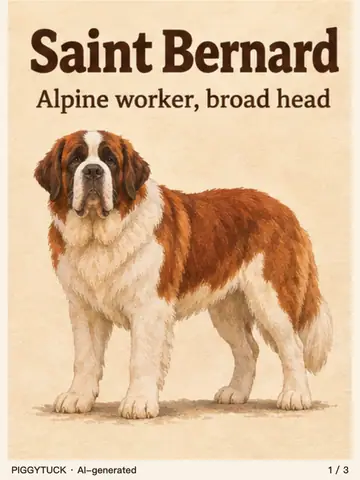
The Saint Bernard is the famously gentle giant of the Swiss Alps. It belongs to the Working Group and gained American Kennel Club recognition in 1885. Watchfulness, patience and care around children are familiar qualities of the breed.[1]
Around 1050, Bernard of Menthon founded a hospice for travellers on an Alpine pass about 8,000 feet above sea level. Deep snow made the crossing hazardous. Over the centuries, the monks developed powerful working dogs that could find and rescue travellers in drifts and avalanches. The familiar brandy cask was a popular image rather than part of the pass dogs’ actual rescue equipment.[1]
Size, head, and long or short coats
Adult males typically stand 28–30 inches at the shoulder and weigh about 140–180 pounds. Females usually stand 26–28 inches and weigh about 120–140 pounds. Life expectancy is about eight to ten years. A broad head, furrowed brow, short muzzle and dark eyes sit above a powerful, muscular body. Both long and short coats occur, often with a dark mask, white blaze and white chest. A standing photograph shows the outline and relative proportions, while height comes from a measurement or the dog’s records.[1]
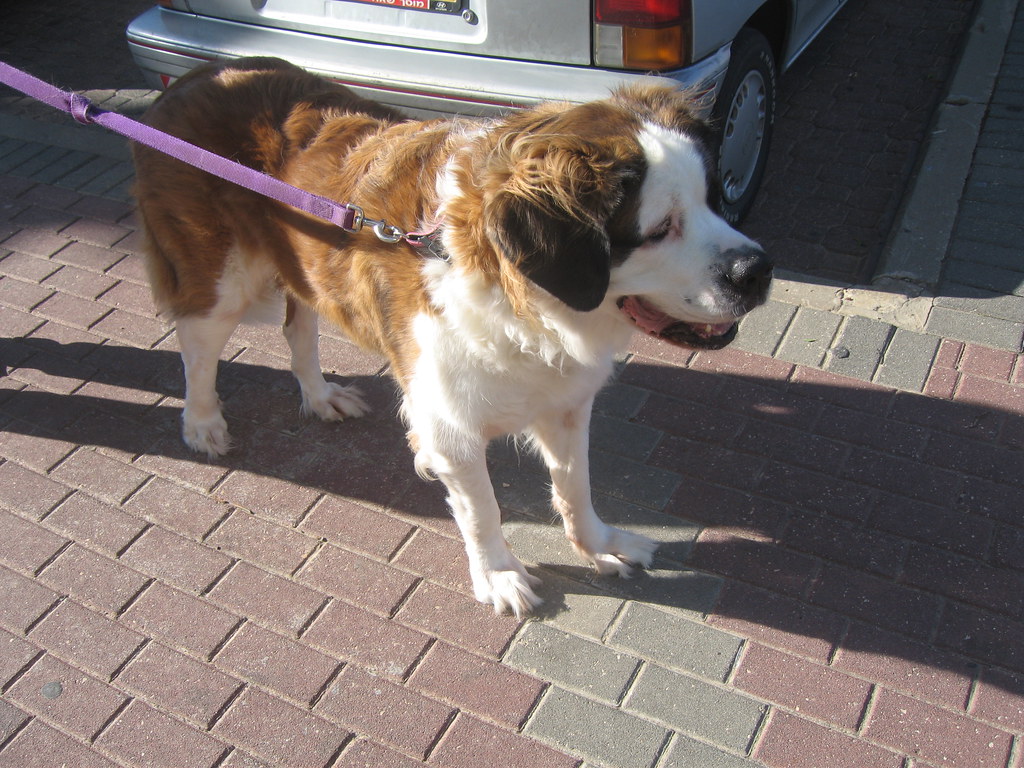
Figure: Long-coated brown-and-white Saint Bernard standing on brick paving, full body visible. Shlomi Fish, Flickr[2]
Moderate exercise and early training you cannot skip
Moderate exercise suits most healthy adult Saints. A longer daily walk or about half an hour of play can be a starting point, with the amount adjusted for the dog’s age and condition. Individuals with the right fitness can join longer hikes, and trained dogs may take part in carting or drafting. Spending that time with familiar people matters to a dog that enjoys company.[1]
Early socialisation and basic training are particularly important given the breed’s size and strength. Calm leash walking, polite greetings and staying away from the table make everyday life easier as the puppy grows. Frequent long stretches alone can lead to behaviour problems, so allow time together. Choose a life-stage-appropriate large-breed food, monitor weight and include training treats in the daily portion. Discuss home-prepared diets with a veterinarian.[1]
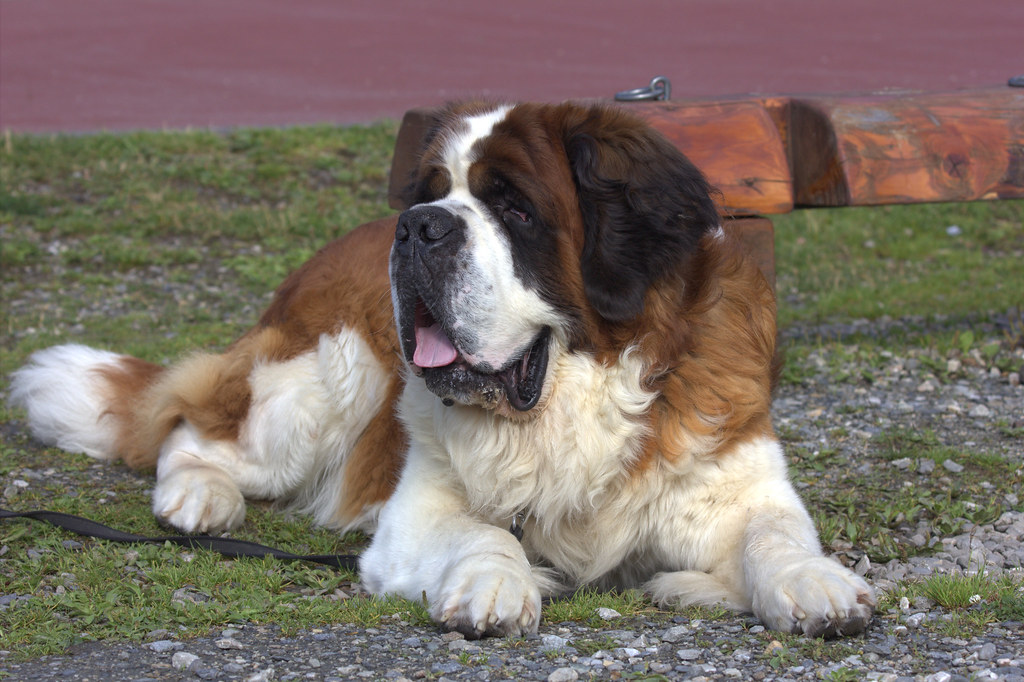
Figure: Long-coated Saint Bernard lying by a wooden bench on grass, broad head and long tail visible. Ancoline, Flickr[3]
Weekly brushing for both coats, daily in shed season
Both long and short coats benefit from weekly brushing to clear dirt and loose hair. Work tangles gently with a slicker brush or metal comb. During the two heavier shedding seasons, that routine can become daily. Bathe as needed and trim the nails regularly, since overlong nails can be painful and affect movement. Plan for cleaning up both hair and drool, and assess how family members with allergies react to spending time with the dog.[1]
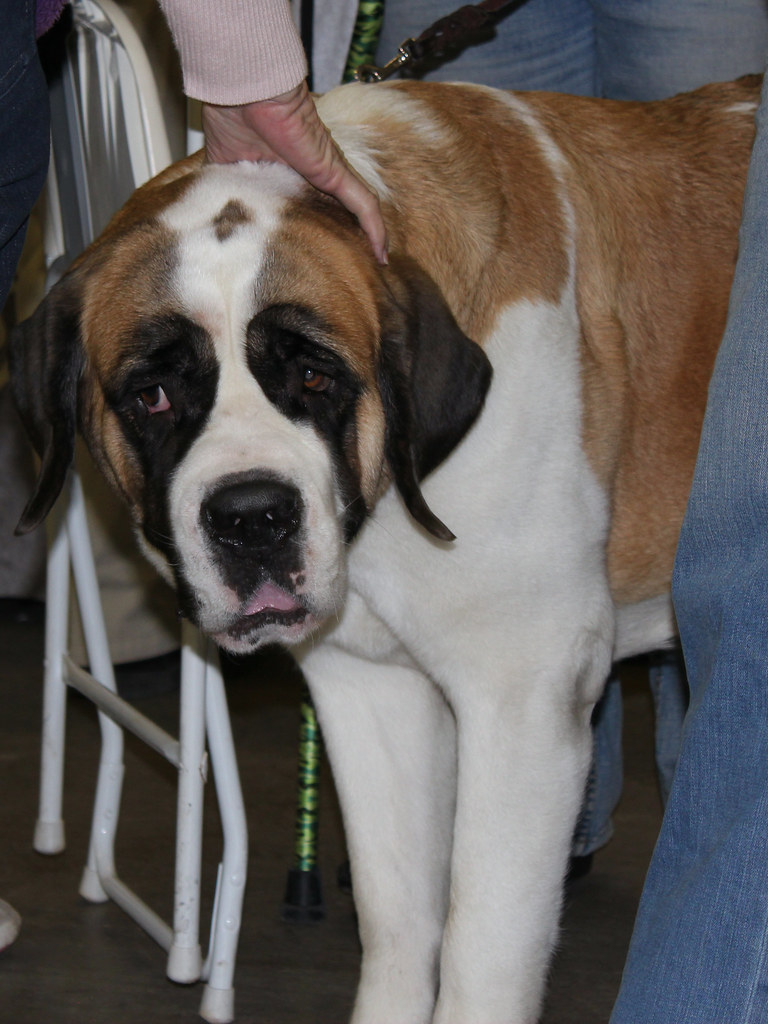
Figure: Short-coated Saint Bernard frontal close-up, dark ear patches and white chest visible. Jeffrey Beall, Flickr[4]
Bloat awareness and the club screening list
The Saint Bernard is a large, deep-chested dog at risk for gastric dilatation and volvulus. A suddenly swollen abdomen, repeated retching with nothing coming up, marked restlessness, heavy drooling or difficulty breathing call for emergency care. Gastric dilatation and a twisted stomach can look alike at home and need veterinary assessment.[1][5]
Ask about parental hip and elbow evaluations, a cardiac exam, an ophthalmologist evaluation and DNA testing for the common degenerative myelopathy variant. Hip dysplasia and eye disease can occur, so changes in gait, eyes or appetite deserve attention. In hot weather, provide a shady place to rest, plenty of water and activity in cooler hours. Allow the dog to adjust when coming out of an air-conditioned room into high heat.[1]
The broad head, deep chest and powerful frame help identify a Saint Bernard. At home, make room for moderate activity, early training, weekly brushing and weight checks. Review screening records with a veterinarian before bringing a dog home, and seek emergency care for sudden abdominal swelling or repeated unproductive retching.[1][5]
References
-
American Kennel Club. Saint Bernard.
-
Fish, S. St. Bernard Dog (CC BY 2.0).
-
Ancoline. Quel Beau Saint Bernard à poil Long (CC BY 2.0).
-
Beall, J. Saint Bernard. (CC BY-SA 2.0).
-
VCA Hospitals. Bloat: Gastric Dilatation and Volvulus in Dogs.