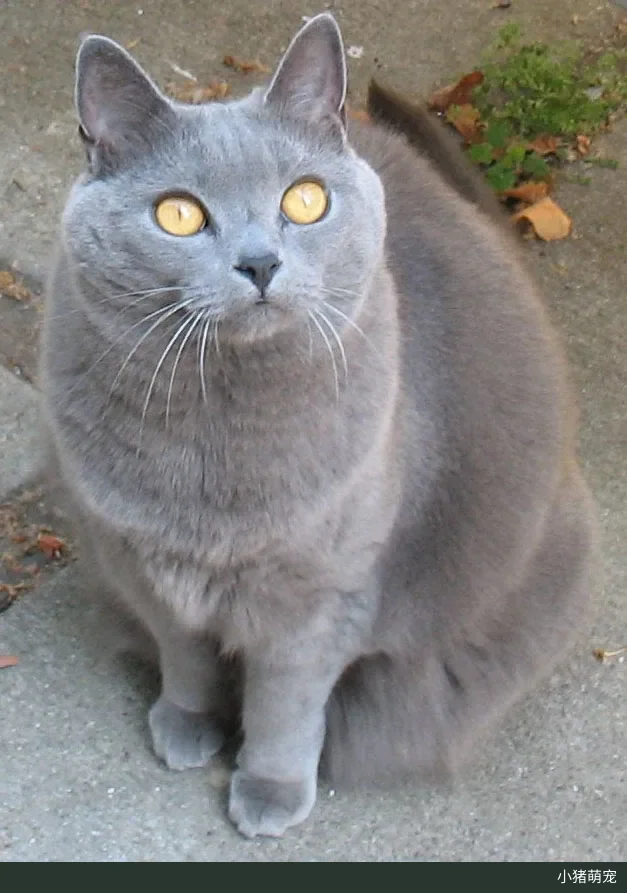
Adult female Chartreux Josie sitting face-on. Photo: Douglas Edwards; source: Wikimedia Commons; license: CC BY-SA 3.0.

The Chartreux is a short-haired cat breed from France, known for its blue-gray coat, copper-to-gold eyes, and a faintly smiling expression. Its body is solid, its limbs relatively fine, and its temperament is usually gentle and quiet, while still willing to join family play. Getting to know the breed means learning its history and looks, and also paying attention to daily care for the double coat, weight, and joints.
Origins and association recognition
Written clues to French blue cats go back to the sixteenth century. Stories of Chartreux living with Carthusian monks are widely told, but claims that the monks bred the breed lack firm proof; the name may also relate to a Spanish wool whose texture people associated with cat fur. Legend adds color to the story; France’s natural blue-cat populations were the important base for modern selection. CFA breed profile
Systematic breeding began in the 1920s. CFA’s breed article records that the Léger sisters started breeding around 1928 with a stable local population on Belle-Île, France. The first Chartreux were brought to North America in 1970; CFA accepted registration in 1979, granted Provisional status in 1986, and Championship status in 1987. Today’s Chartreux has its own breed standard and should be recognized separately from British Shorthairs, which may also have blue coats. CFA breed article
Appearance and everyday temperament
Under the CFA standard, the Chartreux has broad shoulders, a deep chest, and substantial muscle; the body is medium-long, while the legs are relatively short with finer bone. That proportion makes the cat look sturdy while still agile. Males are clearly larger than females and mature more slowly; the head is round and broad, the cheeks full, and the muzzle relatively small and tapered, which often gives a gentle “smile.” Ears are medium-sized and set fairly high; the eyes are round and open, ranging from copper to gold, with a clear, bright deep orange preferred. CFA breed standard
The coat is blue-gray, from a lighter ash-blue through slate blue; the key is a clear, even tone. The medium-short hair has a slightly woolly feel, made of a protective outer coat and resilient undercoat; tufts along the neck and flanks can show a parted, sheepskin-like texture. A solid body with finer limbs is a stronger overall hallmark than coat color alone. Breed Council standard
CFA describes the breed as an attached, adaptable companion that often signals needs with a soft voice, eye contact, or a light touch. Some individuals answer to their names and retrieve toys; quiet does not mean they skip interaction. TICA likewise stresses gentleness, intelligence, and playfulness; floor chase games and puzzle toys fit a familiar daily rhythm of activity and company. CFA temperament overview, TICA breed profile
Health notes and daily care
The CFA Breed Council summarizes the Chartreux as generally healthy, with an average lifespan of about 15 years; TICA’s overview lists 8–13 years or more. The two sources use different framings and should be credited separately—not combined into a lifespan promise for every cat. Breed Council living guide, TICA overview
Patellar luxation—when the kneecap may slip from its normal position—is a joint issue worth watching. The Council notes that selective breeding has gradually lowered its incidence. Some breeders also screen breeding cats regularly for hypertrophic cardiomyopathy (HCM); the disease occurs in many cats, and whether the Chartreux has a clearly defined genetic form is not yet settled. Health management should combine breeding-screen records with veterinary assessment, and breed risk should not be treated as an individual diagnosis. Breed Council health notes
Coat care can use a wide-tooth metal comb to gently remove loose hair, with more frequent sessions in shedding season, without over-combing out the undercoat. Some adults gain weight easily; watch body condition, keep a firm muscular feel, and pair diet with ongoing activity. Oral care also belongs in the daily routine. Breed Council care notes
This article is breed education and does not replace veterinary care for an individual cat.
References
- CFA · Chartreux
- CFA · Chartreux Article
- CFA · Chartreux Show Standard(PDF)
- TICA · Chartreux
- CFA Chartreux Breed Council · Living with Chartreux
- CFA Chartreux Breed Council · Standard of Points
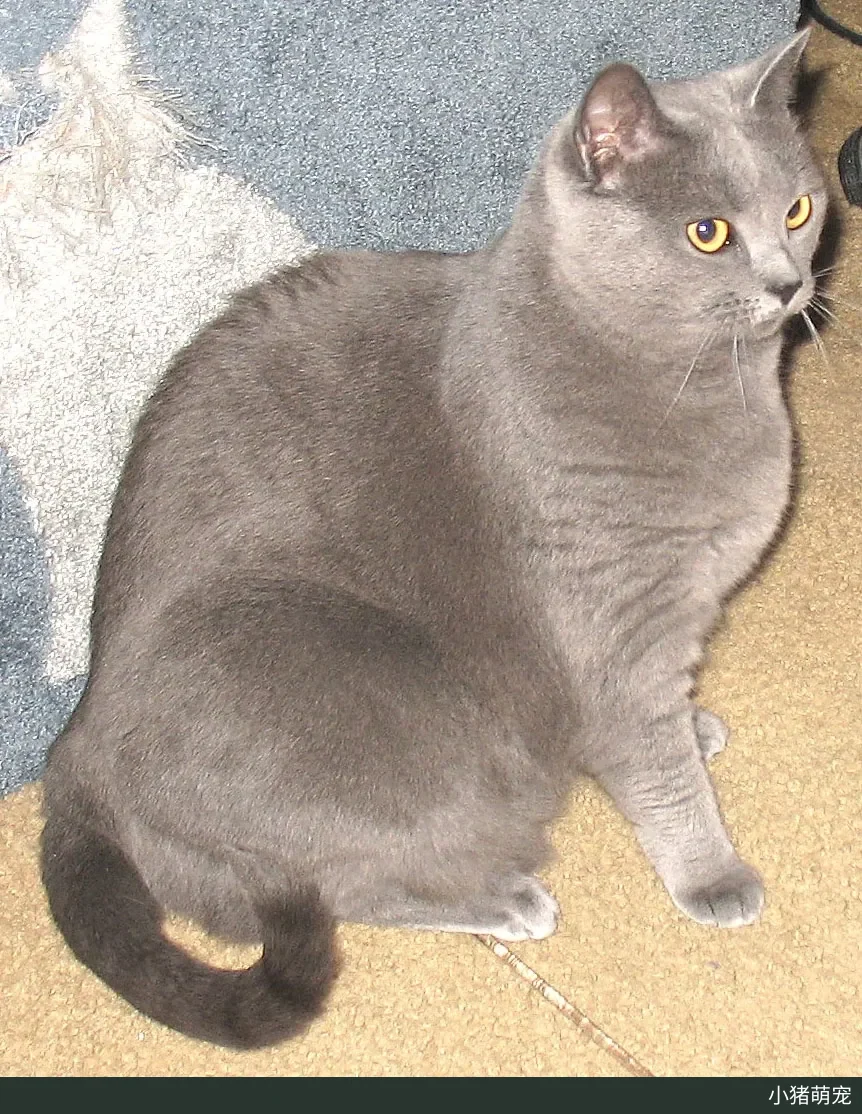
Adult female Chartreux Vianne in a side sitting pose. Photo: Douglas Edwards; source: Wikimedia Commons; license: CC BY-SA 3.0.

References
- Piggy Pets · Welcome to my pet planet