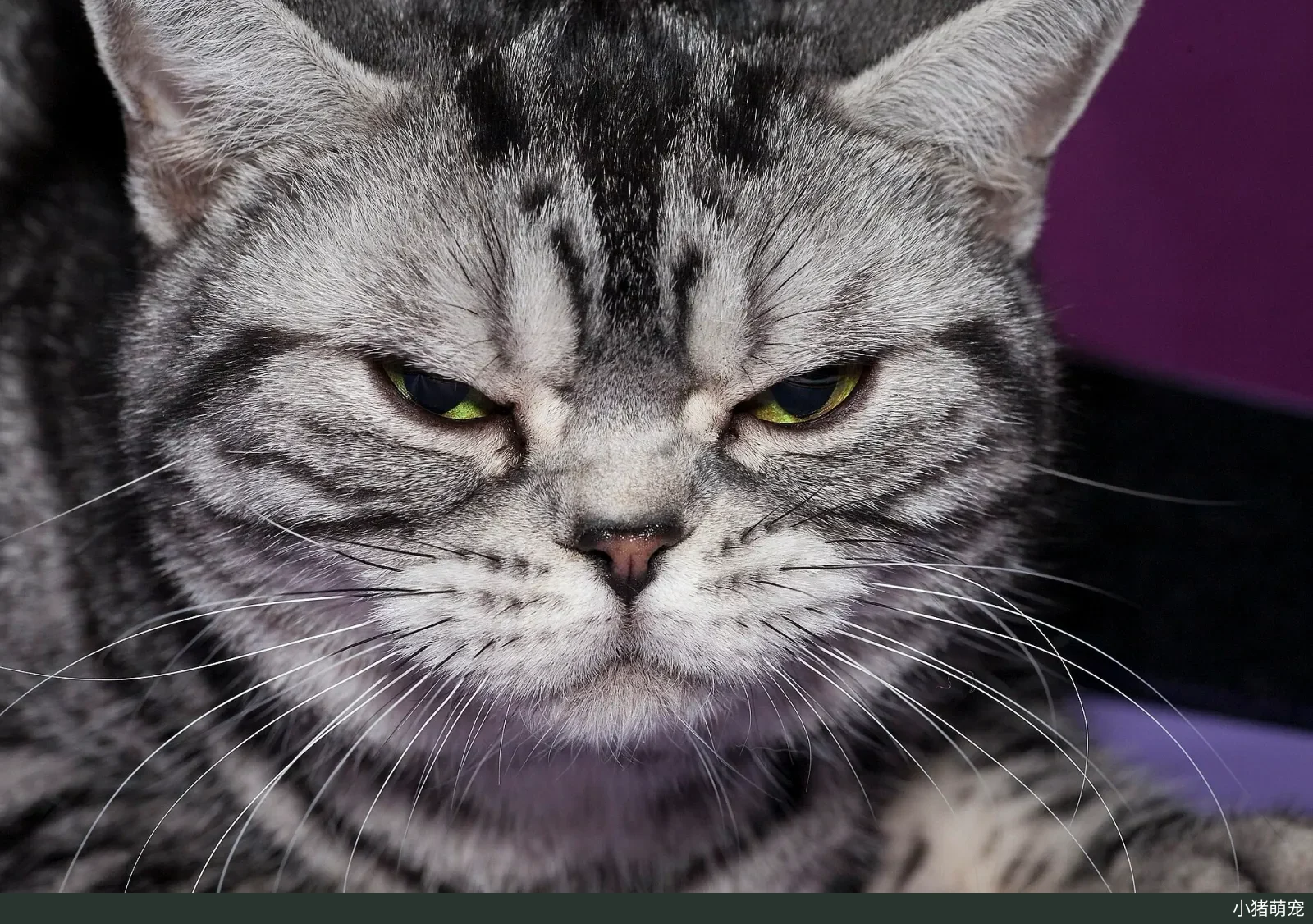
Silver classic tabby American Shorthair “Russeller’s Cleopatra of Solid Fold,” photographed at a Moscow cat show in April 2010. Image: Nickolas Titkov / Wikimedia Commons (originally on Flickr, resized), CC BY-SA 2.0.
The American Shorthair is a North American shorthair breed whose ancestors crossed with early settlers’ ships as working mousers. It is solidly built and well proportioned, even-tempered and people-oriented, yet able to amuse itself. CFA and TICA recognize the breed; Europe’s FIFe does not. It has no folded ears, short legs, or flat face of the kind that draw welfare debate, but veterinary literature still flags hypertrophic cardiomyopathy.
Origins and naming
The American Shorthair story starts in the hold. CFA explains that shorthairs came to North America on early settlers’ ships—cats were kept aboard against rats—and as pioneers moved west, the cats followed onto farms and into homes, still “earning their keep” by hunting rodents. TICA adds that crew lists rarely named these cats; they held on in the New World through hardiness and hunting skill.
Per CFA, more than fifty such shorthairs were shown at America’s first cat show in 1895; when CFA formed in 1906, it was among the first five recognized breeds. It first showed as “Domestic Shorthair”; CFA says the present name arrived in 1965, while TICA places the rename in the early 1960s. TICA also notes that although it is treated as a natural breed, today’s look is the product of long selective breeding.
So “American Shorthair” means a registered breed, not every ordinary shorthair street cat. Associations differ: CFA and TICA both recognize it; FIFe lists it as non-recognized in its EMS system (code AMS non).
Appearance and temperament
CFA’s standard opens by calling the American Shorthair a “true working cat,” with no part exaggerated to the point of weakness. Size is medium to large; the body is slightly longer than tall, with well-developed shoulders, chest, and hindquarters; the head is large and full-cheeked, slightly longer than wide; eyes are large and widely set, upper lids like half almonds and lower lids full curves; the muzzle is square, with clear jowls on adult males. The coat is short, thick, and somewhat hard—enough for damp, cold, and scrapes. TICA stresses a medium cat of moderate bone, not as heavy as the British Shorthair.
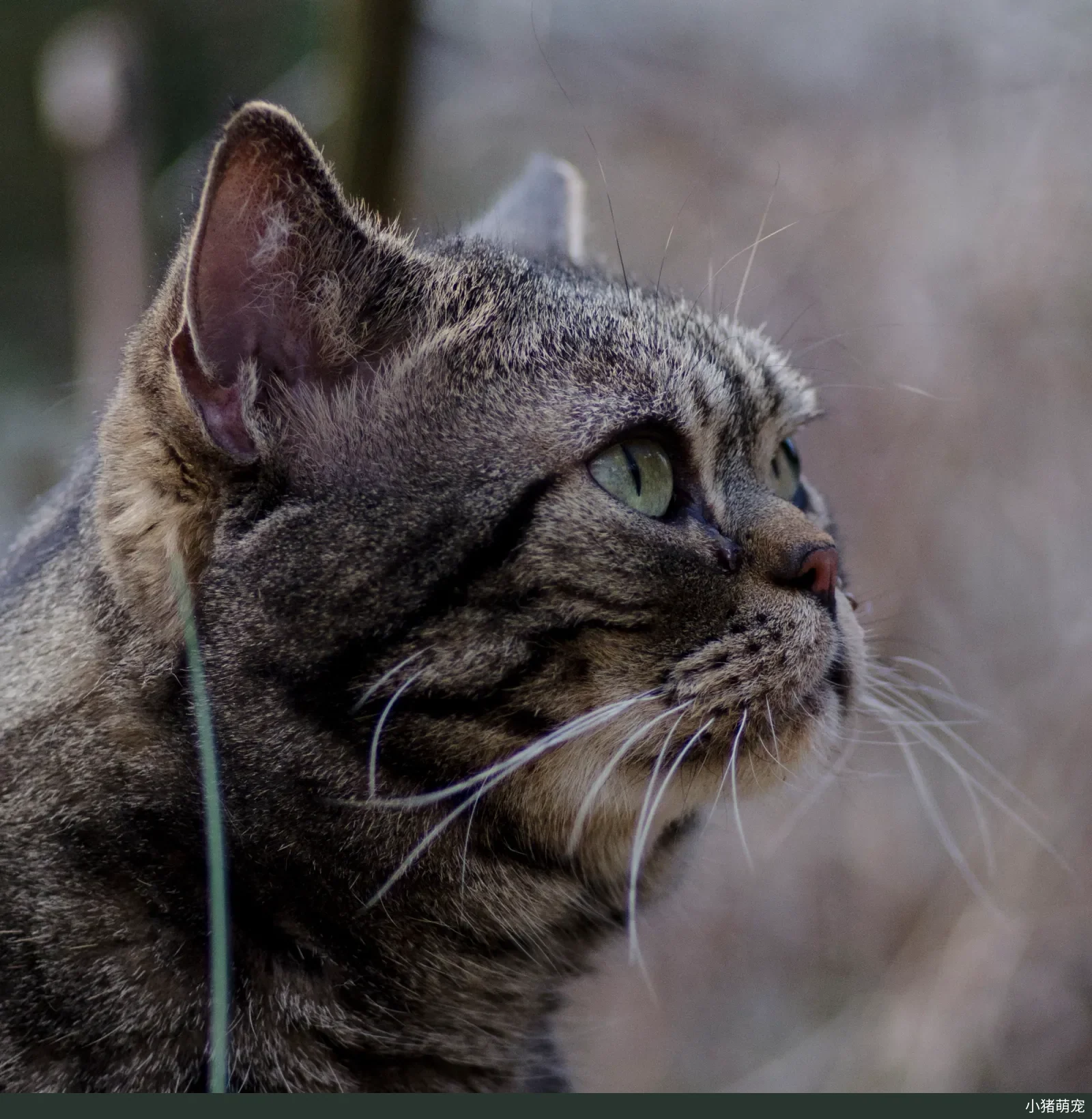
Portrait of a brown classic tabby American Shorthair, March 2013, in a garden. Image: lisa cee (Lisa Campeau) / Wikimedia Commons (originally on Flickr, cropped and resized), CC BY 2.0.
On color, CFA says the breed has more than a hundred combinations, with silver and brown classic tabby most popular; TICA also says tabby and tabby-and-white are most common. CFA treats chocolate, lavender, and pointed patterns (Siamese-like) as signs of outcrossing and disqualifies them in competition. TICA also notes American Shorthairs are not fully mature until about three to four years, when breed type is clearest.
On temperament the two associations agree closely: affectionate, easygoing, and smart; good with children and other pets; able to entertain themselves while owners are at work. CFA mentions a silent open-mouthed “meow” greeting and that they can learn to stay off counters, use a scratching post, and even figure out snack drawers. TICA says hunting instinct remains—they love watching birds from windows; many are lap cats, others prefer simply being nearby. These are association summaries of breed tendencies; individuals still vary.
Common health concerns
On contested extreme looks: the American Shorthair itself has no folded ears, short legs, or flat face. CFA lists a clear nose break and protruding eyes as outcross signs and excludes “any feature so exaggerated as to produce a weakness”; TICA wants a square muzzle that “should not be shortened.” In short, cats bred to standard are outside those extreme-type welfare debates.
The real watch item is the heart. Hypertrophic cardiomyopathy (HCM) is the most common feline heart disease: the left ventricular wall thickens, pumping efficiency falls, and heart failure or clots can follow; clots most often lodge in the hind legs, causing sudden pain or paralysis. Cornell’s Feline Health Center lists American Shorthairs among breeds more often seen with HCM; Kittleson and Côté’s 2021 review likewise treat HCM as relatively common in American Shorthairs and other pedigreed cats and thus possibly heritable. Earlier, a 1997 conference abstract reported signs of autosomal dominant inheritance of HCM in one American Shorthair family—a single-family observation, not a large prevalence study. Confirmed HCM-related mutations so far are limited to breeds such as Maine Coon and Ragdoll; no causal mutation has been reported for American Shorthairs, so there is no breed-specific HCM DNA test.
Breed-association wording differs slightly: CFA says American Shorthairs currently have no known breed-specific health problems, that HCM appeared in some individuals in the 1980s–90s, and that screening and selection have made it “essentially disappear”; TICA also says experts have not found them prone to inherited disease. That is association language and does not fully match the veterinary sources above; we present both. For owners, a safer path is to ask breeders for parental echocardiogram screening when choosing a kitten, and to seek care promptly if a house cat shows rapid breathing, open-mouth breathing, lethargy, or sudden hind-leg weakness. Per Cornell, HCM is diagnosed by echocardiography after ruling out hypertension, hyperthyroidism, and other causes of wall thickening.
Care points
Grooming: short coats are easy but still shed. CFA says American Shorthairs blow their undercoat in spring and have a lighter autumn shed, and suggests regular steel combs or grooming gloves; TICA thinks as-needed combing is enough, mainly to cut swallowed hair. Frequencies differ—follow need day to day and brush more in heavy shed. Baths are usually unnecessary unless showing.
Routine care and play: TICA recommends, as for any cat, regular nail trims, ear cleaning, vet-approved toothpaste, and a tall scratching post. CFA notes hunting instinct needs regular wand and interactive play; if you play at roughly the same time each day, the cat may wait “dancing” for you.
Diet and checkups: TICA says American Shorthairs like small frequent meals—a little wet food daily, adjusted for activity and maturity; refresh water daily, keep the bowl about 1 meter from food (the source says 3 feet), or use a circulating fountain. Weight matters too—CFA’s standard lists both obesity and emaciation as faults; ask a veterinarian to size portions by body condition. TICA also recommends regular vet visits; given the last section, raise heart auscultation and whether echocardiography is warranted at checkups.
References
-
The Cat Fanciers' Association. American Shorthair (breed profile and standard; page undated, accessed 2026-10-17)
-
The International Cat Association. American Shorthair (page undated, accessed 2026-10-17)
-
Fédération Internationale Féline. EMS System (page dated 2026-07-01)
-
Cornell Feline Health Center. Hypertrophic Cardiomyopathy (updated May 2025)
-
Kittleson MD, Côté E. The Feline Cardiomyopathies: 2. Hypertrophic cardiomyopathy. Journal of Feline Medicine and Surgery, 2021, 23(11): 1028–1051.
-
Meurs K, Kittleson MD, Towbin J, Ware W. Familial systolic anterior motion of the mitral valve and/or hypertrophic cardiomyopathy is apparently inherited as an autosomal dominant trait in a family of American shorthair cats (Abstr.). Journal of Veterinary Internal Medicine, 1997, 11: 138. (conference abstract; full text not obtained; bibliographic details checked against references in Ferasin et al. 2003)