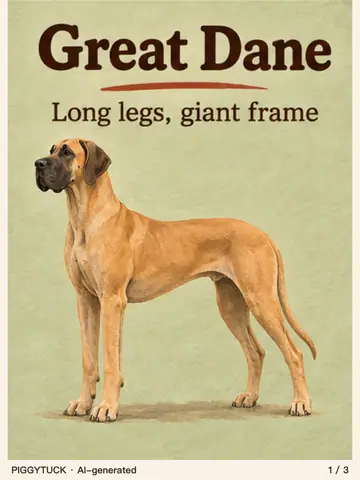
Great Danes originated in Germany, where nobles once used them to hunt wild boars. They later became home guardians. How the breed came to be associated with Denmark remains uncertain.[1] Sometimes called the “Apollo of dogs,” this Working Group giant combines a balanced build with a long, powerful stride. Courage, friendliness, and steadiness are typical breed traits, though temperament and exercise needs vary by dog.[1]
Conformation, head, and colour cues
A Great Dane can stand about 32 inches at the shoulder and can be taller than most people when upright on its hind legs. The coat is short and smooth. Harlequin, with black patches on white, is one of the best-known patterns.[1] Look for a long, rectangular head with a distinct stop and roughly parallel skull and muzzle planes. The eyes are dark, deep-set, and medium in size; natural ears are high-set and fold forward close to the cheeks. A strong, slightly arched neck flows into the shoulders.[1] The sitting photograph shows relative proportions. Measure an individual dog or check its registration or breeder records for shoulder height.[1]
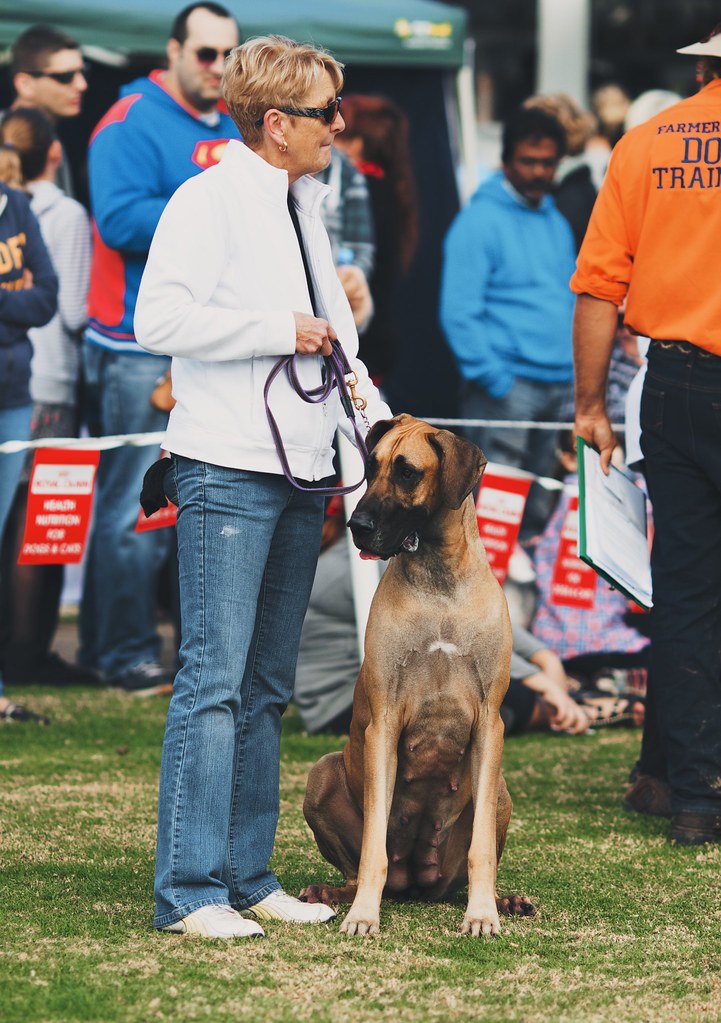
Figure: Fawn Great Dane sitting on grass beside a handler; head to forepaws and bent hindquarters visible, tail hidden. VirtualWolf, Flickr[2]
Daily walks, leash, and early obedience
Great Danes can seem quiet indoors and still need daily, age-appropriate exercise. Two or three brisk walks can be enough. Wait until around age two before adding sustained jogging or strenuous hikes, to protect growing joints. They can follow a scent a long way, so use a well-fitted harness or collar and keep the dog leashed outside a securely fenced area.[1]
Start socialisation and obedience in puppyhood. Practise four paws on the floor for greetings, waiting at doors, and settling around people and other pets. Most Danes respond well to steady, consistent rules and regular company. At home, leave room for an adult to turn, lie down, and pass through doorways, and keep food and fragile objects out of reach.[1]
Agility, obedience, tracking, weight pulling, or flyball may suit some individuals. Choose food for the dog’s age, limit table scraps, and avoid cooked bones and fatty foods. Leave quiet time around meals because of the risk of bloat and gastric dilatation-volvulus.[1]
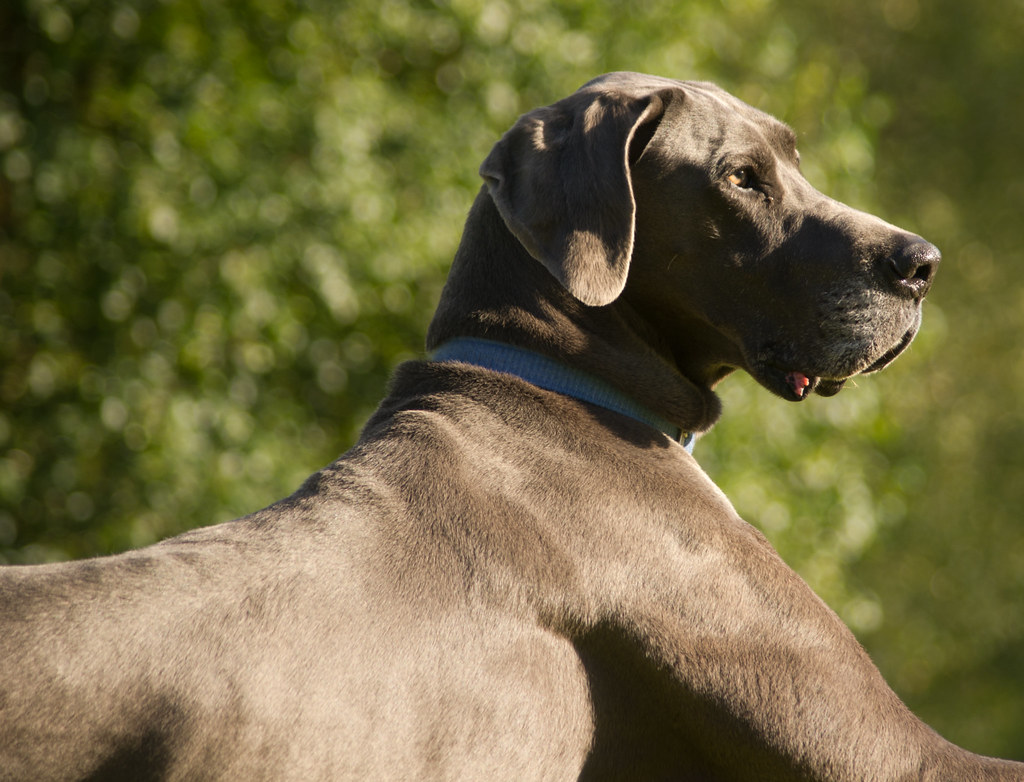
Figure: Blue-grey Great Dane head and upper profile with natural ears. Nick Cavanagh, Flickr[3]
Weekly short-coat brushing and shed seasons
The short, smooth coat sheds lightly most of the year, but a dog this size can leave a fair amount of hair. Brush weekly with a medium-bristle brush, rubber mitt, or hound glove. Once or twice a year, when shedding picks up, brush daily. Bathe when the dog gets dirty and trim nails regularly so they do not cause pain or interfere with movement.[1] Check for unusual redness or broken skin while you brush and have a veterinarian look at any changes.[1]
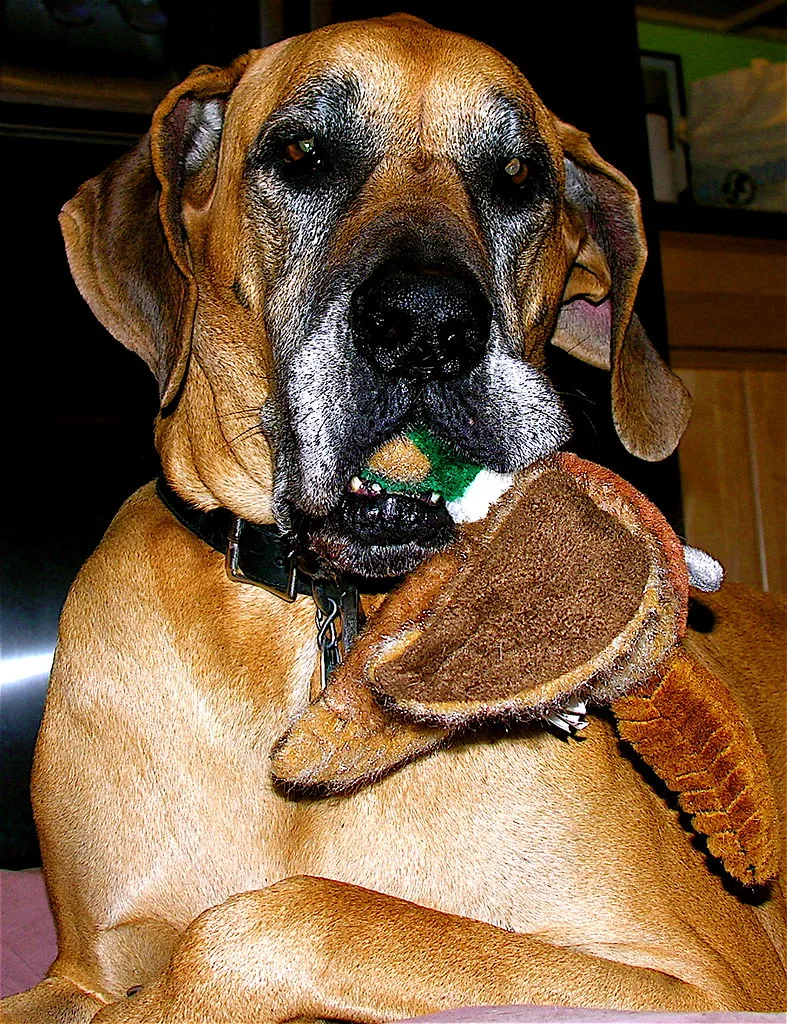
Figure: Fawn Great Dane head and chest with a soft bird toy (not a live bird). Jon Hurd, Flickr[4]
Bloat/GDV and screening talks
Bloat and gastric dilatation-volvulus (GDV) are serious and potentially fatal risks for Great Danes. Discuss preventive gastropexy with a veterinarian. Smaller, more frequent meals and quiet time around feeding are common precautions; they cannot eliminate the risk.[1] Sudden abdominal swelling, unproductive retching, restlessness, heavy drooling, or trouble breathing call for immediate veterinary care.[5]
Ask breeders about screening for eye, heart, thyroid, and hip problems in the parents. Ask your veterinarian to evaluate changes in gait, breathing, appetite, or the appearance of the eyes.[1]
A long rectangular head, naturally folded ears, and a short, smooth coat help identify a Great Dane. Registration can confirm breed identity.[1] Before bringing one home, make room for a giant dog to move and rest and plan for leashed walks, early training, weekly brushing, and quiet mealtimes.[1] Make sure everyone at home recognises sudden abdominal swelling and unproductive retching as emergency signs.[5]
References
-
American Kennel Club. Great Dane.
-
VirtualWolf. Great dane.
-
Cavanagh, N. murphy_great_dane.
-
Hurd, J. Great Dane Bird Lover.
-
VCA Hospitals. Bloat: Gastric Dilatation and Volvulus in Dogs.