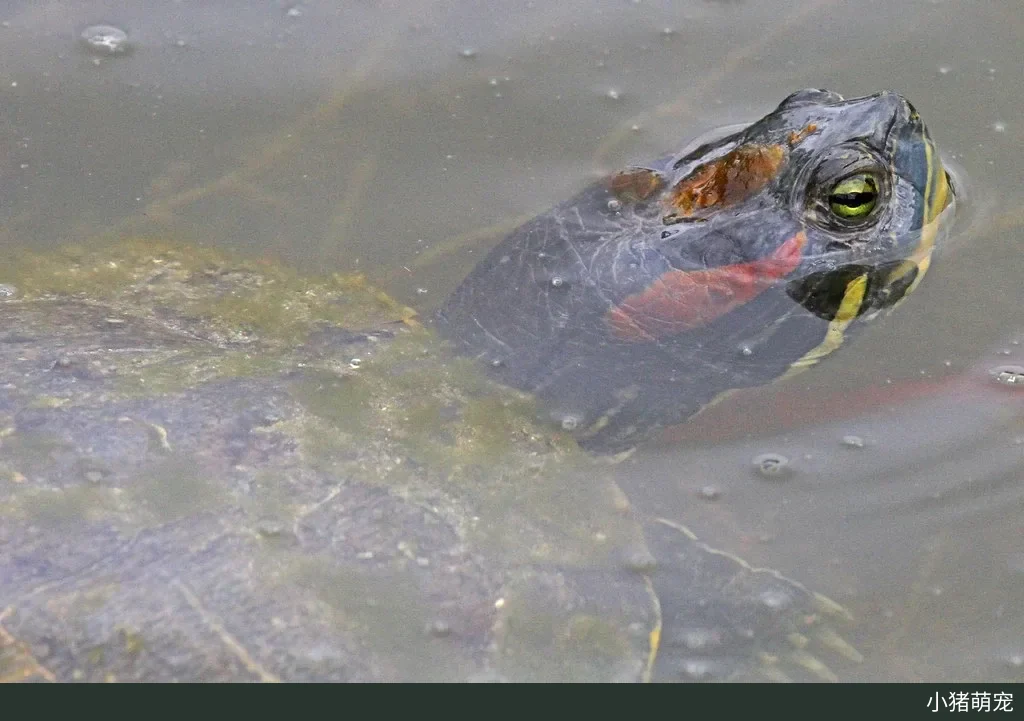
A red-eared slider pokes its head from a pond at Fairchild Tropical Botanic Garden in Coral Gables, Florida, USA. Credit: Judy Gallagher / Flickr, CC BY 2.0.
The red-eared slider (often called the Brazilian turtle in Chinese) is native from the south-central United States to northern Mexico and is among the most common pet turtles. It can grow to 20–30 cm and live for decades, may carry Salmonella, and after abandonment has established in the wild in many countries. China has listed it on the Key Managed Invasive Alien Species List since 2023, and the EU lists its species as an invasive alien species of Union concern. This article covers its habits, husbandry essentials, and legal status.
Native range and wild habits
The red-eared slider is one of three subspecies of the pond slider (Trachemys scripta); the others are the yellow-bellied slider and the Cumberland slider. Its native range centers on the Mississippi River basin in the United States, south into northern Mexico. It is a semi-aquatic turtle that prefers slow water with abundant aquatic plants and basking spots along the bank; per the University of Michigan Animal Diversity Web (ADW) species account, pond sliders most often use water 0.6–0.9 m deep.
Basking is a major part of the day: wild sliders often pile onto rocks, fallen logs, or floating debris to warm up, then “slide” back into the water at any disturbance—hence the English name slider. ADW records basking body temperatures between 18.2°C and 33.6°C; warming helps raise metabolism and aid digestion. Diet shifts with age: hatchlings and juveniles eat mainly animal prey—insects, snails, tadpoles, and small fish; as adults their gut flora can break down plant matter, and they become more herbivorous omnivores.
Do not be fooled by the coin-sized hatchlings sold at pet stalls. ADW records hatchling carapace length at only 2.3–3.5 cm, while adults range from 10–29 cm, with females clearly larger than males; VCA Animal Hospitals veterinary materials give average adult male carapace length of about 18–23 cm and females about 25–31 cm. In other words, a small turtle’s shell may grow to roughly ten times the size it was when you brought it home.

Four turtles lined up basking on a fallen log; the photographer labeled them red-eared sliders in the image title and did not name the location. Credit: Greg Schechter / Flickr, CC BY 2.0.
Housing and diet
A red-eared slider needs a home where it can swim in water and bask on land. The figures below mainly follow VCA Animal Hospitals care materials written by veterinarians Gregory Rich, Laurie Hess, and Rick Axelson; other clinics cite slightly different ranges—for example some recommend a warmer basking dock—so follow the advice of a reptile-experienced veterinarian for your animal.
- Water: Depth at least 1.5–2 times carapace length, and a swimming area 4–6 times carapace length long; another rule of thumb is about 10 gallons (about 38 L) of water per inch (about 2.5 cm) of carapace, with the basking dock taking 15%–25% of the water surface. Turtles keep growing—start with a large tank if you can.
- Temperature: Water 24–29°C, basking dock 24–31°C, with a warm-to-cool gradient; lights may go off at night, but water should not fall below 18–24°C. Long-term chill can stop feeding and raise the risk of bacterial infection.
- UVB: Provide UVB light at 290–320 nm wavelengths, with no glass or plastic between lamp and turtle, and the lamp about 30–45 cm from the animal; UV output declines with use, so replace about every 6 months or per the maker’s guidance. Without UVB, vitamin D3 synthesis and calcium uptake suffer, and metabolic bone disease can follow. When the climate allows, supervised outdoor sun with shade is even better.
- Water quality: Turtles eat, drink, and defecate in the same water—change it at least weekly, or use a strong filter; avoid sand and gravel substrate that can be swallowed and cause gut blockage.
- Overwintering: Wild red-eared sliders overwinter at the bottom of ponds, but VCA advises keeping temperature and light steady in captivity and avoiding hibernation, because immune function is suppressed during hibernation.
VCA materials note that poor diet is the most common cause of health problems in pet aquatic turtles. Use commercial turtle or fish food as the animal base, plus insects, earthworms, snails, and similar prey; for plant matter choose dark leafy greens (romaine, kale, dandelion leaf) and non-toxic aquatic plants, and skip nearly empty iceberg lettuce. Animal foods should be no more than about two-thirds of a juvenile’s diet and about half of an adult’s; juveniles can eat daily, adults a full meal every 2–3 days. Do not feed supermarket raw meat, sausage, bread, or other processed foods; a fish-heavy diet can cause vitamin B1 deficiency, and wild-caught fish and frogs may carry parasites. Red-eared sliders must dunk their heads underwater to swallow—a separate warm “feeding tub” cuts pollution of the main tank. On supplements, some veterinarians suggest a multivitamin once a week and a calcium source (such as cuttlebone) twice a week.
Salmonella risk and household hygiene
The U.S. Centers for Disease Control and Prevention (CDC) warns that pet turtles of any size may shed Salmonella in feces even when they look healthy and clean; germs easily reach the turtle’s body, tank water, and anywhere it has been. In a 2007 Morbidity and Mortality Weekly Report (MMWR), CDC wrote that most turtles carry Salmonella and shed intermittently, shedding may rise with stress, and there is no reliable way to guarantee a turtle is free of the bacterium—so treat every turtle as a carrier.
Because children often treat small turtles as toys—or even put them in their mouths—the United States has since 1975 banned sale and distribution of turtles with carapace shorter than 4 inches (about 10 cm) for pet use, enforced by the Food and Drug Administration (FDA). CDC estimated in 1980 that the ban averted about 100,000 turtle-associated Salmonella infections in children aged 1–9 in 1976 alone. Illegal sales still occur: in an August 2024 CDC outbreak update, 21 states reported 51 cases; of 48 people with hospitalization data, 23 were hospitalized, including 17 children under 5. That is a U.S. rule, but the germ does not respect borders—the habits below apply everywhere.
- After touching a turtle, feeding, or cleaning the tank, wash hands thoroughly with soap and warm water; help young children wash well.
- CDC does not recommend turtles for children under 5, adults 65 and older, or people with weakened immune systems.
- Do not let turtles roam the house, especially near kitchens and food-prep areas.
- Do not bathe turtles or scrub tanks in kitchen sinks, bathroom sinks, or bathtubs; FDA advises cleaning tanks outdoors when possible, or using a dedicated basin.
Lifespan, abandonment, and legal status
Keeping a red-eared slider is a long commitment. ADW records maximum pond-slider lifespan of about 30 years in the wild and about 41.3 years in captivity, while noting that average lifespan data are weak—partly because owners often release turtles after a few years. The IUCN SSC Invasive Species Specialist Group’s Global Invasive Species Database (GISD) notes that many owners never expected decades of care for an adult that can reach 30 cm, so they dump turtles into ponds; today red-eared sliders are dense in urban wetlands in many countries. GISD cites more than 52 million red-eared sliders exported from the United States in 1989–1997, and the species is on the “100 of the World’s Worst Invasive Alien Species” list.
In Europe, red-eared sliders compete with the European pond turtle (Emys orbicularis), protected under the Bern Convention, for food and basking sites; U.S. Geological Survey (USGS) impact summaries also cite experimental work suggesting they may spread parasites and ranaviruses. GISD itself notes that long-term effects on local ecosystems are still under-studied in many places.
China: On 20 December 2022, the Ministry of Agriculture and Rural Affairs, together with the Ministry of Natural Resources, the Ministry of Ecology and Environment, the Ministry of Housing and Urban-Rural Development, the General Administration of Customs, and the National Forestry and Grassland Administration, issued Announcement No. 567 publishing the Key Managed Invasive Alien Species List, effective 1 January 2023. The list has 59 species; the red-eared slider (Trachemys scripta elegans) is item 59, grouped with the alligator snapping turtle among reptiles. The announcement and list themselves do not set separate rules for household keeping; more directly relevant for keepers are Article 60 of the Biosafety Law and Article 9 of the Measures for the Administration of Invasive Alien Species: no unit or individual may, without approval, introduce, release, or discard alien species. Under Article 81 of the Biosafety Law, unauthorized release or discard shall be ordered remedied by capture or recovery, with a fine of not less than 10,000 and not more than 50,000 yuan; unauthorized introduction shall bring confiscation and a fine of not less than 50,000 and not more than 250,000 yuan. Serious cases may also constitute the crime under Article 344-1 of the Criminal Law: in one reference case entered into the courts’ case library, a defendant who smuggled 1,760 red-eared sliders into the country was sentenced in September 2024 by the Zhuhai Intermediate People’s Court to nine months’ imprisonment and a fine of 100,000 yuan for illegally introducing an invasive alien species. Whatever the motive, putting red-eared sliders into rivers or lakes is unauthorized release or discard of an alien species.
European Union: The EU Invasive Alien Species Regulation (Regulation (EU) No 1143/2014) took effect on 1 January 2015. On 13 July 2016 the European Commission adopted Implementing Regulation (EU) 2016/1141 listing the first “invasive alien species of Union concern,” effective 3 August 2016; the list covers the whole species Trachemys scripta, not only the red-eared subspecies. Under Article 7, listed species must not be deliberately introduced into the Union, kept, bred, transported, placed on the market, used or exchanged, allowed to reproduce, or released into the environment. Article 31 leaves a transitional path for existing pet owners: pets already kept for non-commercial purposes before listing may be kept for their natural lives if held in closed conditions that prevent breeding and escape. GISD also notes that the EU banned import of the red-eared subspecies as early as December 1997. Member states may adopt stricter rules—follow the law where you live.
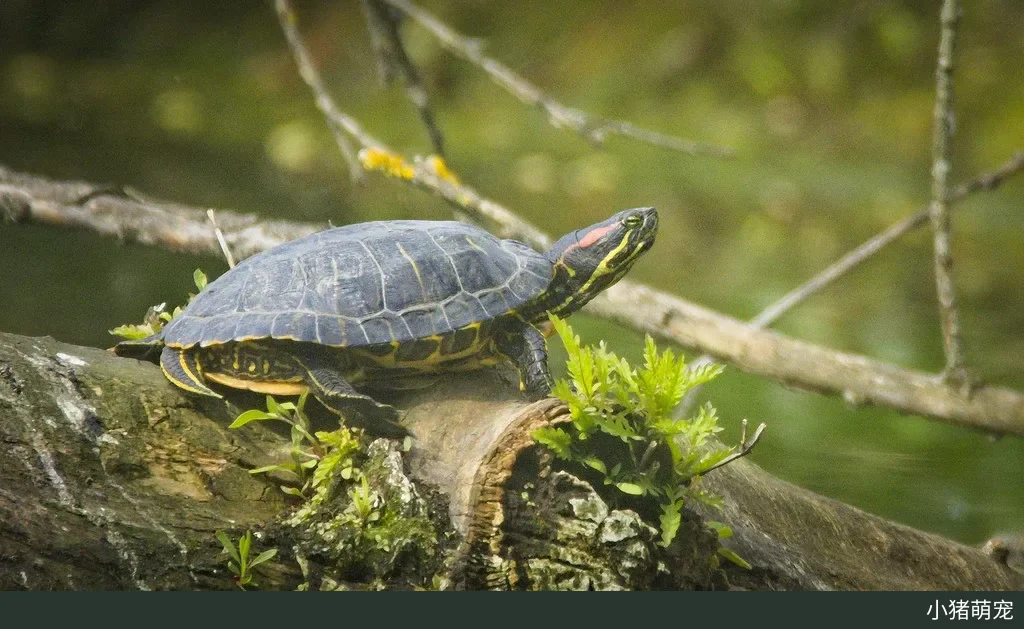
A red-eared slider basks on dead wood beside a pond; the photographer notes that this American turtle is invasive in Europe but does not name the exact location. Credit: hedera.baltica / Flickr, CC BY-SA 2.0.
If you already keep a red-eared slider and can no longer care for it, both CDC and the World Wildlife Fund (WWF) advise contacting local reptile rescue groups, reputable pet shops, or a veterinarian to find a new home—not releasing it outdoors. In China, you can also ask local agriculture/rural or forestry authorities about lawful disposal channels.
References
-
Six ministries including the Ministry of Agriculture and Rural Affairs: Announcement No. 567, Key Managed Invasive Alien Species List, issued 20 December 2022, effective 1 January 2023.
-
Standing Committee of the National People’s Congress: Biosafety Law of the People’s Republic of China, adopted 17 October 2020, effective 15 April 2021 (amended 26 April 2024).
-
Four ministries including the Ministry of Agriculture and Rural Affairs: Measures for the Administration of Invasive Alien Species, issued 31 May 2022, effective 1 August 2022.
-
People’s courts reference case: Yi Mouhua illegally introducing an invasive alien species, (2024) Yue 04 Xing Chu No. 98.
-
European Parliament and Council: Regulation (EU) No 1143/2014 on invasive alien species, 22 October 2014.
-
European Commission: Implementing Regulation (EU) 2016/1141, 13 July 2016, OJ L 189, 14.7.2016.
-
EUR-Lex: Protecting biodiversity from invasive alien species (summary).
-
CDC: Salmonella Outbreak Linked to Small Turtles – August 2023.
-
CDC Newsroom: Tiny turtles, illegal to sell as pets, causing Salmonella illnesses again in young kids, August 2024.
-
CDC MMWR: Turtle-Associated Salmonellosis in Humans — United States, 2006–2007, 2007;56(26).
-
Rich G., Hess L., Axelson R. (VCA Animal Hospitals): Housing Aquatic Turtles.
-
Rich G., Hess L., Axelson R. (VCA Animal Hospitals): Feeding Aquatic Turtles.
-
Rich G., Hess L., Axelson R. (VCA Animal Hospitals): Owning Aquatic Turtles.
-
Armentrout K., Mcgregor C. (Radford University), Animal Diversity Web: Trachemys scripta.
-
IUCN SSC ISSG, Global Invasive Species Database: Trachemys scripta elegans.
-
IUCN SSC ISSG, Global Invasive Species Database: 100 of the World's Worst Invasive Alien Species.
-
USGS Nonindigenous Aquatic Species: Red-eared Slider – Impacts.
-
USDA National Invasive Species Information Center: Red-Eared Slider.
-
Tennessee Wildlife Resources Agency: Pond Slider.
-
Washington Department of Fish & Wildlife: Pond slider.