This brief targets the American Bobtail longhair: WCF code ABL (25 October 2020). The standard describes a medium-to-large, markedly athletic, well-muscled cat with a natural hunting gaze; type matters more than size or exact tail details, and females are usually smaller. The body is moderately long and rectangular with a full chest and deep flank. The tail must have at least about 1 inch (3 cm) of bone, may reach but not pass the hock, may be slightly knotted or hooked, and must stay flexible at the body attachment. Total taillessness or a full-length tail is a disqualification.[1]
Head, semi-long coat, colours
The head is a broad modified wedge without flat planes or doming and a slightly concave profile. A fleshy brow frames the eye and creates the hunting expression. The nose is wide; the muzzle is broad and medium-long with fleshy whisker pads; the chin is strong. Ears are medium, wide-based, slightly outward-tilted, with tipping and furnishings highly desirable. Eyes are large, almost almond, deep-set. The coat is medium-long and slightly shaggy, longer on ruff, britches, belly and tail, resilient and not extremely dense in undercoat. Almost all genetically possible colours are allowed (excluding sunshine and amber), including points and any white. Stops are faults; round eyes can bar certificates; delicate bone and incorrect toe counts disqualify.[1]
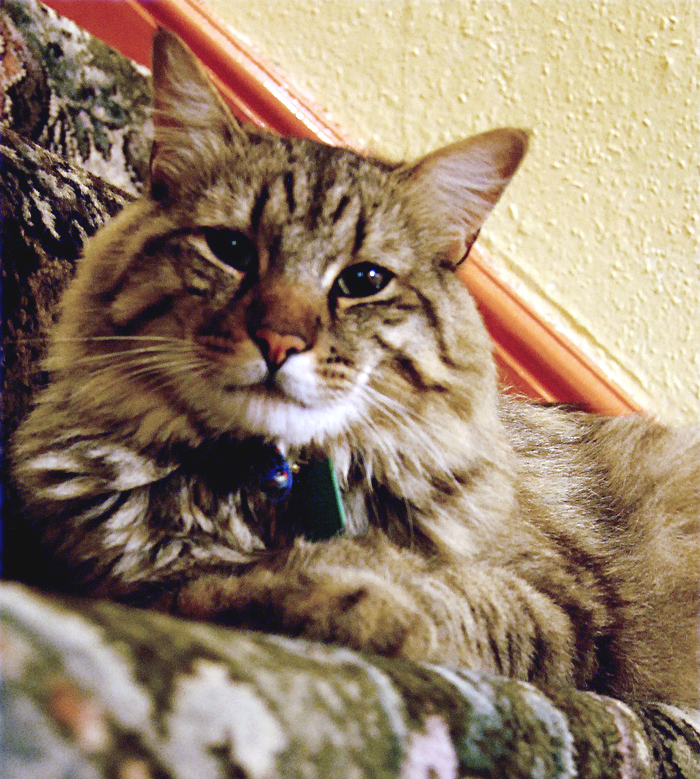
Fig: American Bobtail sitting with a clear bobtail and hunting expression. Rachel Davies, Wikimedia Commons

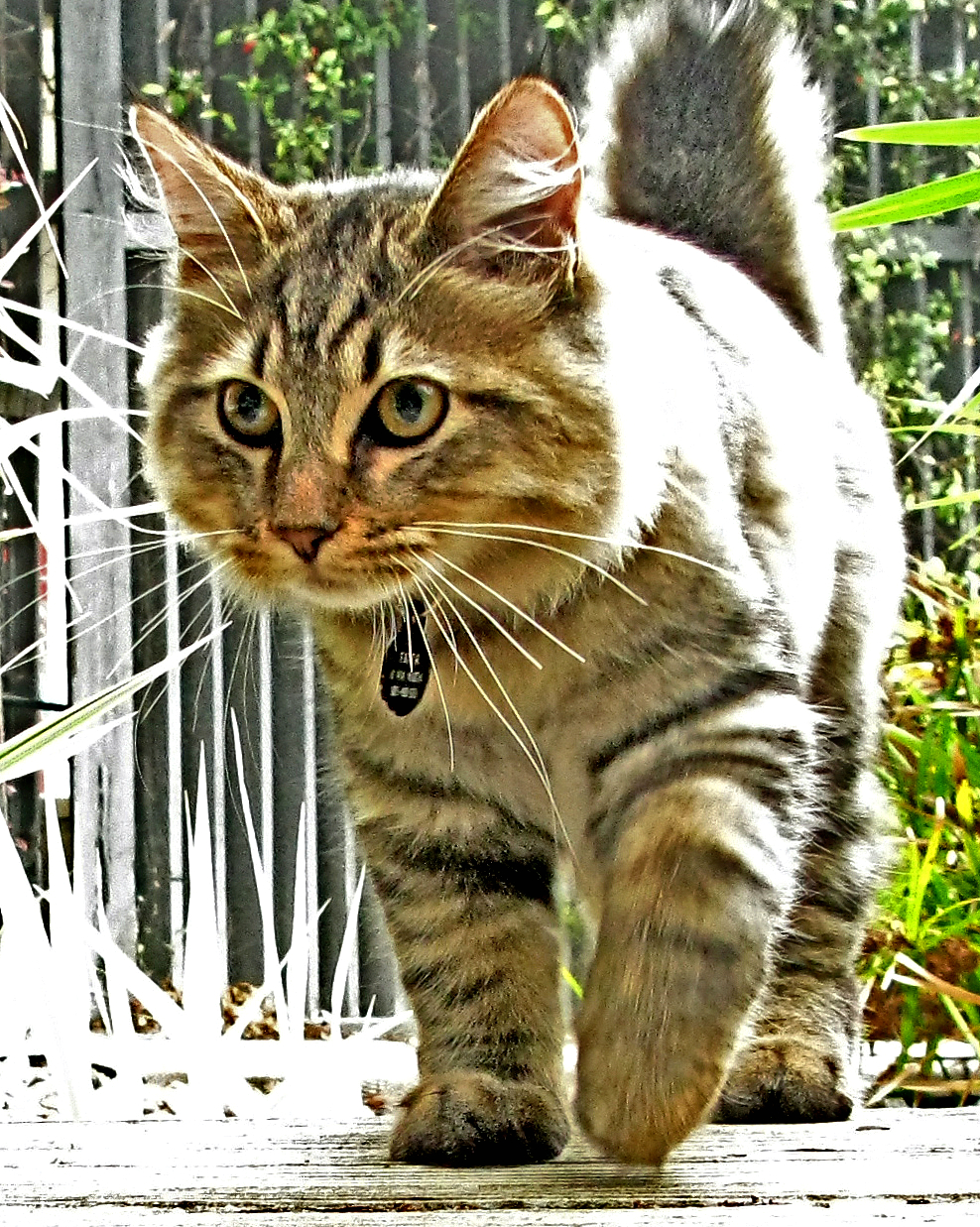
Fig: Standing side view showing bobtail length and a substantial rectangular body. torbakhopper, Wikimedia Commons


Fig: Historic bobtail tabby with kitten, illustrating short-tail silhouette. Klarissae, Wikimedia Commons

Home care for an athletic bobtail
The athletic wording implies climbing shelves and chase toys, plus FelineVMA’s separated resources so multi-cat homes do not jam food and litter into one choke point. Semi-long britches and tail fur need regular combing; clean the tail area gently and never use the bobtail as a handle. Slow maturation is allowed—do not judge adolescents against finished show adults.[1][2]
Welfare notes versus one patient
GCCF lists American Bobtails in an amber table asking for genetic and veterinary information and discussing spinal, bladder and/or bowel risk language for owners—policy context, not a diagnosis of a named ABL. WCF’s own disqualifications against absent/full-length tails and polydactyly show show-ring boundaries. Individual risk still depends on pedigree, exam and testing, not on “short tails look fine in the standard.”[3][1][2]
A home checklist translated from the standard
Translate ABL tail limits into household language: confirm a flexible, non-painful tail base before grooming poses or photos, and never use the bobtail as a handle. Semi-long britches and tail furnishings mat easily—comb weekly and recheck after damp weather. An athletic rectangular outline needs stable jump points with non-slip landings; slow maturation means not judging adolescents against finished muscle photos. GCCF amber language about spinal and elimination risks should be read as “ask for evidence and examine this cat,” not “bobtail equals inevitable disease.” If a breeder cannot provide verifiable health records or dodges vertebral questions, treat that as a gap—not something a registry certificate fills. WCF’s polydactyly disqualification also warns readers not to import other breeds’ toe stories into this standard. During moves or travel, secure rest crates and low-startle routes to reduce hind-end knocks under stress. Action lists beat repeating “wild look” adjectives.[1][2][3] Keep citation numbers tied to sentences you actually read; if only an abstract was available, say so in internal notes and do not promote it to full-text evidence. A household decision list should include traceable origin, a recent exam, a budget for environment changes, and a care path when pain or elimination changes appear. Those steps fit rare breeds and local landraces alike and reduce treating association wording as a lifestyle promise. Avoid two common swaps: treating “association-allowed looks” as “proven for every home,” and treating “welfare policy raises concern” as “every similarly shaped cat is already diagnosed.” Keep source layers side by side—breed standard, indoor-environment statement, welfare policy, and the individual veterinary record—each answering a different question. If public sources lack breed-specific screening advice, say that a public prevalence/screening table was not found instead of borrowing a neighbour breed’s numbers. That is how a mid-length profile can carry both recognisable traits and executable limits. In seasonal shed, check chest furnishings as well as the tail plume; keep the cat stable while combing and never lift or twist the hindquarters to pose the bobtail. Taken together, treat the article as a three-part kit—look recognition, environment readiness, and health boundaries: check recognisable traits against association clauses, audit the home with the indoor five pillars, and return pain, lameness, elimination or skin changes to an individual veterinary path. That keeps a mid-length profile from inventing husbandry anecdotes or turning an ideal type into a promise about every cat. Add a check order: copy the association name, code and update date first, then observable coat/tail/ear/eye clauses, and only then faults and disqualifications. Turn those clauses into a look-alike checklist that never answers “is it healthy.” On environment, tick safe place, separated resources, play/predation, predictable interaction and sensory respect—and fix missing ticks. On medicine, keep vaccine/parasite records, neuter status, prior imaging/labs, and the clinic to call when something changes. If a source offers stories without records, write the gap into the adoption decision instead of filling it with adjectives. Those four steps let traits and boundaries land as household actions. Final reminder: do not pad boundaries with empty disclaimers, and do not invent first-person feeding diaries; every look claim should point back to a read standard or report sentence, and every health concern to veterinary or welfare-policy text. If readers keep only three lines: standards identify looks, statements govern environments, and medical records govern this one cat.