A Dutch Shepherd could take the sheep out to pasture in the morning and bring them back to the fold in the evening, sometimes making the trip on its own. On the farm, it also gathered cows for milking and kept chickens out of the kitchen garden. Each job called for a different result. The cows had to come together, the chickens had to stay outside the garden, and every sheep that went out had to come home. That history helps explain what a Dutch Shepherd might enjoy after a run together: a small job that gives it a decision to make.[1]
The Dutch Shepherd originated in the rural Netherlands. Its first breed standard, drawn up in 1898, allowed a range of coat colors. In 1914, the standard narrowed the color to brindle to distinguish the breed from the similar-looking German Shepherd and Belgian Shepherd. Herding was its historical occupation. The American Kennel Club (AKC) lists the Dutch Shepherd in the Miscellaneous Class. It became eligible to compete in that class on January 1, 2017.[1]
The Dutch Shepherd in Profile
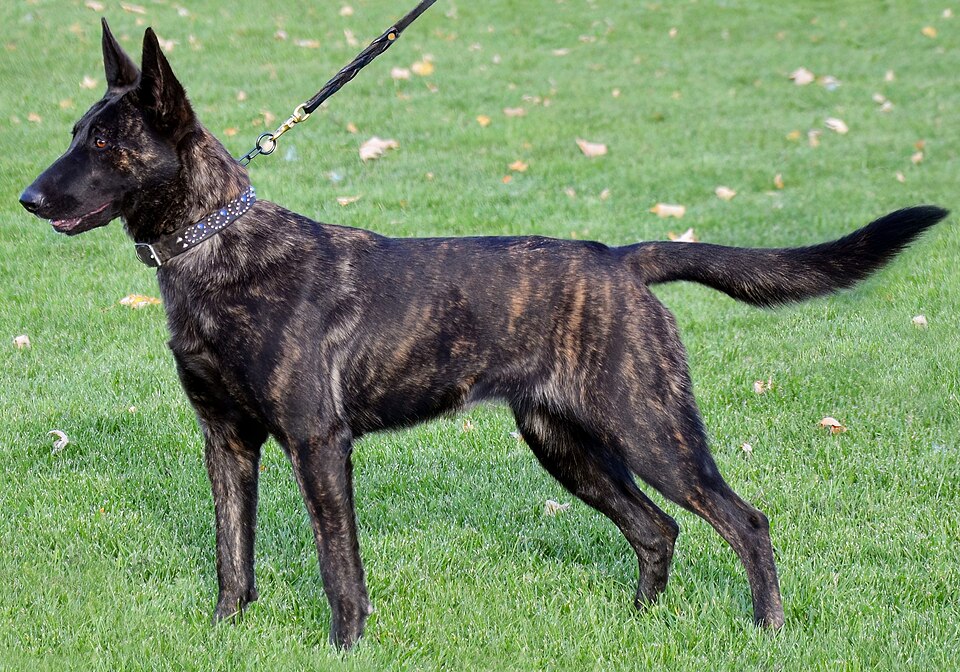
A short-haired Dutch Shepherd stands in profile. CaroleField, Wikimedia Commons[4]

Follow the line of this short-haired dog’s back, then trace its underside from chest to belly. The back is level, the chest is deep, and the belly rises slightly toward the hind legs, where the outline of the muscle is easy to see. The breed standard describes a medium-sized, well-proportioned working dog with the strength and stamina for its job. The AKC gives a height of 21.5 to 24.5 inches at the shoulder (about 55 to 62 cm) and a weight of 42 to 75 pounds (about 19 to 34 kg). A full-length side view helps you picture the size of the adult dog you might share your home with.[1][2]
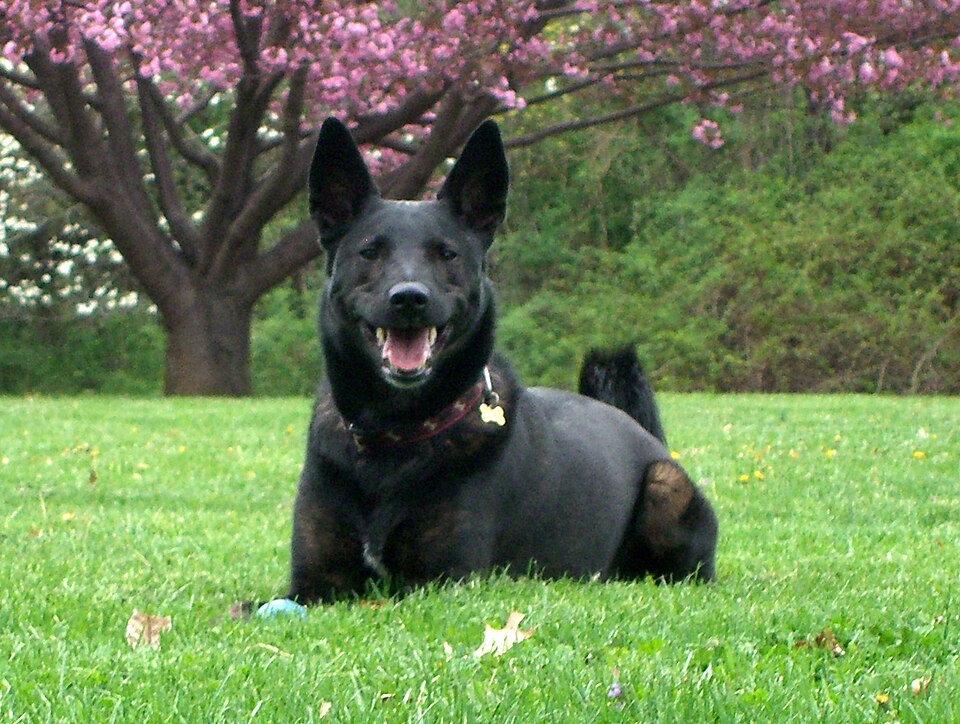
Black, a short-haired male, shows the breed’s upright ears. Jasonpaluck, Wikimedia Commons[5]

Seen head-on, Black’s upright ears have a clear outline. The photographer identifies him as a short-haired brindle. His face and chest are quite dark, and the stripes are easier to pick out on his hind legs. A Dutch Shepherd’s brindle pattern can have a gold or silver base. Coat texture affects how much of the pattern you can see. The short coat lies close to the body, while the tousled outer coat of the rough-haired variety can hide much of the striping. Look at the ears, the build and the color in several places along the body. The forehead alone gives you little to go on.[1][2]
What Does a Toy Search Teach?
Bringing a flock home alone took independent judgment. As sheep flocks dwindled, Dutch Shepherds also took on tracking and search-and-rescue work. You can give a companion dog a little of that independence at home. You set the goal, the dog works out how to reach it, and the two of you come back together. The AKC notes that Dutch Shepherds enjoy a challenge and recommends short training sessions with few repetitions of the same exercise.[1]
Try a search in a familiar room with a toy your dog likes. Let the dog watch you put it in front of a chair, then give a short cue such as “find it.” When the dog walks over and touches the toy with its nose, praise it and play together for a moment. The game tells the dog it found what you wanted. For the next turn, use the same toy and cue, but put the toy beside the chair. Your words still mean the same thing. This time the dog has to look or sniff in a new spot to put what it learned to use.
Knowing when to finish can be the trickiest part. A successful find is a good place to end today’s lesson. Save a new hiding place for next time. If the dog stops and looks to you for help, move the toy somewhere easier to spot so it can finish the search. Agree as a family on what counts as a find. Is a touch with the nose enough, or do you want the dog to bring the toy back? Choose one goal at the outset so that whoever plays the game can recognize success and reward it at the same point.
Now fit that game into an ordinary workday. Who can take the dog out for exercise? Who will put their phone away before dinner and give the dog a few minutes of undivided attention? Where can the dog lie down quietly afterward? The AKC describes a dog that can distinguish work, play and rest, and that suits an active household with dog experience. If opening the door to the yard is the only arrangement you can count on every day, you still need to find time to do things together. Let the individual dog’s age, condition and response to the task guide how much activity you plan.[1]
Each Coat Has Its Own Grooming Schedule
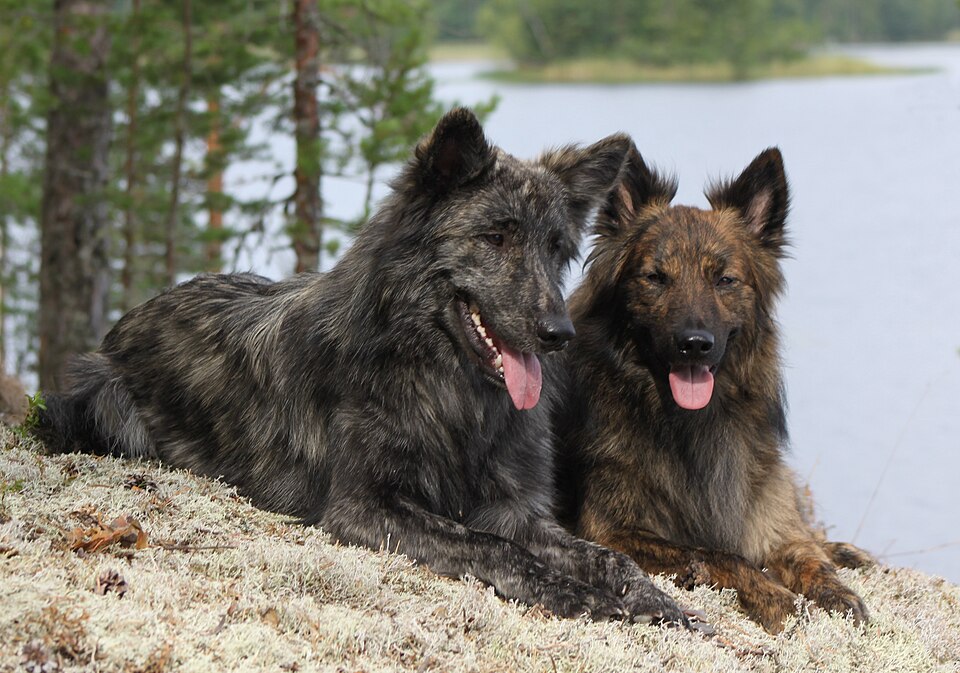
Two long-haired Dutch Shepherds show silver and gold brindle. Lissunmusta, Wikimedia Commons[6]

Look past the cool silver and warm gold of the two dogs by the lake and follow the hair from behind their ears down toward their shoulders. It forms a long ruff, quite different from the close coat in the first photograph. That difference shows up on the grooming calendar. A short-haired Dutch Shepherd usually needs only occasional brushing, but allow time to brush daily during the spring and fall shedding periods. For a long-haired dog, start with a weekly grooming session. If the dog often comes home from long grass with bits of vegetation caught in its coat, brush it more often.[1]
The rough-haired variety needs a different routine. The AKC advises combing about once a month and hand-stripping twice a year to remove the old outer hairs when they are ready to come out. If you are considering a rough-haired dog, ask a groomer familiar with the coat to show you how, or book those sessions into the year ahead. All three varieties can be bathed as needed. Routine care also includes brushing the teeth, checking the ears for wax and debris, and keeping an eye on nail length.[1]
When you discuss health with a breeder, ask to see the reports for both parents of the litter. The American Dutch Shepherd Association recommends hip and elbow evaluations for breeding dogs and annual eye screening beginning at one year of age. On each report, match the dog’s name to the examination, date and result. That tells you what each parent was screened for. Ask about coat-specific checks as well. The association encourages additional screening for autoimmune thyroiditis in long-haired dogs. For rough-haired dogs, the AKC also mentions screening for goniodysplasia, an abnormality of the drainage angle inside the eye.[1][3]
Before deciding, take the busiest day of your week and work through it. Who would handle the morning and evening outings? Where would a short toy search fit? Who would pick up the brush during the spring and fall shed? If there is room for those things on an ordinary day, consider whether you would enjoy the work itself: giving a dog a problem, watching it figure out the answer, and welcoming it back when the job is done.
References
-
[1] American Kennel Club. Dutch Shepherd.
-
[2] American Kennel Club. Official Standard for the Dutch Shepherd.
-
[3] American Dutch Shepherd Association. ADSA Health Statement 2024. October 14, 2024.
-
File:Pitkäkarvainen hollanninpaimenkoira - Dutch Shepherd Dog longhaired.jpg