Around Catahoula Lake in Louisiana, stock handlers once relied on dogs to gather hogs and cattle that had scattered. The dogs worked around the outside of the herd, forming a moving fence. Once the animals were together, the handlers could guide them where they wanted them to go. This was the work that shaped the Catahoula Leopard Dog. It took stamina to keep up with the herd and enough judgment to spot a gap and close it, all while keeping track of the handler. [1]
The American Kennel Club (AKC) has recorded the Catahoula Leopard Dog in its Foundation Stock Service (FSS) since 1996. It is a medium-to-large, short-coated dog. The AKC lists a height of 22–24 inches (about 56–61 cm) at the shoulder and a weight of 50–95 pounds (about 23–43 kg). The side view below gives a good sense of that working build. As the dog turns to look at the camera, its close coat reveals the muscles across its shoulders, back, and hind legs. [1][2]

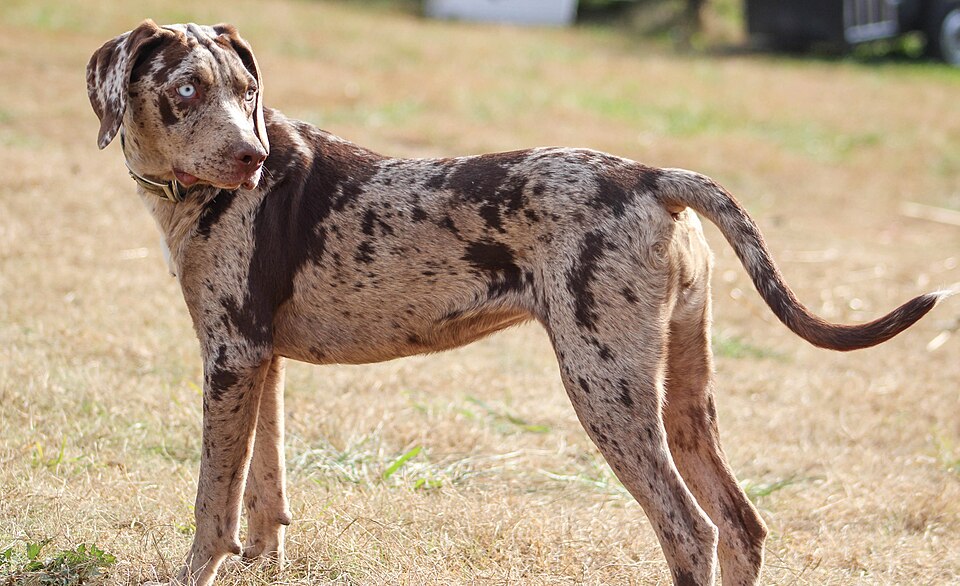
A Catahoula Leopard Dog stands in profile. Bugaflee, Wikimedia Commons[2]
The word “leopard” might have you looking for spots first, but both coat and eye color vary across the breed. On the dog standing in the grass, a pale eye stands out against a mottled face. The close-up below shows brown eyes, fine dark markings on tan cheeks, and ears that fold down. On the dog walking on Lifou, most of the black is on the head, with dark patches scattered across a pale body. For the people gathering livestock, what mattered was how well a dog could hold the herd together, whatever its markings. [1–4]
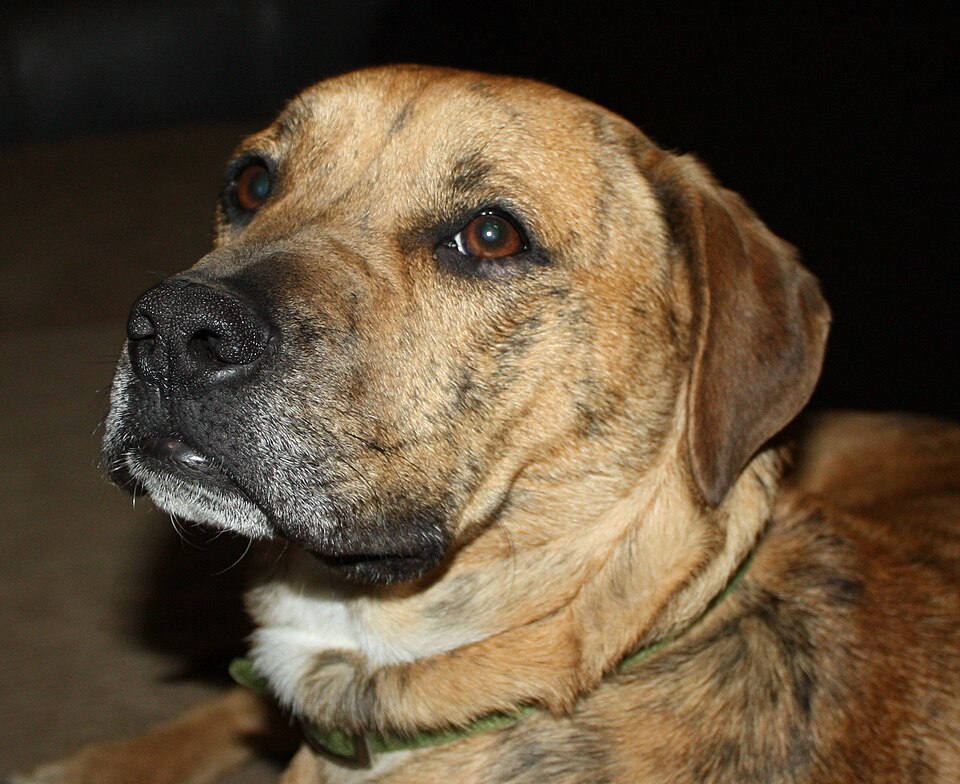
Fine dark markings cross this Catahoula’s cheeks. Pp0013, Wikimedia Commons[3]

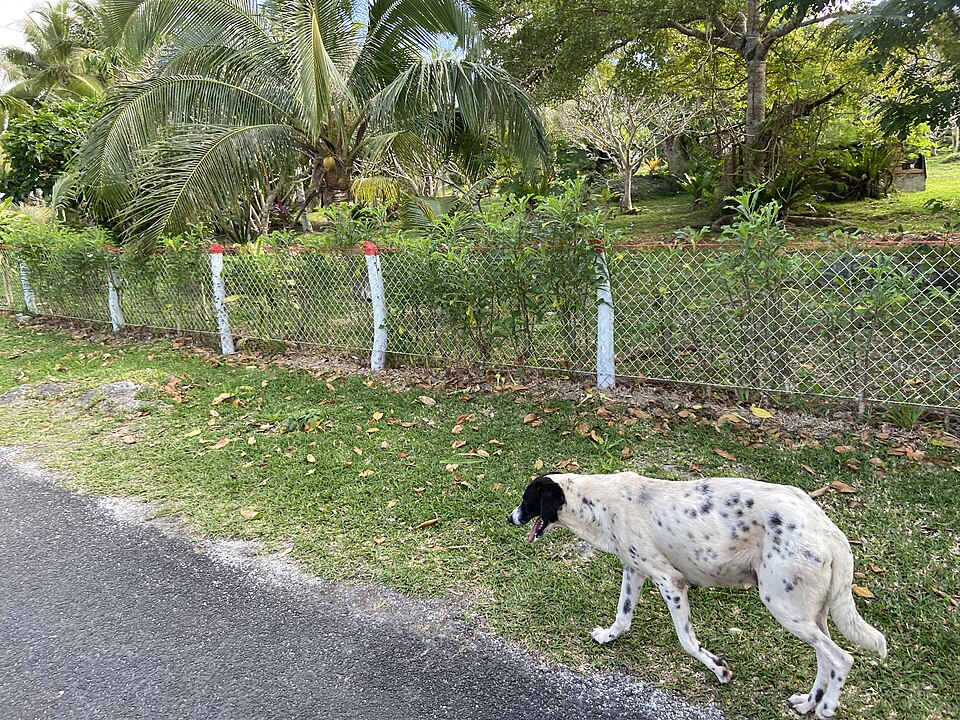
This Catahoula on Lifou has a pale, spotted coat. JustARandomEditor123, Wikimedia Commons[4]

Teach a young dog when the job is done
It is easy to overestimate a young Catahoula’s maturity when you see what it can do. In its training guidance, the AKC notes that a Catahoula may work like an adult as early as ten months old, yet take until about two years of age to mature fully. If your young dog already retrieves a toy easily, there is more to teach in the last few feet. Can the dog hand it back and wait for your next cue? You can practice that part with the same short throw, without adding extra rounds. [1]
In a fenced area, give the retrieve a clear beginning and end. Roll a favorite toy a short distance so it is easy to find. When the dog picks it up and turns toward you, take a few steps back to encourage it to follow. Start the next round once the dog drops the toy within reach. Each turn gives it a chance to chase, find you again, and hand something over. If it keeps running off with the toy, shorten the next roll so you can practice those final steps. While the dog is still happy to play, give it a consistent cue that the game is over, put the toy away, and take a short walk together. [1]
To see how this dog might fit into your household, start with an ordinary weekday. Who can go out with the dog in the morning? Who can take over during the day, and who wants to spend time outdoors with it in the evening? The AKC suggests options including several walks a day, play in a fenced yard, hiking, and swimming. Set walks at times your family can reliably keep. During one outing, work in a retrieve or a game where the dog changes direction on cue. There is time to try a different route on the weekend. A better measure of the fit is what you can still do together after work on a Wednesday. [1]
Use yard time to practice working together
The AKC describes city and apartment living as unsuitable for the Catahoula. This dog needs room to stretch out and run, and someone to give it a job. Opening the back door and leaving the dog in the yard misses an important part of its old herding work. It had a partner to watch and a reason to change position when that partner moved. Some Catahoulas dig in the yard or chew things in the house when they get too little activity or company. When assessing your home, count both the secure space the dog can use and the time someone can actually spend there with it. [1]
Take training beyond the familiar yard, too. Catahoulas tend to bond closely with their families and can be independent, watchful, and protective of their territory. With a young dog, choose a quiet place to watch people pass, far enough away that the dog still responds easily to its name. When it looks back at you, acknowledge it and walk on together. At home, one family member can stay with the dog in a familiar spot while a visitor comes in. Agree on cues for waiting and finishing so the dog hears familiar directions at the door, on a walk, and in the yard. Let the dog’s ability to stay relaxed and move with you guide how close you go. [1]
Everyday care beyond the short coat
After an outing, the short coat is straightforward to care for. The AKC recommends weekly brushing and a bath when the dog gets dirty. The nails are easier to overlook. They are strong and grow quickly, so use the weekly brushing session to check each paw. Trim or grind the nails regularly to keep them from growing long enough to split. Check the ears for wax and debris, and make time for regular toothbrushing. For a young dog still learning household routines, calmly offering a paw and leaving it in your hand long enough to examine it is a skill worth practicing. [1]
Before bringing a Catahoula home, ask specific health questions. The AKC notes that hip dysplasia, deafness, and eye problems occasionally occur in the breed. Ask the breeder which checks each parent has had and what the results showed. Then ask for the puppy’s own veterinary and examination records. Keep the parents’ results separate from the puppy’s records so your veterinarian can see the family history at the first visit. If your dog later responds differently to a familiar sound or starts to limp on a walk, note when you first noticed the change and what was happening at the time. Those details give your veterinarian more to work with than repeating a cue louder or urging the dog to keep up. [1]
References
-
[1] American Kennel Club. Catahoula Leopard Dog.
-
[2] Bugaflee. File:SasquatchCatahoulaCurDog.jpg. Wikimedia Commons.
-
[3] Pp0013. File:Catahoula Face.JPG. Wikimedia Commons.
-
[4] JustARandomEditor123. File:Catahoula Leopard Dog, Lifou.jpg. Wikimedia Commons.