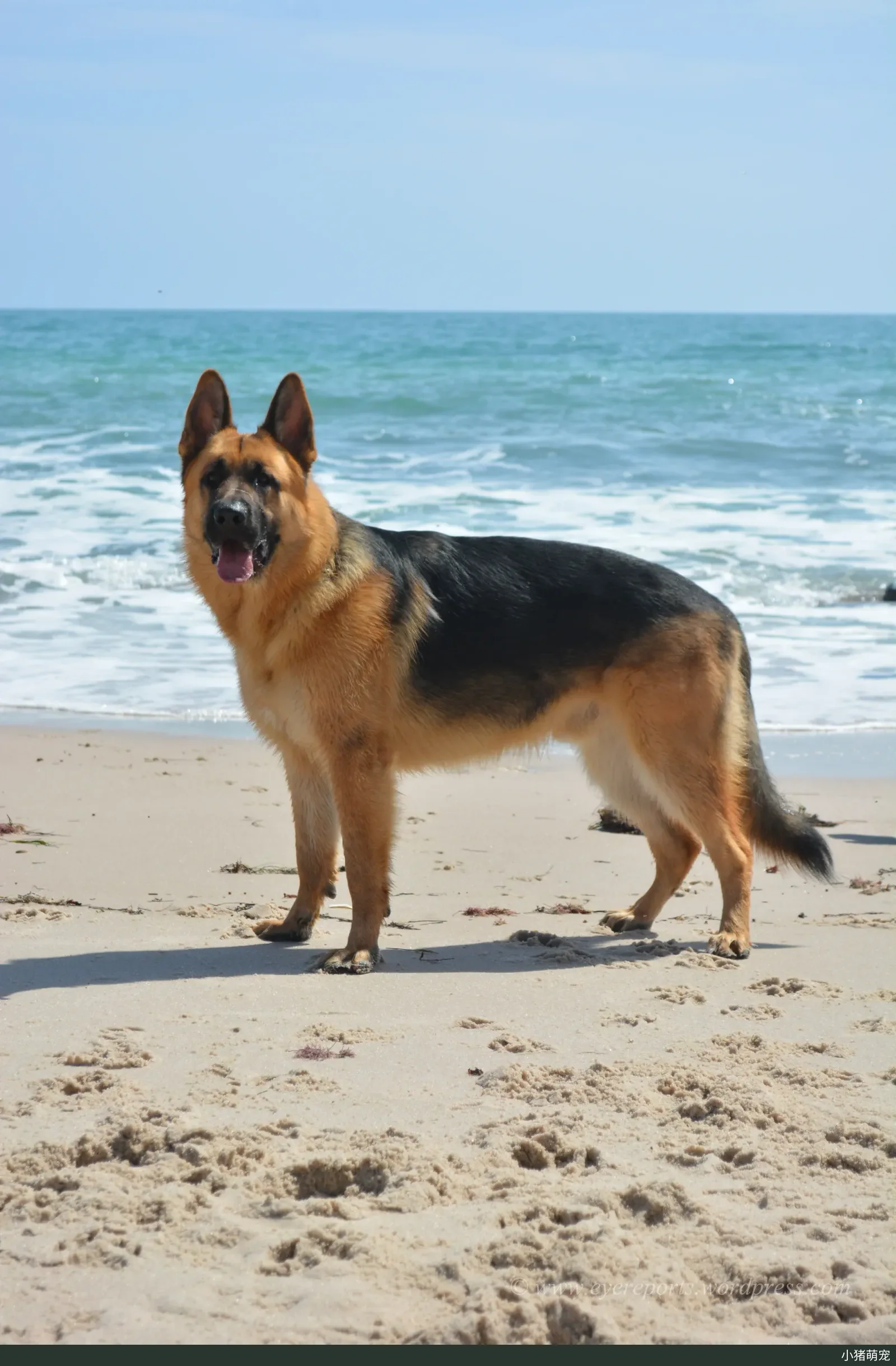
An adult male German Shepherd standing sideways on a beach. Photo: gomagoti; source: Wikimedia Commons (originally on Flickr); license: CC BY-SA 2.0.

The German Shepherd Dog has been selectively bred as a working dog in Germany since 1899. Erect pointed ears, a wedge-shaped head, and an easy trotting gait make it instantly recognizable. It is intelligent, focused, and eager to work with people—but it also needs substantial exercise, early socialization, and ongoing training. Drawing on FCI, AKC, and The Royal Kennel Club materials and UK veterinary research, this article covers origins, appearance, temperament, training needs, and common health issues.
Origins and breed establishment
By the late nineteenth century Germany already had many herding dogs, but according to the AKC their type varied by region and was not unified. The historical overview in FCI Standard No. 166 states that the Verein für Deutsche Schäferhunde (SV) is the breed’s founding club; the breed standard, based on proposals by A. Meyer and Max von Stephanitz, was adopted at the first membership meeting in Frankfurt on 20 September 1899 and has been revised many times since. Planned breeding likewise began after the club’s founding in 1899, using herding dogs from central and southern Germany of the day, with the aim of producing dogs fit for demanding work.
AKC’s breed-history article also tells the “founding sire” story: von Stephanitz, formerly a cavalry officer, admired the intelligence and quick reactions of rural herding dogs. In 1899, at a dog show with Meyer, he chose a wolfish-looking 4-year-old male, bought him, and renamed him Horand von Grafrath; the dog received the first registration number SZ1 in the new SV and is regarded as the breed’s foundation sire. German Shepherds soon left Germany: the AKC recognized the breed in 1908, and the FCI granted formal recognition on 1 January 1955, placing it in Group 1 (Sheepdogs and Cattle Dogs) and requiring a working test. To this day the FCI standard still describes it as a “versatile working, herding and service dog.”
Appearance and coat
The FCI standard describes the German Shepherd as a medium-sized, slightly elongated, strong, well-muscled dog: body length exceeds height at the withers by about 10%–17%; the head is wedge-shaped; eyes are medium-sized almonds, darker preferred; the nose must be black; medium-sized pointed ears stand erect and face forward. It is a natural trotter, with long, low, steady strides; the AKC likewise calls its natural gait an effortless trot that can accelerate when needed.
On size, the FCI standard gives: males 60–65 cm at the withers, 30–40 kg; females 55–60 cm, 22–32 kg. The AKC breed page lists males 24–26 inches (about 61–66 cm), 65–90 lb (about 29–41 kg); females 22–24 inches (about 56–61 cm), 50–70 lb (about 23–32 kg). The two sets come from different organizations and differ slightly; both are breed reference ranges only. Whether a household dog is overweight or underweight should be judged by a veterinarian on individual body condition.
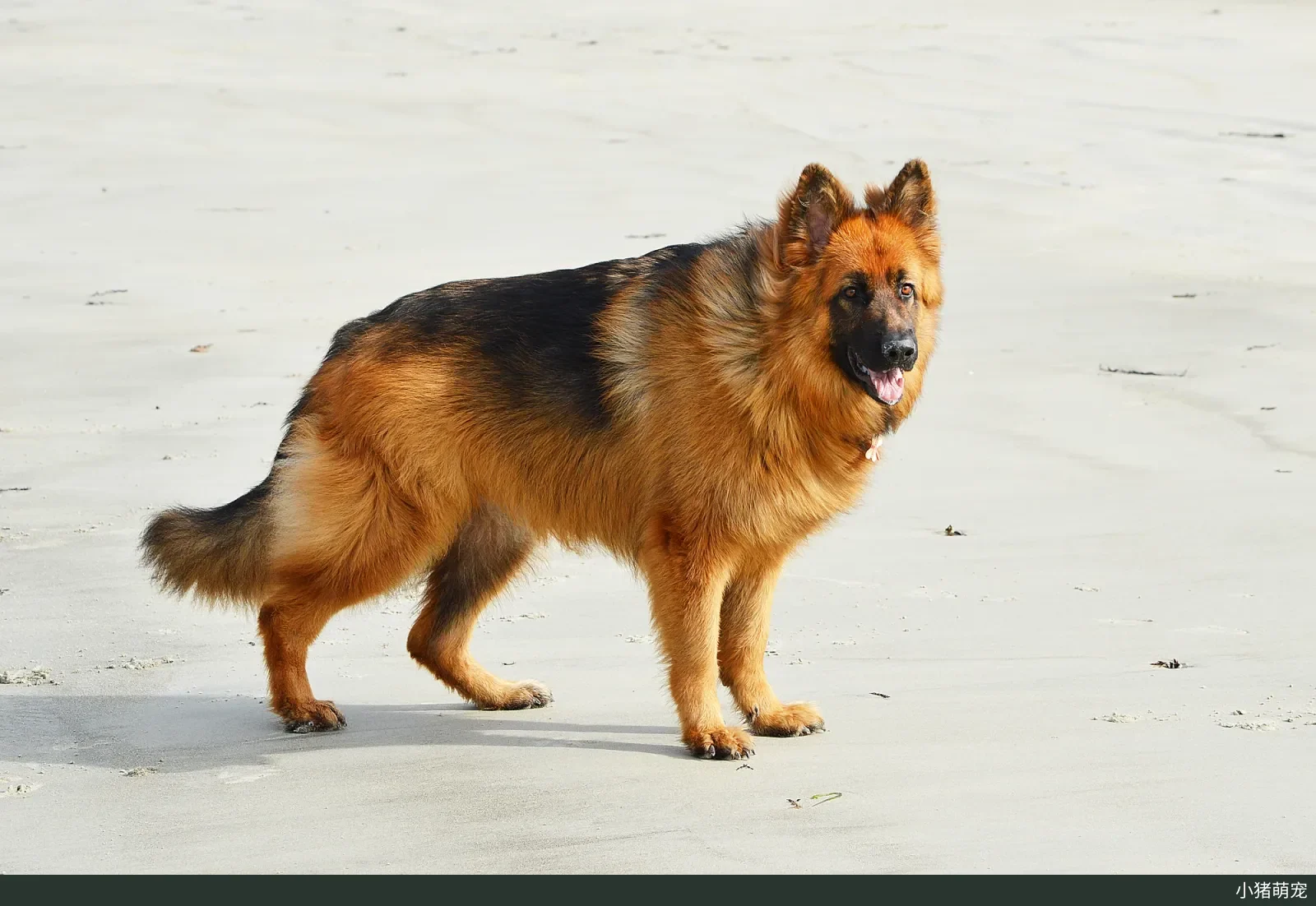
A long-coated German Shepherd, corresponding to the long double coat in the FCI standard. Photo: Primrose2017; source: Wikimedia Commons; license: CC BY-SA 4.0.

On coat, the FCI recognizes two types: a harsh, close-lying double coat, and a longer, softer outer coat with furnishings on the ears and legs (long double coat); both have undercoat. Color is often black with tan, brown, yellow to light-gray markings; solid black and gray with dark shading also occur; white is not allowed under the FCI standard. Day-to-day care is not especially complex: the AKC suggests a quick brush every few days, with heavier shedding once or twice a year when more frequent brushing is needed; The Royal Kennel Club lists grooming frequency as “more than once a week.” If nails do not wear down naturally, the AKC advises monthly trimming or grinding.
Temperament, exercise, and training
On temperament, the FCI standard requires a German Shepherd that is emotionally stable, with strong nerves, self-assured and natural, good-natured unless provoked, and at the same time attentive and willing to work with people—so it can serve as companion, watchdog, protection, service, and herding dog. The AKC emphasizes loyalty, courage, confidence, and the ability to learn many commands, and cites the breed standard’s note of a certain “aloofness” with strangers—it does not instantly befriend everyone. In other words, it bonds closely with family and often watches strangers for a while first.
Exercise is the first thing to weigh before getting a German Shepherd. The Royal Kennel Club recommends more than two hours of exercise a day and notes that it suits a large house and large garden, in town or country. The AKC likewise says this is a very active, highly athletic breed that can become frustrated—and develop frustrating behaviors—without enough exercise. Puppies can start with short daily walks and play in a secure enclosed area; the AKC also warns against casually letting them off leash, because even well-trained dogs can get distracted. Canine sports such as agility, herding, tracking, and dock diving can burn both physical and mental energy.
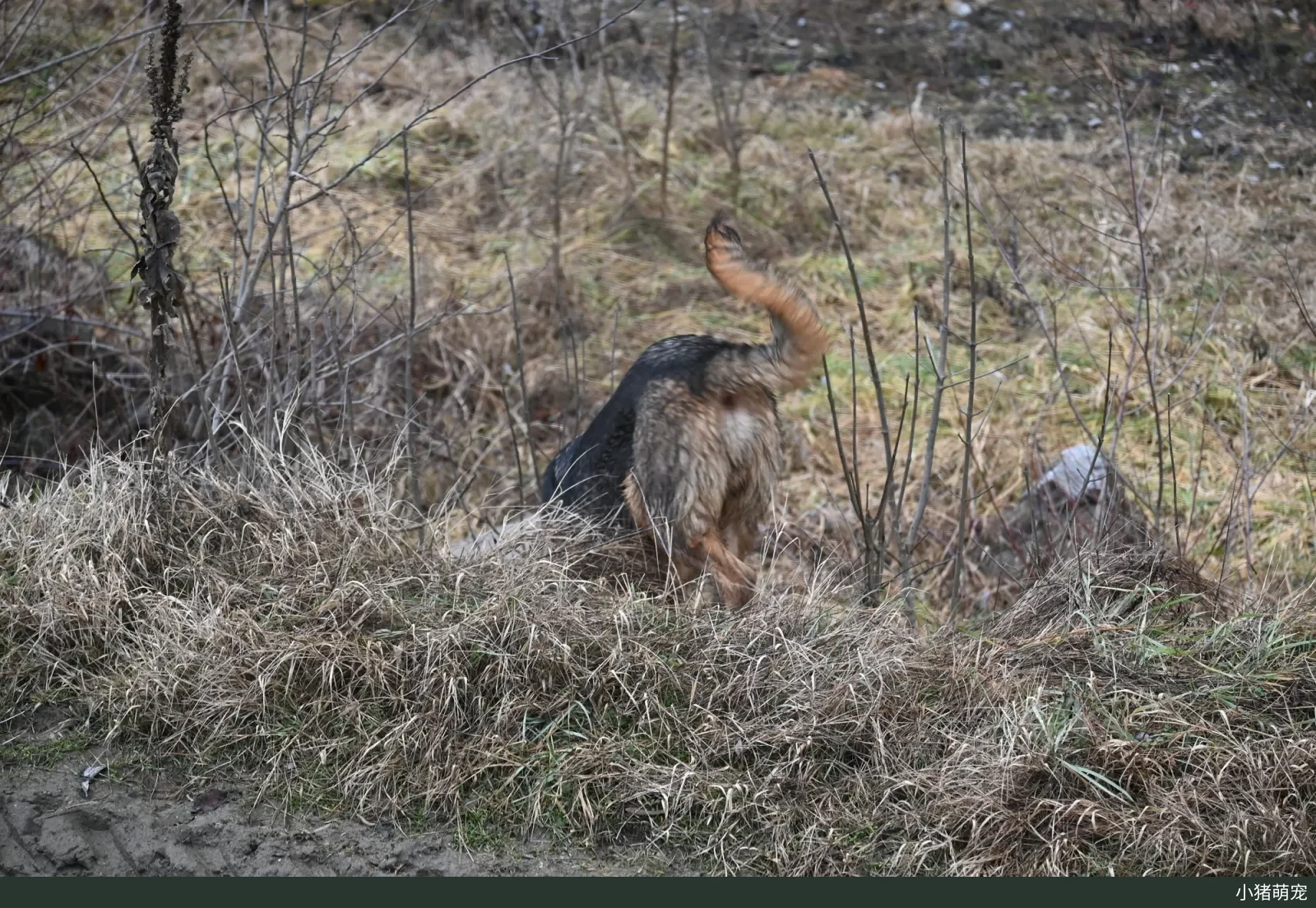
A young German Shepherd running through low dry grass by the Likodra River near Krupanj in western Serbia. Photo: Ljiljana Krupanj; source: Wikimedia Commons; license: CC BY 4.0.
On training, the AKC considers early socialization and puppy classes “vital,” with ongoing obedience work afterward to help it grow into a adaptable, well-mannered adult; consistent, reward-based training works best. It bonds tightly with family and is happiest living with them, so it is best raised in the home and included in daily household life.
Common health issues
The AKC notes that most German Shepherds are healthy, but responsible breeders screen breeding stock for degenerative myelopathy and for elbow and hip dysplasia; tests recommended by the national breed club include hip evaluation, elbow evaluation, and a temperament test. The AKC also specifically flags gastric dilatation (bloat): a sudden, potentially life-threatening abdominal distension whose signs and response owners should know in advance. When choosing a puppy, ask the breeder which tests the parents have had.
Veterinary clinical records offer another angle. A 2017 study by the Royal Veterinary College VetCompass team analyzed 12,146 German Shepherds seen in 2013 at 430 UK primary-care practices. Median lifespan was 10.3 years—females (11.1) longer than males (9.7). The most commonly recorded problems were otitis externa (7.89%), osteoarthritis (5.54%), diarrhea (5.24%), overweight or obesity (5.18%), and aggression (4.76%), with aggression more common in males. Among dogs with a recorded cause of death, the most common were musculoskeletal disease (16.3%) and inability to stand (14.9%).
Put those figures in context: they reflect 2013 UK clinic records; the authors also note that dogs with mild or subtle signs may never have been presented, so results may not apply to German Shepherds outside the UK. The AKC breed page lists expected lifespan as 12–14 years; The Royal Kennel Club marks it “over 10 years”—neither matches this study’s 10.3-year median exactly. Sources and methods differ; the numbers should not be compared directly.
References
-
FCI. FCI-Standard N° 166: Deutscher Schäferhund (German Shepherd Dog), English version 2010-12-23; official standard published 2010-08-11.
-
American Kennel Club. German Shepherd Dog – Dog Breed Information.
-
American Kennel Club. German Shepherd Dog History: Where the Breed Originated.
-
Elaine Waldorf Gewirtz. German Shepherd Dog Facts You May Not Know, American Kennel Club, updated 2026-09-14.
-
The Royal Kennel Club. German Shepherd Dog – Breeds A to Z.
-
O'Neill DG, Coulson NR, Church DB, Brodbelt DC. Demography and disorders of German Shepherd Dogs under primary veterinary care in the UK. Canine Genetics and Epidemiology, 2017, 4:7.