The American Curl is celebrated for its distinctive, gracefully back-curled ears and silky, flat-lying coat, appearing in both longhair and shorthair varieties. Combining an elegant, semi-foreign rectangular build with moderate boning and balanced musculature, this people-oriented breed retains kitten-like curiosity and playful vigor well into maturity—earning it the affectionate moniker "the Peter Pan of the feline world." Understanding the developmental timeline of its unique ear cartilage, the essential safeguards of ear care, and its need for interactive companionship forms the cornerstone of a healthy, lasting relationship with an American Curl.
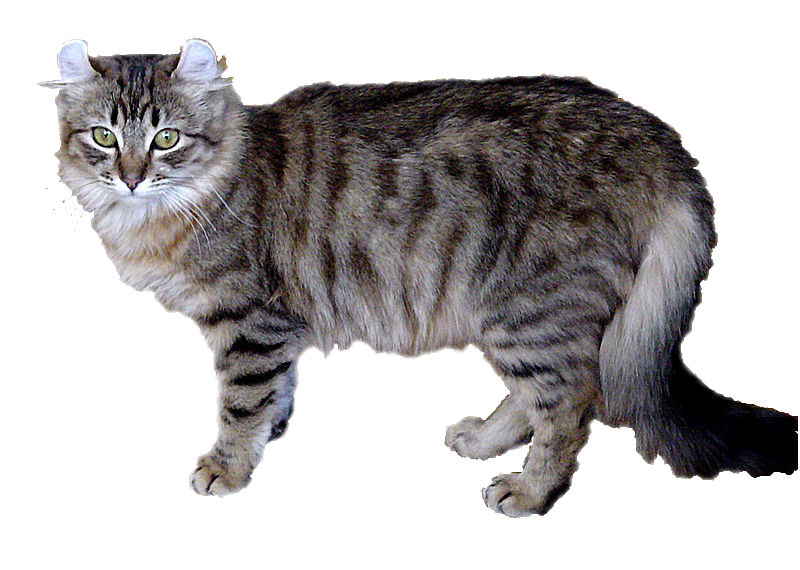
Adult American Curl. Image: Desaix83, after the work of Cljk; source: Wikimedia Commons[4]; license: CC BY-SA 3.0.

Origins and Registry Recognition
The history of the American Curl began in June 1981 in Lakewood, California, when Joe and Grace Ruga took in a stray black longhaired female kitten sporting unusual back-curled ears, naming her Shulamith. In December of that same year, Shulamith delivered her first litter of four kittens, two of which inherited her curled ears, confirming that the trait was genetically dominant. Systematic breeding commenced in 1983, and geneticists subsequently verified that the curled ear is governed by a single autosomal dominant gene without homozygous lethality or accompanying skeletal dysplasia.
The Cat Fanciers' Association (CFA) accepted the American Curl for registration in February 1986, advancing the breed to Provisional status in 1991. In May 1993, the American Curl attained full CFA Championship status. Notably, the breed set a historic precedent in CFA history as the first to have both Longhair and Shorthair divisions judged together in the same championship competition. Concurrently, major cat registries including The International Cat Association (TICA) formulated and refined rigorous championship standards for the breed.
Physical Characteristics and Developmental Process
According to the CFA breed standard, the head forms a modified wedge with rounded contours, slightly longer than it is wide, featuring a straight nose and a gentle transition between the eyes. Its hallmark ears sit erect and open, positioned squarely atop the head with firm cartilage comprising at least the lower third of the ear height. The pinnae sweep back gracefully in a smooth arc between 90 and 180 degrees, with imaginary lines projected from the ear tips pointing toward the center of the base of the skull when alert. Ear tips are rounded and flexible, furnished with plush interior tufts. An ear tip that touches the back of the ear or curves past 180 degrees is considered an extreme deviation and disqualification.
The body conforms to a semi-foreign rectangular build, roughly 1.5 times the height at the shoulders, displaying moderate boning and supple musculature. Adult females typically weigh between 5 and 8 pounds (2.3 to 3.6 kg), while adult males range from 7 to 10 pounds (3.2 to 4.5 kg). The eyes are walnut-shaped—oval on top and rounded on the bottom—radiating an alert expression. Aside from pointed patterns requiring brilliant blue eyes, eye color bears no fixed correlation to coat color. The coat is exceptionally silky and lies flat, defined by a minimal undercoat; longhair varieties feature a full, flowing plumed tail, while shorthair coats remain flat and resilient. Major registries recognize all genetically possible colors and patterns, including solid, tabby, bi-color, and colorpoint.
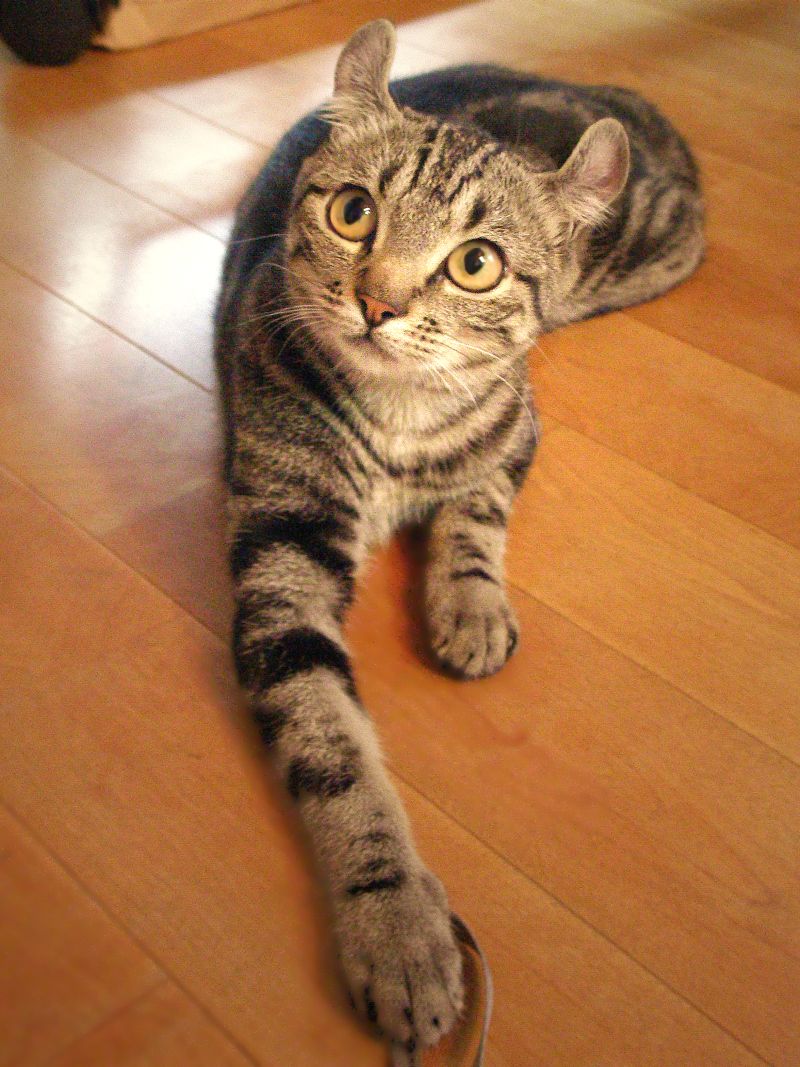
American Curl kitten portrait. Photo: tanakawho; Source: Wikimedia Commons[5]; License: CC BY 2.0.

Newborn American Curl kittens arrive with straight, unfolded ears identical to typical domestic felines. Between days 2 and 7 post-birth, the ear tips begin curling back tightly. Over the subsequent weeks, the ears undergo gradual unfurling and adjustment phases. Around 16 weeks of age (approximately four months), the basal cartilage hardens completely, locking the final angle of curl and structural firmness into place. Breeders and owners must never attempt to bend, reshape, or manipulate the ears during this delicate developmental window.
Temperament and Household Dynamics
The American Curl exhibits an even-tempered, sociable, and family-oriented disposition, showing high engagement with household routines. They frequently trail their caregivers from room to room, seeking physical closeness on sofas or desks without becoming overly vocal. Rather than loud mewing or crying, Curls communicate through soft chirps and gentle trills. Their keen intelligence and investigative drive give them enduring enthusiasm for opening cabinet doors, interactive puzzle toys, and games of fetch.
Retaining a buoyant, kitten-like playfulness, well-socialized American Curls harmonize well with respectful children, cat-friendly dogs, and other felines. While naturally gentle during play, interactions with young children require adult supervision to ensure children never pull, squeeze, or bend the cat's delicate ear pinnae. Within the home, Curls do not require excessive square footage, but they thrive when provided with vertical cat trees, shelving, and scratching posts to satisfy their climbing agility and exploratory instincts.
Health Considerations and Daily Care
Ear management represents the most crucial and sensitive facet of caring for an American Curl. Because the ear base is supported by rigid cartilage that cannot fold forward or inverse, all handling and petting must respect a strict rule: never force or bend the ear backward or inward, as doing so can easily fracture the cartilage and cause permanent tissue damage. Furthermore, the open, flared ear canal collects airborne dust and ceruminous secretions more readily. Caregivers should inspect the ears weekly and use a gentle, vet-approved pet ear cleanser with a soft cotton pad to wipe the outer ear canal, strictly avoiding cotton swabs that can pack debris or puncture the delicate eardrum.
Thanks to its silky texture and minimal undercoat, the American Curl is substantially less prone to matting and tangling than many other longhaired breeds. General coat maintenance typically requires combing only two to three times per month with a fine-toothed metal comb to remove shed hair, increasing to weekly brushing during seasonal shedding periods in spring and autumn. Baths are seldom necessary; when bathed, thorough towel-drying followed by low-heat blow-drying prevents moisture retention around the ear base and armpits. Regular biweekly claw trims and durable sisal scratching posts complete their essential grooming regimen.
Overall, the American Curl enjoys robust health. Because the breed's foundational gene pool involved extensive outcrossing with healthy non-pedigreed domestic cats, geneticists and veterinarians have identified no breed-specific hereditary disorders or bone defects linked to the Curl mutation. Like all domestic cats, however, they remain susceptible to common feline conditions such as obesity, periodontal disease, and chronic kidney disease in senior years. Caregivers should maintain routine core vaccinations, regular veterinary checkups, and introduce daily toothbrushing early in kittenhood to protect lifelong oral health.