A Bull Terrier standing in profile looks solidly built, with a deep chest, a short back and sturdy legs beneath a compact body. Watch one walk and the lightness of its stride may come as a surprise. In Britain, Bulldogs and terriers were once crossed for dogfighting. In the early 1860s, as these dogs gained a following as companions, James Hinks helped establish the modern Bull Terrier. The dogs he bred were white. The breed still has much of the strength and agility of its forebears, two qualities a family can appreciate from the other end of a leash. [1]
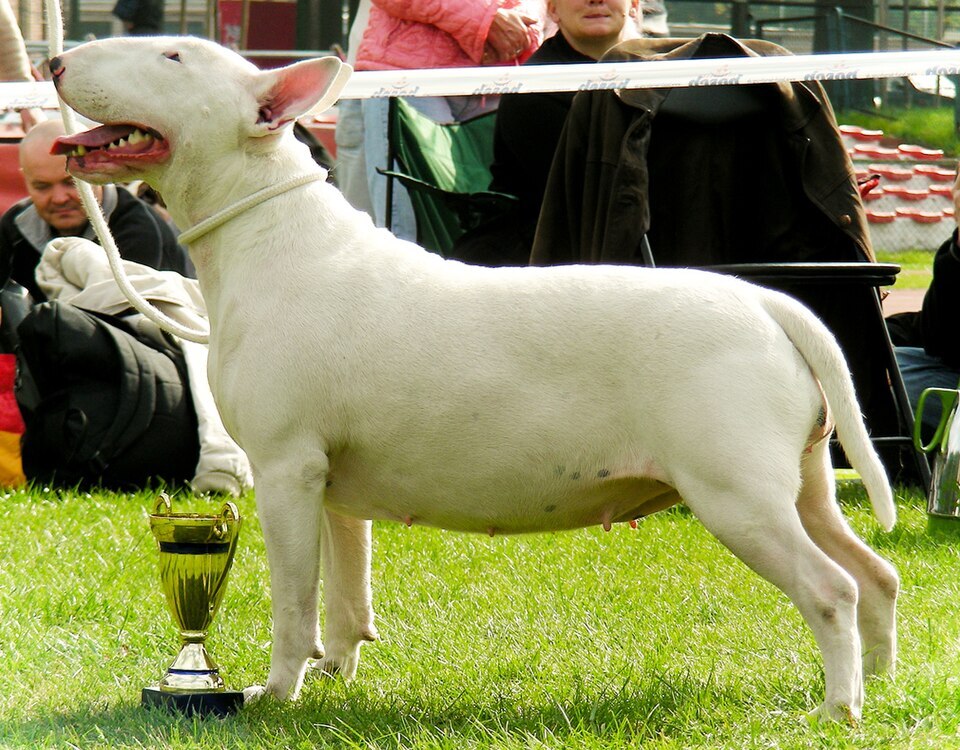
Figure: A white Bull Terrier’s stance. Aricon, Wikimedia Commons[2]

To recognize a Bull Terrier, follow the outline of its head from the crown to the tip of the nose. The long curve carries smoothly from forehead to muzzle. Seen head-on, the head is egg-shaped, with small triangular eyes and pointed ears that stand upright. A close coat leaves those outlines easy to see. Bull Terriers can be white or colored, including brindle, and colored dogs may have white markings. A coat pattern might catch your eye first. When meeting a potential companion, take time to see what happens when something else catches the dog’s eye. How readily does it turn back to you? [1]
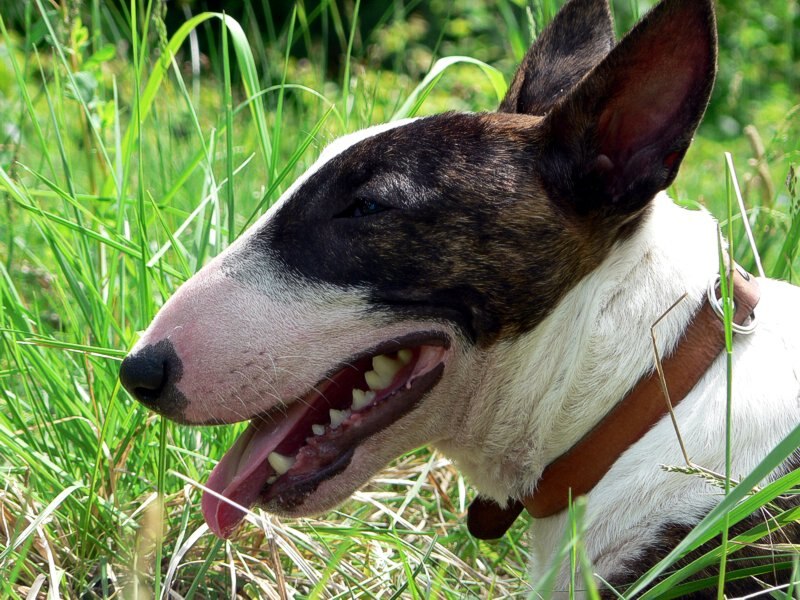
Figure: The Bull Terrier’s head in profile. Ivob, Wikimedia Commons[3]

The American Kennel Club (AKC) recommends moderate daily exercise that engages both body and mind. One example is a long walk with the family. On a familiar route, give the dog room to amble and sniff. As you approach a corner, catch its attention while it is still tuned in to you, then turn together. Once the dog follows and the leash hangs loose, walk on and give it a chance to investigate the next interesting scent. Sniffing becomes part of the reward for following your lead. Let the dog’s stride, interest and energy that day guide how far you go. [1]
Bull Terriers can be persistent, especially about finding their own fun. You may want to rehearse a cue once more just as the dog discovers something more interesting across the room. The AKC suggests using food or toys to reward the response you want. [1] To teach a pause at the door, start when the house is quiet. As soon as the dog stands still beside you, offer a favorite toy. Once that is familiar, try the same cue as you pick up the leash. If several people take turns practicing with food, set aside some of the dog’s daily ration so everyone can see how much is left.
A toy game gives you a chance to practice its ending. Pick an open spot where you can put the toys away afterward. Hold the first toy until all four paws are on the ground, then invite the dog to play with a cue everyone in the household uses. Pause while you still have its attention and offer a second toy it likes. When it releases the first, give it the second. In the early rounds, invite it to play again so giving something up can lead to another turn. On the last round, use your agreed finishing cue, complete the trade, put the toys away and leave together. Chasing the dog to retrieve a toy can easily become its favorite part. [1]
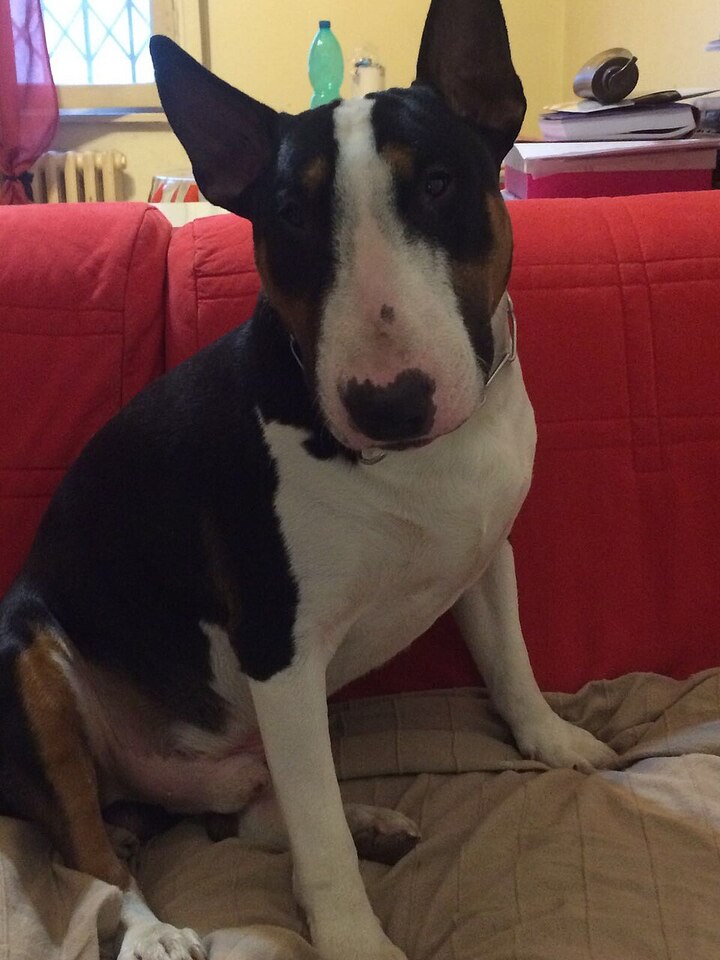
Figure: Upright ears seen from the front. Miniaizer, Wikimedia Commons[4]

Let the dog’s interests suggest the next activity. For one that loves following a scent, start a search game by letting it watch you put a familiar toy nearby. Invite it to find the toy, then try a less obvious spot once it understands the game. A dog that enjoys following your movements might prefer a sequence of turns, stops and fresh starts on a walk. Tracking, obedience and agility are among the sports the AKC suggests for this breed. [1] At home, look for the activity your dog enjoys enough to keep playing with you and can still pause when you call.
To judge whether a Bull Terrier fits your household, think through an ordinary workday. Who can comfortably handle the leash and leave time for sniffing along the way? Who will put things down after work to play, and follow through when the game ends? The AKC also emphasizes companionship and early socialization with people and other dogs. [1] In an unfamiliar place, choose a quiet spot with enough distance for the dog to watch and then walk away with someone it knows. Even with a yard, those outings take a person’s time. Sharing them is easier when the same cues work with each family member.
The Bull Terrier’s short coat lies flat, feels coarse and has a natural gloss. A weekly pass with a soft-bristled brush or grooming mitt lifts away dirt and loose hair. A quiet spell after a walk is a convenient time to brush and check the ears. Clean them when needed. Nails need regular trimming because excess length can make walking and running uncomfortable. [1] For a family that enjoys long walks, paw care belongs in the routine alongside brushing. Getting the dog used to having its paws gently handled can make that part of grooming easier for both of you.
Before bringing a puppy home, ask the breeder for two sets of health records. The AKC recommends that breeders show evidence of heart and kidney testing for both parents. It also recommends a hearing test for each puppy before it leaves the breeder. [1] Check whose name is on each record and which test it covers. A puppy may follow you closely throughout a game, but that observation cannot tell you its hearing test result. Keep the records for the veterinarian who will care for your dog, and keep room in the family schedule for walks, games and quiet company.
References
-
[1] American Kennel Club. Bull Terrier Dog Breed Information.
-
[2] Aricon. File:Bianca.jpg. Wikimedia Commons.
-
[3] Ivob. File:Bull Terrier Chico 04.jpg. Wikimedia Commons.
-
[4] Miniaizer. File:Bull Terrier .jpg. Wikimedia Commons.