The World Cat Federation (WCF) lists the Khao Manee under the breed code KAM and traces its ancestry to Thailand. A glossy white coat is one of its most striking features. The familiar combination of one blue eye and one gold eye is just one possibility. To picture the cat described in the standard, start with its outline as it stands. The body is medium in size and a little longer than it is tall. Firm, flat muscles show through the short coat along the shoulders, back, and legs, giving the cat a light, athletic build. [1]
When a Khao Manee sits upright, its front legs catch the eye. The standard describes medium to slightly long legs and oval paws. Watch the cat get up and walk, and the proportions become easier to see. The front legs are a little shorter than the hind legs, and the tail tapers gradually from a sturdy base. Viewed head-on, the face looks oval, with high cheekbones and a clear space between the ears. Each ear is broad at the base and gently rounded at the tip. On an imaginary clock face, the ears point toward eleven and one. [1]
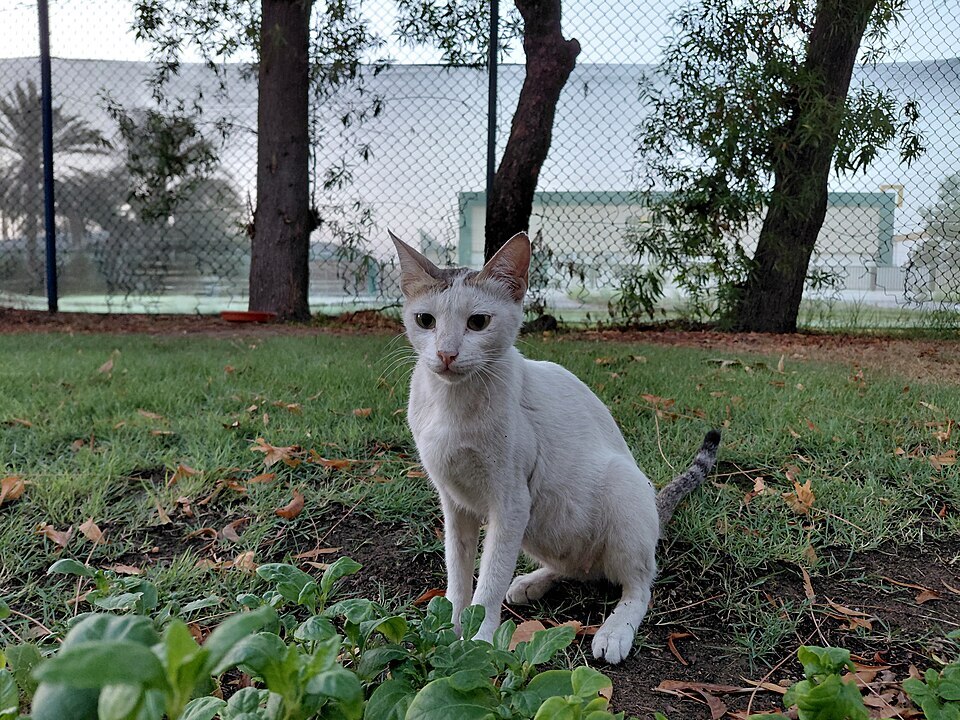
Figure: Forelegs in a seated pose. Axistence.aryan, Wikimedia Commons[4]

The eyes are relatively large, with an open almond shape and a slight upward tilt. The WCF accepts blue, gold, and green. Blue includes aqua, and the gold range takes in copper, amber, yellow, hazel, and brown. A white cat with two clear green eyes fits the description just as well as one with a blue eye and a gold one. Even a single iris can contain more than one color. Soft, even daylight makes the iris easier to see. The small bright spot that shifts when the cat turns toward a window is a reflection on the eye’s surface. [1]

Figure: The Khao Manee’s face from the front. Ritadesbois, Wikimedia Commons[5]

Look along the shoulder of a cat resting side-on by a window and you can see how closely the fur follows the body. The standard describes a short, fine, smooth coat with no undercoat, a pink nose, and pink paw pads. [1] In a photograph, strong direct light can wash out the texture of white fur. With the light behind the cat, the ear rims and body outline stand out. If you notice a darker patch, take a picture of that side in a familiar spot. Using similar light next time makes comparison easier. Note whether the cat repeatedly licks the spot, too.

Figure: A kitten’s ears in silhouette. Chandroshni, Wikimedia Commons[6]

For brushing, choose a place where the cat already comes up to you and has room to walk away. Let it sniff a soft brush. If it comes closer and usually enjoys being stroked across the shoulders or back, try a few gentle strokes there, following the direction of the fur. Then pause. Does the cat lean in again or turn to leave? Its response can guide the next stroke. Brushing also gives you a close look at the coat. Notice any place where the hair has begun to part or where skin has become visible. [1][2]
To plan an indoor space, think through a quiet afternoon from the cat’s point of view. Where can it sleep under cover, stretch and scratch when it wakes, then climb up to watch the household? The Feline Veterinary Medical Association includes opportunities for activity, a sense of safety, and respect for the senses in its guidance for indoor cats. [2] A box with a side opening offers cover, and a stable perch gives a view. In a home with several cats, trace each one’s route from bed to water and litter. A narrow doorway occupied by another cat can cut off an otherwise easy route.
Leave a stretch of floor where the cat can chase a toy or pause to watch it. Draw a wand toy along the floor and let it disappear around the corner of a box. The cat can watch the corner, crouch, edge closer, and pounce when the toy comes back into view. Which part holds its interest? A cat watching from cover may enjoy a longer pause before the toy reappears. One that runs out after it may follow it across open floor. Give the cat a chance to catch it, then put string toys away when play ends. [2]
A familiar invitation makes contact with people more predictable. When someone settles into a chair, leaving a space beside them lets the cat come close, sit nearby, or return to bed. Over several encounters, small details tell you what the cat enjoys. It might rub its cheek against an offered hand, settle beside someone without seeking touch, or draw back when a hand reaches over its head. Family members can use those cues to decide when to offer a stroke and when to give the cat space. These needs are common to indoor cats. Each Khao Manee sets its own comfortable distance. [2]
According to the Cornell Feline Health Center, blue eyes in white cats are associated with a higher risk of congenital deafness, which can affect one ear or both. Eye color cannot tell you how well an individual cat hears. A cat with hearing in one ear may still turn toward a familiar sound. If you have concerns, describe an everyday incident to your veterinarian. Was the cat awake? Could it see someone approaching? Which side did the sound come from, and was the response new? Those details give the veterinarian a history to draw on when assessing hearing. For a cat with confirmed hearing loss, keep its living space away from traffic and other hazards it might otherwise hear approaching. [3]
References
-
[1] World Cat Federation. Khao Manee (KAM). September 29, 2019.
-
[2] Feline Veterinary Medical Association. New Feline Veterinary Medical Association Position Statement Reimagines Life for Indoor Cats. August 28, 2025.
-
[3] Cornell Feline Health Center. Ask Elizabeth: White Cats and Blindness/Deafness.