A dog that spotted someone approaching the flock and barked to alert the shepherd was doing its job. The Canaan Dog worked alongside shepherds, both moving livestock and standing guard. The American Kennel Club (AKC) places this medium-sized Israeli breed in the Herding Group and describes a dog that will keep barking as it watches over flock and home. Before bringing one home, spend a moment at your living room window. How many people would the dog see walking past? How long could it sleep there undisturbed? [1]
Start with the outline of a standing Canaan Dog. An adult measures about 48–61 cm at the shoulder. In profile, the body is nearly square, the chest reaches the elbows, and the belly slopes up toward the loin. On the reddish-brown male in the grass, the pale hair along the belly makes that upward sweep easy to see. His bushy tail is set high and curls over his back. At the other end of that silhouette, the muzzle tapers from just below the eyes. In motion, the breed standard calls for a light, ground-covering trot the dog can sustain. [1]
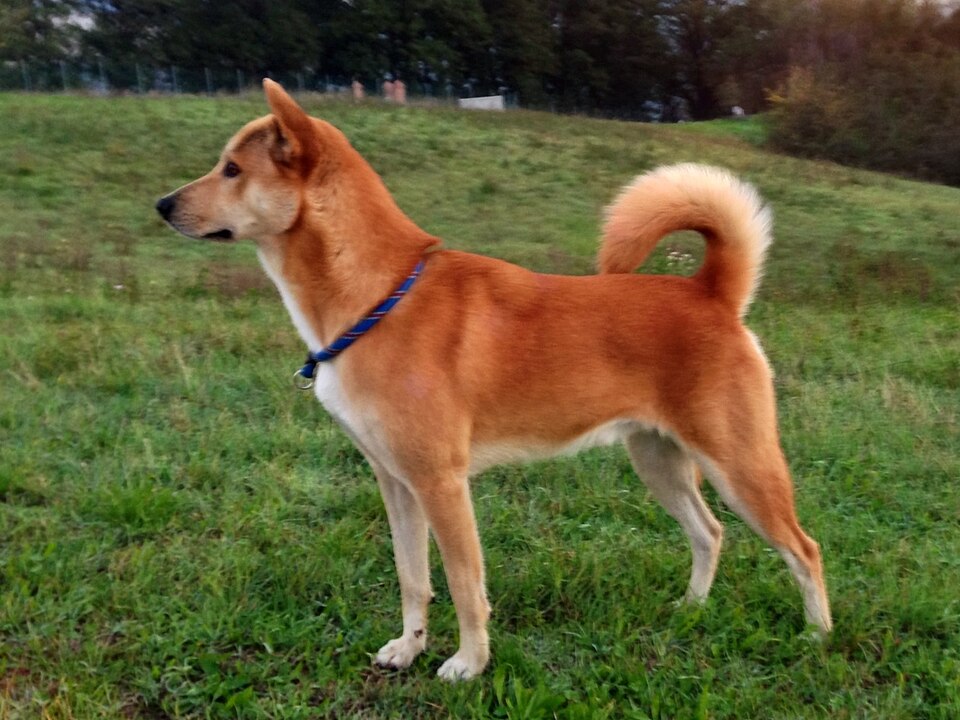
An adult Canaan Dog stands in profile. Giora Sluzky, Wikimedia Commons

On the pale female, seen from the front, the ears catch the eye first. They are broad at the base and set well apart. Below them are dark, almond-shaped eyes, and the head narrows in a wedge from forehead to nose. Temperament takes longer to get to know. Canaan Dogs tend to be affectionate with family and reserved around unfamiliar people, dogs, and places. Ask someone who knows the individual dog what happens when another dog passes on a walk. Does this dog glance over and keep going, or does it need help putting a little distance between them? The answer will help you choose an everyday walking route. [1]
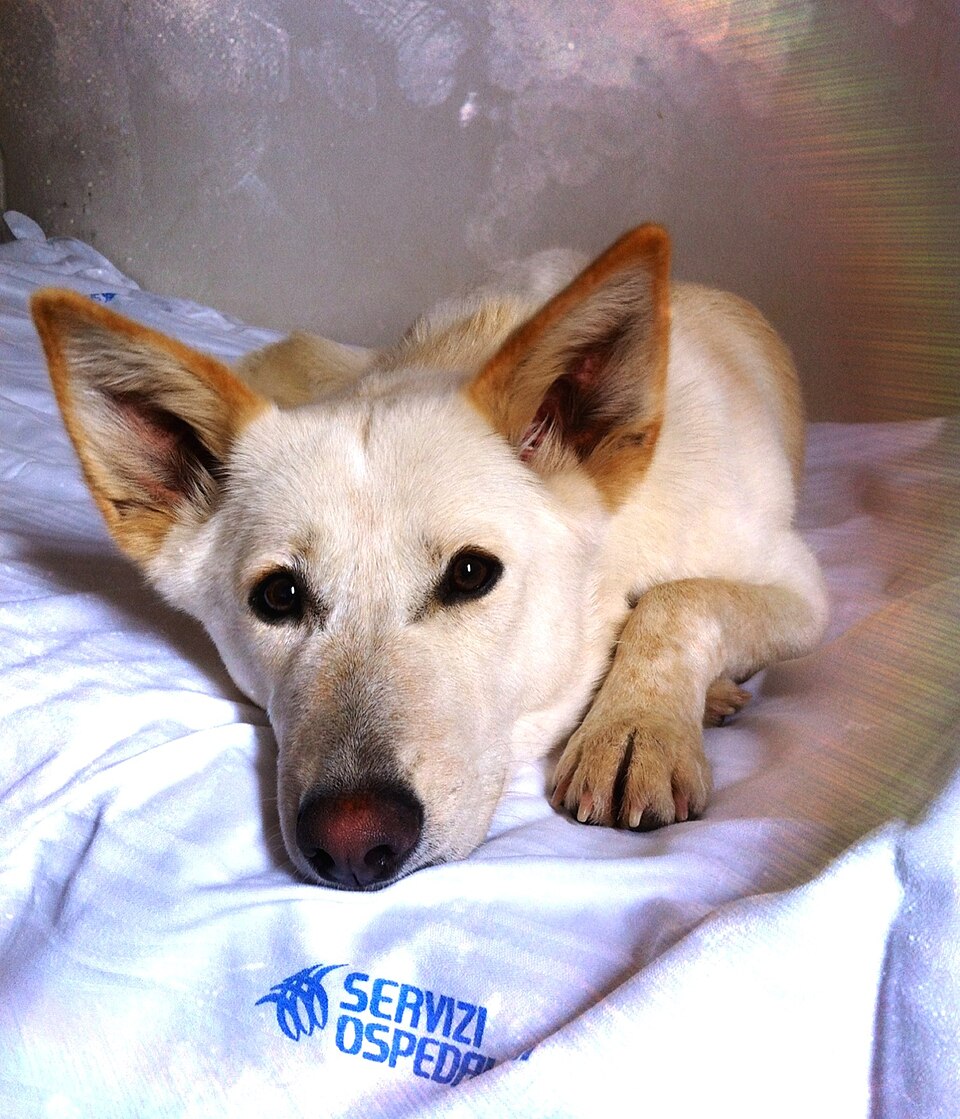
Wide-set ears frame the Canaan Dog’s tapering muzzle. Giora Sluzky, Wikimedia Commons

Leave time to sniff on walks
The AKC describes the Canaan Dog’s exercise needs as moderate and calls for daily outings. These dogs have the stamina to go hiking and can enjoy tracking, scent work, and agility. On an ordinary workday, start with a route you can both walk comfortably. Choose a quieter stretch where the dog can stop to investigate an interesting smell. In a safe spot, play a short search game together. That gives the dog time to follow its own nose and a reason to turn its attention back to you. [1]
Let the dog’s interests help shape the outing. For a keen tracker, leave room for a few extra stops on a familiar route. A dog that loves learning movements with you might enjoy a dog sport with an instructor. When deciding whether the breed fits your household, think beyond the distance you can hike on a weekend. Who can still take the dog out when it rains or work runs late? If the dog comes home from a walk and rushes to the window for every passerby, take a look at what draws its attention there. [1][2]
What draws your dog to the window?
Notice the moment your dog gets up. Has it just seen someone walking a dog, or did it hear voices before anyone came into view? If seeing a pedestrian sends it scrambling onto the back of the sofa, move the sofa away from the window or cover the glass at the dog’s eye level. Before putting down a mat, sit where you plan to place it. Would the dog still be looking straight out at the sidewalk when lying down? If sounds are what catch its attention, begin practicing in a room farther from the street. Making these changes before the barking starts gives the dog a chance to enjoy a quiet stretch of the day. [2][3]
When the room is quiet, sit beside the mat with a few small treats within reach. At first your dog may just stand there, watching your hand. When it lowers its head to sniff the mat on its own, gently place a treat by its paws. As it grows more comfortable, watch for smaller changes. It might shift its weight onto one hip or rest its chin on the mat. Reward it then, leaving the food within reach so it can keep resting. Once the dog lies there comfortably, gradually lengthen the pause between treats. [3]
Next, add a little movement. A familiar family member might walk past at a distance. If the dog lifts its head to look and then settles back down on its own, reward that moment. If it gets up and keeps staring, have the person pass farther away next time. Give a puppy similar room to get used to the world. Ask the breeder which people and places the puppy already knows, continue that work at home, and build on it in a reward-based puppy class. For an alert, sensitive Canaan Dog, calmly watching another dog go by is progress worth recognizing. [1][3]
If you have a yard, spend a moment by the fence. If the dog can see pedestrians along its whole length, it may be every bit as busy out there as it was at the living room window. In an apartment, look for a resting spot away from hallway noise and a nearby route that works for daily walks. A family that enjoys exploring with a dog and can give it somewhere peaceful to sleep has room for both its stamina and its watchful nature. How everyone feels about the occasional burst of alert barking is worth discussing before the dog comes home. [1][2]
Make time for brushing during shedding season
On the tan-and-white dog in the photograph, the coat lies close along the body and fans out around the tail. The same coat structure comes in different colors and patterns. When brushing, work through both layers. Beneath the straight, harsh outer hairs lies a short, soft undercoat. Canaan Dogs generally keep themselves clean and seldom need a bath, but they shed heavily at least once a year. When the undercoat starts coming loose in quantity, brush more often to lift it out. [1]

A tan-and-white Canaan Dog carries its plumed tail high. Canarian, Wikimedia Commons[7]

Brushing gives you a chance to check the ears and paws. Trim nails regularly if they do not wear down naturally, and brush the teeth with toothpaste made for dogs. Before bringing a puppy home, set aside time to go through both parents’ screening records with the breeder. The Canaan Dog Club of America lists evaluations for hip and elbow dysplasia and patellar luxation, an eye exam by a veterinary ophthalmologist, and testing for autoimmune thyroiditis. For each record, look at which dog it belongs to, what was checked, and the result. That tells you more than a general assurance that both parents are healthy. If your own dog develops a persistent limp, have a veterinarian examine it to find the cause. [1][4]
References
-
[1] American Kennel Club. Canaan Dog.
-
[2] Dogs Trust. How to stop your dog barking.
-
[3] Dogs Trust. How to train your dog to be calm, relax and settle.
-
[4] Canaan Dog Club of America, Inc. Canine Health Information Center screening tests for the Canaan Dog.

