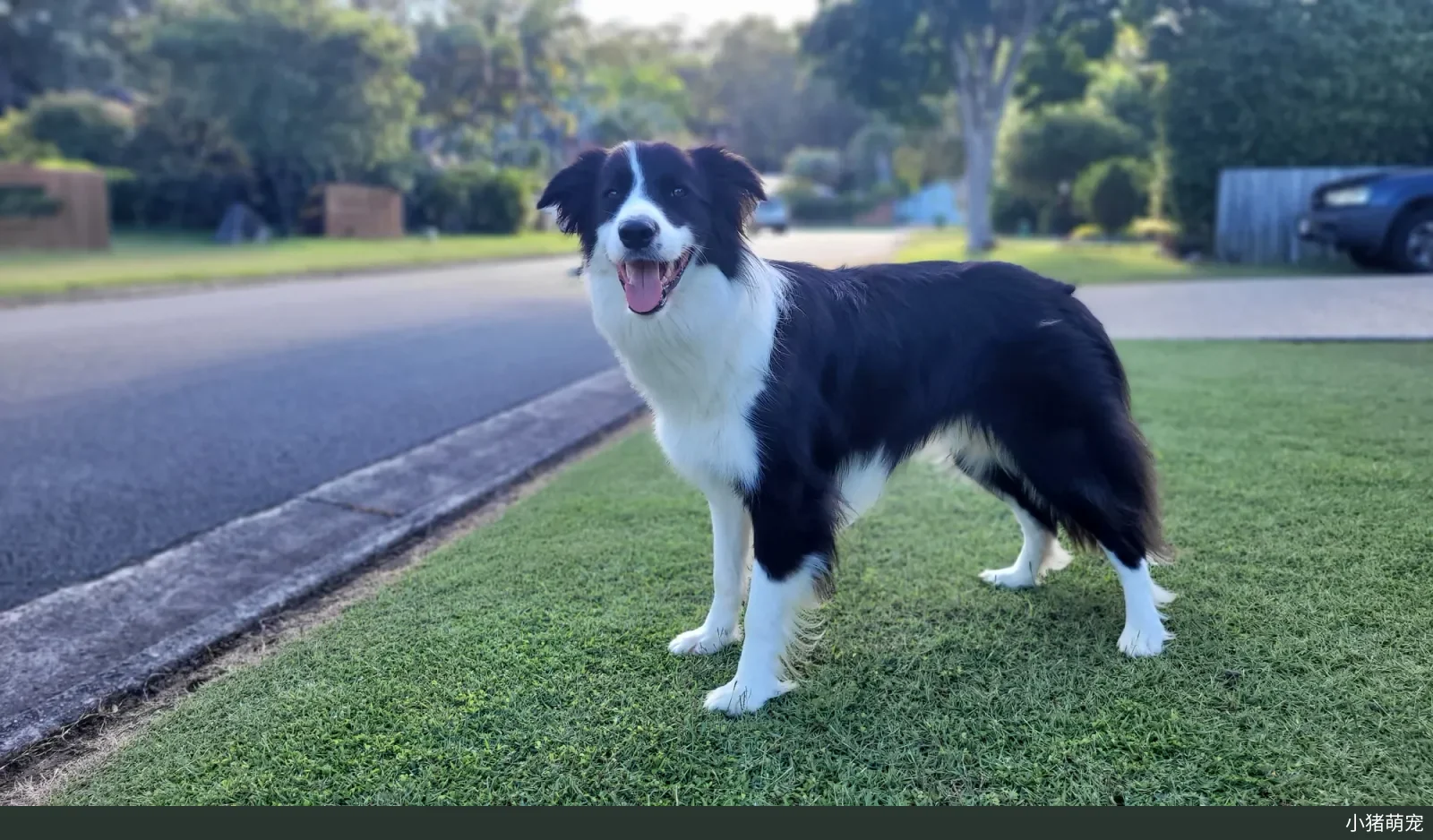
A male Border Collie standing by the roadside. Photo: Janesalway, source: Wikimedia Commons, license: CC BY-SA 4.0.
The Border Collie comes from the border country between Scotland and England and was bred as a medium-sized working dog for herding sheep. It is known for its focused “eye,” agility, and strong trainability—and therefore needs a great deal of exercise and mental “work” every day. Drawing on kennel-club and veterinary sources, this article covers its origins, appearance, temperament, exercise and training needs, and common health issues.
Origins and breed recognition
The breed’s name already tells you where it came from. According to the AKC, it developed in the border region between Scotland and England; the AKC also cites Iris Combe’s writing that “collie” in older local usage meant “something useful.” Early shepherds chose breeding stock for herding ability, not looks: rough hills, harsh weather, and wide pastures favored smaller, fast, enduring dogs. VCA Animal Hospitals notes that the first breed standard, drawn up in 1906, addressed working ability alone and said nothing about appearance.
Sheepdog trials helped shape the breed. Per the AKC, the first formal sheepdog trial was held in Wales in 1873; the International Sheep Dog Society was founded in 1906 and established a stud book. The Fédération Cynologique Internationale (FCI) registers the country of origin as Great Britain, places the breed in Group 1, Section 1 “Sheepdogs,” requires a working trial, and granted definitive recognition on 27 September 1977. In the United States, the AKC first listed it in the Miscellaneous class in 1955 and did not grant full recognition until 1995. VCA notes that many Border Collie enthusiasts opposed AKC recognition at the time, and that most Border Collies today—especially working dogs—are still not AKC-registered.
Appearance and coat
The Border Collie is a balanced, athletic medium-sized dog. The FCI standard gives an ideal height at the withers of about 53 cm (21 inches) for males, with females slightly shorter, and body length slightly greater than height at the withers; the AKC range is 19–22 inches (about 48–56 cm) for males and 18–21 inches (about 46–53 cm) for females, with weight 30–55 pounds (about 14–25 kg). Eyes are usually brown; merle dogs may have one or both eyes, or part of an eye, blue; ears are erect or semi-erect. The AKC especially notes that the intense stare—the famous “eye”—is a hallmark of the breed.
The coat comes in medium-length and short varieties, both dense double coats that stand up to weather; medium-coated dogs grow fuller furnishings on the neck, rear of the legs, and tail. Many colors are allowed, but the FCI standard says white must not predominate. Day-to-day grooming is straightforward: the AKC suggests brushing once or twice a week with a pin brush, and daily during coat blow; The Royal Kennel Club also lists the breed as one that sheds and needs brushing more than once a week.
Temperament, exercise, and training needs
The FCI standard describes the Border Collie as “tenacious, hardworking and of great tractability” and as “keen, alert, responsive and intelligent,” while stressing that it is neither nervous nor aggressive. The AKC calls it a “remarkably intelligent workaholic” that, after a day’s work, is also happy to curl up and be affectionate; it is devoted to family and may be somewhat reserved with strangers.
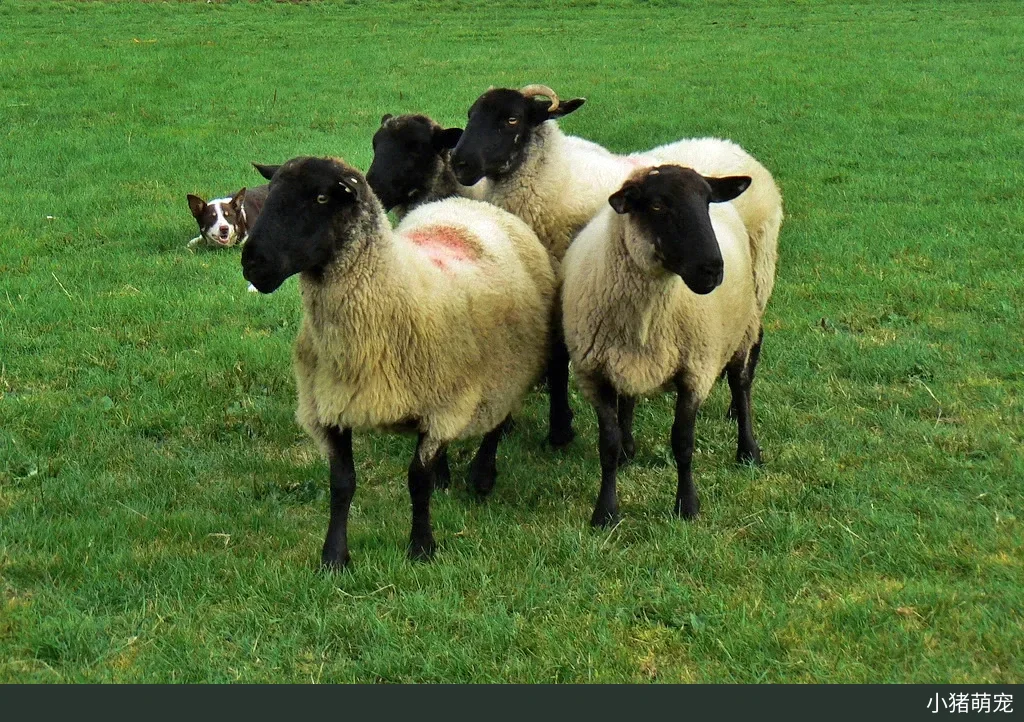
At the August 2006 Ballingeary Show sheepdog trial in County Cork, Ireland, a Border Collie lies on the grass fixed on the flock. Photo: mozzercork (Flickr), source: Wikimedia Commons, license: CC BY 2.0.
Exercise is the first thing to think through before getting a Border Collie. The Royal Kennel Club recommends more than two hours of exercise a day; the AKC also notes that a neighborhood walk or a run in the yard is nowhere near enough, and that the breed is a poor fit for stay-at-home or frequently traveling owners. VCA adds that Border Collies without a job or mental stimulation easily become frustrated and destructive; working lines are usually more active than companion or show lines, and some individuals bark a good deal.
On training, the AKC recommends ongoing positive exposure to people and environments from puppyhood through about seven months of age, with obedience training ideally continuing for life. VCA finds that training rewarded with play, treats, or praise suits Border Collies best; they learn quickly and also bore easily, so variety helps. Herding, agility, disc, flyball, and obedience can burn both body and brain. The breed also has a natural drive to herd animals—and sometimes people; the AKC considers it better suited to families with older children who understand the rules.
Common health issues
The AKC generally regards Border Collies as a hardy, healthy breed, but responsible breeders screen stock for hip dysplasia, deafness, epilepsy, Collie eye anomaly (CEA), neuronal ceroid lipofuscinosis (NCL), and trapped neutrophil syndrome (TNS), among other issues; the U.S. breed club’s recommended tests include hip evaluation and an ophthalmologist exam. The Royal Kennel Club health standard is more detailed: eye examination and gonioscopy; DNA tests for CEA/CH, CL, MDR1, TNS, IGS, severe goniodysgenesis and glaucoma risk (GGD), sensory neuropathy (SN), and Raine syndrome; plus elbow, hip, and BAER hearing screening. These are pre-breeding screening lists, not a prediction that every Border Collie will develop these conditions; when choosing a puppy, you can ask the breeder for the parents’ test results.
One exercise-related issue is Border Collie collapse (BCC). The University of Minnesota College of Veterinary Medicine Canine Genetics Lab describes it as an episodic neurological disorder triggered by strenuous exercise, seen in herding, agility, or flyball dogs and in dogs that repeatedly retrieve balls. Episodes usually begin 5–15 minutes into exercise, with disorientation, a wobbly gait, exaggerated lifting of the legs, or even falling sideways, followed by full recovery in 5–30 minutes. Research treats it as a moderately to highly heritable complex polygenic disease; the lab lists development of a genetic test among research goals, and there is currently no specific preventive therapy to recommend. The lab advises stopping exercise at once if a dog becomes weak, wobbly, or disoriented, keeping the airway clear, offering water and ice, cooling with cool water, and allowing full rest. BCC is not the same as heatstroke, but when something abnormal happens during exercise, a veterinarian should still assess promptly.
On lifespan, estimates differ slightly: the AKC writes 12–15 years, VCA 10–14 years, and The Royal Kennel Club “12 years or more.”
References
-
FCI:FCI-Standard N° 297 BORDER COLLIE(English standard text 2009-10-28; currently valid standard published 1987-06-24)
-
FCI:BORDER COLLIE (297)(breed nomenclature page)
-
American Kennel Club:Border Collie Dog Breed Information
-
American Kennel Club,Helen Lee James:Border Collie History: From Pastures to Today(updated 2026-08-18)
-
The Royal Kennel Club:Border Collie | Breeds A to Z
-
The Royal Kennel Club:The Royal Kennel Club Health Standard
-
VCA Animal Hospitals:Border Collie
-
University of Minnesota College of Veterinary Medicine, Canine Genetics Lab:Border collie collapse