Rosy cheeks, short tails, and the intimate look of mutual preening make lovebirds easy to fall for. But “lovebird” does not mean you must buy a pair, and it does not mean two birds will get along on first meeting. This article focuses on rosy-faced lovebirds and covers companion choice, housing and diet, disease prevention, and legal sourcing—so you can judge whether you can take on this lively, long-term companionship.
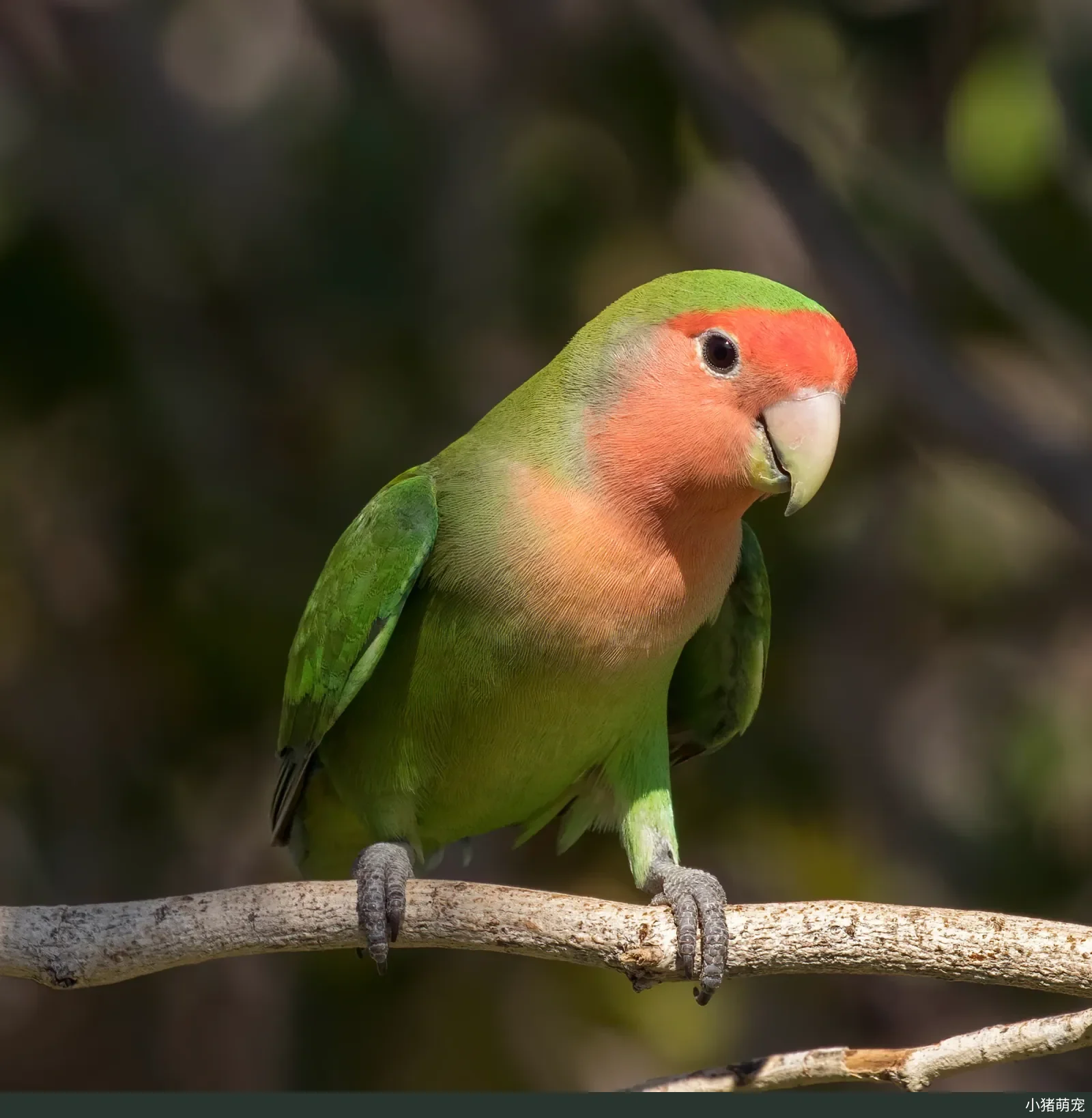
Hero image caption: Rosy-faced lovebird, photographed in Namibia. Photo: Charles J. Sharp; source: Wikimedia Commons; license: CC BY-SA 4.0. Original resized and converted to WebP.

Wild habits and choosing companions
“Lovebird” usually refers to birds in the genus Agapornis; this article focuses on the rosy-faced lovebird Agapornis roseicollis. It is native to southwestern Africa, including Namibia, southwestern Angola, and northwestern South Africa, living in dry open woodland near water, desert edges, and similar habitats. In the wild it often moves in flocks and eats seeds and other plant foods; feral records in other countries should not be treated as its native range. Species account[2]
The romantic image of “lovebirds” has a behavioral basis: mates preen each other, and courtship includes feeding and other interactions. But pair bonds cannot be translated into human romantic commitment, and still less into “one bird cannot survive alone.”
A single bird can be kept if the caregiver can provide steady daily interaction and opportunities to be active. VCA veterinary materials note that a single lovebird can form a close bond with people; two birds may attach more to each other, even when same-sex. So wanting a people-oriented bird does not require keeping one alone; wanting a same-species companion does not mean any second bird will share a cage safely. Veterinary overview[3]
When you plan to add a bird, accept that separate cages may be needed. New birds should be examined and quarantined first, then introduced gradually from separate cages and distance; meetings must be supervised, and chasing or biting means immediate separation. Some birds never safely cohabit. A pair also means managing breeding and egg-laying; mutual company is not a way to reduce care. Introducing a new bird[7]
Housing, diet, and daily life together
Choose a cage for activity space, not looks alone. VCA’s general minimum guidance for lovebirds is about 90 cm long, 60 cm wide, and 60 cm high; that is a starting point, not a guarantee that two birds will have enough room. Prefer a rectangular cage that allows horizontal movement; after setup the bird should still be able to stretch its wings, turn, and move between perches. Bar spacing must not trap heads or feet; materials should resist chewing and lack harmful coatings; perches should be safe wood with varied natural diameters; toys should avoid loose threads and swallowable small parts. Housing guide[4]
Diet cannot rest on a bowl of mixed seed alone. Household feeding can, with an avian veterinarian, use a suitable balanced pelleted formula as the base, plus varied vegetables and small amounts of fruit, with seed as a limited supplement. When switching foods, confirm the bird is actually eating the new diet; do not suddenly remove the old food and leave it hungry. Refresh drinking water daily and clean food and water dishes; do not offer chocolate, alcohol, or caffeine; grit is not needed as a “digestive aid.” Feeding guide[5]
They are small, but not always quiet: rosy-faced lovebirds have sharp calls, and chewing and exploring are everyday behaviors—do not expect a silent ornament. Offer chewable, foraging activities and introduce new toys gradually; out-of-cage time should be supervised after escape and injury risks are controlled, with a quiet rest environment at night. Start interaction at a distance the bird will approach, use small rewards for voluntary cooperation, and do not chase or force handling. If you are noise-sensitive, hear real calls before deciding to keep one; training cannot guarantee silence or no biting. A single hen may still show nest-building such as carrying paper scraps; persistent egg-laying or sudden behavior changes warrant a veterinary consult. Natural history[2]; Veterinary overview[3]
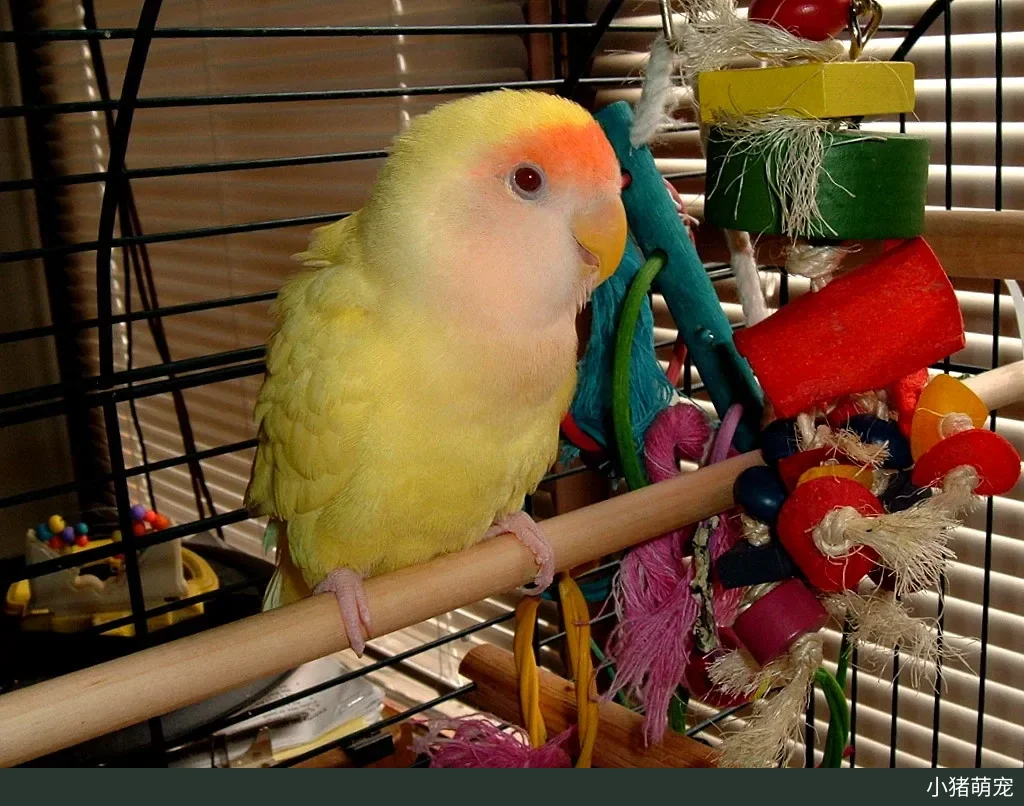
Caption for the image below: A light-color mutation rosy-faced lovebird with in-cage toys; a cropped view does not mean the whole cage size or setup is adequate. Photo: Dan; source: Wikimedia Commons (originally on Flickr); license: CC BY 2.0. Original converted to WebP.

Health observation and legal sourcing
Start health care with daily checks of demeanor, appetite, weight trend, and droppings. Long-term unbalanced diets can lead to vitamin A or calcium shortfalls; hens also need vigilance for egg binding. If the bird is depressed, clearly eating less, or sitting on the cage floor for long periods—especially with open-mouth breathing or a tail that pumps markedly with each breath—seek an avian-capable veterinarian promptly; do not wait for it to “bounce back on its own.” Nutrition issues[5]; Signs to seek care[8]
Psittacosis is caused by Chlamydia psittaci and can pass from birds to people. Infected birds may shed the pathogen even when they look normal; people mainly get infected by inhaling dust with dried droppings or secretions. Moisten debris before cleaning; avoid dry sweeping or vacuuming that raises dust; wash hands after contact with birds and cages. If you develop fever or a dry cough after bird contact, seek medical care and report the exposure. CDC disease overview[9]; Cleaning and prevention[10]
Beak and feather disease (PBFD) is a circovirus-related avian infection that can spread via feather dust, droppings, and so on, and can also reach other birds indirectly on contaminated clothing. It may cause abnormal new feathers and progressive feather loss, but infected birds can also show no clear signs for a long time. Feather loss is not the same as PBFD, and a normal appearance does not rule out infection; which tests, samples, and rechecks to use are judged by a veterinarian with the history. Care is mainly supportive and aimed at preventing spread; do not believe that “extra nutrition will cure it.” PBFD veterinary materials[6]
New birds should be examined before contacting resident birds. VCA suggests quarantine in a separate room for 30–45 days; exact length and screening are set by the attending veterinarian. End of quarantine is not proof that every infection has been ruled out. Introduction and quarantine[7]
Before purchase, verify the scientific name. CITES Appendices effective 5 March 2026 explicitly exclude Agapornis roseicollis from the Appendices; Fischer’s, masked, and other lovebirds cannot use that exception and fall under Appendix II management for Psittaciformes. A seller’s “lovebird” label or a color morph does not replace species identification. Appendices text[11]
CITES mainly regulates international trade; domestic breeding, sale, transport, and import each have their own rules. China’s Wildlife Protection Law sets out rules for captive breeding, sale and use, and special marking of nationally protected wildlife, and for related import/export procedures; “captive-bred” is not a blanket license waiver, and “not listed on CITES” does not mean trade is unconditionally legal. Choose traceable captive-bred sources and keep records of scientific name, transactions, and lawful origin; for protected species, first check required permits and marking with the local forestry and grassland authority, and for imports separately check approval and quarantine. Do not buy birds of unclear origin, and do not release them. Legal text[12]
References
-
The sources below were accessed on 18 October 2026; dates are the update or publication dates marked on the pages, not the retrieval time.
-
Animal Diversity Web; Jessica Vonck: Agapornis roseicollis (2005-05-28).
-
VCA; Gregory Rich, Laurie Hess, Rick Axelson (DVM): Lovebirds: General Information (2025-03-24).
-
VCA; Gregory Rich, Laurie Hess, Rick Axelson (DVM): Housing Small Birds (2024-03-05).
-
VCA; Gregory Rich, Laurie Hess, Rick Axelson (DVM): Feeding Pet Lovebirds (2025-02-25).
-
VCA; Gregory Rich, Rick Axelson (DVM): Psittacine Beak and Feather Disease in Pet Birds (2025-08-06).
-
VCA; Gregory Rich, Laurie Hess, Rick Axelson (DVM): Introducing a New Pet Bird (2023-08-23).
-
VCA; Gregory Rich, Laurie Hess, Rick Axelson (DVM): Recognizing the Signs of Illness in Pet Birds (2023-01-01).
-
CDC: About Psittacosis (2025-09-18).
-
CDC: Preventing Psittacosis (2025-09-18).
-
Dutch Ministry of Foreign Affairs official gazette (English text of CITES Appendices): Tractatenblad 2026, 100 — Appendices I, II and III (2026-09-07).
-
Legal text published by the National Forestry and Grassland Administration: Wildlife Protection Law of the People's Republic of China (2022-12-30).
-
Scope of materials: The Animal Diversity Web species page is older and used only for natural history; VCA is veterinary education and does not replace individual examination. CITES Appendices use the English text in the Dutch government gazette (effective 5 March 2026); this pass did not successfully retrieve the matching PDFs from the CITES site or Chinese official sites. Legal provisions describe the regulatory framework; specific species, locality, and transaction still require checking with the competent authority.