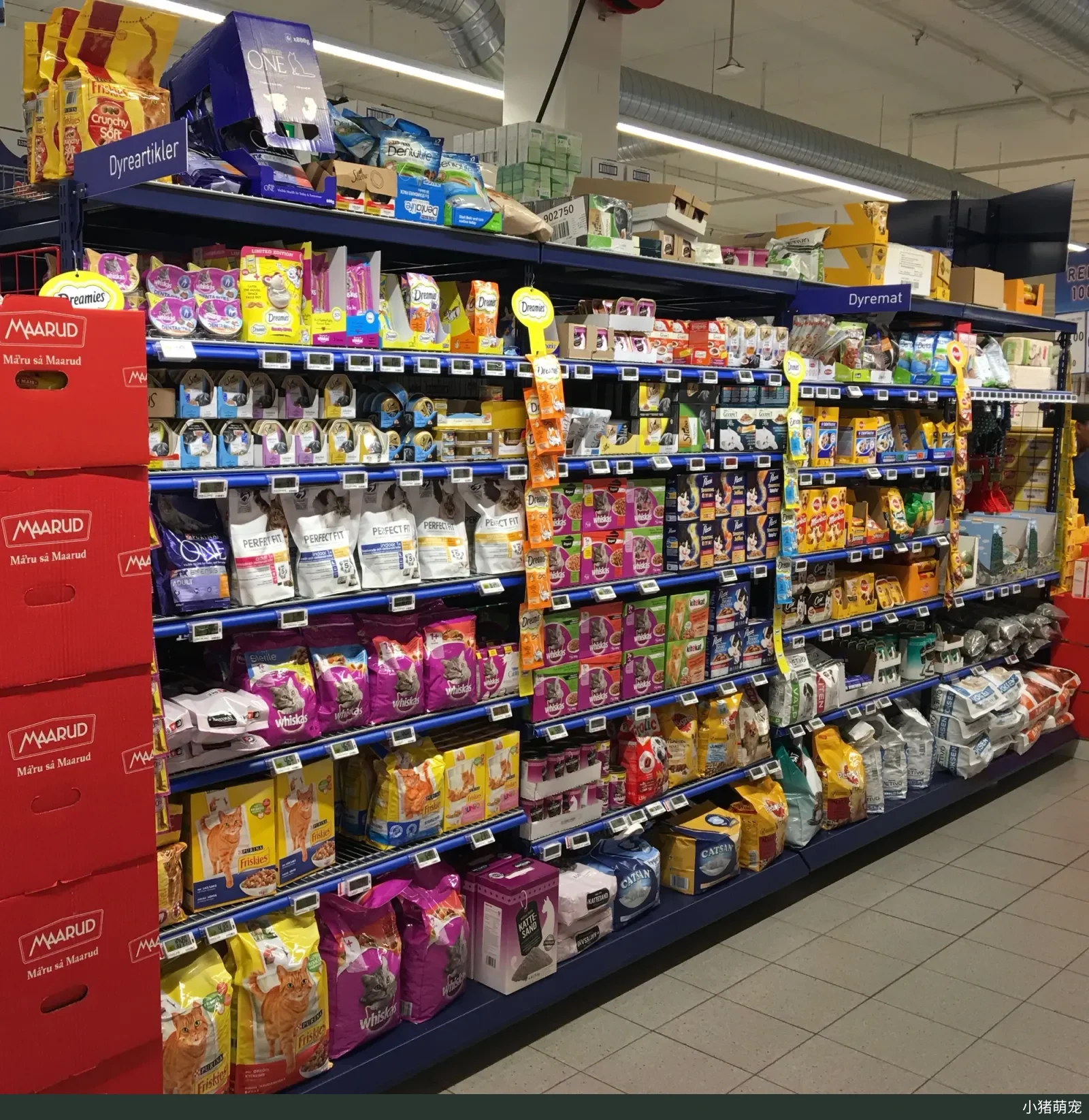
Pet-food shelves at a REMA 1000 supermarket in Tønsberg, Norway (November 2017). Photo: Wolfmann; source: Wikimedia Commons; license: CC BY-SA 4.0.
On 9 October 2026, the U.S. trade outlet PetfoodIndustry published a column by nutritionist George Collings, Ph.D. He argues that pet-food nutrition information is shifting toward a format more like human food labels—but changing the table alone is not enough; industry language used in ingredient lists deserves the same scrutiny. To be clear: this is a personal opinion piece, not a new regulation, and it presents no new research data.
Column content and author
The article, titled “Labeling modernization — did it go far enough?”, ran in PetfoodIndustry’s “Ingredient Issues” column, dated 9 October 2026, matching the RSS date. Per the site’s author bio, George Collings founded and has run the nutrition consultancy Nutrition Solutions since 2005, with more than forty years in the field and credentials in both animal and human nutrition.
He opens with the thesis: as pet-food nutrition labels modernize, the ingredient language the industry uses should face the same scrutiny. The subtitle is blunter—swapping nutrition data into a more familiar presentation may not be enough for owners to understand the wording on pet food.
To show why “saying it clearly” matters, he cites widely circulated estimates: human knowledge roughly doubled every 100 years around 1900, every 25 years by 1945, every 13 months by 1982, and today some say every 12 hours; marketing “frequency of exposure” rules rose from four or five times in the 1980s to eighty or ninety by the early 2000s. His conclusion: amid email, texts, and social media bombardment, product information must be accurate, clear, and substantial. Publicly readable content ends there; which ingredient terms he named and how he would change them are not available to us, so we do not speculate.
Background and transition for AAFCO label modernization
The column’s “nutrition label modernization” refers to the Association of American Feed Control Officials (AAFCO) Pet Food Label Modernization (PFLM) project. Per AAFCO, work began in 2015, with multiple rounds of consumer research, working groups of regulators and industry advisers, and public comment; on 31 July 2023, AAFCO members voted to adopt the revised Model Pet Food and Specialty Pet Food Regulations.
AAFCO lists four main changes: nutrition information becomes a “Pet Nutrition Facts” table closer to human food labels, with a nutritional adequacy statement; the front of pack must state life stage and intended use; clarifying parenthetical notes and common vitamin names in the ingredient list; and a uniform feeding-guide format, with optional icons. So this round mainly clarified format and naming in the ingredient list, while Collings wants scrutiny of the ingredient language itself.
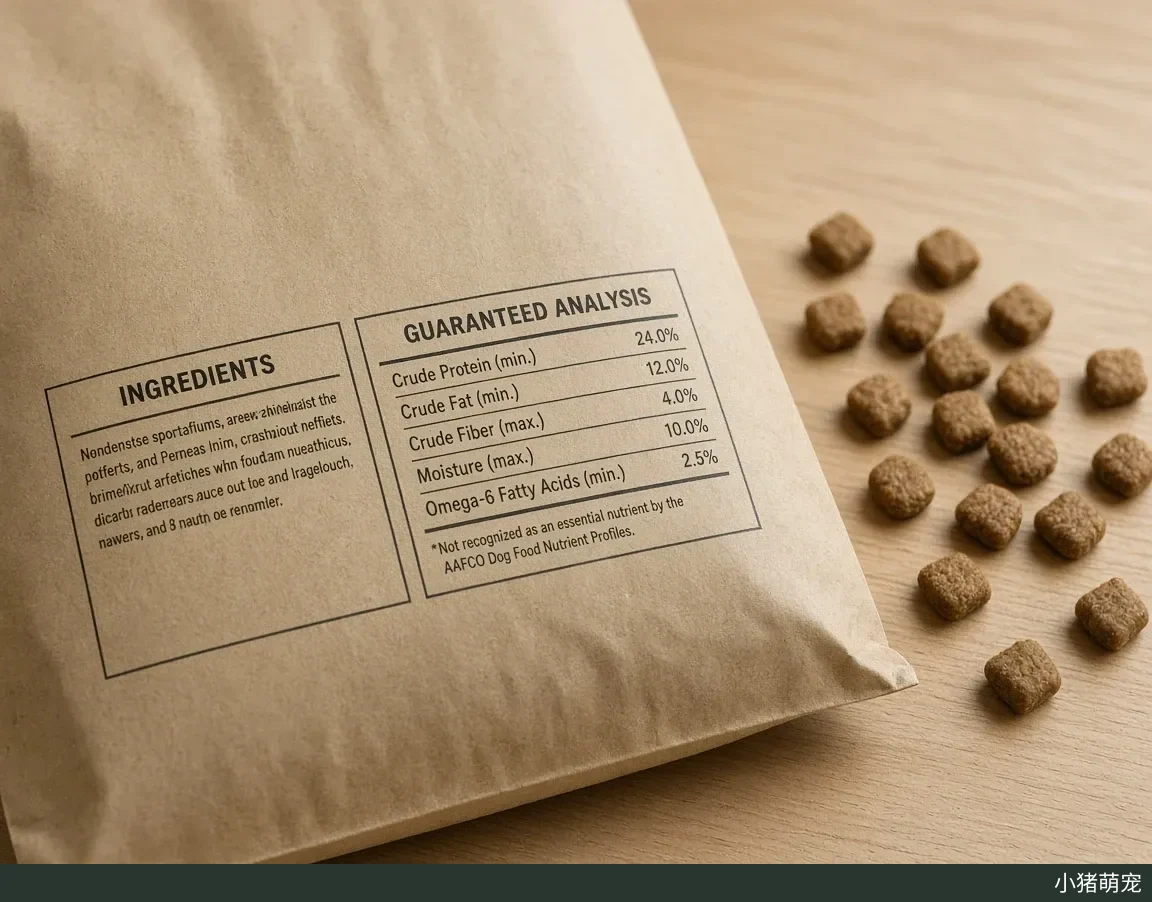
The back of a dry pet-food package usually shows the ingredient list and nutrient (guaranteed analysis) information. AI-generated illustration; text and values in the image are fictional and do not correspond to any real product.
New rules will not appear on shelves overnight. AAFCO writes model regulations for states to adopt through their own legislative processes. AAFCO recommends a six-year enforcement discretion period starting from the printed 2024 Official Publication, during which products meeting old or new rules may both circulate. Washington State, for example, issued a policy statement signed 6 June 2025 by its Department of Agriculture deferring enforcement of the new labeling requirements until 1 July 2030, and making clear that “hybrid” labels mixing old and new rules are not accepted.
What this means for pet owners
In the short term, U.S. shelves will show old and new labels side by side. A package with a “Pet Nutrition Facts” table can be read as nutrition information under the new rules; lacking that table does not mean a product is noncompliant, because AAFCO’s suggested transition is not over and states move at different speeds. These are also U.S. rules; other countries and regions have their own pet-food labeling regimes.
Even when the nutrition table is easier to read, the ingredient list still deserves a close look. Under FDA rules, ingredients must use “common or usual names” and appear in descending order by weight (21 CFR 501.4(a)); names defined in the AAFCO Official Publication can serve as common names, and collective names such as “animal protein products” or “grain products” may be used in some cases. In other words, a single word on the list often sits behind a professional definition that may not match everyday literal reading—exactly the reality behind Collings’s call to scrutinize ingredient language.
A prudent approach: when an ingredient name is unfamiliar, look up the AAFCO or local regulator definition rather than relying on the everyday sense of the words; for a specific pet’s health needs, FDA also advises consulting a veterinarian.
Limits and unknowns
- This is opinion, not a new rule. The piece is a bylined column representing the author’s views, not a new decision by AAFCO, FDA, or any state regulator, and it publishes no new research findings.
- Only the opening was readable. PetfoodIndustry’s publicly readable text covers only the title, subtitle, and first four paragraphs; which ingredient terms the author criticized and what alternatives he proposed could not be verified here and are not paraphrased.
- Opening figures lack sources. Claims such as “knowledge doubles every 12 hours” and marketing exposure rules are not sourced in the readable portion; they are widely circulated but hard-to-verify estimates, useful as rhetorical background, not as statistics to cite.
- State timelines differ. This article uses Washington State’s official filing as one example; adoption and enforcement dates in other states may differ.
References
-
George Collings, Ph.D. Labeling modernization — did it go far enough?. PetfoodIndustry, 2026-10-09.
-
PetfoodIndustry. George Collings, Ph.D. (PFI). Author bio, accessed 2026-10-17.
-
AAFCO. Introducing the New Model Pet Food and Specialty Pet Food Regulations. Accessed 2026-10-17.
-
AAFCO. AAFCO Position on Enforcement Discretion Related to Pet Food Label Modernization Changes. 2023-07-31.
-
Washington State Department of Agriculture. Policy Statement FSCS-AF-25-0001: Pet Food Label Modernization Enforcement Discretion. 2025-06-06.
-
U.S. Food and Drug Administration. Animal Food Labeling and Pet Food Claims. Accessed 2026-10-17.