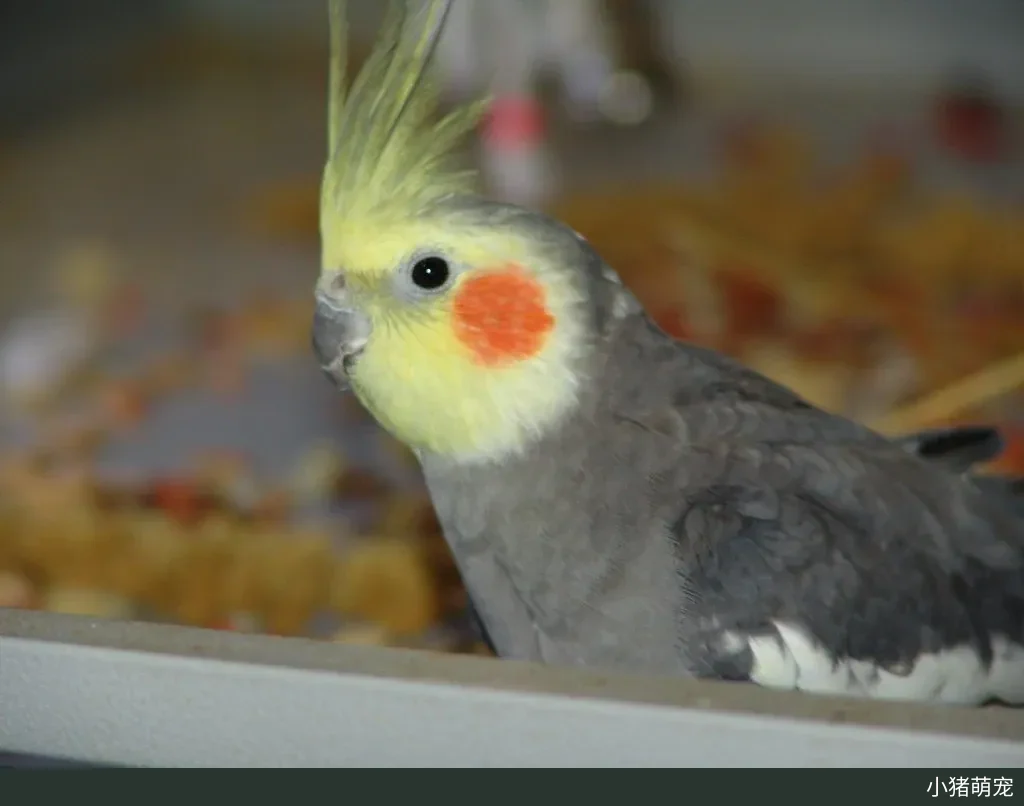
Raised crest, yellow face, and orange cheek patches are the easiest markers of a gray cockatiel. Figure: Drew Avery / Flickr, CC BY 2.0.
The cockatiel (Nymphicus hollandicus, also called the cockatoo-tailed parrot in Chinese) is native to arid inland Australia and a popular companion bird. It is not on the CITES Appendices and is not managed in China as a national key protected wild animal; private keeping does not require forestry paperwork. It may live with an owner for nearly 20 years, needing flight space, a pellet-based diet, and an avian veterinarian. This article organizes points from veterinary manuals and conservation sources.
Natural habits
The cockatiel’s homeland is arid inland mainland Australia. Per BirdLife Australia species material, it occurs in every mainland state and territory but not Tasmania; it is common in sparsely treed grassland, open woodland, and riverside eucalypt stands, and also appears in some cleared farmland. Adults are mainly brownish-gray, with a striking white wing patch, yellow face, an orange round patch at the ear coverts, and a long crest of gray and pale yellow; males are brighter, and juveniles resemble females.
It is a highly social bird: it lives in flocks year-round, including the breeding season—large flocks can reach hundreds or thousands, though most are under 30; they roost together at night, and bonded pairs stay together year-round. Wild cockatiels mainly eat seeds of grasses, shrubs, and trees, especially cereals, mostly foraging on the ground; VCA Animal Hospitals veterinary material adds that they also eat fruit, berries, and vegetation, with diet shifting by season. Nesting is often in eucalypt tree hollows; clutches are up to 8 white eggs, usually 3–5, incubated by both sexes, with chicks remaining in the nest about a month.
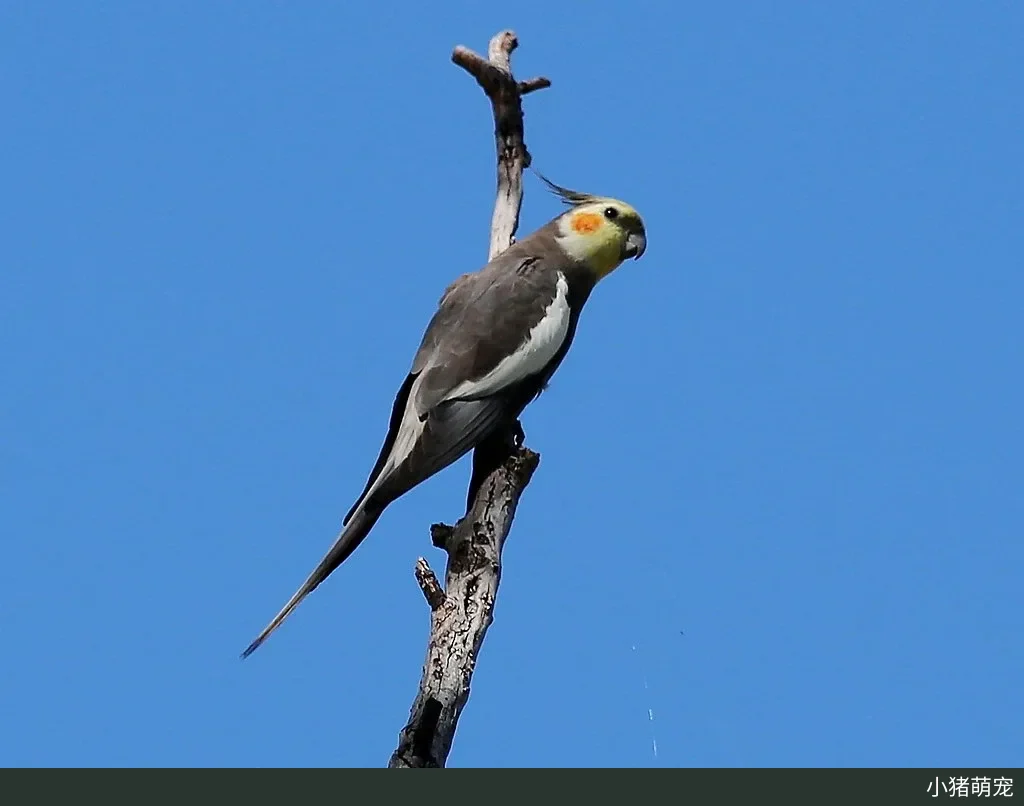
Wild cockatiel photographed July 2016 at Leichhardt Falls, northern Queensland, Australia. Figure: Graham Winterflood / Flickr, CC BY-SA 2.0.
These habits map directly onto home care: flock living means it needs steady companionship, and ground-foraging instincts can be used in feeding and diet conversion—more below.
Husbandry and diet
Make the cage as large as possible, with horizontal space more important than height. RSPCA Australia notes that birds generally do not take off and land like helicopters; tall narrow cages are often unsuitable; if the bird spends most of its time in the cage, give regular flight in a safe room or flight aviary. Provide several natural non-toxic wood perches of varying thickness; avoid sandpaper covers that abrade feet; bar spacing must not let the bird push its head through. Galvanized wire may contain zinc and lead with poisoning risk for parrots—prefer stainless steel. Clean food and water dishes daily and change cage liner paper daily.
Cage placement also needs care. Birds are sensitive to airborne toxins; RSPCA advice is to keep away from paint and cleaner fumes, cigarettes, gas cooking, air fresheners, scented candles, and self-cleaning ovens, avoid drafts, and not place the cage in high-traffic spots or where cats and dogs constantly stare. The kitchen is especially unsuitable: the Merck Veterinary Manual notes that nonstick coatings (polytetrafluoroethylene, PTFE) heated to about 280°C release toxic gases; small birds often die suddenly after small exposures; irons, ironing-board covers, some self-cleaning ovens, and heat lamps can also be sources.
Cockatiels are naturally social. RSPCA recommends keeping compatible birds in pairs or groups; even a single bird will treat the household as its “flock” and needs daily interaction plus movable perches, toys, and other enrichment against boredom.
Diet is the top cockatiel health topic. VCA veterinary authors note that commercial seed mixes are high in fat and carbohydrate and incomplete; cockatiels often pick only one or two favored seeds, and long-term seed-only diets readily lead to vitamin A deficiency, calcium shortfalls, egg binding, and other nutrition-related problems. They recommend bird pellets as about 75%–80% of the daily diet; vegetables, fruit, and leafy greens totaling no more than 20%–25%; seeds only as small treats. Fresh water must always be available and changed daily; remove fresh produce after a few hours in the cage.
Converting from seed to pellets may take days to months. VCA methods include:
- Offer pellets first when the bird is hungriest in the morning; early on they can be mixed with seed;
- Scatter pellets on a flat surface, using ground-foraging instinct to encourage pecking;
- Grind pellets to powder, sprinkle on a little favored moist food, then gradually increase pellets and reduce moist food;
- Only stop seed completely once the bird is eating pellets and produce; consult an avian vet if problems arise.
Remember a few taboos: avocado and onion can be toxic; remove apple seeds; never give chocolate, alcohol, or caffeinated drinks; birds are lactose intolerant—dairy only in tiny amounts; processed snacks such as biscuits and chips have no nutritional value. Cockatiels hull seeds before eating and do not need grit; excess grit can cause digestive blockage. Healthy household foods can be shared in tiny amounts—VCA’s analogy: a teaspoon of food for a cockatiel is like a full plate for a person.
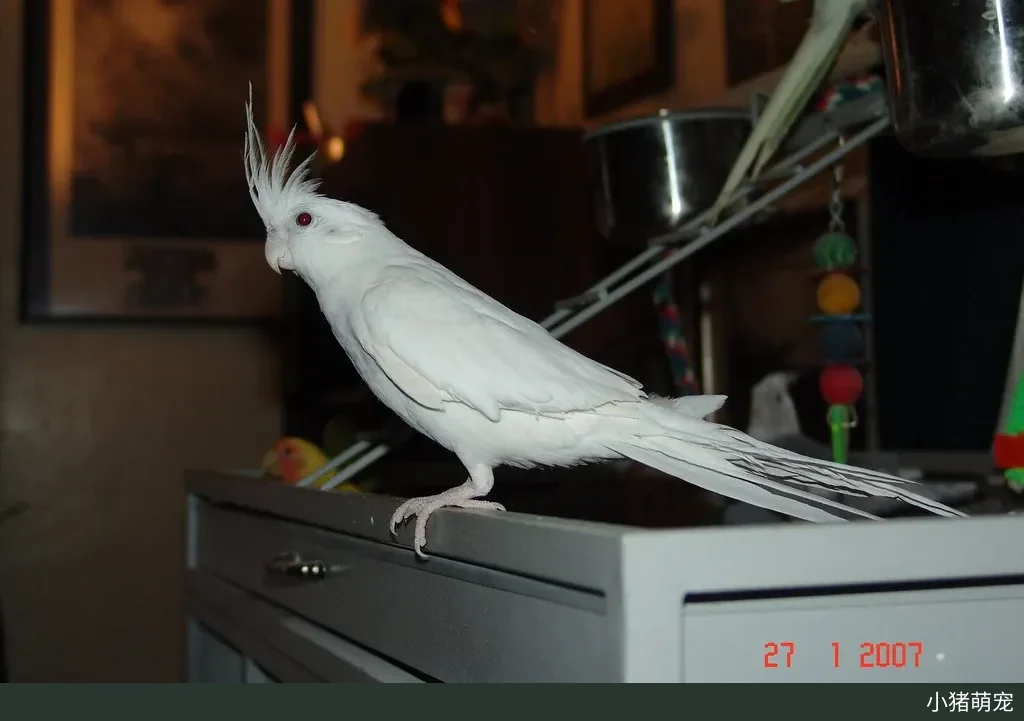
Captive cockatiels come in many color morphs; the photo shows a white individual; the food dish and chew toys behind are part of daily enrichment. Figure: Drew Avery / Flickr, CC BY 2.0.
Common health problems
Reproductive disease is especially common in cockatiels. The Merck Veterinary Manual (updated May 2026) notes that chronic egg laying is seen most in small parrots, “especially cockatiels”; triggers often include high-fat, high-calorie diets, more than 12 hours of light daily, other birds in or near the cage, or excessive bonding to the owner, with possible genetic tendency in some color morphs. Without timely management it may progress to egg binding (dystocia), oviduct obstruction, yolk coelomitis, or cloacal prolapse; yolk coelomitis is most common in cockatiels. Management listed in the manual includes shortening day length to 8 hours, switching to pellets, removing nest boxes and overly bonded toys, and adjusting how the owner pets the bird; when needed, a vet may give calcium or drugs that suppress reproductive hormones.
Egg binding is often an emergency. If a hen sits on the cage floor, looks dull, keeps eyes closed, pumps the tail with each breath, breathes hard, or has a swollen abdomen, take her to an avian vet promptly—do not treat at home yourself.
Psittacosis also warrants attention. The manual states that Chlamydia psittaci can infect all companion birds and is especially common in small parrots such as cockatiels and budgerigars; incubation ranges from 3 days to several weeks; the pathogen is shed in feces and ocular/nasal discharge. Infected birds may show no signs, or reduced appetite, breathing difficulty, or green watery droppings. The disease can infect people, so new birds should see an avian vet; the manual recommends combined conjunctival, choanal, and cloacal swab PCR plus serology. Mycoplasma is also linked to chronic sinusitis, which is likewise common in cockatiels.
Household poisoning risks are many. Besides nonstick coating gases above, the manual mentions lead and zinc: blinds, jewelry, mirror backing, curtain weights, galvanized toys, chains, bells, and wire mesh can all be sources; secondhand smoke may cause chronic respiratory disease and skin problems. Day to day, if a bird stays fluffed, inactive, with dull eyes or ocular/nasal discharge, take it to a doctor; the same signs help when buying, and have an avian vet check before bringing a bird home.
Conservation status, rules in China, and ethics
First the wild picture. BirdLife Australia material shows the cockatiel as Least Concern (LC) on the IUCN Red List and Least Concern in every Australian state and territory where it occurs; habitat loss, large or frequent fires, climate change, and companion animals such as cats and dogs are listed threats.
On international trade, CITES Appendix II covers all Psittaciformes but expressly excludes four species: peach-faced lovebird, budgerigar, cockatiel, and rose-ringed parakeet. So in the Appendices valid from 5 March 2026, the cockatiel is not a CITES Appendix species.
In China, the National Forestry and Grassland Administration’s 2 April 2021 letter On properly resolving issues related to captive-bred parrots (Lin Hu Fa [2021] No. 29) states clearly: except for peach-faced lovebirds, budgerigars, and cockatiels, CITES Appendix parrots introduced from abroad are managed as national key protected wild animals. A September 2024 reply from the Guangzhou Municipal Forestry and Landscape Bureau further explains that the cockatiel is the chicken-tailed parrot, not a national key protected species, and private keeping does not require forestry paperwork; a January 2026 reply from the Yunnan Provincial Forestry and Grassland Administration also states that these three parrot species do not need captive-breeding or commercial-use permits. Two further points: for quarantine and epidemic-prevention questions, Guangzhou’s reply suggests consulting the veterinary authority; the national letter notes that captive-breeding management of parrots not under key protection follows local regulations—before breeding or selling, confirm with the local competent authority.
Legal does not mean treat them casually. The Wildlife Protection Law (2022 revision, effective 1 May 2023) requires that releases use local species suited to survival in the release area, and that species introduced from abroad must not be illegally released or discarded. Cockatiels are native to Australia, not China; if you keep one, see it through—do not release or abandon. The Merck Veterinary Manual gives average cockatiel lifespan up to 20 years; before acquiring one, think through the coming decades of time, space, and vet costs; buy captive-bred birds with verifiable origin, ask for source documentation, and be wary of abnormally cheap sellers. RSPCA Australia’s stance is also clear: wildlife must not be taken from the wild as pets.
References
-
CITES Secretariat. Appendices I, II and III (valid from 5 March 2026)
-
National Forestry and Grassland Administration. Letter on properly resolving issues related to captive-bred parrots (Lin Hu Fa [2021] No. 29), 2021-04-02
-
Guangzhou Municipal Forestry and Landscape Bureau. Does privately keeping a cockatiel risk breaking the law?, 2024-09-25
-
Yunnan Provincial Forestry and Grassland Administration. Parrot species individuals may legally keep, 2026-01-08
-
Standing Committee of the National People’s Congress. Wildlife Protection Law of the People’s Republic of China (2022 revision)
-
BirdLife Australia. Cockatiel (page not dated; accessed 2026-10-17)
-
Rich G, Hess L, Axelson R. Feeding Pet Cockatiels. VCA Animal Hospitals (page not dated; accessed 2026-10-17)
-
Hoppes SM. Reproductive Diseases of Pet Birds. Merck Veterinary Manual (updated May 2026)
-
Hoppes SM. Bacterial Diseases of Pet Birds. Merck Veterinary Manual (updated June 2026)
-
Hoppes SM. Toxicoses of Pet Birds. Merck Veterinary Manual (updated May 2026)
-
Hess L. Choosing a Pet Bird. Merck Veterinary Manual (April 2025)
-
RSPCA Australia. How should I house my bird? (updated 2023-07-17)