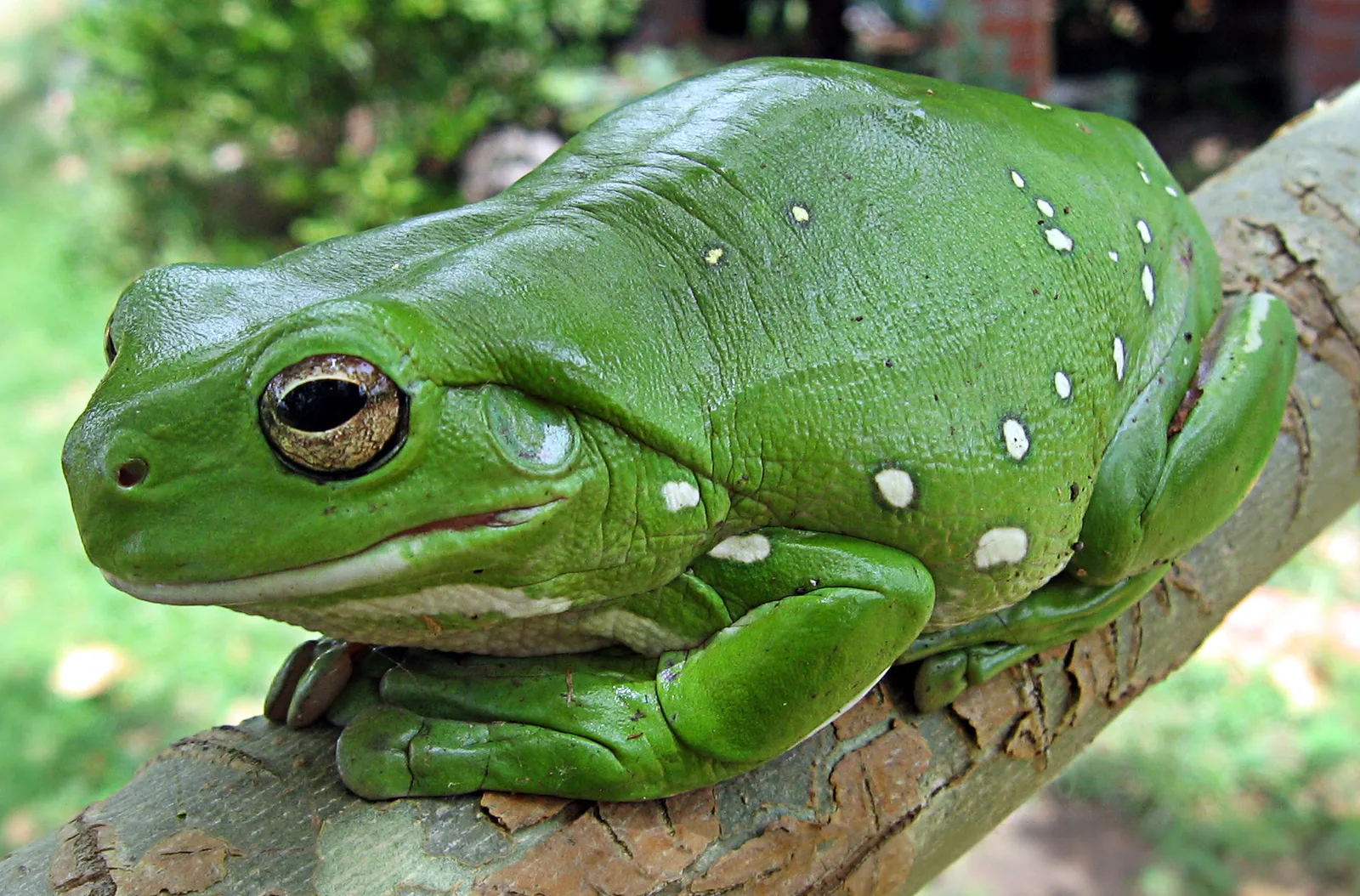
White's tree frog (Ranoidea caerulea). Photo: LiquidGhoul; Source: Wikimedia Commons; License: Public Domain.

White's tree frog (Ranoidea caerulea), also widely recognized in herpetoculture as the dumpy tree frog or Australian green tree frog, is native to Australia and New Guinea. Characterized by its robust physique, placid demeanor, and remarkable adaptability to captive environments, it has become one of the most widely kept pet amphibians worldwide. However, amphibians differ fundamentally from traditional mammalian companion animals: their skin is semipermeable, and their hydration, respiration, and metabolic balance rely entirely on environmental microclimates. Consequently, White's tree frog must be regarded as an ecological observation animal rather than a tactile pet intended for frequent physical handling. Drawing from herpetology and clinical exotic veterinary medicine, this guide systematically examines the species' natural history, vertical vivarium design, microclimate management, nutritional balance, and handling safeguards to establish a framework for responsible, science-based care.
Taxonomic Classification and Biological Characteristics
Taxonomically, White's tree frog belongs to the order Anura, family Pelodryadidae, and genus Ranoidea, although historical literature and international hobbyist circles have long cataloged the species under the scientific synonyms Litoria caerulea or Pelodryas caerulea. Adults are notably large among arboreal frogs: mature males typically reach snout-vent lengths (SVL) of 7 to 9 cm, while females are larger, often attaining 8 to 11 cm or more. The head is broad with a remarkably wide gape, and the golden-copper irises are bisected by characteristic horizontal pupils. Prominent fleshy ridges—supratympanic dermal folds—crest above the eyes and tympanic membranes, thickening and drooping with age and body condition. The limbs are short and robust, with every digit terminating in an expanded adhesive disc. These toe pads secrete a thin film of mucous fluid, enabling the frog to secure firm traction on slick bark, wet foliage, and vertical glass surfaces.
The integument of White's tree frog possesses a specialized physiological adaptation: the outer epidermis secretes a waxy lipid layer that significantly diminishes evaporative cutaneous water loss, providing the biological foundation for its resilience in seasonally dry environments. Base coloration typically ranges from vivid emerald green to muted bluish-green, with certain individuals displaying irregular white or golden dorsal spotting. Notably, color changes in this species are not active camouflage analogous to chameleons, but rather physiological reflexes driven by ambient temperature, relative humidity, illumination, and internal stress levels. In cool, dim, or excessively dry conditions, dermal melanophores expand, turning the frog dull olive, slate grey, or dark brown; once optimal thermal and hygrometric conditions are restored and stress subsides, the skin reverts to bright green. Persistent darkening, mottling, or ashen skin under appropriate environmental parameters frequently serves as a clinical sign of underlying systemic illness, chronic distress, or environmental degradation.
In the wild, White's tree frog is distributed across northern and eastern Australia as well as southern New Guinea, inhabiting sclerophyll forests, eucalyptus woodlands, wetland peripheries, and human-modified landscapes such as farmland, orchards, and suburban gardens. The species is predominantly crepuscular and nocturnal: during daylight hours, individuals conserve moisture by tucking their limbs closely beneath their bodies and roosting in tree hollows, bark crevices, or beneath broad foliage; at dusk, they become active and ascend through the shrub and canopy layers to hunt. The species exhibits extraordinary ecological resilience and synanthropic adaptation, frequently sheltering in residential water tanks, drainage pipes, and humid bathroom window ledges. Nevertheless, wild resilience does not imply that captive vivaria can be maintained casually. Artificial enclosures are bounded micro-ecosystems; any chemical contamination or climatic imbalance can rapidly precipitate fatal physiological distress in amphibians.
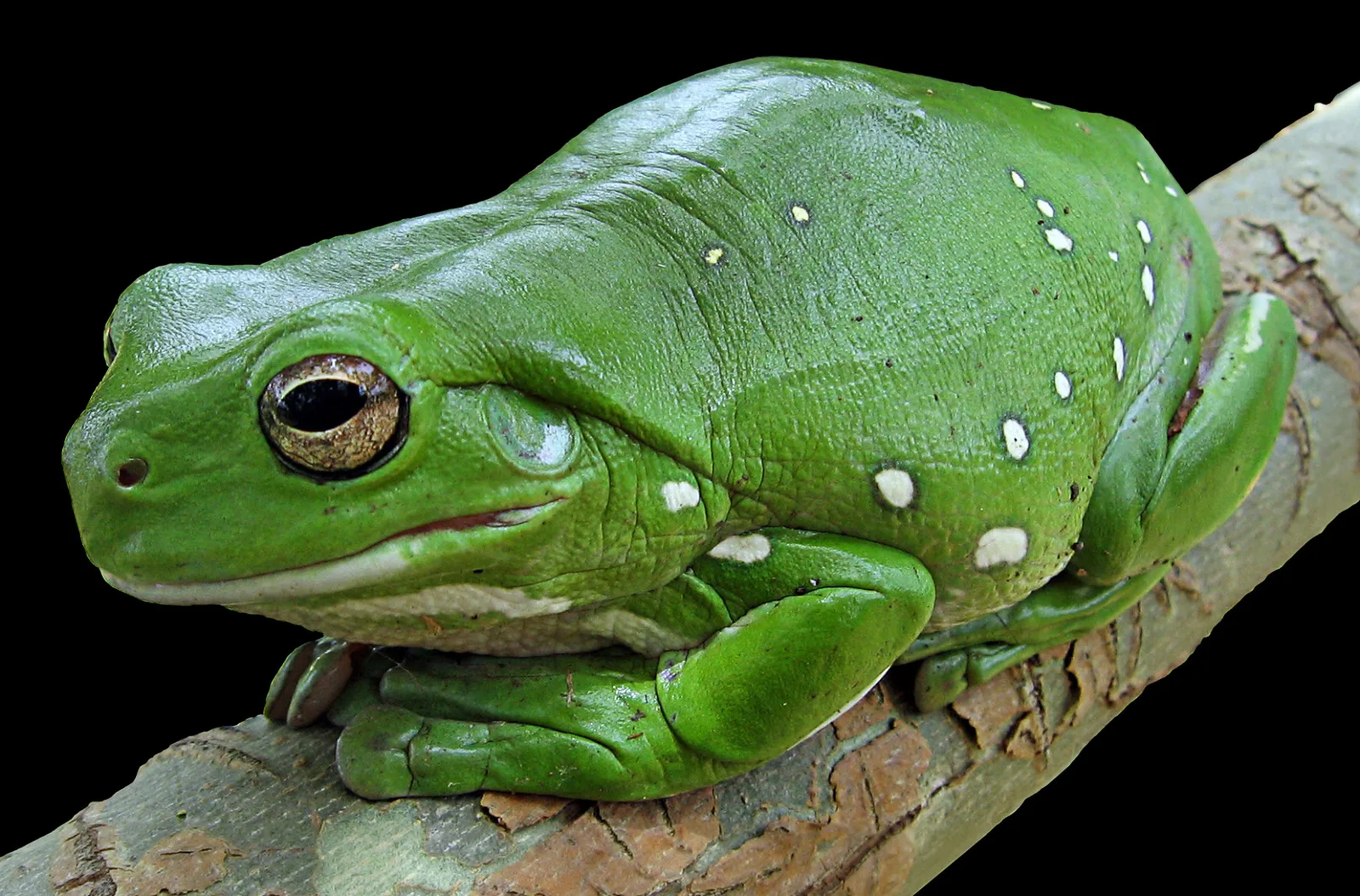
A captive White's tree frog at rest. Photo: LiquidGhoul / Lycaon; Source: Wikimedia Commons; License: Public Domain.

Vivarium Architecture and Microclimate Management
When designing an enclosure for White's tree frog, the primary design parameter is ample vertical space. Because these frogs spend the vast majority of their active cycles climbing and perching above the ground, keepers must prioritize tall, vertically oriented vivaria rather than low horizontal terraria suited for terrestrial reptiles. For a single adult frog, the enclosure should measure no less than 45 cm wide × 45 cm deep × 60 cm high (approximately 18 × 18 × 24 inches); co-housing a pair or a small group requires expanding the dimensions to at least 60 cm × 45 cm × 90 cm or larger. The interior must be fitted with an interlacing network of sanitized cork branches, sturdy grapevines, or smooth driftwood, accompanied by robust broad-leaved vegetation (such as Epipremnum aureum, Monstera deliciosa, Ficus lyrata, or durable silk plants) capable of supporting an adult weighing tens of grams. All climbing elements must possess smooth, debarked surfaces to eliminate sharp splinters that could abrade delicate ventral skin.
Establishing a defined thermal gradient combined with high-flow ventilation is fundamental to respiratory and cutaneous health. Clinical veterinary guidelines recommend maintaining a daytime ambient temperature between 24 °C and 28 °C (75 °F to 82 °F), complemented by a localized basking zone of 29 °C to 30 °C (84 °F to 86 °F) situated near the canopy, with nighttime temperatures dropping naturally to 20 °C–24 °C (68 °F–75 °F). All heating elements must be regulated by a dedicated proportional thermostat and shielded with protective wire cages; under-tank heat rocks must never be utilized due to the severe risk of thermal contact burns. Relative humidity should be maintained within a moderate range of 50% to 70%, facilitated by brief morning and evening mistings that allow the vivarium to dry down between cycles. Housing White's tree frogs in poorly ventilated, stagnant, waterlogged setups exceeding 80% continuous humidity is a critical error: large top and front mesh ventilation panels are mandatory, as stagnant, saturated air is the leading direct cause of lethal bacterial dermatosepticemia (red-leg syndrome) and systemic fungal outbreaks.
Water safety represents the most critical yet frequently neglected facet of amphibian husbandry. Adult anurans do not ingest water orally; instead, they absorb moisture and essential electrolytes transcutaneously through a specialized, highly vascularized ventral skin region known as the pelvic patch or seat patch. Untreated municipal tap water contains free chlorine, chloramines, and heavy metal ions, all of which pass directly across semipermeable membranes into the bloodstream, precipitating chemical burns, severe electrolyte collapse, and acute systemic poisoning. Vivaria must feature a shallow, easily accessible water dish with a water depth not exceeding the frog's shoulder height when seated. Water must be conditioned using specialized amphibian dechlorinators, aged and actively aerated for over 48 hours, or processed through certified carbon filtration. Because frogs frequently defecate in their water dishes, the water must be dumped, the vessel disinfected, and fresh conditioned water replenished daily. Substrates should consist of chemical-free coconut coir, sphagnum moss, or compacted tropical bioactive soil mixes; loose pea gravel or decorative pebbles must be strictly avoided to eliminate fatal ingestion hazards.
Dietary Requirements and Nutritional Balance
White's tree frogs are strict insectivorous carnivores whose visual pathways are intensely tuned to movement, triggering an aggressive, indiscriminate feeding reflex. The staple captive diet must consist of commercially produced live insects, including banded crickets, black crickets, red runner roaches, dubia roaches, and captive-raised earthworms. Molted mealworms or waxworms may be offered as occasional supplemental treats, but must never serve as primary staples due to excessive lipid ratios and poorly digestible chitinous exoskeletons. Feeder insects must never exceed the width between the frog's eyes to prevent mechanical esophageal impaction or choking. White's tree frogs lack satiety feedback mechanisms and will consume virtually anything presented to them, making captive obesity a primary driver of shortened lifespans: rapidly developing juveniles should be fed every 1 to 2 days, while mature adults require strict portion control, receiving only 3 to 5 appropriately sized insects every 2 to 3 days.
Nutritional enrichment and mineral dusting of feeder insects are vital countermeasures against metabolic bone disease (MBD). Commercially reared insects universally exhibit inverse calcium-to-phosphorus ratios, frequently skewing beyond 1:9 in favor of phosphorus. For 24 to 48 hours prior to feeding, all live prey must undergo rigorous gut-loading—nourished on nutrient-dense foods including collard greens, carrots, wheat bran, and commercial gut-loading formulas to pack their digestive tracts with vitamins and minerals. Immediately before feeding, prey should be dusted with an ultra-fine, phosphorus-free calcium carbonate powder: juveniles require dusting at every meal, while adults require supplementation 1 to 2 times weekly. In vivaria lacking calibrated, low-output linear UVB lighting, calcium containing vitamin D3 must be utilized to facilitate intestinal calcium assimilation; furthermore, a specialized amphibian multivitamin containing preformed vitamin A should be administered biweekly to preserve epithelial tissue integrity and retinal function.
Health Monitoring and Safe Handling Protocols
Interactions with White's tree frogs must strictly observe the principles of minimal handling and zero bare-hand contact. Guidance from the Royal Society for the Prevention of Cruelty to Animals (RSPCA) and veterinary bodies underscores that natural sebum, perspiration salts, and trace chemical residues (including soaps, lotions, hand sanitizers, and fragrances) present severe toxicological hazards to amphibian semipermeable membranes. Furthermore, baseline human body temperatures (36 °C to 37 °C / 97 °F to 99 °F) induce acute thermal stress in cold-blooded ectotherms. Routine vivarium maintenance and transfers should be conducted by gently coaxing the animal into a smooth, sterile plastic catch cup; if physical restraint is unavoidable, the handler must wear powder-free medical nitrile gloves thoroughly rinsed and moistened with dechlorinated water. In addition, amphibians can carry enteric bacteria such as Salmonella, requiring keepers to wash their hands thoroughly with soap after servicing enclosures and strictly avoid cleaning equipment in food-preparation areas.
Recognizing early clinical signs of common pathologies is critical for prompt veterinary intervention. Common medical conditions in captive White's tree frogs include: first, bacterial dermatosepticemia (commonly termed red-leg syndrome), typically caused by Aeromonas or Pseudomonas proliferations resulting from fouled water or stagnant humidity, presenting with intense cutaneous erythema on the ventral thighs and abdomen, profound lethargy, and fluid edema, requiring immediate diagnostic cultures and targeted antibiotic bath or systemic therapies; second, corneal lipidosis, where long-term consumption of high-fat insects causes cholesterol crystals to precipitate within the corneal stroma, creating opaque white lesions and progressive blindness; and third, chytridiomycosis (caused by the fungal pathogen Batrachochytrium dendrobatidis), which disrupts cutaneous osmoregulation and leads to cardiac arrest. Any observation of prolonged darkening, ventral reddening, a soft or rubbery lower jaw, ocular discharges, or extended anorexia warrants immediate consultation with a qualified exotic animal veterinarian, strictly eschewing unprescribed over-the-counter fish or mammalian medications.
Captive-Breeding Ethics and Ecological Safeguards
The ethical foundation of exotic pet keeping begins with respecting wildlife conservation frameworks. In the native habitat of White's tree frog, all indigenous amphibians receive comprehensive legal protection under the Australian Environment Protection and Biodiversity Conservation Act (EPBC Act) alongside state wildlife statutes, strictly prohibiting wild harvesting, commercial trafficking, and unauthorized export. Specimens available in the international companion animal market derive from multi-generational captive-bred (CB) lineages. Sourcing verified CB frogs guarantees animals that are behaviorally and physiologically acclimated to artificial microclimates, significantly curtails pathogen and parasite burdens, and dismantles commercial incentives for wild poaching and smuggling. Removing wild amphibians from their ecosystems devastates wild populations and native habitats, and wild-caught specimens suffer catastrophic mortality rates during transport and enclosure acclimation; they must never be acquired as domestic pets.
Choosing to keep a White's tree frog requires a committed, multi-year responsibility. Under diligent, science-based care, White's tree frogs boast an average captive lifespan of 10 to 16 years, with documented individuals surpassing 20 years. Prospective owners must evaluate their long-term willingness to maintain dependable live insect colonies, carry out daily water basin disinfection, monitor automated climate systems, and absorb specialized veterinary expenses. Crucially, captive White's tree frogs must never be released or abandoned into outdoor natural ecosystems under any circumstances. Non-native amphibians introduced into foreign biomes can establish invasive populations, outcompete vulnerable indigenous anurans, and act as catastrophic vectors for virulent pathogens such as chytrid fungi and ranaviruses. Conversely, captive-bred animals acclimated to controlled vivarium climates face swift starvation or exposure if released. Lifelong dedication, rigorous containment, and unwavering stewardship remain the foundational obligations of every amphibian keeper.